



Thursday, April 30, 2026
SAVED POSTS
  • Login
  • Register
RathBiotaClan
No Result
View All Result
  • HOME
  • HEALTH SCIENCE
    • NEUROSCIENCE
    • PHYSIOLOGY
    • IMMUNOLOGY
    • CANCER
  • DISCOVERIES
    • SPOTLIGHTS
    • STUDENT PORTAL
    • SCIENCE FEATURED
  • MOLECULAR BIOLOGY
    • GENETICS
    • BIOTECHNOLOGY
    • BIOINFORMATICS
    • BIOCHEMISTRY
    • BIOPHYSICS
  • ZOOLOGY & ECOLOGY
    • ENVIRONMENTAL SCIENCE
    • ECOLOGY
    • EVOLUTION
  • MICRO & PLANT SCIENCE
    • MICROBIOLOGY
    • CELL BIOLOGY
    • DEVELOPMENTAL BIOLOGY
  • PSYCHOLOGY
  • E STORE
No Result
View All Result
RathBiotaClan
No Result
View All Result
Home DEVELOPMENTAL BIOLOGY

How archaeologists determine the sex of skeletons

Shibasis Rath by Shibasis Rath
July 9, 2025
in DEVELOPMENTAL BIOLOGY, HEALTH SCIENCE, SCIENCE FEATURED
Reading Time: 5 mins read
0
A A
0

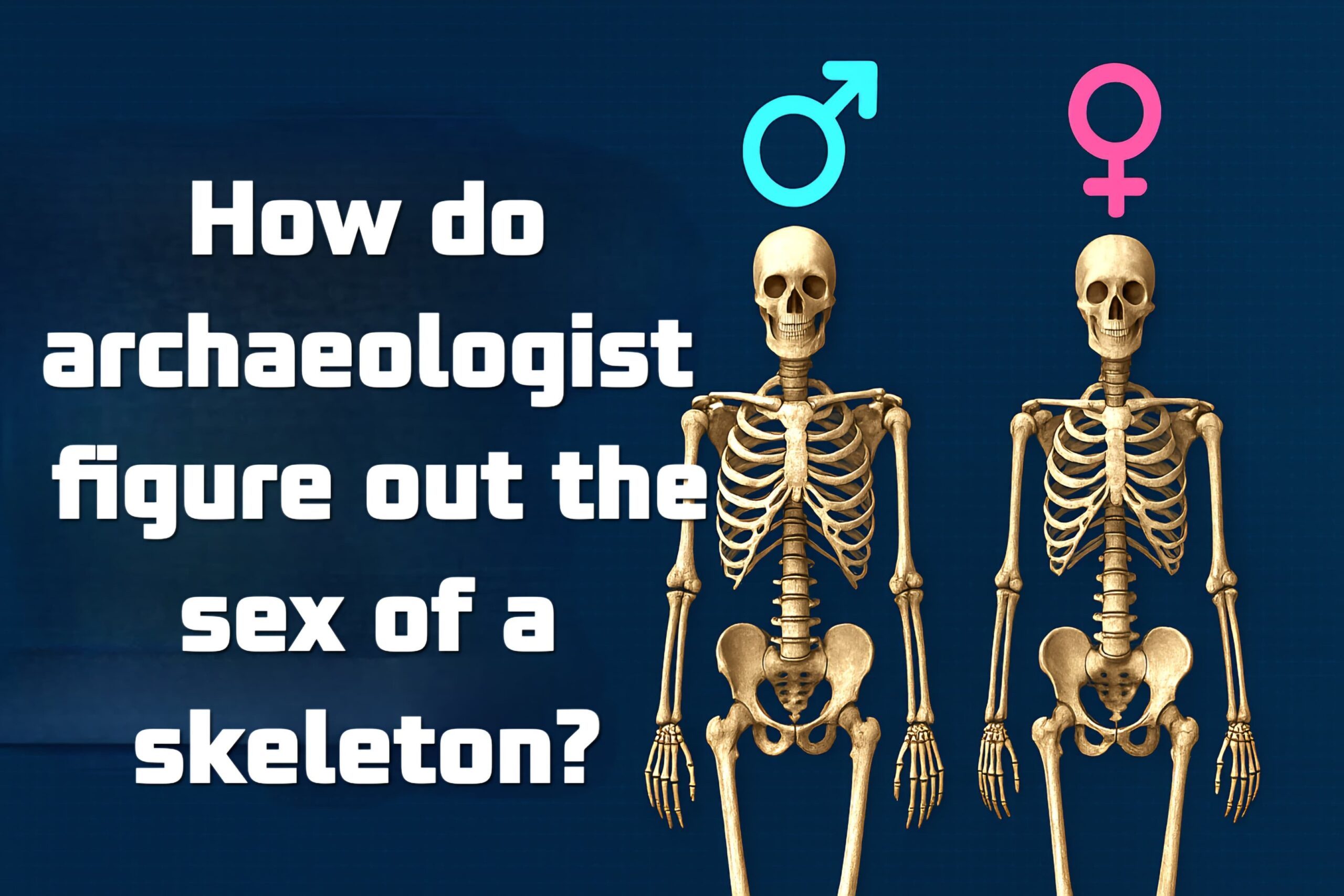
We may see which skeletons are that of males or females which is at the base of what we study in terms of population statistics, also it is key in analysis of how ancient cultures treated different sexes. But what we look at in order to determine that is not a simple task.

Why Sexing Skeletons is Difficult

In the living, we tend to judge sex from what we can see, such as facial hair or body shape. But such physical features, jokingly termed as the “squidgy and hairy bits,” are destroyed during burial. Archaeologists, therefore, cannot look to soft tissue or exterior characteristics. Instead, they must make do with what is left behind: bones.

READ ALSO

Researchers Identify a Hidden Memory Risk Hiding in Plain Sight for Older Adults

Dreams about loved ones can bring comfort before death

Sexual dimorphism the physical differences between the sexes does affect the skeleton, but these are subtle and not always clear cut. Indeed, skeletal variation can occur between individuals of the same sex, so it is not always possible to be absolutely sure.

It’s also necessary to distinguish sex from gender. Sex is used to describe biological differences, whereas gender is a cultural construct that differs between societies. There are individuals born with ambiguous sexual characteristics, and societies can recognize more than two genders. But this degree of subtlety is seldom discernible in archaeological remains.

ADVERTISEMENT

What Archaeologists Look For

If archaeologists are lucky, they may uncover a well-preserved body, such as one buried in a peat bog. In such cases, even soft tissues might be intact, providing greater clues about sex and perhaps social roles. But typically, what’s recovered are just bones.

Here’s where osteo archaeologists, or bone specialists, come in. If a complete skeleton is found, certain features are especially useful for sex determination:

ADVERTISEMENT

1. General Size and Robustness

Male skeletons tend to be taller and more robust (thicker bones, strong muscular attachments).

Female skeletons tend to be more gracile (slighter, with thinner bones).

2. The Pelvis

The pelvis is one of the most reliable indicators of biological sex because it reflects adaptations for childbirth.

ADVERTISEMENT

Pubic Arch: In males, the angle is usually less than 90°, forming an acute angle. In females, it is broader and more rounded.

Pelvic Inlet: The opening is more circular in females and more heart-shaped or “Mickey Mouse” shaped in males.

Acetabulum (hip socket): Larger in males than in females.

3. The Skull

Skull features can offer additional clues:

Chin: Males typically have a squarer, more prominent chin.

Jaw Angle (Gonial Flare): Females may show wider flare.

Forehead: Slopes more in males; rounded in females.

Brow Ridges: More pronounced in males.

Mastoid Process: Larger and more robust in males.

These traits are comparative, meaning they’re more accurate when comparing skeletons within the same population. This is because different populations can show different average features.

Notable Case Studies

1. Paviland Cave, Wales

In 1823, geologist William Buckland discovered a skeleton stained red with ochre and buried with ivory jewelry. Based on these features, he assumed she was a Roman sex worker. Later radiocarbon dating in the 1960s revealed the remains were approximately 29,000 years old—far older than the Roman era. Further analysis identified the skeleton as male, despite initial assumptions influenced by cultural bias.

2. Poulton Abbey Excavation

During an excavation about 12 years ago, a young archaeologist (later the narrator of the original script) worked on a burial site. The skeleton was incomplete and the skull was still embedded in soil, making sex determination extremely difficult. This experience illustrated the challenges and frustrations archaeologists often face with incomplete remains.

3. Tarquinia, Italy

In 2013, archaeologists uncovered what they believed to be an Etruscan prince buried with a spear and rich grave goods. However, detailed study showed the skeleton was female, and the presumed “wife” was male. The interpretation of grave goods had led to incorrect assumptions—once again highlighting how cultural expectations can bias analysis.

The Complexity of Certainty

As these examples show, determining sex from skeletons is fraught with challenges. Children’s skeletons are especially difficult to identify, as skeletal differences only emerge after puberty. Some adults also show traits not typical for their sex, adding further complexity.

Sex determination involves a mixture of:

  • Physical evidence from bones
  • Specialist knowledge and comparative experience
  • Caution against cultural assumptions or gender biases

It’s crucial to remember that absolute certainty is rare. Specialists often make educated guesses based on the available evidence and within the context of the burial environment.

Whats My Thought ?

So, when asked whether a skeleton is male or female, the honest answer is often: “We think it’s likely, but we can’t be 100% sure.” The process is based on anatomical traits, population comparisons, and context—but there’s always room for error.

Sexing skeletons is a deceptively simple question with a complicated answer. And while gender brings a whole different set of considerations that archaeology rarely captures, even biological sex is not always clear-cut in the archaeological record.


  • Share on WhatsApp (Opens in new window) WhatsApp
  • Share on Facebook (Opens in new window) Facebook
  • Share on Reddit (Opens in new window) Reddit
  • Share on X (Opens in new window) X
  • Print (Opens in new window) Print

Did you like this read? Turn on notifications so we can let you know the second a new post goes live.

Turn off Alerts
Shibasis Rath

Shibasis Rath

"𝓒𝓸𝓷𝓷𝓮𝓬𝓽𝓲𝓷𝓰 𝓡𝓮𝓼𝓮𝓪𝓻𝓬𝓱 𝓣𝓸 𝓡𝓮𝓪𝓵𝓲𝓽𝔂" 𝓲𝓼𝓷'𝓽 𝓙𝓾𝓼𝓽 𝓪 𝓜𝓸𝓽𝓽𝓸 - 𝓘𝓽'𝓼 𝓜𝔂 𝓜𝓲𝓼𝓼𝓲𝓸𝓷

Related Posts

Group of seniors walking down a city street.
NEUROSCIENCE

Researchers Identify a Hidden Memory Risk Hiding in Plain Sight for Older Adults

April 30, 2026
end-of-life dreams
HEALTH SCIENCE

Dreams about loved ones can bring comfort before death

April 28, 2026
Strict Parenting Linked to Increased Deceptive Behavior in Children, Study Suggests.
PSYCHOLOGY

Strict Parenting Linked to Increased Deceptive Behavior in Children, Study Suggests.

April 25, 2026
Mammals Might Be Able to Regenerate Tissue Under the Right Conditions
DEVELOPMENTAL BIOLOGY

Mammals Might Be Able to Regenerate Tissue Under the Right Conditions

April 22, 2026
Chimpanzees of the Ngogo community in Uganda divided into two groups that clashed aggressively with each other.PHOTO: A. A. SANDEL ET AL.
ECOLOGY

Chimpanzee Group Split Turns Violent in Uganda Study

April 27, 2026
fuel your passion text
PSYCHOLOGY

77% of Workers Are Disengaged. Research Points to Why “Follow Your Passion” Makes It Worse

April 27, 2026

POPULAR NEWS

Yelling Isn’t Just Yelling: How a Hostile Home Rewires a Child’s Brain for Constant Alert

Yelling Isn’t Just Yelling: How a Hostile Home Rewires a Child’s Brain for Constant Alert

by Shibasis Rath
March 9, 2026
0

To a parent in the heat of the moment, a raised voice may feel like simple frustration. To a child...

a group of gen Z kids walking down a street

Is Gen Z the First Generation Less Intelligent Than Their Parents?

by Shibasis Rath
March 14, 2026
0

Gen Z intelligence decline is emerging as a serious concern among neuroscientists and education researchers. For over a century, each...

Whole Brain Emulation Achieved: Scientists Run a Fruit Fly Brain in Simulation

by Shibasis Rath
March 9, 2026
0

Scientists have copied an entire biological brain neuron by neuron and synapse by synapse and made it control a simulated...

Male G-spot isn’t where we thought it was

Male G-Spot Found: New Study Identifies Frenular Delta as Penis’s Most Sensitive Area

by Staff Writer
April 27, 2026
0

The study found that human penile innervation develops in distinct fetal stages and shows region-specific patterns in adults, with the...

How archaeologists determine the sex of skeletons

by Shibasis Rath
July 9, 2025
0

We may see which skeletons are that of males or females which is at the base of what we study...

EDITOR CHOICE‘S

  • All
  • NEWS
  • SPOTLIGHTS
Bluebuck antelope with silvery-blue coat and curved horns running across open South African grassland, representing extinct species targeted for de-extinction by scientists

Colossal Biosciences Announces De-Extinction of Bluebuck Antelope, 226 Years After Its Extinction

by Staff Writer
April 30, 2026
0

It has been 226 years since humans last saw a living bluebuck, an elegant antelope species native to South Africa...

Group of seniors walking down a city street.

Researchers Identify a Hidden Memory Risk Hiding in Plain Sight for Older Adults

by Shibasis Rath
April 30, 2026
0

More and more research suggests that psychological and behavioral factors can play a role in cognitive decline as people get...

Why Scientists Are Turning to Fish Scales to Restore Human Vision

Why Scientists Are Turning to Fish Scales to Restore Human Vision

by Shibasis Rath
April 30, 2026
0

Researchers at the University of Granada tested decellularized fish scales. They used these scales to create bioartificial corneas. Laboratory and...

Rare Peacock Tarantula Image

Critically Endangered Blue Tarantula Surveyed in India’s Largest Tiger Reserve

by Shibasis Rath
April 30, 2026
0

A new conservation survey has begun for the Peacock Tarantula (Poecilotheria metallica) inside the Nagarjunasagar Srisailam Tiger Reserve (NSTR). This...

ADVERTISEMENT

RathBiotaClan – RBC

RathBiotaClan – Connecting Research To Reality

Your trusted source for life science news, biology research & discoveries. Covering neuroscience, genetics, ecology, and more — connecting research to reality.

Privacy Policies

Shipping Policy

Cancellation & Refund Policy

Pricing Details

Contact Us

Latest Posts

  • Colossal Biosciences Announces De-Extinction of Bluebuck Antelope, 226 Years After Its Extinction
  • Researchers Identify a Hidden Memory Risk Hiding in Plain Sight for Older Adults
  • Why Scientists Are Turning to Fish Scales to Restore Human Vision
  • Critically Endangered Blue Tarantula Surveyed in India’s Largest Tiger Reserve

SHIBASIS RATH

Contact Mail

rathbiotaclan@gmail.com

No Result
View All Result
MSME (Udyam) Certified Science Platform
Govt. of India

Get Us On PlayStore

playstore app for rathbiotaclan
  • About Us
  • Advertise With Us
  • Cancellation and Refund Policy
  • Contact Us
  • Contribute
  • Editorial Standards
  • Home
  • Pricing Details
  • Privacy Policies
  • Shipping Policy
  • Terms & Conditions

© 2026 RathBiotaClan. All rights reserved.

Welcome Back!

Sign In with Google
OR

Login to your account below

Forgotten Password? Sign Up

Create New Account!

Sign Up with Google
OR

Fill the forms below to register

*By registering into our website, you agree to the Terms & Conditions and Privacy Policy.
All fields are required. Log In

Retrieve your password

Please enter your username or email address to reset your password.

Log In
No Result
View All Result
  • HOME
  • HEALTH SCIENCE
    • NEUROSCIENCE
    • PHYSIOLOGY
    • IMMUNOLOGY
    • CANCER
  • DISCOVERIES
    • SPOTLIGHTS
    • STUDENT PORTAL
    • SCIENCE FEATURED
  • MOLECULAR BIOLOGY
    • GENETICS
    • BIOTECHNOLOGY
    • BIOINFORMATICS
    • BIOCHEMISTRY
    • BIOPHYSICS
  • ZOOLOGY & ECOLOGY
    • ENVIRONMENTAL SCIENCE
    • ECOLOGY
    • EVOLUTION
  • MICRO & PLANT SCIENCE
    • MICROBIOLOGY
    • CELL BIOLOGY
    • DEVELOPMENTAL BIOLOGY
  • PSYCHOLOGY
  • E STORE
  • Login
  • Sign Up
SAVED POSTS

© 2026 RathBiotaClan. All rights reserved.

This website uses cookies. By continuing to use this website you are giving consent to cookies being used. Visit our Privacy and Cookie Policy.
Are you sure want to unlock this post?
Unlock left : 0
Are you sure want to cancel subscription?