




Thursday, April 30, 2026
SAVED POSTS
  • Login
  • Register
RathBiotaClan
No Result
View All Result
  • HOME
  • HEALTH SCIENCE
    • NEUROSCIENCE
    • PHYSIOLOGY
    • IMMUNOLOGY
    • CANCER
  • DISCOVERIES
    • SPOTLIGHTS
    • STUDENT PORTAL
    • SCIENCE FEATURED
  • MOLECULAR BIOLOGY
    • GENETICS
    • BIOTECHNOLOGY
    • BIOINFORMATICS
    • BIOCHEMISTRY
    • BIOPHYSICS
  • ZOOLOGY & ECOLOGY
    • ENVIRONMENTAL SCIENCE
    • ECOLOGY
    • EVOLUTION
  • MICRO & PLANT SCIENCE
    • MICROBIOLOGY
    • CELL BIOLOGY
    • DEVELOPMENTAL BIOLOGY
  • PSYCHOLOGY
  • E STORE
No Result
View All Result
RathBiotaClan
No Result
View All Result
Home NEUROSCIENCE

Researchers Identify a Hidden Memory Risk Hiding in Plain Sight for Older Adults

Shibasis Rath by Shibasis Rath
April 30, 2026
in NEUROSCIENCE, SCIENCE FEATURED
Reading Time: 4 mins read
0
A A
0
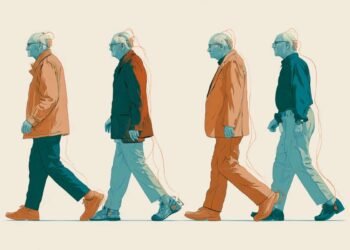
Group of seniors walking down a city street.

More and more research suggests that psychological and behavioral factors can play a role in cognitive decline as people get older. A study from the Rutgers Institute for Health, Health Care Policy and Aging Research in 2025 found that stress internalization, which is when people absorb stressful experiences and feel hopeless, is linked to faster memory decline in older Chinese Americans.

Researchers performed a secondary analysis of the Population Study of Chinese Elderly (PINE), involving 1,528 non-demented adults aged 60 and older living in the Chicago metropolitan area. Data were collected across three waves between 2011 and 2017. Cognitive outcomes were derived via principal component analysis, yielding composite scores for memory and executive functioning. Sociobehavioral variables were reduced using factor analysis into three latent constructs: stress internalization (loading on perceived stress, hopelessness, and low conscientiousness), neighborhood/community cohesion, and external stress alleviation.

READ ALSO

Dreams about loved ones can bring comfort before death

Strict Parenting Linked to Increased Deceptive Behavior in Children, Study Suggests.

Longitudinal linear mixed-effects models showed that only the stress internalization factor was robustly linked to steeper rates of memory decline, independent of demographics, acculturation, and medical comorbidities such as stroke or heart disease. For each standard deviation increase in this factor, annualized memory decline was approximately 0.024 standard deviations greater. Neighborhood cohesion and external support did not show similar associations with change in memory performance over time. No sociobehavioral factors significantly predicted longitudinal change in executive functioning in the primary models.

Older Chinese Americans, like many immigrant groups, often navigate layered stressors: language barriers, discrimination, family role shifts, and social isolation. Cultural norms emphasizing emotional restraint, collectivism, or resilience (“model minority” expectations) may further encourage internalization over open expression or help-seeking. Unaddressed, this can manifest as persistent hopelessness or rumination, potentially sustaining elevated physiological stress responses that affect brain regions critical for memory consolidation, such as the hippocampus.

ADVERTISEMENT

Lead author Michelle Chen emphasized the potential for intervention: “Stress and hopelessness may go unnoticed in aging populations, yet they play a critical role in how the brain ages. Because these feelings are modifiable, our goal is for this research to inform culturally sensitive stress-reduction interventions.”

While this study was observational, it aligns with mechanistic research linking chronic stress to:

ADVERTISEMENT
  • Dysregulation of the hypothalamic-pituitary-adrenal (HPA) axis and prolonged cortisol exposure.
  • Neuroinflammation and oxidative stress.
  • Reduced neurogenesis and synaptic plasticity in memory-related circuits.

Similar patterns appear in other populations. Proneness to negative emotions (anxiety, depression, distress) has been tied to higher risk of mild cognitive impairment. Emotional suppression or maladaptive coping styles can amplify these effects compared to problem-focused or socially supported strategies.

Although centered on Chinese Americans an understudied population in dementia research despite rapid growth—the findings underscore the importance of psychological environments in cognitive health across diverse aging societies. Migration, marginalization, or cultural expectations of stoicism appear in many contexts. Integrating mental health support into geriatric care, with attention to cultural nuances (e.g., stigma reduction, community-based programs), could complement traditional biomedical approaches focused on vascular risk, exercise, and diet.

The study has strengths in its large, community-based sample and rigorous statistical approach accounting for interrelated factors. Limitations include reliance on self-report measures, possible attrition bias (higher internalization linked to dropout), and specificity to this cohort. Causality cannot be firmly established; reverse causation or unmeasured confounders remain possible. Future work should explore biological mediators (e.g., inflammatory markers, neuroimaging), test interventions (mindfulness, cognitive-behavioral approaches adapted culturally), and replicate findings in other ethnic and immigrant groups.

ADVERTISEMENT

This research reinforces that cognitive aging is not driven solely by biology or genetics. The “silent” psychological climate in which people age how they process daily stressors and emotions matters. By identifying internalized stress and hopelessness as predictors of memory trajectories, the study opens avenues for prevention that prioritize well-being alongside physical health. Culturally attuned mental health strategies may prove valuable tools for preserving cognitive function and quality of life in growing older adult populations.

References

  • Chen MH, et al. Stress internalization is a top risk for age-associated cognitive decline among older Chinese in the U.S. The Journal of Prevention of Alzheimer’s Disease. 2025.
  • Rutgers Health. This hidden kind of stress may be damaging your memory as you age.
  • Dong X, et al. Population Study of Chinese Elderly (PINE). (Foundational cohort used in analysis)

  • Share on WhatsApp (Opens in new window) WhatsApp
  • Share on Facebook (Opens in new window) Facebook
  • Share on Reddit (Opens in new window) Reddit
  • Share on X (Opens in new window) X
  • Print (Opens in new window) Print

Did you like this read? Turn on notifications so we can let you know the second a new post goes live.

Turn off Alerts
Shibasis Rath

Shibasis Rath

"𝓒𝓸𝓷𝓷𝓮𝓬𝓽𝓲𝓷𝓰 𝓡𝓮𝓼𝓮𝓪𝓻𝓬𝓱 𝓣𝓸 𝓡𝓮𝓪𝓵𝓲𝓽𝔂" 𝓲𝓼𝓷'𝓽 𝓙𝓾𝓼𝓽 𝓪 𝓜𝓸𝓽𝓽𝓸 - 𝓘𝓽'𝓼 𝓜𝔂 𝓜𝓲𝓼𝓼𝓲𝓸𝓷

Related Posts

end-of-life dreams
HEALTH SCIENCE

Dreams about loved ones can bring comfort before death

April 28, 2026
Strict Parenting Linked to Increased Deceptive Behavior in Children, Study Suggests.
PSYCHOLOGY

Strict Parenting Linked to Increased Deceptive Behavior in Children, Study Suggests.

April 25, 2026
Chimpanzees of the Ngogo community in Uganda divided into two groups that clashed aggressively with each other.PHOTO: A. A. SANDEL ET AL.
ECOLOGY

Chimpanzee Group Split Turns Violent in Uganda Study

April 27, 2026
fuel your passion text
PSYCHOLOGY

77% of Workers Are Disengaged. Research Points to Why “Follow Your Passion” Makes It Worse

April 27, 2026
a white toy with a black nose
SCIENCE FEATURED

How Human And AI Judgements Differs

April 20, 2026
concert photos
NEUROSCIENCE

When Brain Waves Sync More Tightly With Live Music

April 27, 2026

Leave a Reply Cancel reply

Your email address will not be published. Required fields are marked *

I agree to the Terms & Conditions and Privacy Policy.

POPULAR NEWS

Yelling Isn’t Just Yelling: How a Hostile Home Rewires a Child’s Brain for Constant Alert

Yelling Isn’t Just Yelling: How a Hostile Home Rewires a Child’s Brain for Constant Alert

by Shibasis Rath
March 9, 2026
0

To a parent in the heat of the moment, a raised voice may feel like simple frustration. To a child...

a group of gen Z kids walking down a street

Is Gen Z the First Generation Less Intelligent Than Their Parents?

by Shibasis Rath
March 14, 2026
0

Gen Z intelligence decline is emerging as a serious concern among neuroscientists and education researchers. For over a century, each...

Whole Brain Emulation Achieved: Scientists Run a Fruit Fly Brain in Simulation

by Shibasis Rath
March 9, 2026
0

Scientists have copied an entire biological brain neuron by neuron and synapse by synapse and made it control a simulated...

Male G-spot isn’t where we thought it was

Male G-Spot Found: New Study Identifies Frenular Delta as Penis’s Most Sensitive Area

by Staff Writer
April 27, 2026
0

The study found that human penile innervation develops in distinct fetal stages and shows region-specific patterns in adults, with the...

Group of seniors walking down a city street.

Researchers Identify a Hidden Memory Risk Hiding in Plain Sight for Older Adults

by Shibasis Rath
April 30, 2026
0

More and more research suggests that psychological and behavioral factors can play a role in cognitive decline as people get...

EDITOR CHOICE‘S

  • All
  • NEWS
  • SPOTLIGHTS
Bluebuck antelope with silvery-blue coat and curved horns running across open South African grassland, representing extinct species targeted for de-extinction by scientists

Colossal Biosciences Announces De-Extinction of Bluebuck Antelope, 226 Years After Its Extinction

by Staff Writer
April 30, 2026
0

It has been 226 years since humans last saw a living bluebuck, an elegant antelope species native to South Africa...

Group of seniors walking down a city street.

Researchers Identify a Hidden Memory Risk Hiding in Plain Sight for Older Adults

by Shibasis Rath
April 30, 2026
0

More and more research suggests that psychological and behavioral factors can play a role in cognitive decline as people get...

Why Scientists Are Turning to Fish Scales to Restore Human Vision

Why Scientists Are Turning to Fish Scales to Restore Human Vision

by Shibasis Rath
April 30, 2026
0

Researchers at the University of Granada tested decellularized fish scales. They used these scales to create bioartificial corneas. Laboratory and...

Rare Peacock Tarantula Image

Critically Endangered Blue Tarantula Surveyed in India’s Largest Tiger Reserve

by Shibasis Rath
April 30, 2026
0

A new conservation survey has begun for the Peacock Tarantula (Poecilotheria metallica) inside the Nagarjunasagar Srisailam Tiger Reserve (NSTR). This...

ADVERTISEMENT

RathBiotaClan – RBC

RathBiotaClan – Connecting Research To Reality

Your trusted source for life science news, biology research & discoveries. Covering neuroscience, genetics, ecology, and more — connecting research to reality.

Privacy Policies

Shipping Policy

Cancellation & Refund Policy

Pricing Details

Contact Us

Latest Posts

  • Colossal Biosciences Announces De-Extinction of Bluebuck Antelope, 226 Years After Its Extinction
  • Researchers Identify a Hidden Memory Risk Hiding in Plain Sight for Older Adults
  • Why Scientists Are Turning to Fish Scales to Restore Human Vision
  • Critically Endangered Blue Tarantula Surveyed in India’s Largest Tiger Reserve

SHIBASIS RATH

Contact Mail

rathbiotaclan@gmail.com

No Result
View All Result
MSME (Udyam) Certified Science Platform
Govt. of India

Get Us On PlayStore

playstore app for rathbiotaclan
  • About Us
  • Advertise With Us
  • Cancellation and Refund Policy
  • Contact Us
  • Contribute
  • Editorial Standards
  • Home
  • Pricing Details
  • Privacy Policies
  • Shipping Policy
  • Terms & Conditions

© 2026 RathBiotaClan. All rights reserved.

Welcome Back!

Sign In with Google
OR

Login to your account below

Forgotten Password? Sign Up

Create New Account!

Sign Up with Google
OR

Fill the forms below to register

*By registering into our website, you agree to the Terms & Conditions and Privacy Policy.
All fields are required. Log In

Retrieve your password

Please enter your username or email address to reset your password.

Log In
No Result
View All Result
  • HOME
  • HEALTH SCIENCE
    • NEUROSCIENCE
    • PHYSIOLOGY
    • IMMUNOLOGY
    • CANCER
  • DISCOVERIES
    • SPOTLIGHTS
    • STUDENT PORTAL
    • SCIENCE FEATURED
  • MOLECULAR BIOLOGY
    • GENETICS
    • BIOTECHNOLOGY
    • BIOINFORMATICS
    • BIOCHEMISTRY
    • BIOPHYSICS
  • ZOOLOGY & ECOLOGY
    • ENVIRONMENTAL SCIENCE
    • ECOLOGY
    • EVOLUTION
  • MICRO & PLANT SCIENCE
    • MICROBIOLOGY
    • CELL BIOLOGY
    • DEVELOPMENTAL BIOLOGY
  • PSYCHOLOGY
  • E STORE
  • Login
  • Sign Up
SAVED POSTS

© 2026 RathBiotaClan. All rights reserved.

This website uses cookies. By continuing to use this website you are giving consent to cookies being used. Visit our Privacy and Cookie Policy.
Are you sure want to unlock this post?
Unlock left : 0
Are you sure want to cancel subscription?