





Two recent Science studies challenge an old assumption. They show that mammalian regenerative failure does not stem from genetics alone. Instead, it depends heavily on the wound environment. Key factors include the extracellular matrix composition and local oxygen levels.
Mammals typically heal wounds by forming scar tissue. They rarely replace lost structures with functional ones. This lack of regeneration causes major clinical problems. Limb loss and severe scarring heavily impact patients. Scientists long knew that fish and salamanders can regenerate entire limbs. Mammals simply cannot. Experts previously assumed strict genetic limits caused this difference.
However, recent evidence challenges this idea. Mammalian genes might not inherently block regeneration. Instead, the default wound environment might actively trigger scarring programs. Altering this environment could open new doors for therapy development. The two new studies provide strong experimental evidence for this idea.
Mui and colleagues studied adult mice. These mice can regenerate toe tips. However, they cannot regenerate tissue closer to the paw. The team compared tissues across the intact digits. They discovered that regenerative regions feel softer. These areas also hold more hyaluronic acid. This extracellular matrix component aids cell migration and reduces inflammation. Fibrotic regions, conversely, lack this environment.
The researchers then tested this link directly. They stabilized hyaluronic acid in non-regenerating areas. They actively prevented the body from removing it. This intervention reduced scarring and boosted bone repair. Next, they depleted hyaluronic acid in normally regenerative areas. This action completely stopped regeneration and caused scarring instead.
The team also found high levels of the HAPLN1 protein. This protein stabilizes hyaluronic acid inside the blastema. The blastema holds the progenitor cells that build new tissue. The researchers forced non-regenerative regions to produce extra HAPLN1. Consequently, hyaluronic acid built up and scarring decreased. Bone growth even extended past the original amputation site. Commentary authors highlighted the clinical relevance of these findings. Doctors already use hyaluronic acid hydrogels for chronic wounds. This new research identifies HAPLN1 as a promising new therapeutic target.
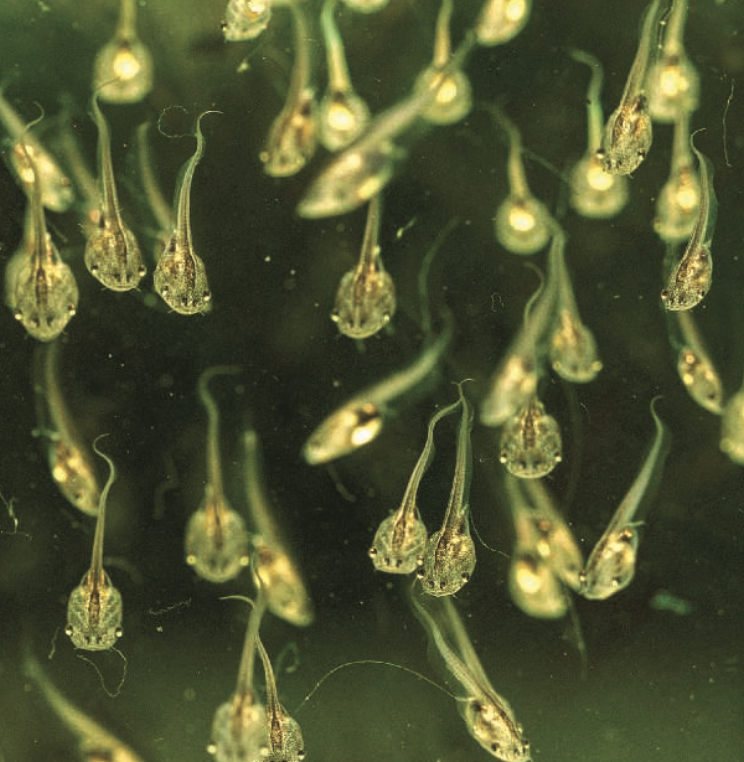
Tsissios and colleagues took a different approach. They compared two distinct animal models. They used highly regenerative African clawed frog tadpoles. They compared these to non-regenerative embryonic mouse limbs. The team cultured both systems outside the body.
They exposed half the mouse limbs to normal atmospheric oxygen. They submerged the other half to mimic low-oxygen environments. Submerging the tadpoles replicated their natural, low-oxygen habitats. Mouse limbs failed to close their wounds under normal oxygen. However, the researchers saw a major change under low oxygen. When they lowered the oxygen levels, mouse wound closure improved dramatically.
Further tests revealed exactly how low oxygen helps. It triggered cell growth and cell movement. It also stabilized HIF1A, a crucial oxygen-sensing transcription factor. Blocking HIF1A quickly stopped skin cell movement in both species. The researchers noted a key difference between the species, however. The frog’s HIF1A remains much more stable than the mouse’s version. This stability lets frogs activate genes better in low oxygen. High oxygen, therefore, may uniquely harm mammalian regeneration.
The team also studied actin, a protein guiding cell movement. Normal oxygen caused actin to clump near the epithelial cell base. Low oxygen prevented this clumping. This change mirrored the healthy cell structure seen in regenerating frogs. A regeneration-linked protein called YAP1 also activated during this shift. Finally, the team artificially activated YAP1 in normal-oxygen mouse tissues. This single action successfully triggered wound healing.
Low oxygen also caused major epigenetic shifts. It opened up access to specific regeneration genes. It simultaneously stripped away repressive chemical markers. This combination awakened dormant regenerative genes in the mouse tissue. Low oxygen did not directly force gene expression. Instead, it changed the physical chromatin landscape. This landscape shift simply allowed regenerative genes to turn on. The researchers achieved another major breakthrough. They successfully induced apical ectodermal ridge markers in mouse tissues. This specialized cell group drives actual limb outgrowth. However, this induction only worked under strict low-oxygen conditions.
Both research teams reached a similar conclusion. Regeneration relies on more than just fixed genetics. It depends heavily on the extracellular environment and epigenetics. Oxygen sensing plays a massive role as well.
Missing genes do not fully explain mammalian regenerative failure. The physical wound environment actively suppresses gene expression in progenitor cells. Mammals likely need a two-pronged approach for true regeneration. They need specific regenerative gene expression. They also require a modified local tissue niche. Reindeer perfectly illustrate this localized healing response. They can regenerate antler skin without any scarring. However, wounds on their backs still heal with thick fibrosis.
Both studies relied entirely on animal models. Neither team tested human tissues. Therefore, doctors cannot directly apply these findings to human patients yet. Furthermore, the explant system keeps limbs outside the body. This setup cannot perfectly replicate living body conditions.
True limb outgrowth needs very specific cell populations. Simple wound healing does not produce these specialized cells. The researchers only partially addressed this hurdle. They successfully induced markers for these cells, but nothing more. Commentary authors outlined several crucial steps for future research. Scientists must examine the spatial organization of local wound niches. They need to study the role of passing immune cells. Finally, they must investigate long-range molecular signals from the wider body. Neither of these current studies examined those specific factors.
Reference:
Paoli, J. C., & Whited, J. L. (2026). Awakening latent regeneration in mammals. Science, 392(6680), 149–150.
Mui, B. W. H., et al. (2026). Science, 392, eady3136.
Tsissios, G., et al. (2026). Science, 392, eadw8526.