





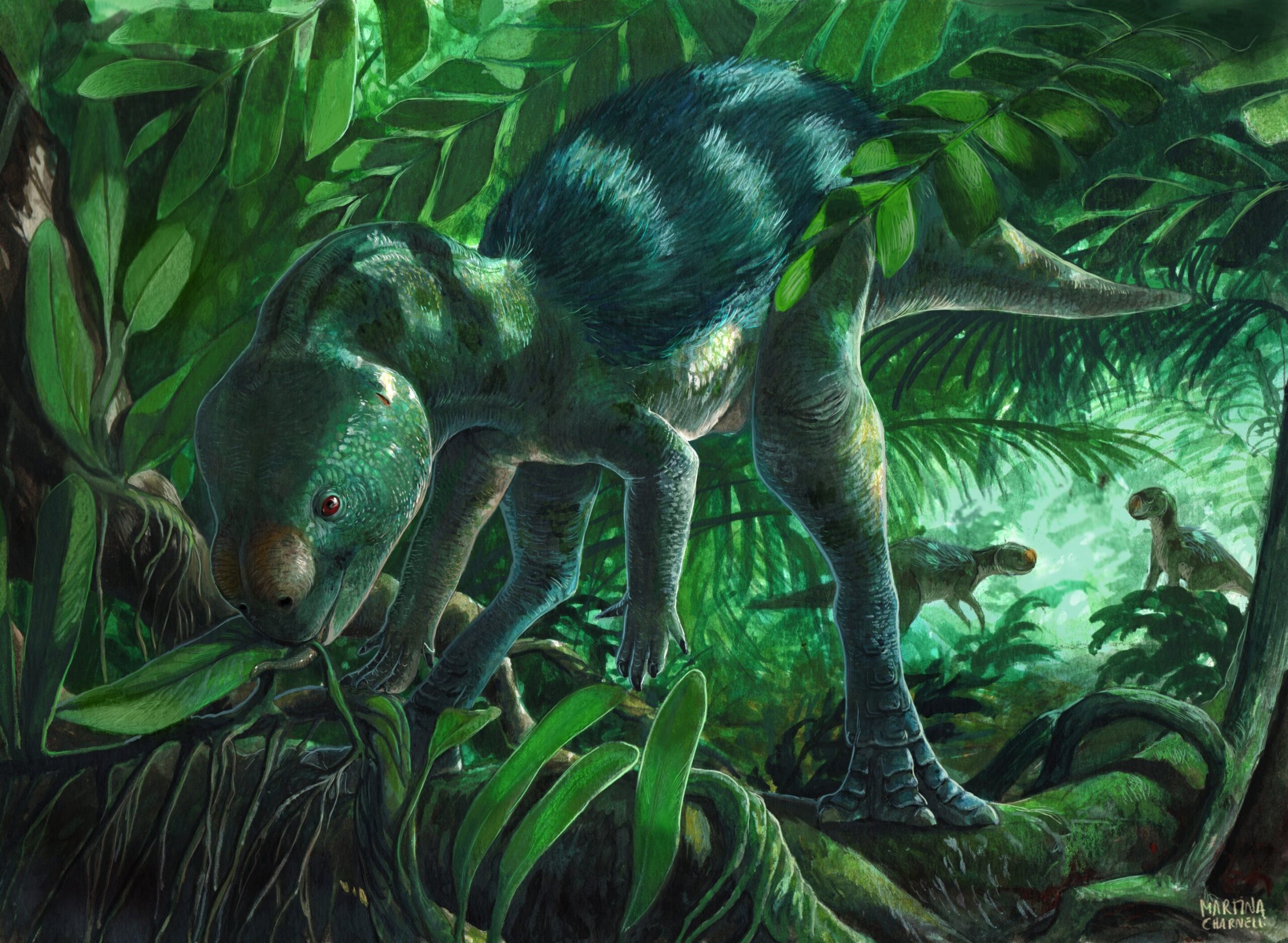
Imagine stumbling upon a fossil small enough to fit in your hand, yet powerful enough to rewrite part of the dinosaur story. Meet Foskeia pelendonum, a pint-sized plant-eater and Early Cretaceous ornithopod that fills a crucial gap in our understanding of dinosaur evolution.
The species is described in a new study published in Papers in Palaeontology. The fossils come from rocks near Salas de los Infantes in Burgos Province, northern Spain. At just half a meter long (about 1.6 feet), Foskeia was roughly the size of a large chicken. That makes it one of the smallest ornithopods—bird-hipped, plant-eating dinosaurs ever discovered.
The remains include scattered bones and teeth from several individuals. Researchers unearthed them from ancient river floodplains in the Cameros Basin, dated to about 125 million years ago. Although the fossils are fragmentary, they preserve telling anatomical details.
A team led by paleontologist Paul-Emile Dieudonné identified slender limbs built for quick bursts of speed. The teeth show adaptations for grinding tough vegetation. The bones also suggest a shift in posture with age. Juveniles moved on four legs, while adults became more upright and bipedal.
What truly sets Foskeia apart is its position on the dinosaur family tree. It belongs to the rhabdodontomorphs, a group previously known mainly from larger, later species such as Rhabdodon and Zalmoxes. Those dinosaurs lived on European islands during the Late Cretaceous, around 70–80 million years ago.

Many of these later forms showed signs of island dwarfism. Isolated habitats pushed them toward smaller body sizes. Foskeia, however, tells a different story.
This discovery pushes the origin of rhabdodontomorphs back tens of millions of years into the Early Cretaceous. It suggests the group first evolved and diversified in more mainland-like environments. At the time, Europe was fragmented but not yet dominated by island ecosystems. Foskeia helps explain how these dinosaurs spread and adapted before some lineages became isolated.
During Foskeia’s lifetime, the Burgos region was a lush floodplain. Ferns and conifers covered the landscape, and rivers cut through the terrain. Small herbivores like Foskeia likely browsed low-growing plants. To survive, they probably relied on speed to escape predators such as spinosaurids and other theropods found in nearby fossil sites.
The name Foskeia pelendonum honors two legacies. It nods to the collaborative spirit of paleontological fieldwork and to the ancient Pelendones people who once inhabited the region.
This find shows how even tiny, incomplete fossils can deliver outsized insights. Foskeia reshapes our view of ornithischian evolution and highlights Spain’s rich Cretaceous fossil record. As paleontologists continue to dig deeper, discoveries like this remind us that small secrets can still change the big picture.
Reference
Papers in Palaeontology (2026). DOI: 10.1002/spp2.70057