



Monday, May 18, 2026
SAVED POSTS
  • Login
  • Register
RathBiotaClan
No Result
View All Result
  • HOME
  • HEALTH SCIENCE

    TRENDING ON HEALTH (TOP)

    Cycling Linked to Lower Dementia Risk in Study of Nearly 480,000 Adults

    First oral GLP-1 weight-loss pill approved a new era for accessible treatment

    Chewing gum releases thousands of microplastic particles directly into your mouth with every piece you chew

    Single-Cell Study of Over a Million Immune Cells Reveals Why Women Are More Prone to Autoimmune Disease

    NOW ON AIR (RBC)

    A new study has found that men’s brains shrink faster than women’s as they age.
    NEUROSCIENCE

    12,638 MRI Scans Confirm Men’s Brains Shrink Faster in PNAS Study

    May 14, 2026
    ENVIRONMENTAL SCIENCE

    Volcanic Eruptions Can Destroy Their Own Methane — Tonga’s Plume Shows How

    May 13, 2026
    3 men standing on rocky shore during daytime
    MOLECULAR BIOLOGY

    For Future Space Missions, Molecular Ecology Finally Offers a Clear Biosignature Target

    May 12, 2026
    Babies Yawn in the Womb
    DEVELOPMENTAL BIOLOGY

    Scientists Say Babies May Learn to Yawn Before Birth

    May 11, 2026
  • NEUROSCIENCE
    • PHYSIOLOGY
    • IMMUNOLOGY
    • CANCER
  • DISCOVERIES
    • SPOTLIGHTS
    • STUDENT PORTAL
    • SCIENCE FEATURED
  • MOLECULAR BIOLOGY
    • GENETICS
    • BIOTECHNOLOGY
    • BIOINFORMATICS
    • BIOCHEMISTRY
    • BIOPHYSICS
  • ZOOLOGY & ECOLOGY
    • ENVIRONMENTAL SCIENCE
    • ECOLOGY
    • EVOLUTION
  • MICRO & PLANT SCIENCE
    • MICROBIOLOGY
    • CELL BIOLOGY
    • DEVELOPMENTAL BIOLOGY
  • PSYCHOLOGY
RathBiotaClan
RathBiotaClan
No Result
View All Result
Home EVOLUTION

The Rise and Fall of Dinosaurs: Journey Through 170 Million Years

Shibasis Rath by Shibasis Rath
October 3, 2024
in EVOLUTION, SCIENCE FEATURED, SPOTLIGHTS, ZOOLOGY
Reading Time: 7 mins read
0
A A
0
brown dinosaur on brown sand

About 100 million years ago, Earth looked completely different. With no humans, some scary animals were ruling over this planet. Dinosaurs. Dinosaurs were so big, that they were taller than buildings. With jaws so strong, that they could have crushed your bones within a second. They were so fast, that they ran at around the speed of 90 km/hr. They were truly fear-arousing creatures. They ruled over Earth for more than 170 million years.

dinosaur with open mouth beside buildings still selective focus photography of

But then one day, something happened that completely wiped them off the planet. What exactly happened? And how? Come, let’s understand this in today’s blog.“As it gets closer to the planet, Earth’s gravitational pull gets stronger.” “They now can’t see what’s headed their way.” Friends, the word ‘Dinosaur’ originated from Greek. From the words Denios and Sauros. Denios means Terrible. And Sauros means Lizard. A terrible lizard. This literally is the meaning of the word dinosaur. The first time the word “dinosaur” coined was in 1841. When the fossil of a dinosaur was discovered in that time, the British scientist named Richard Owen used the term dinosaur. People at that time did not have much more knowledge about dinosaurs or their appearance. So the initial drawings of how dinosaurs are quite different from now a days. It was among the earliest fossils found.
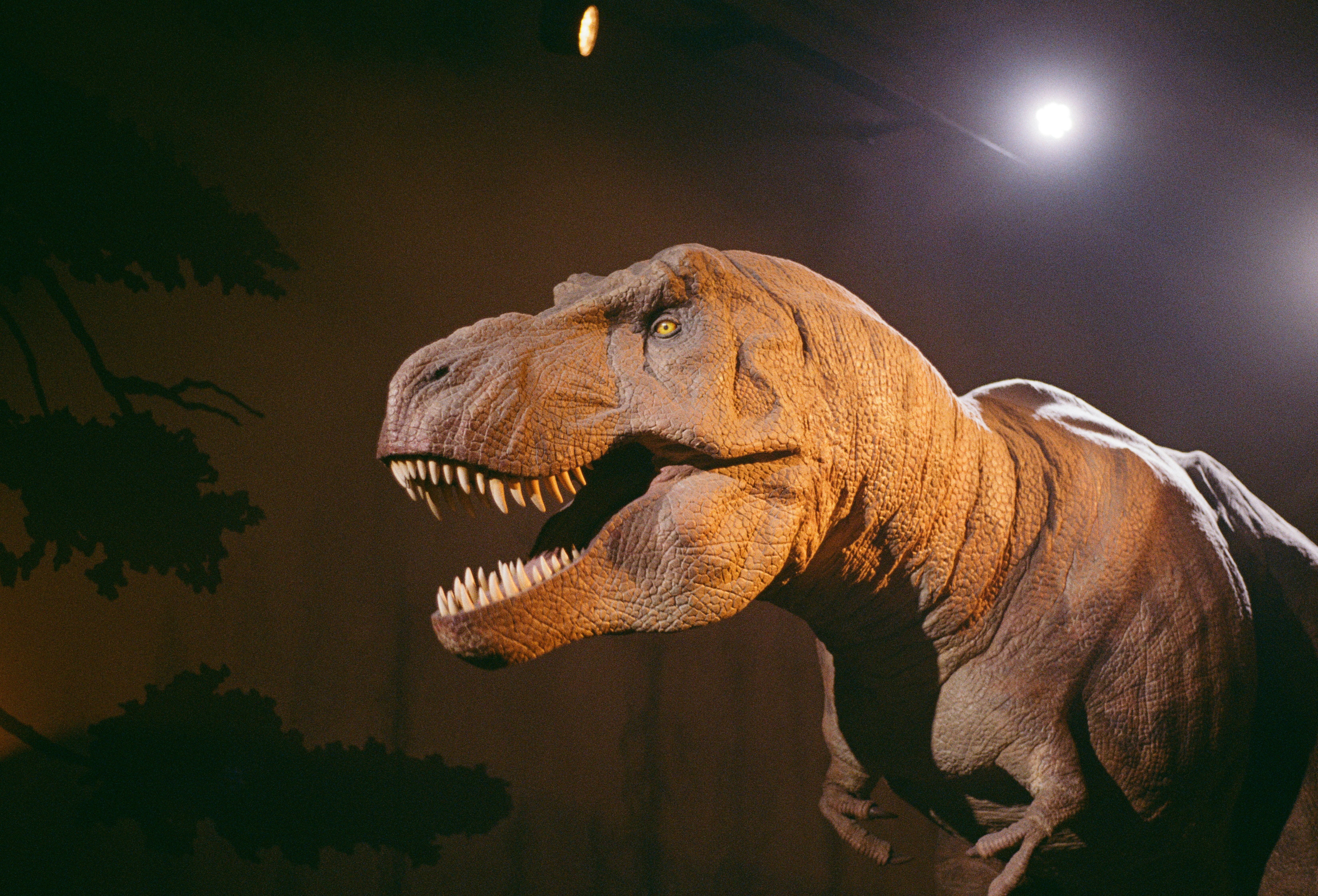
a dinosaur with its mouth open

Decades later, as the researchers discovered more information about them, the drawings were modified, trying to make them more realistic. So the depictions look like this now. Dinosaur fossils have been found by palaeontologists all over the world now. Currently, over 10,000 fossil specie of dinosaurs were determined. More than 900 types are identified, and perhaps you are excited to find more fossils. What is surprising though, is from 2003 up to 2022, about 45 new species of dinosaurs are said to be found each year. The list does not seem to be completed by palaeontologists yet. Look at the photos of the new species of dinosaurs discovered last year. Of them, this is a bizarre dinosaur discovered in Chile, with a weapon that looks like a blade on its tail and a beak for a mouth. It was named Stegouros Elengassen.
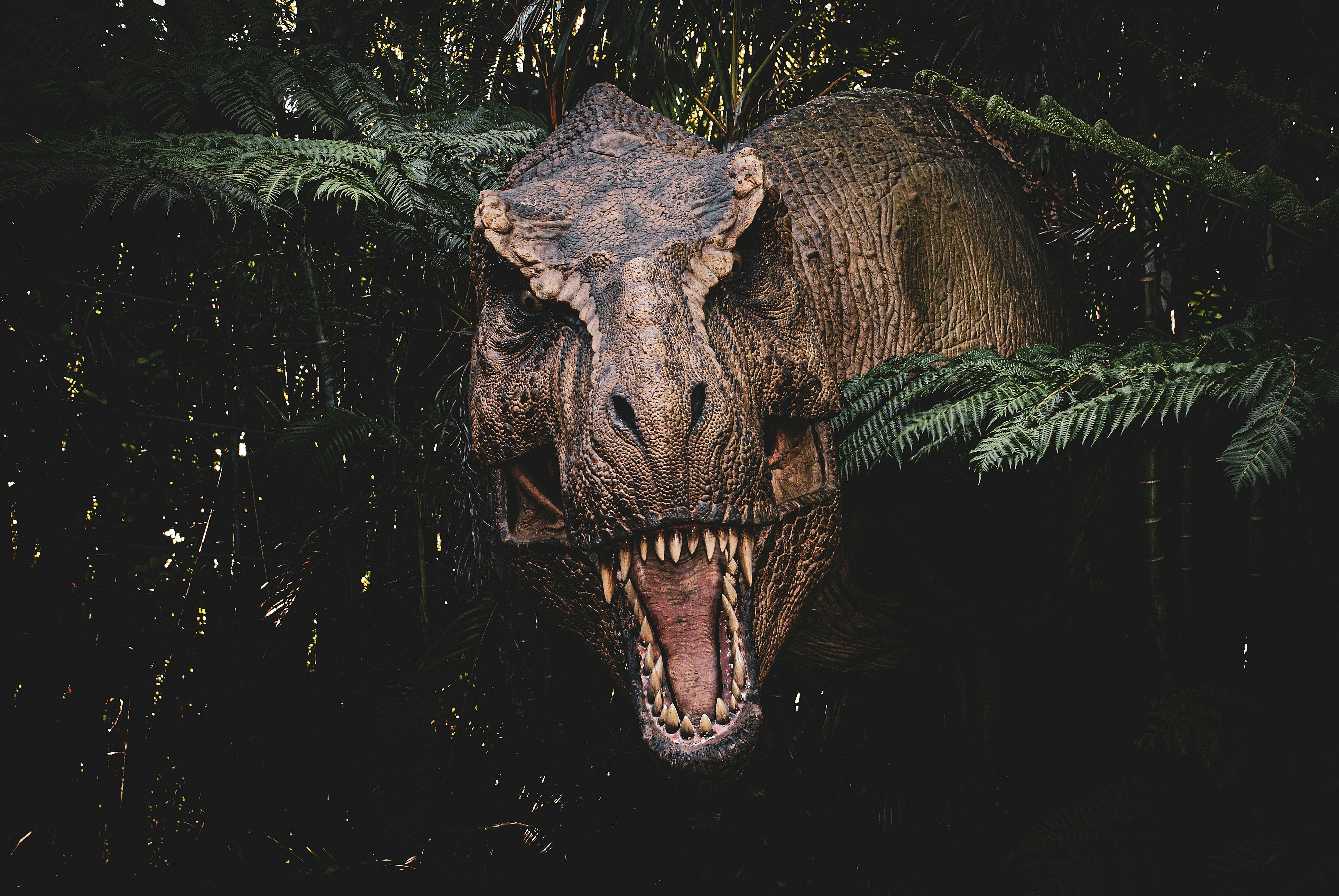
a large dinosaur with its mouth open in a forest

Overall, we know a lot about dinosaurs today. But come, let’s start this story at the beginning. Let’s dive into the past. Millions of years ago. Scientists estimate that the first dinosaur emerged about 230-240 million years ago because the oldest dinosaur fossils that we have found till now are from 231.4 million years ago in Africa.
ADVERTISEMENT
gray elephant statue on green grass field during daytime

Back then, Earth was much different than it is today. The continents that you see now, Asia, Africa, Australia, Europe, were all joined together. There was only one supercontinent that we call Pangaea. Scientists believe that Pangaea looked somewhat like this. You can even see the placement of the continents that we know.

READ ALSO

Volcanic Eruptions Can Destroy Their Own Methane — Tonga’s Plume Shows How

Scientists Say Babies May Learn to Yawn Before Birth

Then the climate of Earth was dry and arid with only a little rain. This time period has been named the Triassic Period, the era when the dinosaurs had started emerging. Dinosaurs were slowly populating the Earth due to evolution. The dinosaurs of this era aren’t anything like the ones you imagine. They were quite small in size. The common dinosaurs of the time were generally around 2 meters long only.

ADVERTISEMENT

For example, Eoraptor was a dinosaur that existed in that period. In fact, this dinosaur is known as the ancestor of other dinosaurs. The dominant animals of the era were giant reptiles. Some of these reptiles looked cute, like this one, that’s believed to be the ancestor of all turtles.

With time, Earth started changing. 201 million years ago, the Triassic period ended when Earth’s climate changed suddenly. The Pangaea started breaking apart. Although I am using the word ‘suddenly,’ it didn’t happen in a day or two. It was relatively sudden. In the time scale of millions of years, it happened gradually over thousands of years.
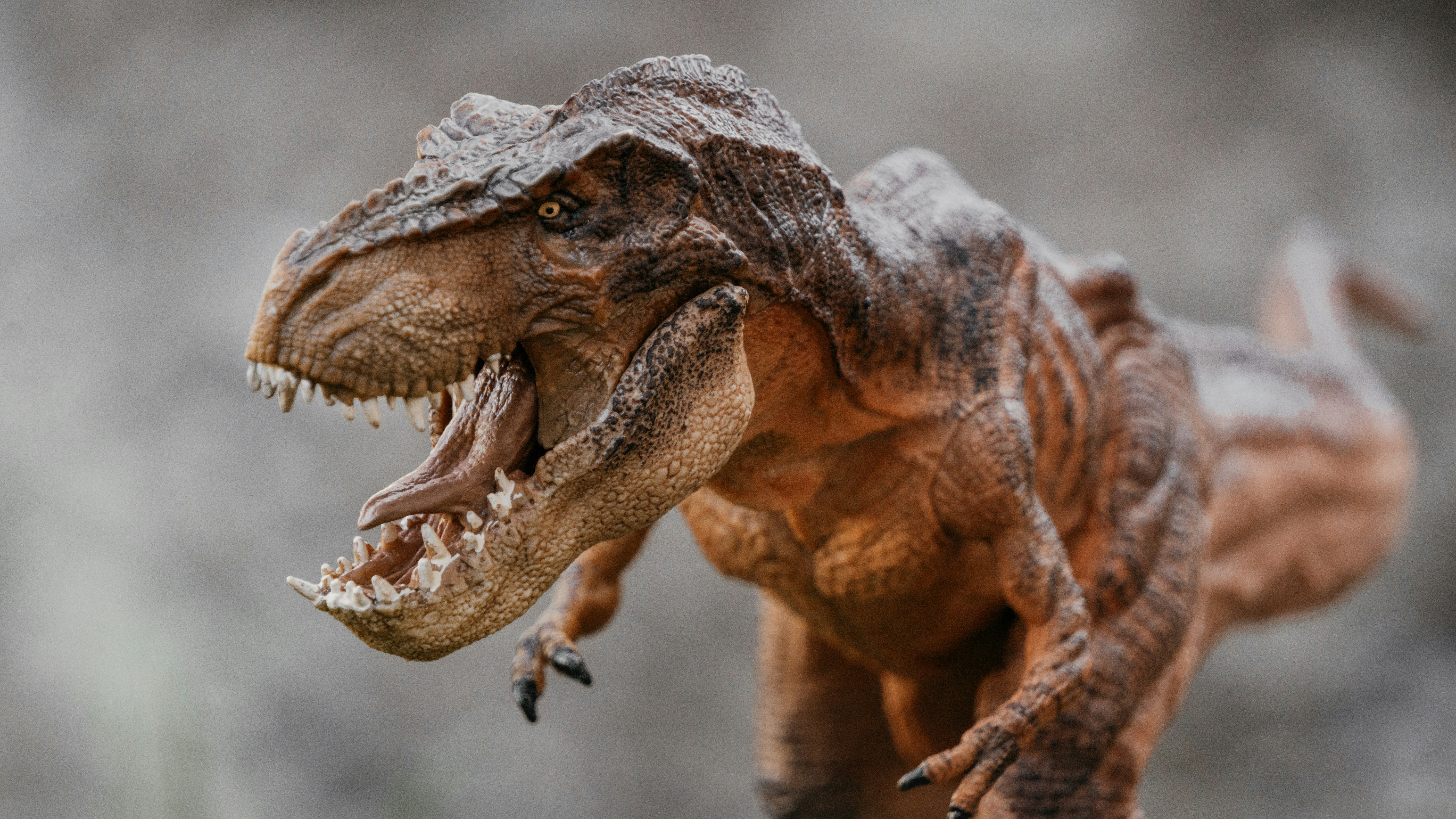
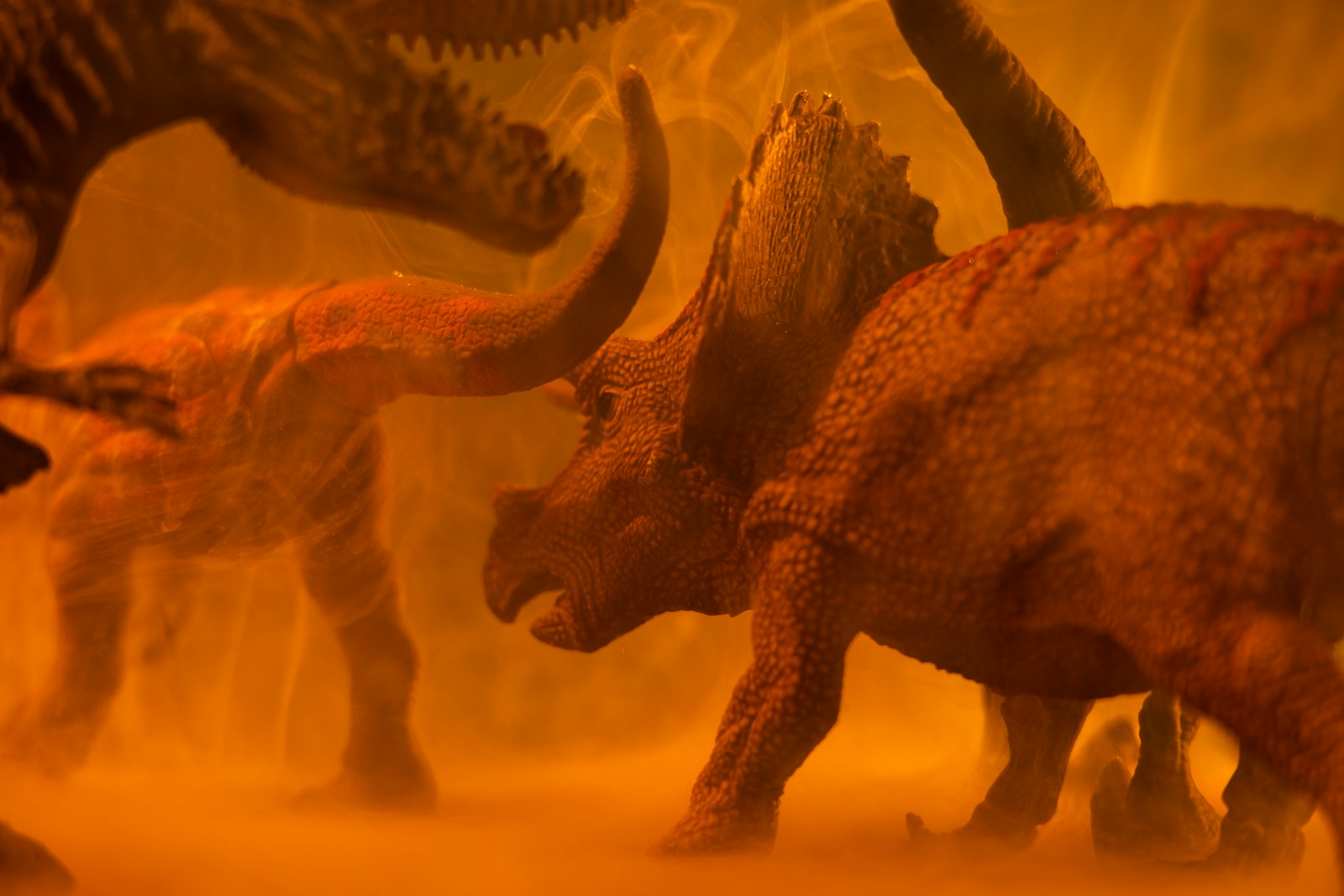
a close up of a toy dinosaur with its mouth open

The supercontinent cracked. Enormous volcanic eruptions were going both on and around the fractures. Due to these enormous scale volcanic eruptions, enormous mounts of carbon dioxide and sulphur dioxide were released into the atmosphere. This led to extreme global warming. In return, when the sulphur dioxides and aerosols entered the atmosphere, it made the sun dim and cooler. Acidification of the oceans began with the introduction of carbon dioxide and sulphur dioxide in water. The acidity of the ocean water increased. The climate was changing rapidly, and survival became difficult for the animals that existed. Most reptiles and other species back then were cold-blooded animals. They couldn’t withstand the temperature changes.

ADVERTISEMENT

But the dinosaurs were warm-blooded like human beings. It was easier for the dinosaurs to tolerate the changes in temperature. The volcanic eruptions and climate changes continues for about 600,000 years. Because of this nearly all other species became extinct. The only animals remaining on Earth were the dinosaurs, crocodiles, turtles, and early mammals. This event is known as the Triassic-Jurassic Extinction Event.As I said, after this, the Triassic period ended and the Jurassic period began. If you hear this name, you might know which movies are inspired by this name of Jurassic Park films. This Jurassic refers to the name for this Jurassic Period. The Jurassic period existed from 201 million ago to 145 million years ago. In this time, dinosaurs emerged in Earth as the most powerful species.

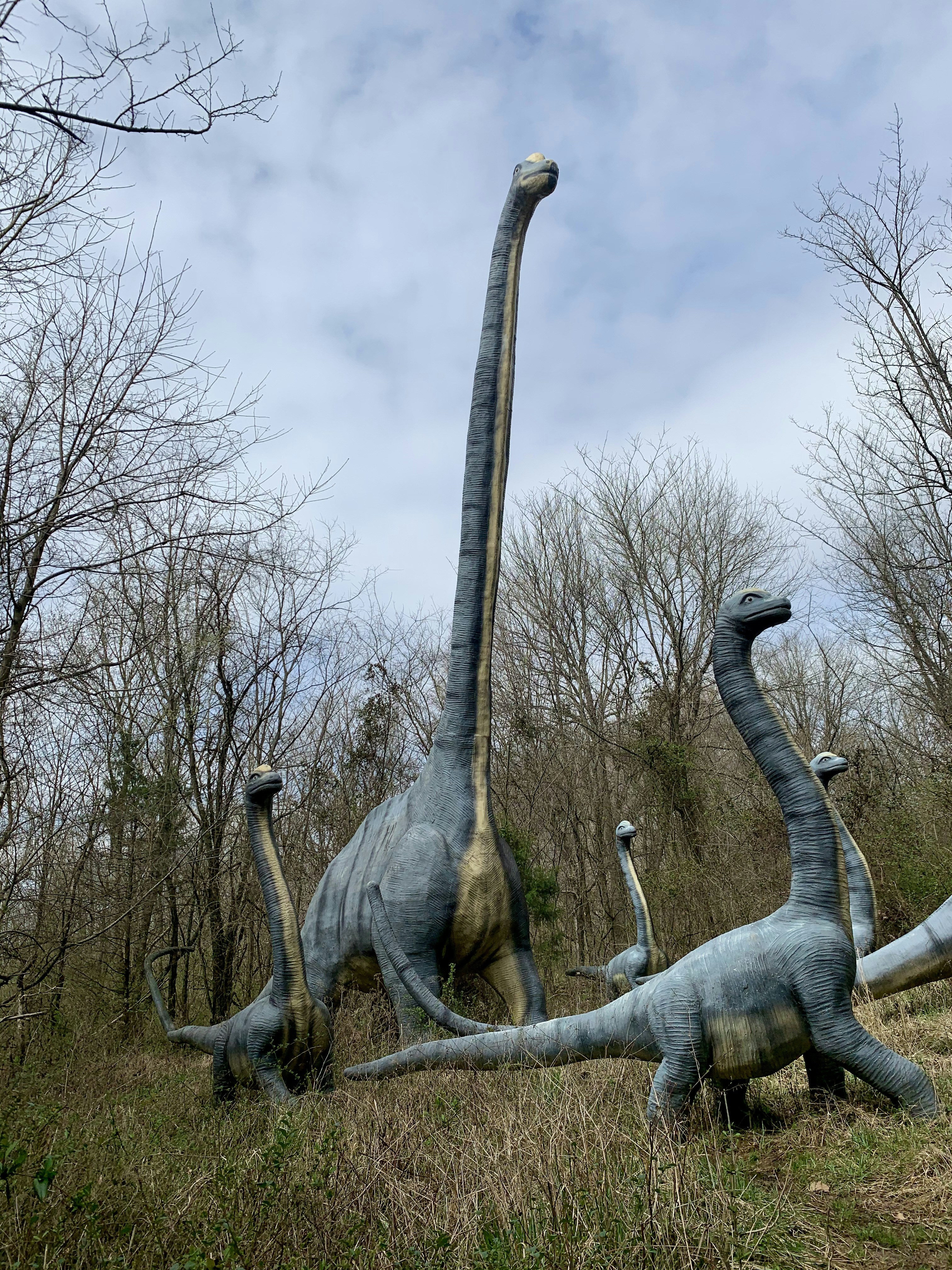
Over time, some of them became rather large in size, such as some of the first Titanosaurus. They lived around 160 million years ago. Each of them weighed up to 15,000 kg and could be up to 15 meters long. Some other iconic dinosaurs of the time were the Brachiosaurus, mass herbivore from the Jurassic forest, with heights reaching to 13 meters above other living things. These gentle giants thrived because of the luscious vegetation which warm and humid climate offered during the period of the Jurassic.

There was another dinosaur of this epoch-the infamous Stegosaurus, recognizable for its distinctive back plates and spiked tail, used as an element for defense. Though impressive, it has been proved to be a creature that fed on plants and roamed quite peacefully along the banks of what is now North America.

But, again, time kept passing. The continents kept moving apart step by step, slowly like their actual positions today. Jurassic ended and Cretaceous began, holding ground from 145 to 66 million years back. In that epoch, some of the most feared and magnificent predators roamed the earth: the Tyrannosaurus rex, the Velociraptor, and the Triceratops.

Dinosaurs proved to be dominant during the time of Cretaceous, they learned how to grow up and adapt to absolutely every environment. They maintained their dominance over the land and other beasts, with flying reptiles like Pterosaurs crowning the sky and marine reptiles such as the Mosasaurus, Plesiosaurs ruling over the oceans.

But then, approximately 66 million years ago, it all went to hell. A 10 kilometer diameter asteroid hit Earth near what is now the Yucatán Peninsula in Mexico. The impact marked off a catastrophic chain of events, throwing wildfires and tsunamis and spewing forth a “nuclear winter,” with dust and debris blocking the sun for months or even years.

The extinction that came along as a consequence of the Cretaceous-Paleogene saw the extinction of 75% of the species present on earth, and this was including all non-avian dinosaurs. There existed only small, changeable creatures, including mammals, birds, and reptiles. After the end of the era with dinosaurs, time to those mammals came ahead, and finally humans emerged.

So it was with the reign of the dinosaurs, that lasted over 170 million years. Their fossils remind us of this world long gone, where these incredible creatures dominated Earth’s land.

And that’s all about dinosaurs. Thanks for your company in this journey through the ages!

  • Share on WhatsApp (Opens in new window) WhatsApp
  • Share on Facebook (Opens in new window) Facebook
  • Share on Reddit (Opens in new window) Reddit
  • Share on X (Opens in new window) X
  • Print (Opens in new window) Print
Shibasis Rath

Shibasis Rath

"𝓒𝓸𝓷𝓷𝓮𝓬𝓽𝓲𝓷𝓰 𝓡𝓮𝓼𝓮𝓪𝓻𝓬𝓱 𝓣𝓸 𝓡𝓮𝓪𝓵𝓲𝓽𝔂" 𝓲𝓼𝓷'𝓽 𝓙𝓾𝓼𝓽 𝓪 𝓜𝓸𝓽𝓽𝓸 - 𝓘𝓽'𝓼 𝓜𝔂 𝓜𝓲𝓼𝓼𝓲𝓸𝓷

Related Posts

Volcanic Eruptions Can Destroy Their Own Methane — Tonga’s Plume Shows How
ENVIRONMENTAL SCIENCE

Volcanic Eruptions Can Destroy Their Own Methane — Tonga’s Plume Shows How

May 13, 2026
Babies Yawn in the Womb
DEVELOPMENTAL BIOLOGY

Scientists Say Babies May Learn to Yawn Before Birth

May 11, 2026
man riding bicycle on top of mountain
HEALTH SCIENCE

Cycling Linked to Lower Dementia Risk in Study of Nearly 480,000 Adults

May 10, 2026

POPULAR NEWS

Chewing gum releases thousands of microplastic particles directly into your mouth with every piece you chew

Chewing gum releases thousands of microplastic particles directly into your mouth with every piece you chew

by Shibasis Rath
May 8, 2026
0

Microplastics are turning up in places researchers never expected: deep-sea sediments, Arctic ice, and human blood. Now, a UCLA pilot...

Yelling Isn’t Just Yelling: How a Hostile Home Rewires a Child’s Brain for Constant Alert

Yelling Isn’t Just Yelling: How a Hostile Home Rewires a Child’s Brain for Constant Alert

by Shibasis Rath
March 8, 2026
0

To a parent in the heat of the moment, a raised voice may feel like simple frustration. To a child...

a group of gen Z kids walking down a street

Is Gen Z the First Generation Less Intelligent Than Their Parents?

by Shibasis Rath
February 5, 2026
0

Gen Z intelligence decline is emerging as a serious concern among neuroscientists and education researchers. For over a century, each...

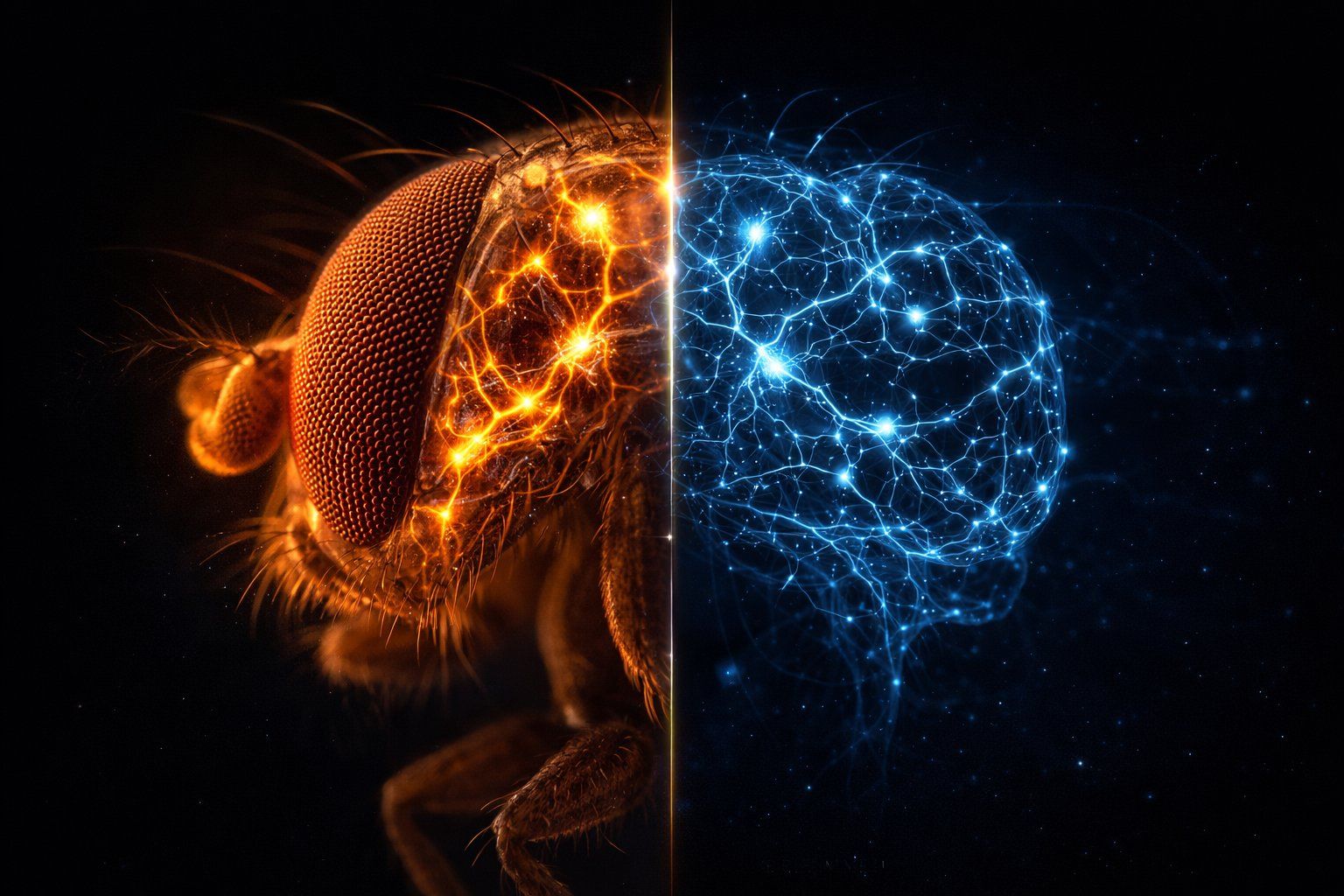
Whole Brain Emulation Achieved: Scientists Run a Fruit Fly Brain in Simulation

by Shibasis Rath
March 9, 2026
0

Scientists have copied an entire biological brain neuron by neuron and synapse by synapse and made it control a simulated...

Global Sperm Counts Have Dropped 50% in 50 Years Now 128 Men Are Racing Their Way to a $100,000 Prize to Prove the Point

Global Sperm Counts Have Dropped 50% in 50 Years Now 128 Men Are Racing Their Way to a $100,000 Prize to Prove the Point

by Staff Writer
May 5, 2026
0

A group of technology entrepreneurs is staging a competitive event in San Francisco in which semen samples from 128 men...

EDITOR CHOICE‘S

  • All
  • NEWS
  • SPOTLIGHTS
A new study has found that men’s brains shrink faster than women’s as they age.

12,638 MRI Scans Confirm Men’s Brains Shrink Faster in PNAS Study

by Staff Writer
May 14, 2026
0

A large-scale analysis of brain scans taken over time has found that men's brains shrink faster than women's across a...

Volcanic Eruptions Can Destroy Their Own Methane — Tonga’s Plume Shows How

Volcanic Eruptions Can Destroy Their Own Methane — Tonga’s Plume Shows How

by Shibasis Rath
May 13, 2026
0

A study published in Nature Communications analyzed the Hunga Tonga-Hunga Ha'apai volcano eruption's impact on methane in the atmosphere. It...

3 men standing on rocky shore during daytime

For Future Space Missions, Molecular Ecology Finally Offers a Clear Biosignature Target

by Shibasis Rath
May 12, 2026
0

When the next generation of probes scoops up dust from the icy shell of Europa or the surface of Mars,...

Babies Yawn in the Womb

Scientists Say Babies May Learn to Yawn Before Birth

by Shibasis Rath
May 11, 2026
0

Mothers can spread yawns to their yet-to-be-born offspring during pregnancy, researchers report May 5 in Current Biology  the first empirical evidence...

ADVERTISEMENT

RathBiotaClan – RBC

RathBiotaClan – Connecting Research To Reality

Your trusted source for life science news, biology research & discoveries. Covering neuroscience, genetics, ecology, and more — connecting research to reality.

Privacy Policies

Contact Us

About Us

Editorial Standards

Latest Posts

  • 12,638 MRI Scans Confirm Men’s Brains Shrink Faster in PNAS Study
  • Volcanic Eruptions Can Destroy Their Own Methane — Tonga’s Plume Shows How
  • For Future Space Missions, Molecular Ecology Finally Offers a Clear Biosignature Target
  • Scientists Say Babies May Learn to Yawn Before Birth

SHIBASIS RATH

Contact Mail

rathbiotaclan@gmail.com

No Result
View All Result
MSME (Udyam) Certified Science Platform
Govt. of India

Get Us On PlayStore

playstore app for rathbiotaclan
  • About Us
  • Advertise With Us
  • Cancellation and Refund Policy
  • Contact Us
  • Contribute
  • Editorial Standards
  • Home
  • Pricing Details
  • Privacy Policies
  • Shipping Policy
  • Terms & Conditions

© 2026 RathBiotaClan. All rights reserved.

Welcome Back!

Sign In with Google
OR

Login to your account below

Forgotten Password? Sign Up

Create New Account!

Sign Up with Google
OR

Fill the forms bellow to register

*By registering into our website, you agree to the Terms & Conditions and Privacy Policy.
All fields are required. Log In

Retrieve your password

Please enter your username or email address to reset your password.

Log In

Add New Playlist

No Result
View All Result
  • HOME
  • HEALTH SCIENCE
  • NEUROSCIENCE
    • PHYSIOLOGY
    • IMMUNOLOGY
    • CANCER
  • DISCOVERIES
    • SPOTLIGHTS
    • STUDENT PORTAL
    • SCIENCE FEATURED
  • MOLECULAR BIOLOGY
    • GENETICS
    • BIOTECHNOLOGY
    • BIOINFORMATICS
    • BIOCHEMISTRY
    • BIOPHYSICS
  • ZOOLOGY & ECOLOGY
    • ENVIRONMENTAL SCIENCE
    • ECOLOGY
    • EVOLUTION
  • MICRO & PLANT SCIENCE
    • MICROBIOLOGY
    • CELL BIOLOGY
    • DEVELOPMENTAL BIOLOGY
  • PSYCHOLOGY
  • Login
  • Sign Up
SAVED POSTS

© 2026 RathBiotaClan. All rights reserved.

This website uses cookies. By continuing to use this website you are giving consent to cookies being used. Visit our Privacy and Cookie Policy.