




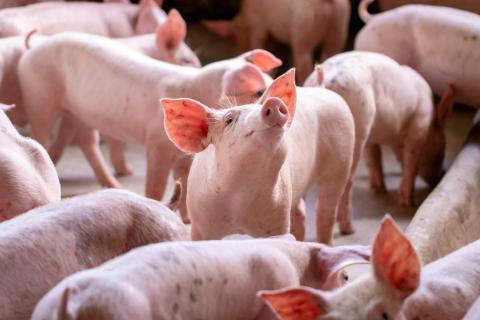
Researchers implanted autologous, cell-seeded esophageal segments into growing minipigs. The grafts integrated with host tissue. They showed contractility, remodeling, and functional swallowing. Notably, the animals required no immunosuppression.
The study tackles long-gap esophageal atresia in infants. It also applies to other conditions needing full esophageal replacement. Current surgeries often use stomach or colon segments to bridge gaps. These methods carry significant long-term risks. Patients may develop chronic acid reflux and swallowing difficulties. Many also experience dysmotility, strictures, and repeated surgeries.
Earlier regenerative approaches tested acellular or synthetic scaffolds. Some succeeded in small animals or partial repairs. Scaling to larger models remained difficult. Robust muscle regeneration proved inconsistent. Coordinated peristalsis and long-term function were also limited. Researchers reported poor muscle formation and recurrent strictures. Many approaches still depended on stents.
Researchers prepared 2.5-centimeter grafts for minipigs weighing about 10 kilograms. They isolated esophageal segments from donor pigs. They then decellularized the tissue to form protein scaffolds. From small biopsies, they harvested autologous cells. These included myogenic precursors and fibroblasts. They expanded the cells and microinjected them into the scaffolds. The team used a defined ratio. They matured the seeded grafts for one week in a dynamic bioreactor.
During transplantation, the team resected a matching thoracic esophagus segment in eight minipigs. It then replaced the segment with the engineered conduit. To stabilize the graft, surgeons used a biodegradable intraluminal stent and added a vascularizing pleural wrap.
The animals initially received supportive feeding before transitioning to a normal oral diet. Clinicians performed endoscopic interventions when necessary.
Over six months, outcomes were assessed through clinical monitoring, high-resolution impedance manometry, ex vivo organ bath studies, histology, spatial transcriptomics, and biomechanical testing. All eight animals survived the initial 30-day period. Five of the eight pigs reached the six-month endpoint and maintained normal growth while eating an oral diet. By three months the grafts had integrated with native tissue, showing development of new muscle fibers, blood vessels, and nerves. Manometry detected secondary peristalsis across the graft area in several animals, indicating coordinated contractile activity. Ex vivo testing confirmed contractile responses to stimulation, although these were graded compared with native esophagus. Because the grafts used the animals’ own cells, there was no evidence of immune rejection.
The researchers concluded that combining autologous cell seeding, bioreactor conditioning, biodegradable stenting, and a pleural wrap produced a functional esophageal replacement. The graft behaved as a living tissue. It regenerated a structure similar to the native esophagus in a growing large-animal model.
Dr. Marco Pellegrini, senior researcher and co-lead author, explained the clinical potential. “Our technology could allow us to build a child a new esophagus using their own cells,” he said. These cells can be collected during a routine surgery. They are then combined with a prepared scaffold from pig tissue. “Because the graft contains the child’s own muscle progenitor cells, the body would recognise it as its own tissue.”
The study has notable limitations. Only 63 percent of the animals reached the full six-month endpoint, constrained in part by license requirements and humane endpoints. Several pigs developed strictures requiring endoscopic dilation, a complication also common in current human esophageal surgery. Fibrosis and some chronic inflammation persisted, skeletal muscle regeneration was incomplete relative to native tissue, and the precise long term contribution of the seeded cells versus host-driven remodeling remains unclear. The grafts were relatively short; longer segments would pose additional challenges. As a large-animal study, the findings are preclinical and will require further validation before any potential translation to pediatric patients.
Reference:
Durkin, N. et al. Functional integration of an autologous engineered esophagus in a large-animal model. Nature Biotechnology (2026). https://doi.org/10.1038/s41587-026-03043-1.