





Friday, July 17, 2026
SAVED POSTS
  • Login
  • Register
RathBiotaClan
No Result
View All Result
  • HOME
  • HEALTH SCIENCE

    TRENDING ON HEALTH (TOP)

    Fick Method Underestimates Heart Problems in Children After Heart Transplant, Study Finds

    For Women on Antidepressants, Creatine Showed a Possible Extra Boost

    Did the iPhone Quietly Reshape When and Whether Americans Have Children?

    For People Antidepressants Never Helped, a 30-Minute Home Session Is Now FDA-Approved

    NOW ON AIR (RBC)

    The parsimony criterion
    BIOINFORMATICS

    The Parsimony Criterion in Phylogenetics: Morphological & Molecular Methods

    July 15, 2026
    maximum-likelihood-criterion
    BIOINFORMATICS

    Maximum Likelihood Criterion in Phylogenetic Tree Reconstruction

    July 15, 2026
    Tree Optimization Criteria and Search Methods in Phylogenetics – NNI, SPR, TBR Explained
    BIOINFORMATICS

    Tree Optimization Criteria and Tree Search Methods in Phylogenetics

    July 15, 2026
    Bootstrapping in Phylogenetics
    BIOINFORMATICS

    Bootstrapping in Phylogenetics – Tree Reliability, Resampling & Bootstrap Values

    July 15, 2026
  • NEUROSCIENCE
    • PHYSIOLOGY
    • IMMUNOLOGY
    • CANCER
  • DISCOVERIES
    • SPOTLIGHTS
    • STUDENT PORTAL
    • SCIENCE FEATURED
  • MOLECULAR BIOLOGY
    • GENETICS
    • BIOTECHNOLOGY
    • BIOINFORMATICS
    • BIOCHEMISTRY
    • BIOPHYSICS
  • ZOOLOGY & ECOLOGY
    • ENVIRONMENTAL SCIENCE
    • ECOLOGY
    • EVOLUTION
  • MICRO & PLANT SCIENCE
    • MICROBIOLOGY
    • CELL BIOLOGY
    • DEVELOPMENTAL BIOLOGY
  • PSYCHOLOGY
RathBiotaClan
RathBiotaClan
No Result
View All Result
Home PHYSIOLOGY

Succession of Kidney Development

Shibasis Rath by Shibasis Rath
June 19, 2024
in PHYSIOLOGY, STUDENT PORTAL, ZOOLOGY
Reading Time: 5 mins read
0
A A
0
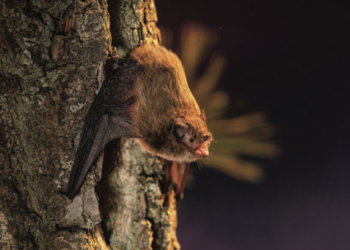
a drawing of the kidney and kidney

Kidney development follows a highly organized sequence that begins in the intermediate mesoderm and progresses through three major stages: pronephros, mesonephros, and metanephros. Together, these steps illustrate the evolutionary and functional progression of the vertebrate excretory system.

1. Origin and Early Formation of the Kidney

Intermediate Mesoderm

Kidneys arise from the intermediate mesoderm, located in the posterior region of the embryo. As the embryo grows, this tissue thickens to form a longitudinal structure called the nephrogenic ridge.

Nephrogenic Ridge and Nephrotome Formation

Initially, the nephrogenic ridge protrudes into the body cavity. Over time, it differentiates to form nephrotomes, small segmented structures that connect the medial region of the embryo to developing capillaries.

Nephrostome and Nephric Duct Formation

Each nephrotome develops an opening called the nephrostome, which grows outward and eventually fuses with neighboring outgrowths. As a result, the nephric duct forms and extends toward the cloaca.
Later, this nephrostome becomes a tubular structure that joins the nephric duct and opens into the coelom through a funnel-like passage.

ADVERTISEMENT

2. Fundamental Plan of the Excretory System

The basic excretory design includes:

READ ALSO

The Parsimony Criterion in Phylogenetics: Morphological & Molecular Methods

Maximum Likelihood Criterion in Phylogenetic Tree Reconstruction

  • Paired, segmented tubules
  • A filtering tuft of capillaries called the glomerulus
  • Tubules linked to both the coelom and the nephric duct

This ancestral layout provides the foundation for all vertebrate kidney types

ADVERTISEMENT

Tripartite Concept of Kidney Organization

The tripartite concept explains how the nephrogenic ridge differentiates into three regional kidneys. Each region matures at a specific stage of development, giving rise to the pronephros, mesonephros, and metanephros.

ADVERTISEMENT

1. Pronephros

Location

The pronephros develops in the anterior section of the nephric ridge.

Development

Pronephric tubules form early, connecting to create the pronephric duct, which grows posteriorly to reach the cloaca.
Glomeruli often project into the coelom, allowing filtered fluid to enter the pronephric tubules.

Function

  • Fully functional in larval cyclostomes and some adult fishes.
  • In lower vertebrate embryos, each pair of tubules forms a nephron that filters blood and coelomic fluid.
  • In amniotes (reptiles, birds, mammals), the pronephros is non-functional and regresses early.

2. Mesonephros

Location

The mesonephros forms in the middle region of the nephric ridge.

Development

After the pronephros regresses, new tubules appear that connect to the pre-existing duct, now termed the mesonephric duct. These tubules do not form a new duct system but reuse the pronephric pathway.

Function

  • Serves as the functional kidney in all vertebrate embryos.
  • In adult fishes and amphibians, it develops into the opisthonephros, an expanded and fully functional kidney.
  • In amniotes, the mesonephros works only during embryogenesis and is eventually replaced by the metanephros.

3. Metanephros

Location

This definitive kidney develops in the posterior region of the nephric ridge.

Development

  1. The metanephric duct forms as a bud from the base of the mesonephric duct.
  2. This duct grows into the posterior ridge, inducing the development of metanephric tubules.

Function

The metanephros becomes the permanent adult kidney in amniotes. It produces the ureter, which conducts urine to the bladder or cloaca.
This stage marks the final and most advanced structural organization of the vertebrate kidney.

Connection to the Coelom

Pronephros

Pronephric tubules typically retain their connection to the peritoneal funnels, allowing fluid movement between the coelom and renal tubules.

Mesonephros and Metanephros

As development continues, these later kidney forms lose their connection to the coelom. Therefore, no direct fluid exchange occurs between the coelomic cavity and renal tubules in adult vertebrates
  • Share on WhatsApp (Opens in new window) WhatsApp
  • Share on Facebook (Opens in new window) Facebook
  • Share on Reddit (Opens in new window) Reddit
  • Share on X (Opens in new window) X
  • Print (Opens in new window) Print
Shibasis Rath

Shibasis Rath

"𝓒𝓸𝓷𝓷𝓮𝓬𝓽𝓲𝓷𝓰 𝓡𝓮𝓼𝓮𝓪𝓻𝓬𝓱 𝓣𝓸 𝓡𝓮𝓪𝓵𝓲𝓽𝔂" 𝓲𝓼𝓷'𝓽 𝓙𝓾𝓼𝓽 𝓪 𝓜𝓸𝓽𝓽𝓸 - 𝓘𝓽'𝓼 𝓜𝔂 𝓜𝓲𝓼𝓼𝓲𝓸𝓷

Related Posts

The parsimony criterion
BIOINFORMATICS

The Parsimony Criterion in Phylogenetics: Morphological & Molecular Methods

July 15, 2026
maximum-likelihood-criterion
BIOINFORMATICS

Maximum Likelihood Criterion in Phylogenetic Tree Reconstruction

July 15, 2026
Tree Optimization Criteria and Search Methods in Phylogenetics – NNI, SPR, TBR Explained
BIOINFORMATICS

Tree Optimization Criteria and Tree Search Methods in Phylogenetics

July 15, 2026

POPULAR NEWS

Chewing gum releases thousands of microplastic particles directly into your mouth with every piece you chew

Chewing gum releases thousands of microplastic particles directly into your mouth with every piece you chew

by Shibasis Rath
May 8, 2026
0

Microplastics are turning up in places researchers never expected: deep-sea sediments, Arctic ice, and human blood. Now, a UCLA pilot...

grayscale photo of girl in polka dot long sleeve shirt

Yelling Isn’t Just Yelling: How a Hostile Home Rewires a Child’s Brain for Constant Alert

by Shibasis Rath
March 8, 2026
0

To a parent in the heat of the moment, a raised voice may feel like simple frustration. To a child...

72-Hour Fasting Can Reset Your Entire Immune System, USC Study Shows

72-Hour Fasting Can Reset Your Entire Immune System, USC Study Shows

by Shibasis Rath
February 28, 2026
0

A 72-hour fast can trigger a powerful immune system reset. Scientists call this stem cell regeneration. The process clears old...

woman in white tank top lying on bed

New Studys Says Gen Z is the least sexually active young cohort in modern recorded history

by Shibasis Rath
January 24, 2026
0

A generation that grew up with dating apps in their pockets, pornography a tap away, and sex discussed more openly...

a group of gen Z kids walking down a street

Is Gen Z the First Generation Less Intelligent Than Their Parents?

by Shibasis Rath
February 5, 2026
0

Gen Z intelligence decline is emerging as a serious concern among neuroscientists and education researchers. For over a century, each...

EDITOR CHOICE‘S

  • All
  • NEWS
  • SPOTLIGHTS
The parsimony criterion

The Parsimony Criterion in Phylogenetics: Morphological & Molecular Methods

by Shibasis Rath
July 15, 2026
0

The parsimony criterion is one of the oldest and most widely used methods of constructing phylogenetic trees, having its roots...

maximum-likelihood-criterion

Maximum Likelihood Criterion in Phylogenetic Tree Reconstruction

by Shibasis Rath
July 15, 2026
0

The maximum-likelihood (ML) criterion is one of the most important and statistically rigorous approaches used for phylogenetic tree reconstruction, first...

Tree Optimization Criteria and Search Methods in Phylogenetics – NNI, SPR, TBR Explained

Tree Optimization Criteria and Tree Search Methods in Phylogenetics

by Shibasis Rath
July 15, 2026
0

Distance-matrix clustering methods such as UPGMA and Neighbor-Joining construct a phylogenetic tree directly through a fixed, well-defined algorithm, without explicitly...

Bootstrapping in Phylogenetics

Bootstrapping in Phylogenetics – Tree Reliability, Resampling & Bootstrap Values

by Shibasis Rath
July 15, 2026
0

Bootstrapping is a statistical method used to assess the reliability of a phylogenetic tree, introduced by Felsenstein in 1985. Since...

ADVERTISEMENT

RathBiotaClan – RBC

RathBiotaClan – Connecting Research To Reality

Your trusted source for life science news, biology research & discoveries. Covering neuroscience, genetics, ecology, and more — connecting research to reality.

About Us

Privacy Policies

Contact Us

Editorial Standard

Latest Posts

  • The Parsimony Criterion in Phylogenetics: Morphological & Molecular Methods
  • Maximum Likelihood Criterion in Phylogenetic Tree Reconstruction
  • Tree Optimization Criteria and Tree Search Methods in Phylogenetics
  • Bootstrapping in Phylogenetics – Tree Reliability, Resampling & Bootstrap Values

SHIBASIS RATH

Contact Mail

rathbiotaclan@gmail.com

No Result
View All Result
MSME (Udyam) Certified Science Platform
Govt. of India

Get Us On PlayStore

playstore app for rathbiotaclan
  • About Us
  • Advertise With Us
  • Cancellation and Refund Policy
  • Contact Us
  • Contribute
  • Editorial Standards
  • Home
  • Pricing Details
  • Privacy Policies
  • Shipping Policy
  • Terms & Conditions

© 2026 RathBiotaClan. All rights reserved.

Welcome Back!

Sign In with Google
OR

Login to your account below

Forgotten Password? Sign Up

Create New Account!

Sign Up with Google
OR

Fill the forms below to register

*By registering into our website, you agree to the Terms & Conditions and Privacy Policy.
All fields are required. Log In

Retrieve your password

Please enter your username or email address to reset your password.

Log In

Add New Playlist

No Result
View All Result
  • HOME
  • HEALTH SCIENCE
  • NEUROSCIENCE
    • PHYSIOLOGY
    • IMMUNOLOGY
    • CANCER
  • DISCOVERIES
    • SPOTLIGHTS
    • STUDENT PORTAL
    • SCIENCE FEATURED
  • MOLECULAR BIOLOGY
    • GENETICS
    • BIOTECHNOLOGY
    • BIOINFORMATICS
    • BIOCHEMISTRY
    • BIOPHYSICS
  • ZOOLOGY & ECOLOGY
    • ENVIRONMENTAL SCIENCE
    • ECOLOGY
    • EVOLUTION
  • MICRO & PLANT SCIENCE
    • MICROBIOLOGY
    • CELL BIOLOGY
    • DEVELOPMENTAL BIOLOGY
  • PSYCHOLOGY
  • Login
  • Sign Up
SAVED POSTS

© 2026 RathBiotaClan. All rights reserved.

This website uses cookies. By continuing to use this website you are giving consent to cookies being used. Visit our Privacy and Cookie Policy.