



Tuesday, June 16, 2026
SAVED POSTS
  • Login
  • Register
RathBiotaClan
No Result
View All Result
  • HOME
  • HEALTH SCIENCE

    TRENDING ON HEALTH (TOP)

    For People Antidepressants Never Helped, a 30-Minute Home Session Is Now FDA-Approved

    Scientists Say Your Next Tube of Toothpaste Could Be Made From Human Hair

    Your Lungs, Liver, and Pancreas Also Age Faster When You Sleep Wrong

    Cycling Linked to Lower Dementia Risk in Study of Nearly 480,000 Adults

    NOW ON AIR (RBC)

    SCIENCE FEATURED

    Step-Synchronized Brain Stimulation Reduces Falls in Small Parkinson’s Trial

    June 16, 2026
    NEWS

    A Father’s Touch in Infancy Can Shape a Child’s Health for Years, New Science Explains Why

    June 9, 2026
    MutExpress
    BIOINFORMATICS

    South Asian Patients Have Been Left Out of Cancer Genomics for Decades & MutExpress-India Is Changing That

    June 8, 2026
    Biodiversity Loss
    ECOLOGY

    Biodiversity Loss Could Bankrupt Nations And Wall Street Hasn’t Noticed Yet

    June 5, 2026
  • NEUROSCIENCE
    • PHYSIOLOGY
    • IMMUNOLOGY
    • CANCER
  • DISCOVERIES
    • SPOTLIGHTS
    • STUDENT PORTAL
    • SCIENCE FEATURED
  • MOLECULAR BIOLOGY
    • GENETICS
    • BIOTECHNOLOGY
    • BIOINFORMATICS
    • BIOCHEMISTRY
    • BIOPHYSICS
  • ZOOLOGY & ECOLOGY
    • ENVIRONMENTAL SCIENCE
    • ECOLOGY
    • EVOLUTION
  • MICRO & PLANT SCIENCE
    • MICROBIOLOGY
    • CELL BIOLOGY
    • DEVELOPMENTAL BIOLOGY
  • PSYCHOLOGY
RathBiotaClan
RathBiotaClan
No Result
View All Result
Home SCIENCE FEATURED

Step-Synchronized Brain Stimulation Reduces Falls in Small Parkinson’s Trial

Staff Writer by Staff Writer
June 16, 2026
in SCIENCE FEATURED
Reading Time: 4 mins read
0
A A
0

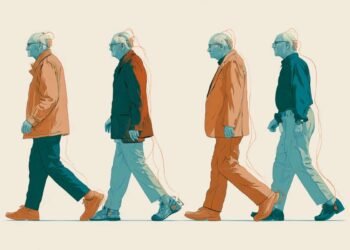
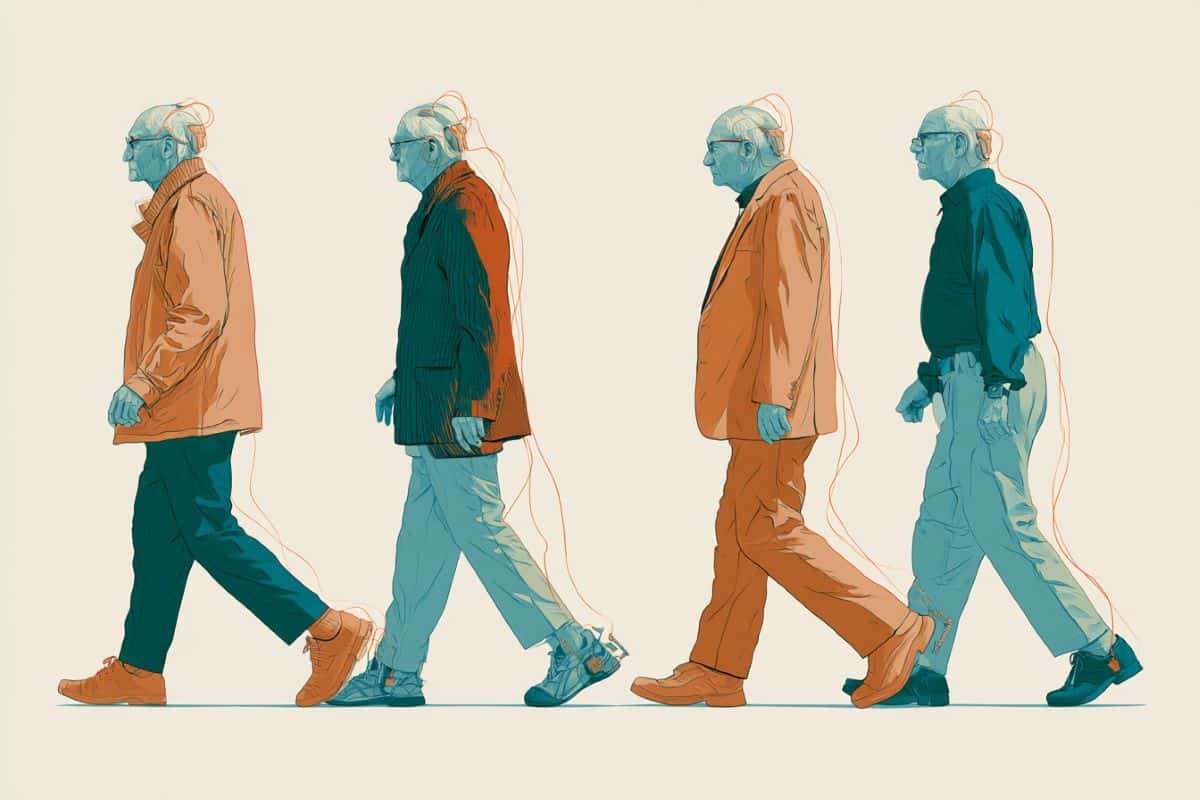
A five-patient feasibility study found that a form of deep brain stimulation programmed to adjust its output with each step of walking reduced falls and improved gait measures in people with Parkinson’s disease, compared with the standard approach of continuous stimulation.

Why this question mattered

Walking difficulties are among the most disabling features of Parkinson’s disease. They reduce independence, increase injury risk from falls, and tend to worsen as the disease progresses. Standard deep brain stimulation (DBS) electrical pulses delivered to specific brain regions via implanted electrodes can reduce tremor, stiffness, and slowness, but its benefits for gait are inconsistent and often diminish over years. Attempts to tune conventional DBS for walking, including lowering stimulation frequency or shifting electrode location, have produced mixed results, sometimes improving gait at the cost of worse tremor control.

What was already known

ADVERTISEMENT

Researchers have known for some time that brain signals in the deep nuclei targeted by DBS particularly a structure called the globus pallidus internus (GPi) fluctuate in patterns that reflect a person’s physical state: sleep, medication levels, and movement all leave detectable signatures in local field potentials. A class of devices called adaptive DBS (aDBS) systems, which modulate stimulation in response to these shifting signals, has shown promise for controlling general motor symptoms. Most aDBS work to date has used slow-changing signals tied to disease state rather than moment-to-moment movement. Applying that logic to gait is more technically demanding: walking is cyclical and fast, with each stride lasting roughly a second, so useful control signals need to be identified and acted upon at sub-second timescales.

READ ALSO

Psychology Study Says, Why People Who Enjoy Being Alone Often Build Stronger Minds and Deeper Connections

Volcanic Eruptions Can Destroy Their Own Methane — Tonga’s Plume Shows How

How the study was conducted

ADVERTISEMENT

Each participant underwent surgery to implant bilateral electrodes in the GPi and subdural cortical electrode paddles. An investigational bidirectional neurostimulator the Medtronic Summit RC+S was connected to both the therapeutic DBS lead and the cortical paddle, allowing simultaneous recording and stimulation. Researchers recorded local field potentials and gait data during overground walking at self-selected speeds for at least 250 steps, both before stimulation was activated and after DBS parameters had been clinically optimized.

ADVERTISEMENT

Using each participant’s own neural data, the team developed an aDBS therapy that modulated stimulation amplitude between 0.5 and 1.0 times the clinically optimized setting during contralateral leg swing. Control signals came from single-frequency band power at one recording site per hemisphere, selected through a data-driven search for features that could reliably distinguish the swing phase from other phases of the gait cycle.

For three of the five participants, a double-blind crossover experiment was then conducted, randomizing three conditions: continuous DBS, aDBS ramping up from half to full amplitude during contralateral leg swing, and aDBS ramping down from full to half amplitude during that phase. The multi-day crossover was carried out in participants’ daily lives, not only in the clinic.

What the results showed

Researchers successfully identified personalized gait-phase biomarkers from cortical or pallidal field potentials in all five participants and embedded them into the bidirectional neurostimulator. During acute in-clinic testing, aDBS improved step variability and step symmetry compared with continuous DBS.

In the blinded, multi-day portion of the study, participants experienced fewer falls while the adaptive system was active and maintained overall control of Parkinson’s symptoms. No serious adverse events occurred, and patients tolerated the rapid stimulation adjustments well.

The improvements in gait were patient-specific that is, the particular measures that improved differed across individuals which the authors noted as consistent with the personalized nature of the biomarker identification process.

What the researchers concluded

The authors concluded that the findings establish the feasibility of biomarker-driven, movement-synchronized neuromodulation and support the development of a larger randomized trial to determine clinical efficacy.

“Difficulty walking is one of the most disabling symptoms of Parkinson’s disease and one of the hardest to treat,” said Doris D. Wang, MD, PhD, associate professor of neurological surgery at UCSF and senior author. “Walking is a highly dynamic behavior that requires precise timing across both sides of the body. We developed a system that can recognize those movement patterns and respond in real time, effectively allowing the stimulation to work with the patient as they move.”

First author Kenneth H. Louie, PhD, a UCSF postdoctoral scholar, noted: “The brain contains remarkably rich information about movement. We found that we could identify neural signatures linked to each step and use them to guide stimulation in real time.”

Limitations

The study enrolled five participants at a single center; only three completed the multi-day blinded crossover phase. The sample is too small to draw conclusions about clinical efficacy, and the authors explicitly frame this as a feasibility trial rather than an efficacy trial. All participants used an investigational device that is not commercially available. The subdural cortical electrode paddles implanted as part of this research protocol are not part of standard clinical DBS surgery, which adds procedural complexity. Because gait improvements were patient-specific and not uniform, the findings cannot be generalized to a typical DBS population. Longer-term follow-up data are not yet available. The researchers note that conflicts of interest exist: the senior author consults for Medtronic and Boston Scientific, and the first author is now employed by a neuromodulation company though that employment began after the study was completed.


Reference

Kenneth H. Louie, Jannine P. Balakid, Jessica E. Bath, Seongmi Song, Hamid Fekri Azgomi, Jacob H. Marks, Julia T. Choi, Philip A. Starr, Doris D. Wang. “Adaptive deep brain stimulation for dynamic gait control in Parkinson’s disease: a randomized feasibility trial.” Nature Medicine, June 15, 2026. DOI: 10.1038/s41591-026-04434-2


  • Share on WhatsApp (Opens in new window) WhatsApp
  • Share on Facebook (Opens in new window) Facebook
  • Share on Reddit (Opens in new window) Reddit
  • Share on X (Opens in new window) X
  • Print (Opens in new window) Print
Staff Writer

Staff Writer

Related Posts

woman in black jacket sitting on gray concrete wall during daytime
PSYCHOLOGY

Psychology Study Says, Why People Who Enjoy Being Alone Often Build Stronger Minds and Deeper Connections

May 21, 2026
Volcanic Eruptions Can Destroy Their Own Methane — Tonga’s Plume Shows How
ENVIRONMENTAL SCIENCE

Volcanic Eruptions Can Destroy Their Own Methane — Tonga’s Plume Shows How

May 13, 2026
Babies Yawn in the Womb
DEVELOPMENTAL BIOLOGY

Scientists Say Babies May Learn to Yawn Before Birth

May 11, 2026

Leave a Reply Cancel reply

Your email address will not be published. Required fields are marked *

I agree to the Terms & Conditions and Privacy Policy.

POPULAR NEWS

Chewing gum releases thousands of microplastic particles directly into your mouth with every piece you chew

Chewing gum releases thousands of microplastic particles directly into your mouth with every piece you chew

by Shibasis Rath
May 8, 2026
0

Microplastics are turning up in places researchers never expected: deep-sea sediments, Arctic ice, and human blood. Now, a UCLA pilot...

New Studys Says Gen Z is the least sexually active young cohort in modern recorded history

New Studys Says Gen Z is the least sexually active young cohort in modern recorded history

by Shibasis Rath
January 24, 2026
0

A generation that grew up with dating apps in their pockets, pornography a tap away, and sex discussed more openly...

Yelling Isn’t Just Yelling: How a Hostile Home Rewires a Child’s Brain for Constant Alert

Yelling Isn’t Just Yelling: How a Hostile Home Rewires a Child’s Brain for Constant Alert

by Shibasis Rath
March 8, 2026
0

To a parent in the heat of the moment, a raised voice may feel like simple frustration. To a child...

a group of gen Z kids walking down a street

Is Gen Z the First Generation Less Intelligent Than Their Parents?

by Shibasis Rath
February 5, 2026
0

Gen Z intelligence decline is emerging as a serious concern among neuroscientists and education researchers. For over a century, each...

Whole Brain Emulation Achieved: Scientists Run a Fruit Fly Brain in Simulation

by Shibasis Rath
March 9, 2026
0

Scientists have copied an entire biological brain neuron by neuron and synapse by synapse and made it control a simulated...

EDITOR CHOICE‘S

  • All
  • NEWS
  • SPOTLIGHTS
Step-Synchronized Brain Stimulation Reduces Falls in Small Parkinson’s Trial

Step-Synchronized Brain Stimulation Reduces Falls in Small Parkinson’s Trial

by Staff Writer
June 16, 2026
0

A five-patient feasibility study found that a form of deep brain stimulation programmed to adjust its output with each step...

A Father’s Touch in Infancy Can Shape a Child’s Health for Years, New Science Explains Why

A Father’s Touch in Infancy Can Shape a Child’s Health for Years, New Science Explains Why

by Staff Writer
June 9, 2026
0

A study from Penn State University has revealed something startling beneath that simplicity those early interactions carry biological consequences that...

MutExpress

South Asian Patients Have Been Left Out of Cancer Genomics for Decades & MutExpress-India Is Changing That

by Staff Writer
June 8, 2026
0

The databases that underpin modern cancer genomics have a geography problem. The gnomAD database the gold standard for allele frequency...

Biodiversity Loss

Biodiversity Loss Could Bankrupt Nations And Wall Street Hasn’t Noticed Yet

by Staff Writer
June 5, 2026
0

Every year, governments borrow trillions of dollars to function. The interest rate they pay depends almost entirely on their credit...

ADVERTISEMENT

RathBiotaClan – RBC

RathBiotaClan – Connecting Research To Reality

Your trusted source for life science news, biology research & discoveries. Covering neuroscience, genetics, ecology, and more — connecting research to reality.

About Us

Privacy Policies

Contact Us

Editorial Standard

Latest Posts

  • Step-Synchronized Brain Stimulation Reduces Falls in Small Parkinson’s Trial
  • A Father’s Touch in Infancy Can Shape a Child’s Health for Years, New Science Explains Why
  • South Asian Patients Have Been Left Out of Cancer Genomics for Decades & MutExpress-India Is Changing That
  • Biodiversity Loss Could Bankrupt Nations And Wall Street Hasn’t Noticed Yet

SHIBASIS RATH

Contact Mail

rathbiotaclan@gmail.com

No Result
View All Result
MSME (Udyam) Certified Science Platform
Govt. of India

Get Us On PlayStore

playstore app for rathbiotaclan
  • About Us
  • Advertise With Us
  • Cancellation and Refund Policy
  • Contact Us
  • Contribute
  • Editorial Standards
  • Home
  • Pricing Details
  • Privacy Policies
  • Shipping Policy
  • Terms & Conditions

© 2026 RathBiotaClan. All rights reserved.

Welcome Back!

Sign In with Google
OR

Login to your account below

Forgotten Password? Sign Up

Create New Account!

Sign Up with Google
OR

Fill the forms bellow to register

*By registering into our website, you agree to the Terms & Conditions and Privacy Policy.
All fields are required. Log In

Retrieve your password

Please enter your username or email address to reset your password.

Log In

Add New Playlist

No Result
View All Result
  • HOME
  • HEALTH SCIENCE
  • NEUROSCIENCE
    • PHYSIOLOGY
    • IMMUNOLOGY
    • CANCER
  • DISCOVERIES
    • SPOTLIGHTS
    • STUDENT PORTAL
    • SCIENCE FEATURED
  • MOLECULAR BIOLOGY
    • GENETICS
    • BIOTECHNOLOGY
    • BIOINFORMATICS
    • BIOCHEMISTRY
    • BIOPHYSICS
  • ZOOLOGY & ECOLOGY
    • ENVIRONMENTAL SCIENCE
    • ECOLOGY
    • EVOLUTION
  • MICRO & PLANT SCIENCE
    • MICROBIOLOGY
    • CELL BIOLOGY
    • DEVELOPMENTAL BIOLOGY
  • PSYCHOLOGY
  • Login
  • Sign Up
SAVED POSTS

© 2026 RathBiotaClan. All rights reserved.

This website uses cookies. By continuing to use this website you are giving consent to cookies being used. Visit our Privacy and Cookie Policy.