



Thursday, June 18, 2026
SAVED POSTS
  • Login
  • Register
RathBiotaClan
No Result
View All Result
  • HOME
  • HEALTH SCIENCE

    TRENDING ON HEALTH (TOP)

    For People Antidepressants Never Helped, a 30-Minute Home Session Is Now FDA-Approved

    Scientists Say Your Next Tube of Toothpaste Could Be Made From Human Hair

    Your Lungs, Liver, and Pancreas Also Age Faster When You Sleep Wrong

    Cycling Linked to Lower Dementia Risk in Study of Nearly 480,000 Adults

    NOW ON AIR (RBC)

    NEUROSCIENCE

    Step-Synchronized Brain Stimulation Reduces Falls in Small Parkinson’s Trial

    June 16, 2026
    NEWS

    A Father’s Touch in Infancy Can Shape a Child’s Health for Years, New Science Explains Why

    June 9, 2026
    MutExpress
    BIOINFORMATICS

    South Asian Patients Have Been Left Out of Cancer Genomics for Decades & MutExpress-India Is Changing That

    June 8, 2026
    Biodiversity Loss
    ECOLOGY

    Biodiversity Loss Could Bankrupt Nations And Wall Street Hasn’t Noticed Yet

    June 5, 2026
  • NEUROSCIENCE
    • PHYSIOLOGY
    • IMMUNOLOGY
    • CANCER
  • DISCOVERIES
    • SPOTLIGHTS
    • STUDENT PORTAL
    • SCIENCE FEATURED
  • MOLECULAR BIOLOGY
    • GENETICS
    • BIOTECHNOLOGY
    • BIOINFORMATICS
    • BIOCHEMISTRY
    • BIOPHYSICS
  • ZOOLOGY & ECOLOGY
    • ENVIRONMENTAL SCIENCE
    • ECOLOGY
    • EVOLUTION
  • MICRO & PLANT SCIENCE
    • MICROBIOLOGY
    • CELL BIOLOGY
    • DEVELOPMENTAL BIOLOGY
  • PSYCHOLOGY
RathBiotaClan
RathBiotaClan
No Result
View All Result
Home PHYSIOLOGY

Hemostasis and Blood Clotting System

Shibasis Rath by Shibasis Rath
June 15, 2024
in PHYSIOLOGY, STUDENT PORTAL, ZOOLOGY
Reading Time: 6 mins read
0
A A
0
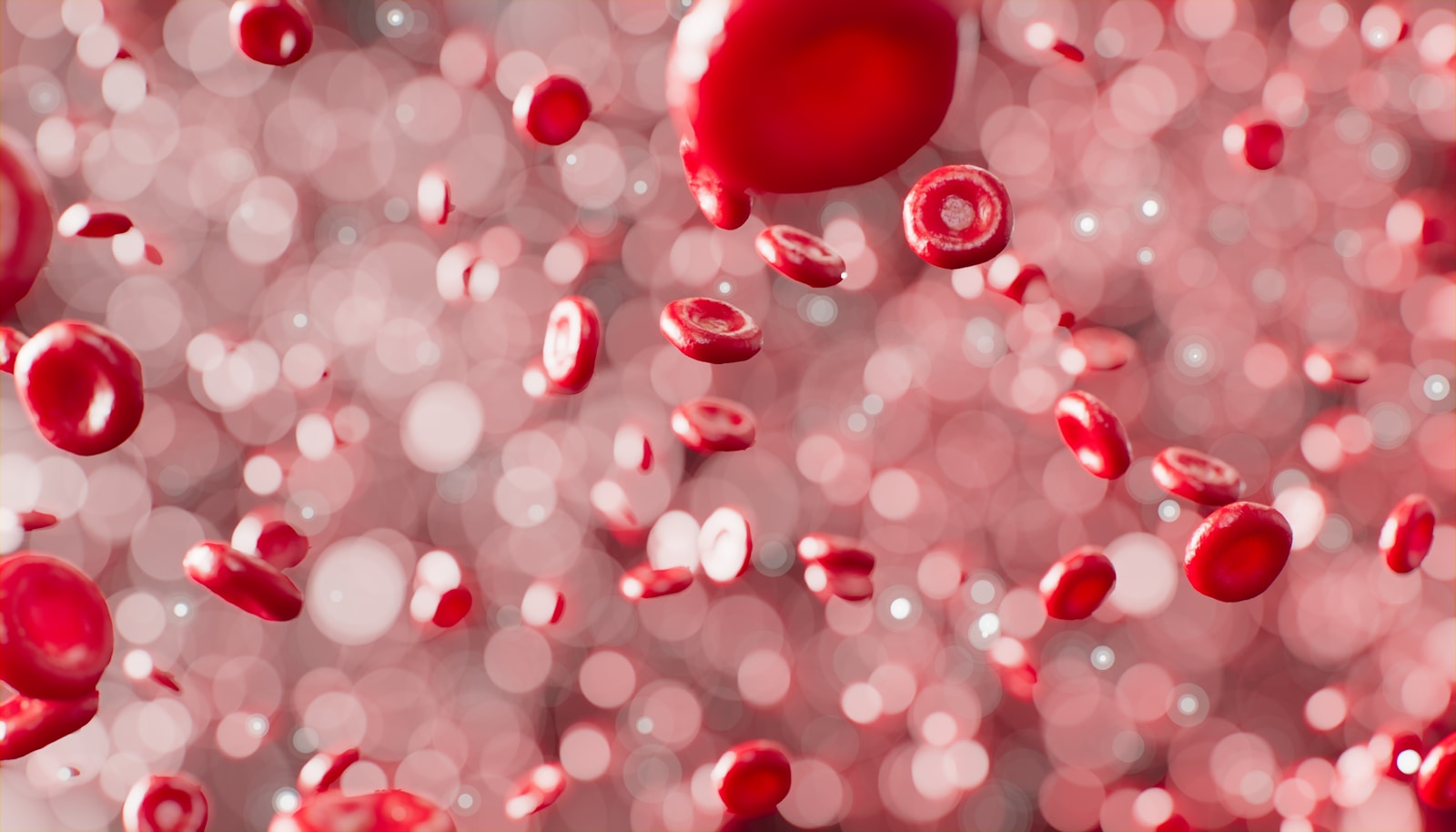
a bunch of red bubbles floating in the air

Hemostasis is the process that stops bleeding when blood vessels are damaged. It’s a rapid, localized, and controlled response designed to prevent hemorrhage (excessive blood loss).

Note: Hemostasis should not be confused with homeostasis, which is the maintenance of a stable internal body environment.

Hemostasis involves three main, sequential mechanisms:

  1. Vascular Spasm
  2. Platelet Plug Formation
  3. Blood Clotting (Coagulation)

1. Vascular Spasm

The first response to vascular injury is the immediate contraction of the vessel wall.

Image of vascular spasm in a damaged blood vessel

ADVERTISEMENT

READ ALSO

Human-generated electromagnetic noise has long lasting effects on light orientation in bats

Critically Endangered Blue Tarantula Surveyed in India’s Largest Tiger Reserve

  • Definition: Immediate contraction of smooth muscle in the walls of damaged arteries or arterioles.
  • Duration: Reduces blood loss for several minutes to hours.
  • Causes:
    • Damage to the smooth muscle tissue itself.
    • Substances released from activated platelets.
    • Reflexes initiated by pain receptors.

2. Platelet Plug Formation

Platelets play a crucial role by forming a temporary plug to stem the flow of blood.

ADVERTISEMENT

Chemicals Stored in Platelets

Platelets contain numerous chemicals vital for clotting and vasoconstriction.

ADVERTISEMENT
Chemical ComponentPrimary Function
Clotting factorsEssential for the coagulation cascade.
ADP, ATP, $\text{Ca}^{2+}$, SerotoninActivation of nearby platelets, vasoconstriction.
Enzymes producing Thromboxane $\text{A}_2$Platelet aggregation and vasoconstriction.
Fibrin-stabilizing factorStrengthens the final fibrin clot.
PDGF (Platelet-derived growth factor)Stimulates vessel repair.

Steps in Platelet Plug Formation

  1. Platelet Adhesion: Platelets stick to exposed collagen fibers of damaged blood vessel endothelium.
  2. Platelet Release Reaction: Platelets become activated, release vesicle contents (e.g., ADP, Thromboxane $\text{A}_2$). Liberated ADP and Thromboxane $\text{A}_2$ activate nearby platelets; Serotonin and Thromboxane $\text{A}_2$ act as vasoconstrictors.
  3. Platelet Aggregation: ADP causes platelets to adhere to each other, forming a mass called a platelet plug, which temporarily stops blood loss. The plug is later reinforced by fibrin.

3. Blood Clotting (Coagulation)

This complex process converts blood from a liquid to a stabilizing gel, further preventing blood loss.

  • Overview: A clot consists of a network of insoluble protein fibers called fibrin that traps formed blood elements. The liquid component left behind is called serum.
  • Regulation: The process must be tightly regulated to prevent thrombosis (clot formation in an undamaged vessel).
  • General Stages:
    1. Formation of Prothrombinase.
    2. Conversion of Prothrombin to Thrombin.
    3. Conversion of Fibrinogen to Fibrin.

Pathways of Blood Clotting

Blood clotting involves a cascade of enzymatic reactions divided into three pathways: Extrinsic, Intrinsic, and Common.Image of the coagulation cascade pathways: Extrinsic, Intrinsic, and Common

Shutterstock

1. Extrinsic Pathway

This pathway is typically initiated rapidly by external trauma and begins outside the bloodstream.

  • Initiation: Triggered by Tissue Factor (TF), or thromboplastin, released from damaged cells/tissues.
  • Key Reaction: TF forms a complex with clotting Factor VII and $\text{Ca}^{2+}$, activating it ($\text{VIIa}$).
  • Convergence: The $\text{TF-VIIa-Ca}^{2+}$ complex activates clotting Factor X ($\text{Xa}$), marking the start of the common pathway.

2. Intrinsic Pathway

This pathway is more complex, begins within the bloodstream, and is triggered by contact with internal vessel damage.

  • Initiation: Triggered when blood contacts collagen exposed by vessel damage.
  • Key Reaction: Contact activates Factor XII, initiating a cascade that sequentially activates Factors XI, IX, and VIII, ultimately leading to the activation of Factor X ($\text{Xa}$).
  • Convergence: Factor $\text{Xa}$ contributes to the formation of prothrombinase.

3. Common Pathway

The final stage where the Extrinsic and Intrinsic pathways converge to form the stable fibrin clot.

  • Prothrombinase Formation: $\text{Xa}$ (from both pathways) combines with activated Factor V ($\text{Va}$) and $\text{Ca}^{2+}$ to form Prothrombinase.
  • Fibrin Formation:
    1. Prothrombinase catalyzes the conversion of inactive Prothrombin into active Thrombin.
    2. Thrombin acts on soluble Fibrinogen, converting it into insoluble Fibrin threads.
  • Stabilization: The Fibrin threads form a meshwork, solidifying the clot.
  • Share on WhatsApp (Opens in new window) WhatsApp
  • Share on Facebook (Opens in new window) Facebook
  • Share on Reddit (Opens in new window) Reddit
  • Share on X (Opens in new window) X
  • Print (Opens in new window) Print
Shibasis Rath

Shibasis Rath

"𝓒𝓸𝓷𝓷𝓮𝓬𝓽𝓲𝓷𝓰 𝓡𝓮𝓼𝓮𝓪𝓻𝓬𝓱 𝓣𝓸 𝓡𝓮𝓪𝓵𝓲𝓽𝔂" 𝓲𝓼𝓷'𝓽 𝓙𝓾𝓼𝓽 𝓪 𝓜𝓸𝓽𝓽𝓸 - 𝓘𝓽'𝓼 𝓜𝔂 𝓜𝓲𝓼𝓼𝓲𝓸𝓷

Related Posts

Soprano pipistrelle (Pipistrellus pygmaeus) emerging from a tree hollow at the moment of take-off.
ECOLOGY

Human-generated electromagnetic noise has long lasting effects on light orientation in bats

June 4, 2026
Rare Peacock Tarantula Image
NEWS

Critically Endangered Blue Tarantula Surveyed in India’s Largest Tiger Reserve

April 30, 2026
Cannibal killer whales in Russian waters
ECOLOGY

Scientists spot signs of cannibal killer whales in Russian waters

April 30, 2026

POPULAR NEWS

Chewing gum releases thousands of microplastic particles directly into your mouth with every piece you chew

Chewing gum releases thousands of microplastic particles directly into your mouth with every piece you chew

by Shibasis Rath
May 8, 2026
0

Microplastics are turning up in places researchers never expected: deep-sea sediments, Arctic ice, and human blood. Now, a UCLA pilot...

New Studys Says Gen Z is the least sexually active young cohort in modern recorded history

New Studys Says Gen Z is the least sexually active young cohort in modern recorded history

by Shibasis Rath
January 24, 2026
0

A generation that grew up with dating apps in their pockets, pornography a tap away, and sex discussed more openly...

Yelling Isn’t Just Yelling: How a Hostile Home Rewires a Child’s Brain for Constant Alert

Yelling Isn’t Just Yelling: How a Hostile Home Rewires a Child’s Brain for Constant Alert

by Shibasis Rath
March 8, 2026
0

To a parent in the heat of the moment, a raised voice may feel like simple frustration. To a child...

a group of gen Z kids walking down a street

Is Gen Z the First Generation Less Intelligent Than Their Parents?

by Shibasis Rath
February 5, 2026
0

Gen Z intelligence decline is emerging as a serious concern among neuroscientists and education researchers. For over a century, each...

Whole Brain Emulation Achieved: Scientists Run a Fruit Fly Brain in Simulation

by Shibasis Rath
March 9, 2026
0

Scientists have copied an entire biological brain neuron by neuron and synapse by synapse and made it control a simulated...

EDITOR CHOICE‘S

  • All
  • NEWS
  • SPOTLIGHTS
Step-Synchronized Brain Stimulation Reduces Falls in Small Parkinson’s Trial

Step-Synchronized Brain Stimulation Reduces Falls in Small Parkinson’s Trial

by Staff Writer
June 16, 2026
0

Researchers have reported encouraging results from a small feasibility study testing a new form of adaptive deep brain stimulation (aDBS)...

A Father’s Touch in Infancy Can Shape a Child’s Health for Years, New Science Explains Why

A Father’s Touch in Infancy Can Shape a Child’s Health for Years, New Science Explains Why

by Staff Writer
June 9, 2026
0

A study from Penn State University has revealed something startling beneath that simplicity those early interactions carry biological consequences that...

MutExpress

South Asian Patients Have Been Left Out of Cancer Genomics for Decades & MutExpress-India Is Changing That

by Staff Writer
June 8, 2026
0

The databases that underpin modern cancer genomics have a geography problem. The gnomAD database the gold standard for allele frequency...

Biodiversity Loss

Biodiversity Loss Could Bankrupt Nations And Wall Street Hasn’t Noticed Yet

by Staff Writer
June 5, 2026
0

Every year, governments borrow trillions of dollars to function. The interest rate they pay depends almost entirely on their credit...

ADVERTISEMENT

RathBiotaClan – RBC

RathBiotaClan – Connecting Research To Reality

Your trusted source for life science news, biology research & discoveries. Covering neuroscience, genetics, ecology, and more — connecting research to reality.

About Us

Privacy Policies

Contact Us

Editorial Standard

Latest Posts

  • Step-Synchronized Brain Stimulation Reduces Falls in Small Parkinson’s Trial
  • A Father’s Touch in Infancy Can Shape a Child’s Health for Years, New Science Explains Why
  • South Asian Patients Have Been Left Out of Cancer Genomics for Decades & MutExpress-India Is Changing That
  • Biodiversity Loss Could Bankrupt Nations And Wall Street Hasn’t Noticed Yet

SHIBASIS RATH

Contact Mail

rathbiotaclan@gmail.com

No Result
View All Result
MSME (Udyam) Certified Science Platform
Govt. of India

Get Us On PlayStore

playstore app for rathbiotaclan
  • About Us
  • Advertise With Us
  • Cancellation and Refund Policy
  • Contact Us
  • Contribute
  • Editorial Standards
  • Home
  • Pricing Details
  • Privacy Policies
  • Shipping Policy
  • Terms & Conditions

© 2026 RathBiotaClan. All rights reserved.

Welcome Back!

Sign In with Google
OR

Login to your account below

Forgotten Password? Sign Up

Create New Account!

Sign Up with Google
OR

Fill the forms below to register

*By registering into our website, you agree to the Terms & Conditions and Privacy Policy.
All fields are required. Log In

Retrieve your password

Please enter your username or email address to reset your password.

Log In

Add New Playlist

No Result
View All Result
  • HOME
  • HEALTH SCIENCE
  • NEUROSCIENCE
    • PHYSIOLOGY
    • IMMUNOLOGY
    • CANCER
  • DISCOVERIES
    • SPOTLIGHTS
    • STUDENT PORTAL
    • SCIENCE FEATURED
  • MOLECULAR BIOLOGY
    • GENETICS
    • BIOTECHNOLOGY
    • BIOINFORMATICS
    • BIOCHEMISTRY
    • BIOPHYSICS
  • ZOOLOGY & ECOLOGY
    • ENVIRONMENTAL SCIENCE
    • ECOLOGY
    • EVOLUTION
  • MICRO & PLANT SCIENCE
    • MICROBIOLOGY
    • CELL BIOLOGY
    • DEVELOPMENTAL BIOLOGY
  • PSYCHOLOGY
  • Login
  • Sign Up
SAVED POSTS

© 2026 RathBiotaClan. All rights reserved.

This website uses cookies. By continuing to use this website you are giving consent to cookies being used. Visit our Privacy and Cookie Policy.