



Thursday, June 18, 2026
SAVED POSTS
  • Login
  • Register
RathBiotaClan
No Result
View All Result
  • HOME
  • HEALTH SCIENCE

    TRENDING ON HEALTH (TOP)

    For People Antidepressants Never Helped, a 30-Minute Home Session Is Now FDA-Approved

    Scientists Say Your Next Tube of Toothpaste Could Be Made From Human Hair

    Your Lungs, Liver, and Pancreas Also Age Faster When You Sleep Wrong

    Cycling Linked to Lower Dementia Risk in Study of Nearly 480,000 Adults

    NOW ON AIR (RBC)

    NEUROSCIENCE

    Step-Synchronized Brain Stimulation Reduces Falls in Small Parkinson’s Trial

    June 16, 2026
    NEWS

    A Father’s Touch in Infancy Can Shape a Child’s Health for Years, New Science Explains Why

    June 9, 2026
    MutExpress
    BIOINFORMATICS

    South Asian Patients Have Been Left Out of Cancer Genomics for Decades & MutExpress-India Is Changing That

    June 8, 2026
    Biodiversity Loss
    ECOLOGY

    Biodiversity Loss Could Bankrupt Nations And Wall Street Hasn’t Noticed Yet

    June 5, 2026
  • NEUROSCIENCE
    • PHYSIOLOGY
    • IMMUNOLOGY
    • CANCER
  • DISCOVERIES
    • SPOTLIGHTS
    • STUDENT PORTAL
    • SCIENCE FEATURED
  • MOLECULAR BIOLOGY
    • GENETICS
    • BIOTECHNOLOGY
    • BIOINFORMATICS
    • BIOCHEMISTRY
    • BIOPHYSICS
  • ZOOLOGY & ECOLOGY
    • ENVIRONMENTAL SCIENCE
    • ECOLOGY
    • EVOLUTION
  • MICRO & PLANT SCIENCE
    • MICROBIOLOGY
    • CELL BIOLOGY
    • DEVELOPMENTAL BIOLOGY
  • PSYCHOLOGY
RathBiotaClan
RathBiotaClan
No Result
View All Result
Home EVOLUTION

Evolution of the Heart in Vertebrates

Shibasis Rath by Shibasis Rath
June 17, 2024
in EVOLUTION, STUDENT PORTAL, ZOOLOGY
Reading Time: 4 mins read
0
A A
0
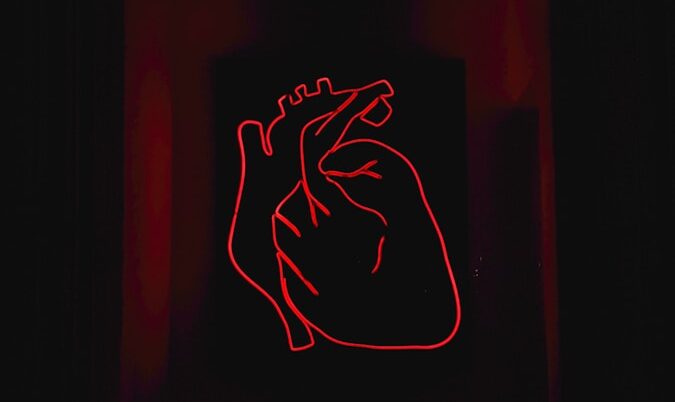
red heart clip art

The heart originates from a bilateral structure in the embryo. There, mesenchymal cells form a pair of endocardial tubes below the pharynx. These tubes fuse into a single endocardial tube, which, along with the surrounding splanchnic mesoderm, forms the heart. This two-layered tube consists of an inner endocardium and an outer myocardium. The heart becomes S-shaped due to differential growth and the formation of chambers and valves.

Single-Chambered and Primitive Hearts

Primitive Chordates: Absence of a True Heart

Amphioxus, a primitive chordate, lacks a true heart. Instead, a contractile part of the ventral aorta beneath the pharynx acts as a heart. This primitive heart is enclosed within a pericardial cavity, which a transverse septum separates from the body cavity. The conus arteriosus connects to the ventral aorta and functions during circulation.

The Two-Chambered Heart in Fish

Cyclostomes

In Cyclostomes, the heart has four chambers arranged sequentially: a thin-walled sinus venosus, a slightly muscular auricle, a muscular ventricle, and a muscular conus arteriosus and bulbus cordis. These chambers lie within the body cavity alongside other visceral organs. Evolution has brought significant changes to the heart’s structure.

Elasmobranchs (Cartilaginous Fish)

In elasmobranchs (cartilaginous fish like dogfish), the heart is a muscular, dorsoventrally bent S-shaped tube with four compartments in a linear series. The sinus venosus and auricle receive venous blood, and the ventricle and conus arteriosus pump blood. We call this heart a branchial venous heart because only deoxygenated blood is pumped to the gills, where it gets oxygenated and then distributed to the body.Image of two-chambered heart of a fish

ADVERTISEMENT

READ ALSO

Human-generated electromagnetic noise has long lasting effects on light orientation in bats

Critically Endangered Blue Tarantula Surveyed in India’s Largest Tiger Reserve

Teleosts (Bony Fish)

The heart in teleosts resembles that of elasmobranchs but with some differences. The conus arteriosus is reduced and contains a single pair of valves. The ventral aorta’s proximal part, the bulbus arteriosus, is thick-walled and elastic, which aids in blood circulation during ventricular contraction.

ADVERTISEMENT

Three-Chambered Hearts: Transition to Double Circulation

Lungfish

In lungfish, a septum divides the atrium into right and left chambers, reflecting a shift towards a double circulatory system where both oxygenated and deoxygenated blood enter the heart separately. The right auricle receives deoxygenated blood and pumps it to the gills or lungs, while the left auricle receives oxygenated blood returning from the lungs.

ADVERTISEMENT

Amphibians

Amphibians show a further evolution of the heart, where the atrium is completely divided into right and left chambers. The conus arteriosus divides into systemic and pulmonary vessels by a spiral valve, which facilitates better separation of oxygenated and deoxygenated blood. However, some mixing still occurs, especially in lungless salamanders where the interatrial septum is incomplete.Image of three-chambered heart of an amphibian

Reptiles: Ventricular Partitioning

In reptiles, the heart has advanced further with a complete separation of the atrium into right and left chambers. The ventricle is partially divided, with complete separation in alligators and crocodiles. This structure ensures better separation of oxygenated and deoxygenated blood. The embryonic conus arteriosus splits into the pulmonary arch and systemic aorta, enhancing the efficiency of blood circulation.

Four-Chambered Heart in Birds and Mammals: Complete Separation

In birds and mammals, the heart is fully divided into four chambers: two atria and two ventricles. This complete separation allows for efficient double circulation without any mixing of oxygenated and deoxygenated blood. The systemic aorta leaves the left ventricle, supplying oxygenated blood to the body, while the pulmonary artery leaves the right ventricle, carrying deoxygenated blood to the lungs for oxygenation. The sinus venosus is incorporated into the right atrium, enhancing the efficiency of venous return. This design represents the peak efficiency in the vertebrate heart’s evolution, supporting the high metabolic demands of endothermy.Image of four-chambered heart of a mammal

  • Share on WhatsApp (Opens in new window) WhatsApp
  • Share on Facebook (Opens in new window) Facebook
  • Share on Reddit (Opens in new window) Reddit
  • Share on X (Opens in new window) X
  • Print (Opens in new window) Print
Shibasis Rath

Shibasis Rath

"𝓒𝓸𝓷𝓷𝓮𝓬𝓽𝓲𝓷𝓰 𝓡𝓮𝓼𝓮𝓪𝓻𝓬𝓱 𝓣𝓸 𝓡𝓮𝓪𝓵𝓲𝓽𝔂" 𝓲𝓼𝓷'𝓽 𝓙𝓾𝓼𝓽 𝓪 𝓜𝓸𝓽𝓽𝓸 - 𝓘𝓽'𝓼 𝓜𝔂 𝓜𝓲𝓼𝓼𝓲𝓸𝓷

Related Posts

Soprano pipistrelle (Pipistrellus pygmaeus) emerging from a tree hollow at the moment of take-off.
ECOLOGY

Human-generated electromagnetic noise has long lasting effects on light orientation in bats

June 4, 2026
Rare Peacock Tarantula Image
NEWS

Critically Endangered Blue Tarantula Surveyed in India’s Largest Tiger Reserve

April 30, 2026
Cannibal killer whales in Russian waters
ECOLOGY

Scientists spot signs of cannibal killer whales in Russian waters

April 30, 2026

POPULAR NEWS

Chewing gum releases thousands of microplastic particles directly into your mouth with every piece you chew

Chewing gum releases thousands of microplastic particles directly into your mouth with every piece you chew

by Shibasis Rath
May 8, 2026
0

Microplastics are turning up in places researchers never expected: deep-sea sediments, Arctic ice, and human blood. Now, a UCLA pilot...

New Studys Says Gen Z is the least sexually active young cohort in modern recorded history

New Studys Says Gen Z is the least sexually active young cohort in modern recorded history

by Shibasis Rath
January 24, 2026
0

A generation that grew up with dating apps in their pockets, pornography a tap away, and sex discussed more openly...

Yelling Isn’t Just Yelling: How a Hostile Home Rewires a Child’s Brain for Constant Alert

Yelling Isn’t Just Yelling: How a Hostile Home Rewires a Child’s Brain for Constant Alert

by Shibasis Rath
March 8, 2026
0

To a parent in the heat of the moment, a raised voice may feel like simple frustration. To a child...

a group of gen Z kids walking down a street

Is Gen Z the First Generation Less Intelligent Than Their Parents?

by Shibasis Rath
February 5, 2026
0

Gen Z intelligence decline is emerging as a serious concern among neuroscientists and education researchers. For over a century, each...

Whole Brain Emulation Achieved: Scientists Run a Fruit Fly Brain in Simulation

by Shibasis Rath
March 9, 2026
0

Scientists have copied an entire biological brain neuron by neuron and synapse by synapse and made it control a simulated...

EDITOR CHOICE‘S

  • All
  • NEWS
  • SPOTLIGHTS
Step-Synchronized Brain Stimulation Reduces Falls in Small Parkinson’s Trial

Step-Synchronized Brain Stimulation Reduces Falls in Small Parkinson’s Trial

by Staff Writer
June 16, 2026
0

Researchers have reported encouraging results from a small feasibility study testing a new form of adaptive deep brain stimulation (aDBS)...

A Father’s Touch in Infancy Can Shape a Child’s Health for Years, New Science Explains Why

A Father’s Touch in Infancy Can Shape a Child’s Health for Years, New Science Explains Why

by Staff Writer
June 9, 2026
0

A study from Penn State University has revealed something startling beneath that simplicity those early interactions carry biological consequences that...

MutExpress

South Asian Patients Have Been Left Out of Cancer Genomics for Decades & MutExpress-India Is Changing That

by Staff Writer
June 8, 2026
0

The databases that underpin modern cancer genomics have a geography problem. The gnomAD database the gold standard for allele frequency...

Biodiversity Loss

Biodiversity Loss Could Bankrupt Nations And Wall Street Hasn’t Noticed Yet

by Staff Writer
June 5, 2026
0

Every year, governments borrow trillions of dollars to function. The interest rate they pay depends almost entirely on their credit...

ADVERTISEMENT

RathBiotaClan – RBC

RathBiotaClan – Connecting Research To Reality

Your trusted source for life science news, biology research & discoveries. Covering neuroscience, genetics, ecology, and more — connecting research to reality.

About Us

Privacy Policies

Contact Us

Editorial Standard

Latest Posts

  • Step-Synchronized Brain Stimulation Reduces Falls in Small Parkinson’s Trial
  • A Father’s Touch in Infancy Can Shape a Child’s Health for Years, New Science Explains Why
  • South Asian Patients Have Been Left Out of Cancer Genomics for Decades & MutExpress-India Is Changing That
  • Biodiversity Loss Could Bankrupt Nations And Wall Street Hasn’t Noticed Yet

SHIBASIS RATH

Contact Mail

rathbiotaclan@gmail.com

No Result
View All Result
MSME (Udyam) Certified Science Platform
Govt. of India

Get Us On PlayStore

playstore app for rathbiotaclan
  • About Us
  • Advertise With Us
  • Cancellation and Refund Policy
  • Contact Us
  • Contribute
  • Editorial Standards
  • Home
  • Pricing Details
  • Privacy Policies
  • Shipping Policy
  • Terms & Conditions

© 2026 RathBiotaClan. All rights reserved.

Welcome Back!

Sign In with Google
OR

Login to your account below

Forgotten Password? Sign Up

Create New Account!

Sign Up with Google
OR

Fill the forms below to register

*By registering into our website, you agree to the Terms & Conditions and Privacy Policy.
All fields are required. Log In

Retrieve your password

Please enter your username or email address to reset your password.

Log In

Add New Playlist

No Result
View All Result
  • HOME
  • HEALTH SCIENCE
  • NEUROSCIENCE
    • PHYSIOLOGY
    • IMMUNOLOGY
    • CANCER
  • DISCOVERIES
    • SPOTLIGHTS
    • STUDENT PORTAL
    • SCIENCE FEATURED
  • MOLECULAR BIOLOGY
    • GENETICS
    • BIOTECHNOLOGY
    • BIOINFORMATICS
    • BIOCHEMISTRY
    • BIOPHYSICS
  • ZOOLOGY & ECOLOGY
    • ENVIRONMENTAL SCIENCE
    • ECOLOGY
    • EVOLUTION
  • MICRO & PLANT SCIENCE
    • MICROBIOLOGY
    • CELL BIOLOGY
    • DEVELOPMENTAL BIOLOGY
  • PSYCHOLOGY
  • Login
  • Sign Up
SAVED POSTS

© 2026 RathBiotaClan. All rights reserved.

This website uses cookies. By continuing to use this website you are giving consent to cookies being used. Visit our Privacy and Cookie Policy.