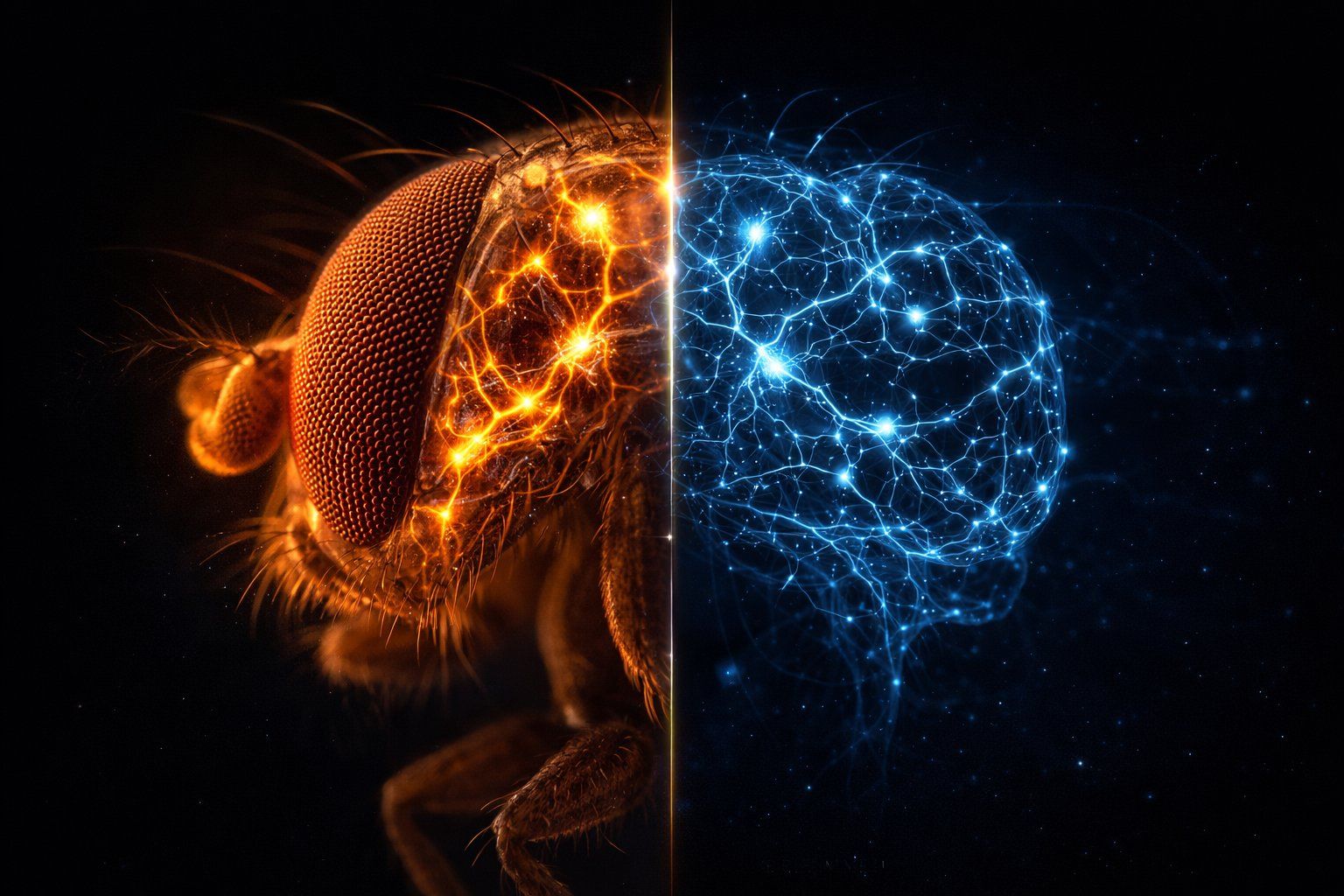







Imagine a world where blindness is no longer an unbreakable barrier a device that bypasses damaged eyes entirely, feeding visual information straight into the brain like a digital lifeline. This isn’t science fiction; it’s the promise of Neuralink’s Blindsight implant, a cutting age innavation on brain-computer interface announced by Elon Musk and his team.
Elon Musk View:
What Is Blindsight?
Blindsight is Neuralink’s second major product after Telepathy, their initial brain-computer interface focused on thought-controlled devices. Announced in early 2024, Blindsight targets a profound challenge: restoring vision for people who are completely blind, even those who’ve never seen before due to congenital conditions or total loss of eyes and optic nerves. The key caveat? The brain’s visual cortex—the region responsible for processing sight—must remain intact.
Picture this: Instead of relying on the eyes as cameras, Blindsight acts as a neural shortcut. It captures visual data from an external source, like a camera, converts it into electrical signals, and delivers those signals directly into the brain.
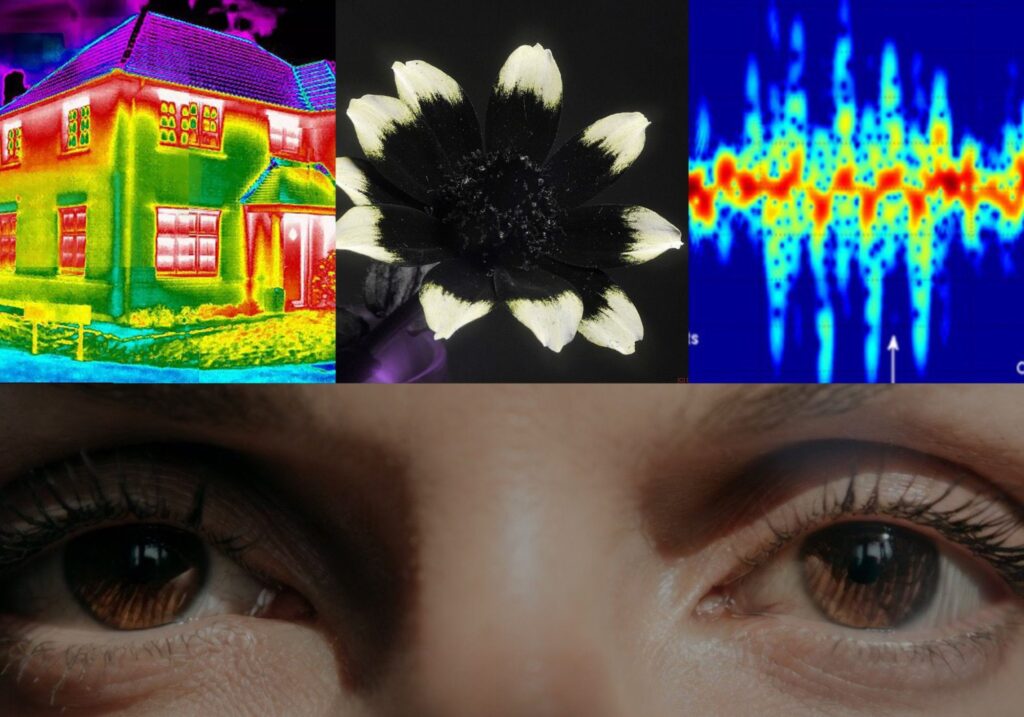
The user “sees” phosphenes tiny flashes of light that form images, starting crude but potentially evolving into high-definition, superhuman vision. Musk has likened the early stages to “Atari graphics,” evoking blocky, pixelated views from old video games, but with upgrades that could let users perceive infrared, ultraviolet, or even radar wavelengths like Star Trek’s Geordi La Forge with his visor.
The Result
By January 2026, Neuralink is actively hiring for roles to advance Blindsight, signaling ongoing development amid animal trials and early human considerations. The FDA granted it Breakthrough Device Designation in September 2024, fast-tracking its path to clinical use for serious conditions like blindness.
How Does Blindsight Actually Work?
At its core, Blindsight is a sophisticated brain-computer interface that bridges the gap between the digital world and the human brain. Here’s how it unfolds, based on Neuralink’s descriptions and expert breakdowns:
Capturing the Visual World: The process starts outside the body. A camera possibly mounted on glasses or integrated into a wearable device records the scene in front of the user. This isn’t just any video feed; it’s processed to mimic how light hits the retina in a healthy eye. The camera converts light into digital data, which is then translated into patterns of electrical signals.
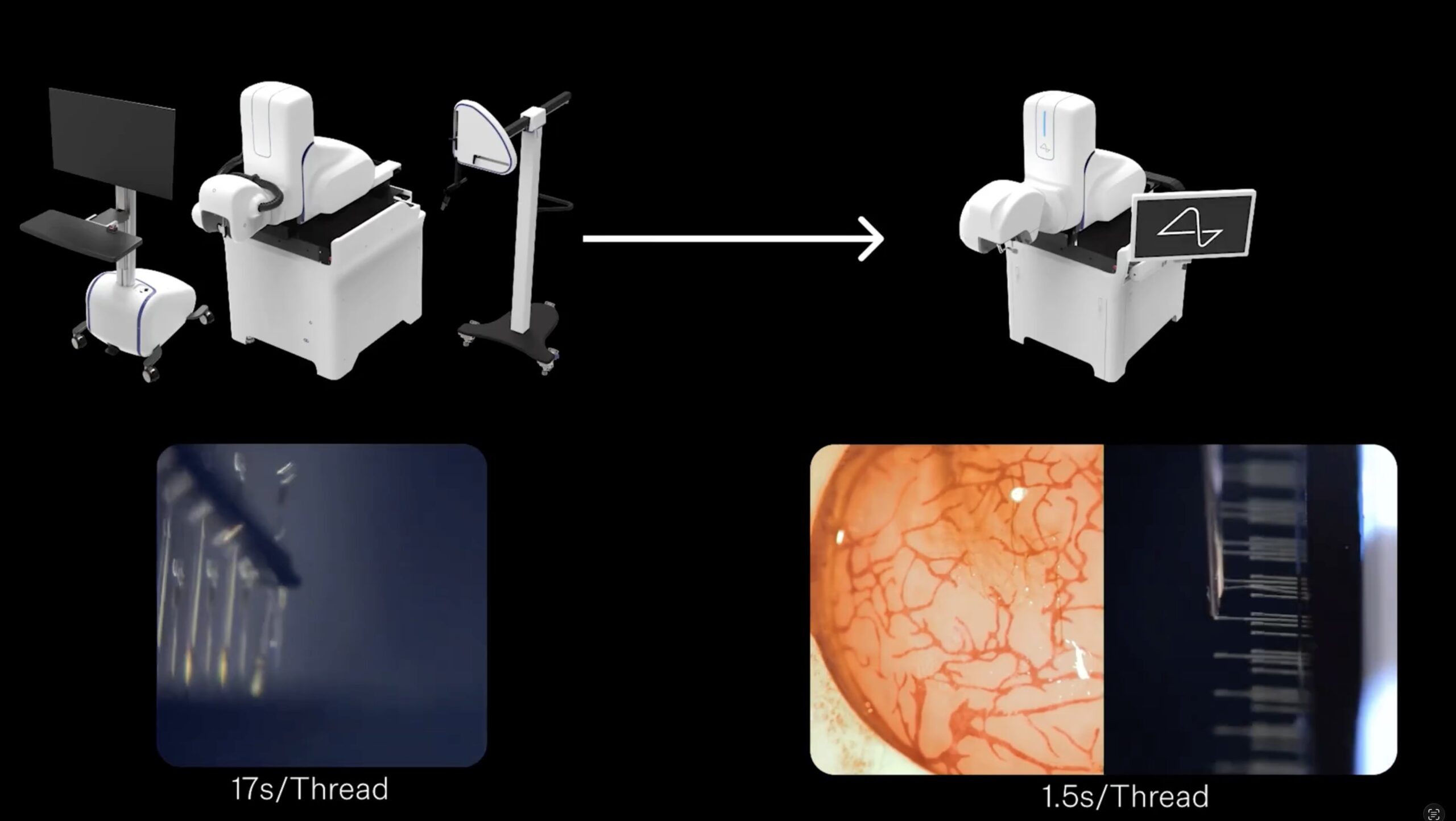
The Implant: Neuralink’s N1 Chip: This is where the magic happens. Neuralink’s N1 implant, a coin-sized device with over 1,000 ultra-thin, flexible threads (each thinner than a human hair), is surgically placed in the visual cortex. These threads contain electrodes that can both read brain activity and stimulate neurons. For Blindsight, the focus is on “writing” to the brain: delivering precise electrical pulses to activate specific neurons.
Stimulating the Visual Cortex: The digital signals from the camera are wirelessly transmitted to the implant. There, they trigger neurons in the visual cortex, creating phosphenes—those perceived dots of light. It’s like painting a picture pixel by pixel on the brain’s canvas. Initially, this might produce low-resolution images, but as the system refines its mapping, learning which electrodes correspond to which parts of the visual field, clarity improves.
Brain Adaptation and Learning: The brain isn’t a passive screen; it’s plastic and adaptable. Users would train with the device, allowing their visual cortex to interpret these artificial signals as coherent vision. This is especially revolutionary for those blind from birth, whose visual cortices have never processed natural input but retain the potential to learn. Neuralink has demonstrated this concept in monkeys, where implants induced “phantom” visions making the animal perceive shapes that weren’t there physically.
Output and Enhancement: Over time, the system could scale up resolution by increasing electrode density. Beyond restoration, enhancements like seeing in non-visible spectrums become possible because the input is digital and tunable feed in infrared data, and the brain learns to “see” heat signatures.
The surgery is robotic for precision, minimizing risks, and the implant is powered wirelessly. As of mid-2025, Neuralink reported success in monkey trials, with plans for human implants that year.
The Science Behind From Neurons to Phosphenes
Blindsight builds on over 50 years of neuroscience research into visual prosthetics. The visual cortex, located at the back of the brain, is a map of our sight—different areas process edges, colors, and motion. When light hits the retina, it sends electrical signals via the optic nerve to this cortex, creating what we perceive as vision.
But what if the eyes or nerve are damaged? Enter cortical stimulation. Pioneering work in the 1960s showed that electrically stimulating the visual cortex with electrodes produces phosphenes—users report seeing stars or spots. Neuralink amplifies this approach with high-density arrays: more electrodes mean more “pixels” for finer images.
The brain’s receptive fields each neuron’s “preferred” spot in the visual field—limit resolution. Stimulating one neuron creates a blob, not a sharp point, so even millions of electrodes might not exceed natural vision without clever algorithms. A 2024 University of Washington model suggests Blindsight’s output could match but not immediately surpass human sight, due to these biological constraints.
The challenge?
The brain rewires itself, especially in younger users or through training. For “write” capabilities like stimulating the brain, Blindsight flips the traditional brain-computer interface script from reading thoughts to inputting sensations, opening doors to future applications in memory enhancement or sensory augmentation. Comparisons to devices like the Australian Gennaris bionic eye highlight similarities, but Blindsight’s direct cortical approach bypasses more limitations of eye-based systems.
Neuroplasticity is key
Neuralink’s journey with Blindsight kicked off with announcements in 2024, following Telepathy’s first human implant. Monkey trials showed promise: By March 2024, implants restored basic vision, and by June 2025, they induced visual hallucinations in primates proof of concept for creating sight from electrical stimulation alone.
Human trials are on the horizon. The FDA’s breakthrough status accelerates reviews, with initial human implants targeted for 2025. By 2026, recruitment continues for both patients and engineers, focusing on those with intact visual cortices. Challenges remain, including infection risks, electrode longevity, and ethical concerns like data privacy in a brain-linked device.
Critics warn of potential overhype: Early versions may disappoint with blurry, unstable images that fall short of natural vision. Yet, if successful, the technology could transform the lives of millions affected by blindness from accidents, diseases, or congenital conditions.
The Future Of Superhuman Senses
Blindsight isn’t just about fixing what’s broken it’s about augmentation. Imagine soldiers seeing in the dark, surgeons perceiving infrared heat signatures during operations, or artists experiencing entirely new spectrums of color. The possibilities extend far beyond medical restoration into the realm of human enhancement.
But this raises profound questions:
Who gets access to such technology?
Could it create new forms of inequality between the enhanced and unenhanced?
What are the long-term effects of constant electrical stimulation on brain tissue?
And how do we protect the privacy and security of devices that interface directly with our thoughts and perceptions?
As Neuralink pushes boundaries, blending artificial intelligence with biology, we’re on the cusp of a new era in human capability. Blindsight could illuminate not just dark worlds but our understanding of consciousness, perception, and what it means to be human. The technology promises to restore one of our most precious senses while simultaneously challenging us to consider the implications of transcending our natural limitations.
Watch this space the future looks brighter, pixel by pixel.