



Thursday, June 18, 2026
SAVED POSTS
  • Login
  • Register
RathBiotaClan
No Result
View All Result
  • HOME
  • HEALTH SCIENCE

    TRENDING ON HEALTH (TOP)

    For People Antidepressants Never Helped, a 30-Minute Home Session Is Now FDA-Approved

    Scientists Say Your Next Tube of Toothpaste Could Be Made From Human Hair

    Your Lungs, Liver, and Pancreas Also Age Faster When You Sleep Wrong

    Cycling Linked to Lower Dementia Risk in Study of Nearly 480,000 Adults

    NOW ON AIR (RBC)

    NEUROSCIENCE

    Step-Synchronized Brain Stimulation Reduces Falls in Small Parkinson’s Trial

    June 16, 2026
    NEWS

    A Father’s Touch in Infancy Can Shape a Child’s Health for Years, New Science Explains Why

    June 9, 2026
    MutExpress
    BIOINFORMATICS

    South Asian Patients Have Been Left Out of Cancer Genomics for Decades & MutExpress-India Is Changing That

    June 8, 2026
    Biodiversity Loss
    ECOLOGY

    Biodiversity Loss Could Bankrupt Nations And Wall Street Hasn’t Noticed Yet

    June 5, 2026
  • NEUROSCIENCE
    • PHYSIOLOGY
    • IMMUNOLOGY
    • CANCER
  • DISCOVERIES
    • SPOTLIGHTS
    • STUDENT PORTAL
    • SCIENCE FEATURED
  • MOLECULAR BIOLOGY
    • GENETICS
    • BIOTECHNOLOGY
    • BIOINFORMATICS
    • BIOCHEMISTRY
    • BIOPHYSICS
  • ZOOLOGY & ECOLOGY
    • ENVIRONMENTAL SCIENCE
    • ECOLOGY
    • EVOLUTION
  • MICRO & PLANT SCIENCE
    • MICROBIOLOGY
    • CELL BIOLOGY
    • DEVELOPMENTAL BIOLOGY
  • PSYCHOLOGY
RathBiotaClan
RathBiotaClan
No Result
View All Result
Home DISCOVERIES

New Species of Extinct Pig-Footed Bandicoot Discovered

Shibasis Rath by Shibasis Rath
September 3, 2024
in DISCOVERIES, EVOLUTION, ZOOLOGY
Reading Time: 5 mins read
0
A A
0

The Extinct Pig-Footed Bandicoot: Chaeropus ecaudatus

Scientific Classification:

  • Scientific name: Chaeropus ecaudatus
  • Phylum: Chordata
  • Class: Mammalia
  • Order: Peramelemorphia
  • Family: Chaeropodidae

When did it become extinct?

The last verifiable specimen was collected in 1901, but it probably survived in remote areas for far longer, possibly until the 1950s.

Where did it live?

This marsupial was known only from the plains of inland Australia. Australia was once home to a unique collection of beasts, including giant marsupials and fearsome reptiles. However, scurrying around the big feet of this megafauna were a huge number of small marsupials that evolved to fill most of the ecological niches occupied by placental mammals in other parts of the world. There were rabbit like marsupials, tiny mouse like animals, even a marsupial equivalent of a mole, to name but a few. Some of these animals can still be found today, but many ended up going the same way as the other long-gone denizens of Australia.

The pig-footed bandicoot was one of these animals. For millions of years, this odd little marsupial, which was no bigger than a kitten, lived throughout Australia. However, in recent times, it became restricted to the arid and semiarid inland plains. This bandicoot, with its rabbit ears, was probably a familiar sight to the Australian Aborigines as it hopped and bounded around the plains.

Unique Characteristics:

Perhaps the oddest thing about this marsupial was the four spindly legs that supported its plump little body. It is from the animal’s feet that we get its common name. On its forefeet, there were only two functional toes with hoof-like nails, remarkably similar to the feet of a pig, but in miniature. The hind limbs were also highly modified as the second and third toes were fused together, and only the fourth toe, which ended in a nail like a tiny horse’s hoof, was used in locomotion.

ADVERTISEMENT

With such highly modified limbs, the pig-footed bandicoot was undoubtedly a running animal. Its gait depended on its speed: when it was skulking around looking for food, it moved in a series of bunny hops—taking its weight on its forelimbs and pulling its back legs along. When it chose to increase its pace, the hind limbs were moved alternately, and, according to Aborigines, when it really wanted to move quickly, it stretched out and took to a smooth gallop. Not only was the pig-footed bandicoot quick, but it also had a lot of stamina and could run at full speed for long periods.

READ ALSO

Human-generated electromagnetic noise has long lasting effects on light orientation in bats

Fossil Penguins From New Zealand Reveal Stages of the Birds’ Long Evolutionary History

Diet and Behavior:

Apart from being very fleet of foot, the pig-footed bandicoot was also said to be more dependent on plant food than the other types of bandicoots, which are generally insectivorous marsupials. In the wild, they subsisted on grass seeds, but in captivity, they ate a range of food, including lettuce, bulbs, and grasshoppers. It is said that during the hottest part of the day, they would seek refuge from the sun’s rays in a grass nest, only venturing out to seek food and mates in the early evening.

ADVERTISEMENT

If the other bandicoots are anything to go by, the pig-footed bandicoot must have had a very short gestation. Baby bandicoots spend only about 12 days in their mother’s womb—the shortest time for any mammal—and they are also unique for being attached to their mother by a placenta-like organ. The pig-footed bandicoot’s short gestation probably ended in a very short birth—which, for living bandicoots, is around 10 minutes. The tiny babies crept to their mother’s rear-facing pouch, and although there were eight teats in this furry pocket, there were no more than four babies in each litter. After the young had outgrown the pouch, the female left them in a grass nest until they were ready to follow her on forays for food in the warmth of the evening sun.

ADVERTISEMENT

Extinction:

The last known definite specimen was collected in 1901, and even long before this date, it was never considered to be a common species. We do know that it was hunted by Australian Aborigines for its meat, which was regarded as a delicacy, and its tail brush, which was sometimes worn as a decoration.

The extinction of some of Australia’s other native animals has been blamed on Aborigines, but the pig-footed bandicoot coexisted with the Aborigines for thousands of years. The decline and extinction of this unique marsupial coincides with the spread of Europeans through Australia.

For thousands of years, Aborigines practiced brush burning to clear land and encourage new plant growth. Many species of smaller marsupials benefited from this because of the food it provided, not only in terms of fresh plant matter but also in terms of the smaller animals that were forced out of hiding by the smoke and flames. With the arrival of Europeans, all this changed, as the Aborigines themselves were pushed toward extinction. The way the Aborigines managed the land ended, and any native animals that had previously benefited were faced with some tough times.

As Europeans swept aside the old Aboriginal ways, they replaced them with their own methods of taming the harsh land. They brought modern agriculture and a menagerie of domestic animals, including dogs, cats, foxes, sheep, goats, and cattle.

To a seasoned predator, such as a cat or fox, the pig-footed bandicoot must have been a delightful morsel; however, hunting by introduced species was probably only a minor factor in their extinction. Agriculture likely had the greatest effect on this species.

Herds of sheep, goats, and cattle grazed the delicate plains of inland Australia, lands that simply could not tolerate the intensive chomping of countless mouths, not to mention the hordes of hooves, which churned the ground into a dust bowl. Not long after Europeans first settled Australia, the pig-footed bandicoot joined the long roll call of extinct marsupials.
  • Share on WhatsApp (Opens in new window) WhatsApp
  • Share on Facebook (Opens in new window) Facebook
  • Share on Reddit (Opens in new window) Reddit
  • Share on X (Opens in new window) X
  • Print (Opens in new window) Print
Shibasis Rath

Shibasis Rath

"𝓒𝓸𝓷𝓷𝓮𝓬𝓽𝓲𝓷𝓰 𝓡𝓮𝓼𝓮𝓪𝓻𝓬𝓱 𝓣𝓸 𝓡𝓮𝓪𝓵𝓲𝓽𝔂" 𝓲𝓼𝓷'𝓽 𝓙𝓾𝓼𝓽 𝓪 𝓜𝓸𝓽𝓽𝓸 - 𝓘𝓽'𝓼 𝓜𝔂 𝓜𝓲𝓼𝓼𝓲𝓸𝓷

Related Posts

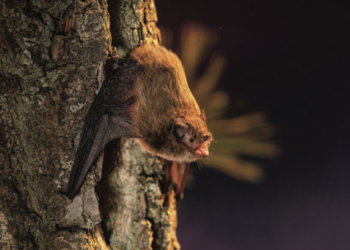
Soprano pipistrelle (Pipistrellus pygmaeus) emerging from a tree hollow at the moment of take-off.
ECOLOGY

Human-generated electromagnetic noise has long lasting effects on light orientation in bats

June 4, 2026
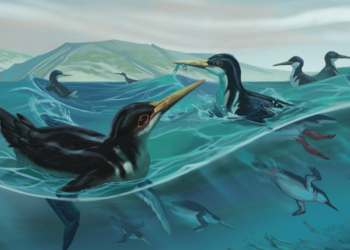
The oldest penguin species yet discovered, Daniadyptes primaevus, was a flightless bird that spent much of its time in the ocean, just like modern penguins. However, fossil evidence of the species’ long beaks suggests that it used hunting practices more like those of modern seabirds, such as cormorants, which stay near the water’s surface because they cannot swallow their prey underwater. Traces of the many varieties of ancient penguins that lived in New Zealand are al- lowing paleontologists to track their evolution into the semiaquatic birds found today.
DISCOVERIES

Fossil Penguins From New Zealand Reveal Stages of the Birds’ Long Evolutionary History

May 1, 2026
Rare Peacock Tarantula Image
NEWS

Critically Endangered Blue Tarantula Surveyed in India’s Largest Tiger Reserve

April 30, 2026

POPULAR NEWS

Chewing gum releases thousands of microplastic particles directly into your mouth with every piece you chew

Chewing gum releases thousands of microplastic particles directly into your mouth with every piece you chew

by Shibasis Rath
May 8, 2026
0

Microplastics are turning up in places researchers never expected: deep-sea sediments, Arctic ice, and human blood. Now, a UCLA pilot...

New Studys Says Gen Z is the least sexually active young cohort in modern recorded history

New Studys Says Gen Z is the least sexually active young cohort in modern recorded history

by Shibasis Rath
January 24, 2026
0

A generation that grew up with dating apps in their pockets, pornography a tap away, and sex discussed more openly...

Yelling Isn’t Just Yelling: How a Hostile Home Rewires a Child’s Brain for Constant Alert

Yelling Isn’t Just Yelling: How a Hostile Home Rewires a Child’s Brain for Constant Alert

by Shibasis Rath
March 8, 2026
0

To a parent in the heat of the moment, a raised voice may feel like simple frustration. To a child...

a group of gen Z kids walking down a street

Is Gen Z the First Generation Less Intelligent Than Their Parents?

by Shibasis Rath
February 5, 2026
0

Gen Z intelligence decline is emerging as a serious concern among neuroscientists and education researchers. For over a century, each...

Whole Brain Emulation Achieved: Scientists Run a Fruit Fly Brain in Simulation

by Shibasis Rath
March 9, 2026
0

Scientists have copied an entire biological brain neuron by neuron and synapse by synapse and made it control a simulated...

EDITOR CHOICE‘S

  • All
  • NEWS
  • SPOTLIGHTS
Step-Synchronized Brain Stimulation Reduces Falls in Small Parkinson’s Trial

Step-Synchronized Brain Stimulation Reduces Falls in Small Parkinson’s Trial

by Staff Writer
June 16, 2026
0

Researchers have reported encouraging results from a small feasibility study testing a new form of adaptive deep brain stimulation (aDBS)...

A Father’s Touch in Infancy Can Shape a Child’s Health for Years, New Science Explains Why

A Father’s Touch in Infancy Can Shape a Child’s Health for Years, New Science Explains Why

by Staff Writer
June 9, 2026
0

A study from Penn State University has revealed something startling beneath that simplicity those early interactions carry biological consequences that...

MutExpress

South Asian Patients Have Been Left Out of Cancer Genomics for Decades & MutExpress-India Is Changing That

by Staff Writer
June 8, 2026
0

The databases that underpin modern cancer genomics have a geography problem. The gnomAD database the gold standard for allele frequency...

Biodiversity Loss

Biodiversity Loss Could Bankrupt Nations And Wall Street Hasn’t Noticed Yet

by Staff Writer
June 5, 2026
0

Every year, governments borrow trillions of dollars to function. The interest rate they pay depends almost entirely on their credit...

ADVERTISEMENT

RathBiotaClan – RBC

RathBiotaClan – Connecting Research To Reality

Your trusted source for life science news, biology research & discoveries. Covering neuroscience, genetics, ecology, and more — connecting research to reality.

About Us

Privacy Policies

Contact Us

Editorial Standard

Latest Posts

  • Step-Synchronized Brain Stimulation Reduces Falls in Small Parkinson’s Trial
  • A Father’s Touch in Infancy Can Shape a Child’s Health for Years, New Science Explains Why
  • South Asian Patients Have Been Left Out of Cancer Genomics for Decades & MutExpress-India Is Changing That
  • Biodiversity Loss Could Bankrupt Nations And Wall Street Hasn’t Noticed Yet

SHIBASIS RATH

Contact Mail

rathbiotaclan@gmail.com

No Result
View All Result
MSME (Udyam) Certified Science Platform
Govt. of India

Get Us On PlayStore

playstore app for rathbiotaclan
  • About Us
  • Advertise With Us
  • Cancellation and Refund Policy
  • Contact Us
  • Contribute
  • Editorial Standards
  • Home
  • Pricing Details
  • Privacy Policies
  • Shipping Policy
  • Terms & Conditions

© 2026 RathBiotaClan. All rights reserved.

Welcome Back!

Sign In with Google
OR

Login to your account below

Forgotten Password? Sign Up

Create New Account!

Sign Up with Google
OR

Fill the forms below to register

*By registering into our website, you agree to the Terms & Conditions and Privacy Policy.
All fields are required. Log In

Retrieve your password

Please enter your username or email address to reset your password.

Log In

Add New Playlist

No Result
View All Result
  • HOME
  • HEALTH SCIENCE
  • NEUROSCIENCE
    • PHYSIOLOGY
    • IMMUNOLOGY
    • CANCER
  • DISCOVERIES
    • SPOTLIGHTS
    • STUDENT PORTAL
    • SCIENCE FEATURED
  • MOLECULAR BIOLOGY
    • GENETICS
    • BIOTECHNOLOGY
    • BIOINFORMATICS
    • BIOCHEMISTRY
    • BIOPHYSICS
  • ZOOLOGY & ECOLOGY
    • ENVIRONMENTAL SCIENCE
    • ECOLOGY
    • EVOLUTION
  • MICRO & PLANT SCIENCE
    • MICROBIOLOGY
    • CELL BIOLOGY
    • DEVELOPMENTAL BIOLOGY
  • PSYCHOLOGY
  • Login
  • Sign Up
SAVED POSTS

© 2026 RathBiotaClan. All rights reserved.

This website uses cookies. By continuing to use this website you are giving consent to cookies being used. Visit our Privacy and Cookie Policy.