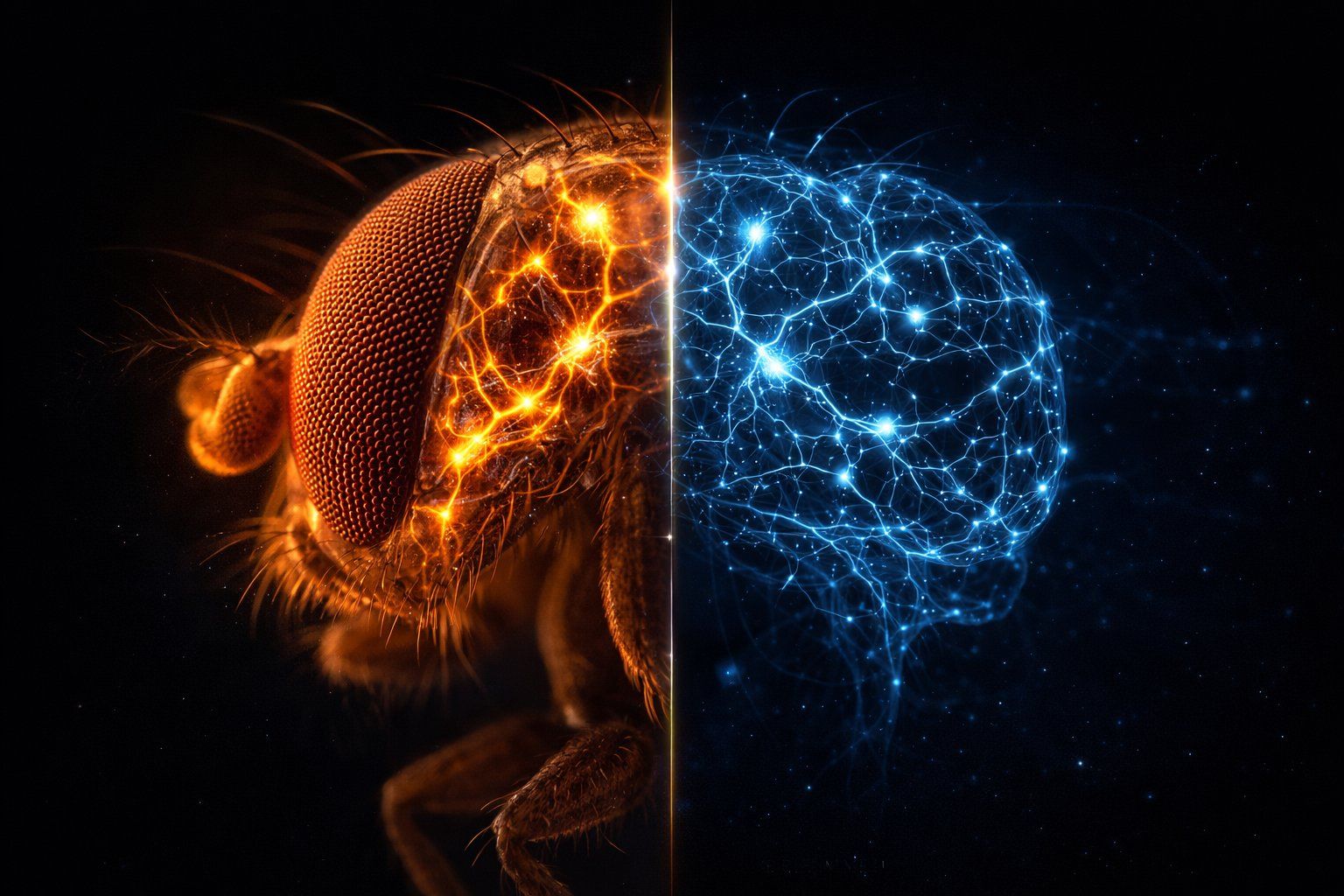







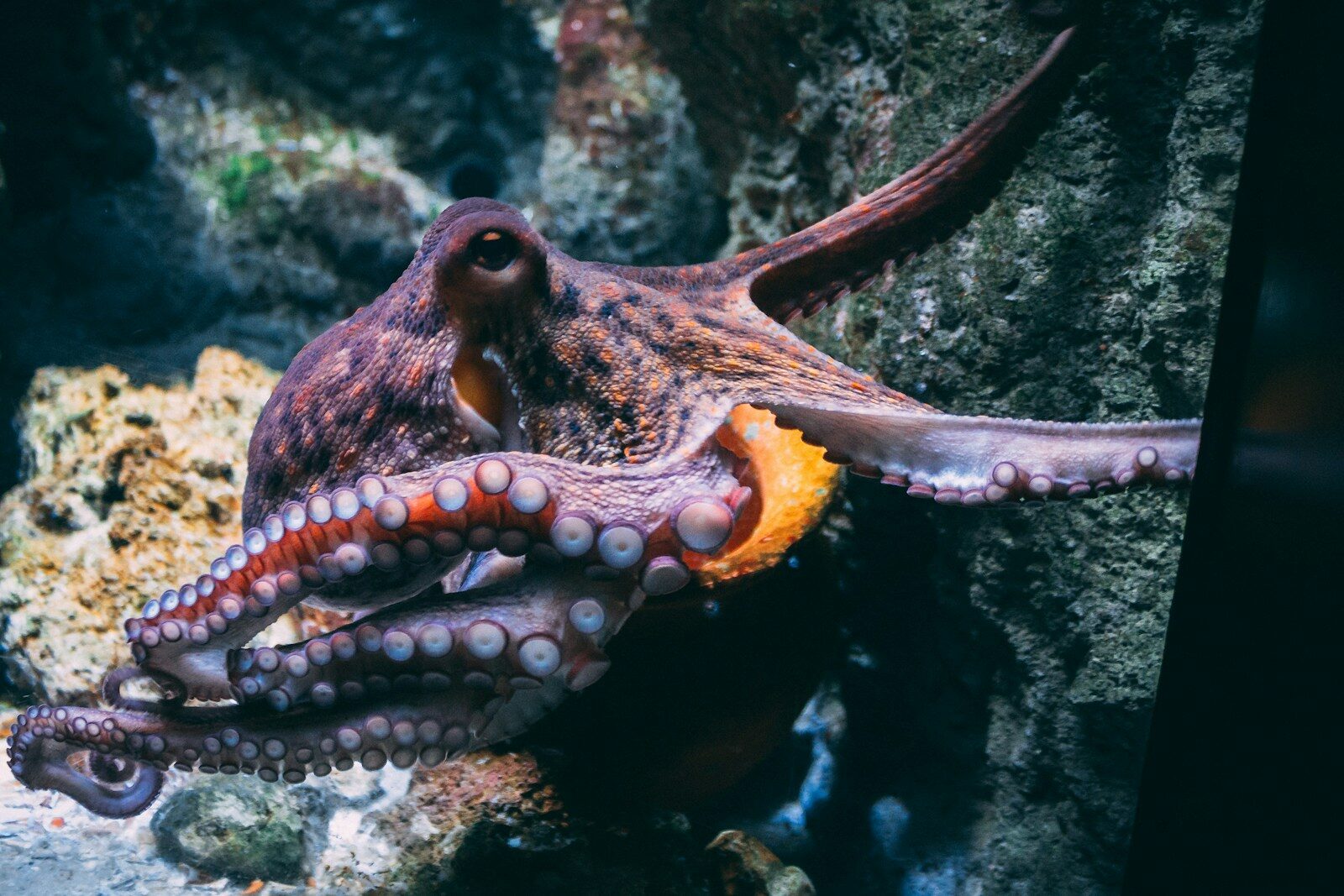
A throwaway remark about “alien” biology sparked a viral myth. The reality of octopus genetics is stranger and more illuminating than any science fiction.
In 2015, a team of international researchers published what was, by any measure, a landmark paper. Sequencing the genome of Octopus bimaculoides the California two-spot octopus they revealed an animal whose molecular architecture had been sculpted into something almost unrecognisable by hundreds of millions of years of evolution. The genome, they reported, contained roughly 33,000 protein-coding genes, a number that comfortably exceeds our own ~20,000. The paper, published in Nature, sent ripples through the scientific community and, unfortunately, through corners of the internet where nuance rarely survives.
Within months, a distorted reading of the work had taken hold online: octopuses must be extraterrestrial. Their genomes were “alien.” One researcher had even said so — hadn’t they? A viral blogpost in 2018, citing a speculative paper on panspermia in the journal Progress in Biophysics and Molecular Biology, claimed that cephalopod eggs may have arrived on Earth via meteorite. The paper was widely condemned by evolutionary biologists. Yet the myth proved stickier than the science.
The reality, as any cephalopod biologist will tell you, is simultaneously more prosaic and more astonishing. Octopuses are not aliens. They are molluscs — the same phylum as garden snails and clams and every base pair of their DNA is unmistakably terrestrial. What makes them extraordinary is not their cosmic origins but the audacity of Earth’s own evolutionary process.
An Octopus Genome So Unusual It Rewrote Evolutionary Expectations
When Clifton Ragsdale at the University of Chicago and his colleagues published the O. bimaculoides genome, they were immediately struck by its sheer size: 2.7 gigabases, comparable to a mammalian genome. More striking than its length, though, was its content. The team identified massive expansions in two gene families: the protocadherins and the zinc-finger transcription factors.
Protocadherins are cell-adhesion proteins critical to the wiring of the vertebrate nervous system. In humans, we carry around 58 of them. In O. bimaculoides, the researchers counted 168. Zinc-finger transcription factors — proteins that bind DNA and regulate gene expression — numbered more than 1,800, one of the largest repertoires ever identified in any animal. These are not exotic, extraterrestrial proteins. They are familiar evolutionary tools, repurposed and amplified to extraordinary effect.
“What we found,” Ragsdale told Nature at the time, “is that the octopus is like no other animal we’ve ever seen.” He did not mean cosmologically. He meant evolutionarily — that cephalopods had arrived at complexity through a path entirely their own, diverging from the last common ancestor shared with vertebrates more than 750 million years ago.
Evolution Ran the Experiment Twice and Octopuses Built Intelligence Their Own Way
Perhaps the most intellectually exciting aspect of octopus biology is what it reveals about convergent evolution the process by which unrelated lineages independently evolve similar traits in response to similar selective pressures. The octopus camera eye, for instance, is functionally almost identical to the vertebrate eye, yet it evolved entirely separately. The same logic applies to their nervous systems.
The octopus brain is not a vertebrate brain wearing a disguise. It has a completely different architecture. Rather than being centralised in a single mass, roughly two-thirds of an octopus’s 500 million neurons are distributed across its eight arms. Each arm can act semi-autonomously, processing sensory information and executing motor commands without consulting the central brain — a form of distributed cognition that has no precise vertebrate equivalent.
The genetic underpinning of this architecture appears to be, at least in part, those expanded protocadherin genes. In vertebrates, protocadherins generate diversity in neuronal identity, helping the brain distinguish self from non-self at the synaptic level. An expanded repertoire in octopuses may serve an analogous function in a very different neural topology. This is evolution solving the same problem — complex cognition with different molecular starting materials and arriving at different, but equally effective, solutions.
A 2022 study in Cell added another layer: transposable elements, or “jumping genes,” are highly active in the octopus brain particularly in its vertical lobe, the region associated with learning and memory. The authors showed that these LINE retrotransposons are expressed in a regulated, tissue-specific manner. Rather than being genomic noise, they appear to be active participants in neural function.
Octopuses Can Rewrite Their Genetic Code and It Changes Everything
If the genome expansion grabbed headlines in 2015, a quieter but arguably more profound discovery followed two years later. A team led by Eli Eisenberg at Tel Aviv University and Joshua Rosenthal at the Marine Biological Laboratory in Woods Hole, Massachusetts, reported in Cell that cephalopods edit their RNA with extraordinary frequency.
In most organisms, RNA editing — the post-transcriptional modification of messenger RNA sequences — is a relatively modest affair. In humans, around 3,000 such edits have been catalogued, mostly in non-coding regions. In the squid Doryteuthis pealeii, the researchers identified more than 60,000 recoding sites — positions where the RNA sequence is altered, changing the protein that will be produced. Crucially, the vast majority of these edits occur in the nervous system.
The mechanism is adenosine-to-inosine (A-to-I) editing, catalysed by enzymes of the ADAR family. Inosine is read by the cellular machinery as guanosine, effectively changing codons and, consequently, amino acids. In cephalopods, this process appears to be a significant source of proteomic diversity — allowing the same genome to produce functionally distinct proteins under different conditions, at different developmental stages, or in different tissues.
A 2022 study in Nucleic Acids Research extended these findings to octopuses, identifying tens of thousands of editing sites conserved across multiple species. The authors proposed that this RNA editing programme may be particularly important in cold-adapted cephalopods, allowing rapid, reversible tuning of neural protein function without requiring permanent DNA mutations — a kind of epigenetic flexibility unparalleled among animals.
None of this requires an extraterrestrial explanation. ADAR enzymes are ancient, conserved proteins found across the animal kingdom. What appears to have happened in cephalopods is an evolutionary amplification of a pre-existing toolkit.
The Science Behind Octopus Invisibility: Skin That Sees, Thinks, and Transforms
Ask most people what they know about octopuses, and they will mention camouflage. In under 200 milliseconds, an octopus can transform its skin from blank beige to a complex pattern mimicking coral, sand, or rock all while being, for all available evidence, colour-blind. The 2015 genome paper shed light on the molecular basis of this feat.
The reflectin gene family, responsible for the iridescent, light-scattering properties of cephalopod skin, was found to be substantially expanded in O. bimaculoides. Reflectins are structural proteins that assemble into tunable Bragg reflectors within specialised skin cells called iridophores. By changing the spacing between reflectin layers, the animal can dynamically alter the wavelengths of light it reflects — producing iridescence, colour change, and polarised light patterns under neural control.
Alongside iridophores, the skin contains chromatophores pigment-filled sacs expanded or contracted within milliseconds by muscular action and leucophores, which scatter white light. The interplay of these three cell types, coordinated by a sophisticated neural system, produces the visual spectacle for which cephalopods are renowned. Each component has a clear molecular and evolutionary history rooted entirely in Lophotrochozoa, the superphylum of which molluscs are members.
Where Did the Myth Come From?
The 2018 panspermia paper that ignited the viral myth was authored by a group including astrophysicists and microbiologists. The paper proposed that cryopreserved cephalopod eggs or the viruses encoding cephalopod novelties may have arrived on Earth aboard comets during the Cambrian explosion. The claim was based primarily on the timing of the Cambrian radiation and the apparent discontinuity of cephalopod evolution in the fossil record.
The paper was not peer-reviewed by evolutionary biologists or geneticists, and its central claims contradicted well-established phylogenetic evidence. Cephalopod molecular phylogenetics places them firmly within the molluscan tree of life, sharing unambiguous homology with gastropods and bivalves at the level of both morphology and DNA sequence.
The viral spread of the “alien octopus” claim offers a case study in scientific communication. A speculative and poorly received academic paper was filtered through popular science blogs, stripped of its caveats, and amplified by social media into a claim that continues to circulate today. The fact that octopus biology is genuinely remarkable made the distortion easier: readers primed to find octopuses extraordinary were receptive to an extraordinary explanation.
“The alien hypothesis is not only unnecessary,” says cephalopod cognition specialist Jennifer Mather of the University of Lethbridge, “it actively obscures what is genuinely fascinating about these animals. They got here the same way we did — through evolution. The difference is that their evolutionary path was so different from ours that it feels alien, even though it isn’t.”
What Octopus Genomes Teach Us About Life
The scientific value of the octopus genome extends well beyond cephalopod biology. Because cephalopods achieved complex intelligence independently of vertebrates, they constitute a natural experiment in the evolution of cognition — one of the most important questions in all of biology.
The RNA editing story has similarly broad implications. Research groups studying neurological plasticity in mammals have begun examining whether ADAR activity plays a role in synaptic tuning, partly inspired by the cephalopod findings.
Reflectin proteins, meanwhile, have attracted interest from materials scientists. Their ability to dynamically control light scattering has inspired research into bioinspired photonics — tunable optical devices modelled on cephalopod skin.
None of these research programmes require their subjects to be extraterrestrial. On the contrary, their value depends entirely on octopuses being products of Earth’s evolutionary history, related to us by distant common ancestry, subject to the same molecular constraints and selective pressures that shaped every other living thing on this planet.
The Real Truth Is More Powerful Than the Myth
There is something telling about our appetite for the alien octopus myth. It reflects a hunger for evidence that intelligence is not a solitary human achievement, and that the universe is stranger and more populated with minds than we imagine. These are reasonable things to hope for.
But the octopus already delivers on both counts, without requiring us to invoke comets. Here is an animal whose last common ancestor with us was a small, probably eyeless, flatworm-like creature half a billion years ago. From that shared starting point, two lineages diverged and, independently, each found its way to a brain capable of learning, play, problem-solving, and something that looks very much like curiosity. That is not a lesser wonder. It may be a greater one.
The octopus did not come from space. It came from here — from the same primordial biochemistry, the same evolutionary crucible, the same restless tinkering of natural selection that produced us. The fact that it ended up so different is precisely what makes it worth studying.
References
- Albertin et al. (2015). The octopus genome and the evolution of cephalopod neural and morphological novelties. Nature, 524, 220–224. https://doi.org/10.1038/nature14668
- Liscovitch-Brauer et al. (2017). Trade-off between transcriptome plasticity and genome evolution in cephalopods. Cell, 169(2), 191–202. https://doi.org/10.1016/j.cell.2017.03.025
- Zolotarov et al. (2022). A-to-I RNA editing is developmentally regulated and inversely correlated with genome editing in octopus. Nucleic Acids Research, 50(8), 4440–4456. https://doi.org/10.1093/nar/gkac144
- Díaz-Balzac & Garcia-Rivera (2022). Cephalopod transposable elements in the octopus brain. Cell, 185(10), 1862–1876. https://doi.org/10.1016/j.cell.2022.03.024
- Hochner, B. (2012). An embodied view of octopus neurobiology. Current Biology, 22(20), R887–R892. https://doi.org/10.1016/j.cub.2012.09.019
- Mäthger et al. (2009). Mechanisms and behavioural functions of structural coloration in cephalopods. Journal of the Royal Society Interface, 6(S2), S149–S163. https://doi.org/10.1098/rsif.2008.0240.focus
- Kocot et al. (2011). Phylogenomics reveals deep molluscan relationships. Nature, 477, 452–456. https://doi.org/10.1038/nature10382
- Steele et al. (2018). Cause of Cambrian explosion — Terrestrial or cosmic? Progress in Biophysics and Molecular Biology, 136, 3–23. https://doi.org/10.1016/j.pbiomolbio.2018.03.004 (Note: extraterrestrial claims rejected by mainstream evolutionary biology.)