





Monday, May 18, 2026
SAVED POSTS
  • Login
  • Register
RathBiotaClan
No Result
View All Result
  • HOME
  • HEALTH SCIENCE

    TRENDING ON HEALTH (TOP)

    Cycling Linked to Lower Dementia Risk in Study of Nearly 480,000 Adults

    First oral GLP-1 weight-loss pill approved a new era for accessible treatment

    Chewing gum releases thousands of microplastic particles directly into your mouth with every piece you chew

    Single-Cell Study of Over a Million Immune Cells Reveals Why Women Are More Prone to Autoimmune Disease

    NOW ON AIR (RBC)

    A new study has found that men’s brains shrink faster than women’s as they age.
    NEUROSCIENCE

    12,638 MRI Scans Confirm Men’s Brains Shrink Faster in PNAS Study

    May 14, 2026
    ENVIRONMENTAL SCIENCE

    Volcanic Eruptions Can Destroy Their Own Methane — Tonga’s Plume Shows How

    May 13, 2026
    3 men standing on rocky shore during daytime
    MOLECULAR BIOLOGY

    For Future Space Missions, Molecular Ecology Finally Offers a Clear Biosignature Target

    May 12, 2026
    Babies Yawn in the Womb
    DEVELOPMENTAL BIOLOGY

    Scientists Say Babies May Learn to Yawn Before Birth

    May 11, 2026
  • NEUROSCIENCE
    • PHYSIOLOGY
    • IMMUNOLOGY
    • CANCER
  • DISCOVERIES
    • SPOTLIGHTS
    • STUDENT PORTAL
    • SCIENCE FEATURED
  • MOLECULAR BIOLOGY
    • GENETICS
    • BIOTECHNOLOGY
    • BIOINFORMATICS
    • BIOCHEMISTRY
    • BIOPHYSICS
  • ZOOLOGY & ECOLOGY
    • ENVIRONMENTAL SCIENCE
    • ECOLOGY
    • EVOLUTION
  • MICRO & PLANT SCIENCE
    • MICROBIOLOGY
    • CELL BIOLOGY
    • DEVELOPMENTAL BIOLOGY
  • PSYCHOLOGY
RathBiotaClan
RathBiotaClan
No Result
View All Result
Home CELL BIOLOGY

Sea Urchin Twinning New Research On Embryo Self Organization

Shibasis Rath by Shibasis Rath
September 5, 2025
in CELL BIOLOGY, DEVELOPMENTAL BIOLOGY, MOLECULAR BIOLOGY, NEWS, SCIENCE FEATURED, ZOOLOGY
Reading Time: 4 mins read
0
A A
0
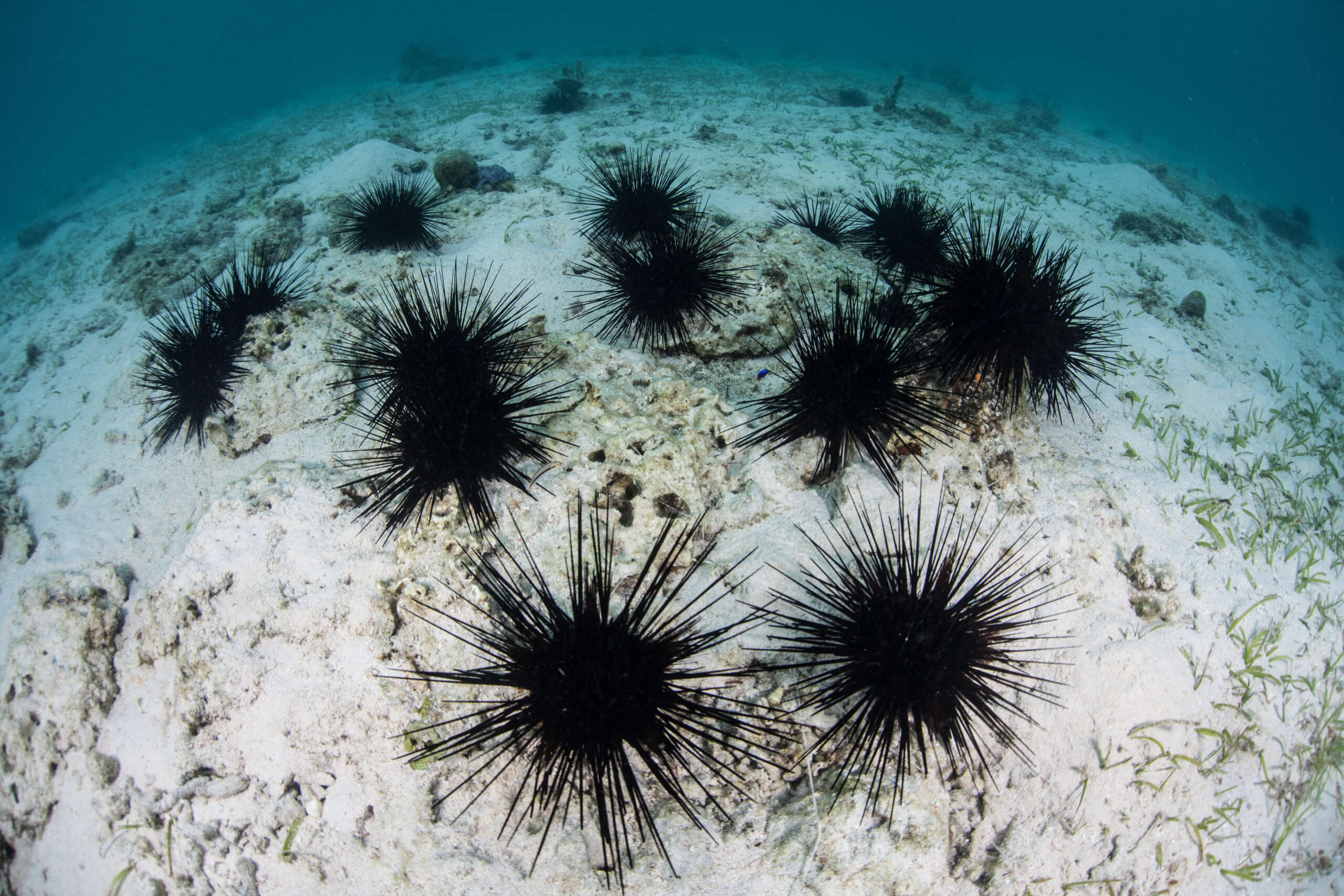
Underwater scene showing several black sea urchins, some appearing as if engaging in sea urchin twinning, with long spines scattered across a sandy ocean floor amid rocks and sparse marine vegetation.

Sea urchin twinning has fascinated scientists for more than a century, raising the question of how two complete individuals can emerge from a single fertilised egg. For over a century, scientists have been puzzled by a remarkable biological phenomenon: how can two complete individuals emerge from a single fertilised egg? 

This new research from the University of Tsukuba, published in Nature Communications, has shed light on this long-standing question, revealing the intricate cellular and molecular mechanisms behind sea urchin twinning. 

The study, drawing on Hans Driesch’s pioneering experiments from the late 19th century, details how early-stage sea urchin embryos can self-organise and regenerate their entire developmental plan even after being split in half.

Unique Developmental Trajectory

The researchers focused on the Japanese sea urchin species, Hemicentrotus pulcherrimus, and found that when a 2-cell stage embryo is bisected, each isolated half undergoes a unique and previously unreported developmental process. Unlike intact embryos that directly form a blastula, these halved embryos first develop into a flat, plate-like structure, then transition into a cup-like shape, and finally close to form a sphere. This spherical structure eventually develops into a miniature, yet complete, blastula. This distinct sequence of “flat, cup, and sphere” stages was also observed in S. purpuratus and Strongylocentrotus intermedius, though interestingly, Temnopleurus reevesii embryos develop directly into a blastula without these intermediate shapes. This suggests potential species-specific variations in regulative development.

ADVERTISEMENT

The Mechanics of Shape Transformation

The dramatic shift from a flat to a spherical shape is not driven by increased cell proliferation, but rather by dynamic cell shape changes. The study identified two key molecular mechanisms facilitating this morphological reorganisation. Firstly, actomyosin activity plays a crucial role. Live imaging revealed strong actin polymerisation on the basal side of cells during the cup-to-sphere transition, leading to cell elongation along the apicobasal axis, giving cells a distinct cone-like shape. Inhibiting actin polymerisation with cytochalasin D or myosin-II ATPase with (-)-blebbistatin prevented or delayed proper sphere formation, highlighting the essential role of actomyosin-generated forces.

READ ALSO

12,638 MRI Scans Confirm Men’s Brains Shrink Faster in PNAS Study

Volcanic Eruptions Can Destroy Their Own Methane — Tonga’s Plume Shows How

Secondly, septate junctions, which act as occluding junctions in invertebrates, contribute significantly to this shape transition. The timing of the flat-to-cup transition coincided with the initiation of septate junction formation. Knockdown experiments targeting tetraspanin and ZO-1, genes related to septate junctions, resulted in “bumpy” flat shapes where cells failed to form a single layer and struggled to achieve a spherical form. These findings suggest that the adhesive forces provided by septate junctions enable the edges of the cup-like structure to bind and close, forming a cohesive sphere. Crucially, the researchers concluded that these morphological changes are largely driven by cell-autonomous mechanisms, not by major signaling pathways typically associated with body axis formation.

ADVERTISEMENT

How the Body Finds Its Axes Again

Beyond forming a proper spherical shape, the halved embryos face the challenge of re-establishing their body axes. The study revealed a temporary disorganisation of the anterior-posterior (A-P) axis immediately after sphere formation, with anterior (foxQ2) and posterior (foxA) marker genes expressed in close proximity. However, this disruption is transient; within hours, the A-P axis is reorganised to resemble normal patterning. This re-organisation primarily involves the shifting of the anterior end specification site from its original position, while the posterior end largely maintains its location.

The Wnt/β-catenin signaling pathway was found to be essential for this anterior shift. Live imaging showed temporal nuclear β-catenin signals adjacent to the original posterior site after sphere formation, and inhibition of Wnt signaling prevented the anterior shift. This suggests that Wnt/β-catenin, while typically not restricting the anterior end in intact embryos at this stage, is reactivated to facilitate axis re-formation in halved embryos. Non-canonical Wnt signaling also partially contributes to this process.

The dorsal-ventral (D-V) axis also undergoes re-organisation. Initially, key D-V patterning genes like nodal are broadly expressed across the embryo during the cup and sphere stages, unlike their typical biased expression. However, after sphere formation, nodal expression re-biases towards the future ventral side, restoring normal D-V patterning. The re-establishment of the A-P axis appears to indirectly trigger D-V axis formation, possibly by clearing the Nodal repressor FoxQ2, thereby allowing the stable activation of the Nodal autoregulatory loop necessary for robust D-V axis formation.

ADVERTISEMENT

Broader Impact on Life Sciences

This research not only provides the first experimental evidence of the molecular mechanisms underlying axis re-formation during self-organization but also highlights the robustness and flexibility of embryonic developmental programs. The ability of sea urchin embryos to autonomously re-establish their developmental axes and molecular gradients after disruption offers crucial insights into regulative development and the origins of monozygotic twinning in humans. The parallels observed with Xenopus laevis suggest conserved evolutionary pathways for self-organisation. These findings could have significant implications for regenerative biology and artificial tissue engineering, where harnessing such self-organising principles might be key for tissue repair and organ regeneration.

REFERENCE

Suzuki, H., Yaguchi, J., Tsuyuzaki, K., & Yaguchi, S. (2025). Unraveling the regulative development and molecular mechanisms of identical sea urchin twins. Nature Communications, 16, 8005.

  • Share on WhatsApp (Opens in new window) WhatsApp
  • Share on Facebook (Opens in new window) Facebook
  • Share on Reddit (Opens in new window) Reddit
  • Share on X (Opens in new window) X
  • Print (Opens in new window) Print
Shibasis Rath

Shibasis Rath

"𝓒𝓸𝓷𝓷𝓮𝓬𝓽𝓲𝓷𝓰 𝓡𝓮𝓼𝓮𝓪𝓻𝓬𝓱 𝓣𝓸 𝓡𝓮𝓪𝓵𝓲𝓽𝔂" 𝓲𝓼𝓷'𝓽 𝓙𝓾𝓼𝓽 𝓪 𝓜𝓸𝓽𝓽𝓸 - 𝓘𝓽'𝓼 𝓜𝔂 𝓜𝓲𝓼𝓼𝓲𝓸𝓷

Related Posts

A new study has found that men’s brains shrink faster than women’s as they age.
NEUROSCIENCE

12,638 MRI Scans Confirm Men’s Brains Shrink Faster in PNAS Study

May 14, 2026
Volcanic Eruptions Can Destroy Their Own Methane — Tonga’s Plume Shows How
ENVIRONMENTAL SCIENCE

Volcanic Eruptions Can Destroy Their Own Methane — Tonga’s Plume Shows How

May 13, 2026
3 men standing on rocky shore during daytime
MOLECULAR BIOLOGY

For Future Space Missions, Molecular Ecology Finally Offers a Clear Biosignature Target

May 12, 2026

POPULAR NEWS

Chewing gum releases thousands of microplastic particles directly into your mouth with every piece you chew

Chewing gum releases thousands of microplastic particles directly into your mouth with every piece you chew

by Shibasis Rath
May 8, 2026
0

Microplastics are turning up in places researchers never expected: deep-sea sediments, Arctic ice, and human blood. Now, a UCLA pilot...

Yelling Isn’t Just Yelling: How a Hostile Home Rewires a Child’s Brain for Constant Alert

Yelling Isn’t Just Yelling: How a Hostile Home Rewires a Child’s Brain for Constant Alert

by Shibasis Rath
March 8, 2026
0

To a parent in the heat of the moment, a raised voice may feel like simple frustration. To a child...

a group of gen Z kids walking down a street

Is Gen Z the First Generation Less Intelligent Than Their Parents?

by Shibasis Rath
February 5, 2026
0

Gen Z intelligence decline is emerging as a serious concern among neuroscientists and education researchers. For over a century, each...

Whole Brain Emulation Achieved: Scientists Run a Fruit Fly Brain in Simulation

by Shibasis Rath
March 9, 2026
0

Scientists have copied an entire biological brain neuron by neuron and synapse by synapse and made it control a simulated...

Global Sperm Counts Have Dropped 50% in 50 Years Now 128 Men Are Racing Their Way to a $100,000 Prize to Prove the Point

Global Sperm Counts Have Dropped 50% in 50 Years Now 128 Men Are Racing Their Way to a $100,000 Prize to Prove the Point

by Staff Writer
May 5, 2026
0

A group of technology entrepreneurs is staging a competitive event in San Francisco in which semen samples from 128 men...

EDITOR CHOICE‘S

  • All
  • NEWS
  • SPOTLIGHTS
A new study has found that men’s brains shrink faster than women’s as they age.

12,638 MRI Scans Confirm Men’s Brains Shrink Faster in PNAS Study

by Staff Writer
May 14, 2026
0

A large-scale analysis of brain scans taken over time has found that men's brains shrink faster than women's across a...

Volcanic Eruptions Can Destroy Their Own Methane — Tonga’s Plume Shows How

Volcanic Eruptions Can Destroy Their Own Methane — Tonga’s Plume Shows How

by Shibasis Rath
May 13, 2026
0

A study published in Nature Communications analyzed the Hunga Tonga-Hunga Ha'apai volcano eruption's impact on methane in the atmosphere. It...

3 men standing on rocky shore during daytime

For Future Space Missions, Molecular Ecology Finally Offers a Clear Biosignature Target

by Shibasis Rath
May 12, 2026
0

When the next generation of probes scoops up dust from the icy shell of Europa or the surface of Mars,...

Babies Yawn in the Womb

Scientists Say Babies May Learn to Yawn Before Birth

by Shibasis Rath
May 11, 2026
0

Mothers can spread yawns to their yet-to-be-born offspring during pregnancy, researchers report May 5 in Current Biology  the first empirical evidence...

ADVERTISEMENT

RathBiotaClan – RBC

RathBiotaClan – Connecting Research To Reality

Your trusted source for life science news, biology research & discoveries. Covering neuroscience, genetics, ecology, and more — connecting research to reality.

Privacy Policies

Contact Us

About Us

Editorial Standards

Latest Posts

  • 12,638 MRI Scans Confirm Men’s Brains Shrink Faster in PNAS Study
  • Volcanic Eruptions Can Destroy Their Own Methane — Tonga’s Plume Shows How
  • For Future Space Missions, Molecular Ecology Finally Offers a Clear Biosignature Target
  • Scientists Say Babies May Learn to Yawn Before Birth

SHIBASIS RATH

Contact Mail

rathbiotaclan@gmail.com

No Result
View All Result
MSME (Udyam) Certified Science Platform
Govt. of India

Get Us On PlayStore

playstore app for rathbiotaclan
  • About Us
  • Advertise With Us
  • Cancellation and Refund Policy
  • Contact Us
  • Contribute
  • Editorial Standards
  • Home
  • Pricing Details
  • Privacy Policies
  • Shipping Policy
  • Terms & Conditions

© 2026 RathBiotaClan. All rights reserved.

Welcome Back!

Sign In with Google
OR

Login to your account below

Forgotten Password? Sign Up

Create New Account!

Sign Up with Google
OR

Fill the forms bellow to register

*By registering into our website, you agree to the Terms & Conditions and Privacy Policy.
All fields are required. Log In

Retrieve your password

Please enter your username or email address to reset your password.

Log In

Add New Playlist

No Result
View All Result
  • HOME
  • HEALTH SCIENCE
  • NEUROSCIENCE
    • PHYSIOLOGY
    • IMMUNOLOGY
    • CANCER
  • DISCOVERIES
    • SPOTLIGHTS
    • STUDENT PORTAL
    • SCIENCE FEATURED
  • MOLECULAR BIOLOGY
    • GENETICS
    • BIOTECHNOLOGY
    • BIOINFORMATICS
    • BIOCHEMISTRY
    • BIOPHYSICS
  • ZOOLOGY & ECOLOGY
    • ENVIRONMENTAL SCIENCE
    • ECOLOGY
    • EVOLUTION
  • MICRO & PLANT SCIENCE
    • MICROBIOLOGY
    • CELL BIOLOGY
    • DEVELOPMENTAL BIOLOGY
  • PSYCHOLOGY
  • Login
  • Sign Up
SAVED POSTS

© 2026 RathBiotaClan. All rights reserved.

This website uses cookies. By continuing to use this website you are giving consent to cookies being used. Visit our Privacy and Cookie Policy.