

Wednesday, July 8, 2026
SAVED POSTS
  • Login
  • Register
RathBiotaClan
No Result
View All Result
  • HOME
  • HEALTH SCIENCE

    TRENDING ON HEALTH (TOP)

    Fick Method Underestimates Heart Problems in Children After Heart Transplant, Study Finds

    For Women on Antidepressants, Creatine Showed a Possible Extra Boost

    Did the iPhone Quietly Reshape When and Whether Americans Have Children?

    For People Antidepressants Never Helped, a 30-Minute Home Session Is Now FDA-Approved

    NOW ON AIR (RBC)

    Choices for Gap Weights: Constant, Affine & Arbitrary Gap Weights in Sequence Alignment
    BIOINFORMATICS

    Choices for Gap Weights: Constant, Affine & Arbitrary Gap Weights in Sequence Alignment

    July 4, 2026
    BIOINFORMATICS

    Gaps in Sequence Alignment and Their Role in cDNA Matching

    July 4, 2026
    Local Alignment: Finding Substrings of High Similarity
    BIOINFORMATICS

    Local Alignment: Finding Substrings of High Similarity | Notes

    July 4, 2026
    BIOINFORMATICS

    Weighted Edit Distance Explained: Operation-Weight & Alphabet-Weight (Notes)

    July 4, 2026
  • NEUROSCIENCE
    • PHYSIOLOGY
    • IMMUNOLOGY
    • CANCER
  • DISCOVERIES
    • SPOTLIGHTS
    • STUDENT PORTAL
    • SCIENCE FEATURED
  • MOLECULAR BIOLOGY
    • GENETICS
    • BIOTECHNOLOGY
    • BIOINFORMATICS
    • BIOCHEMISTRY
    • BIOPHYSICS
  • ZOOLOGY & ECOLOGY
    • ENVIRONMENTAL SCIENCE
    • ECOLOGY
    • EVOLUTION
  • MICRO & PLANT SCIENCE
    • MICROBIOLOGY
    • CELL BIOLOGY
    • DEVELOPMENTAL BIOLOGY
  • PSYCHOLOGY
RathBiotaClan
RathBiotaClan
No Result
View All Result
Home PHYSIOLOGY

Animals with having special Regenerative ability

Shibasis Rath by Shibasis Rath
August 22, 2024
in PHYSIOLOGY, SCIENCE FEATURED, ZOOLOGY
Reading Time: 7 mins read
0
A A
1
white and black zebra tail

Animals with having special regenerative ability possess unique abilities that allow them to regrow lost or damaged body parts. These remarkable creatures include sea slugs, sea cucumbers, and axolotls, each demonstrating fascinating regenerative capabilities.

Sea Slugs

One of the most extraordinary examples of regeneration in the animal kingdom is found in the sea slug Elysia marginata. This species can completely regenerate its body after decapitation.

When faced with parasitic infections or severe damage, Elysia marginata can sever its head from its body. Remarkably, the detached head continues to survive, crawling and feeding on algae, from which it extracts chloroplasts to harness solar energy. Over time, the sea slug’s head regenerates an entirely new body, although the abandoned body, while remaining alive for a short period, cannot regenerate a new head.

sea cucumber

Sea Cucumbers

Sea cucumbers also possess extraordinary regenerative abilities. These marine invertebrates, which resemble slugs, inhabit the ocean floor and feed on organic matter.

ADVERTISEMENT

When threatened, sea cucumbers can perform evisceration, a process where they expel their internal organs to deter predators. Amazingly, they can regenerate these lost organs, restoring their full functionality over time.

READ ALSO

Shocking New Study Reveals More Than a Third of US Teens Are Being Cyberbullied — And What’s Happening Online Is Worse Than Parents Think

Pineal and Thymus Peptides Associated With Lower Mortality in Elderly Patients, Long-Term Study Reports

This ability not only serves as a defense mechanism but also highlights their regenerative prowess.
ADVERTISEMENT
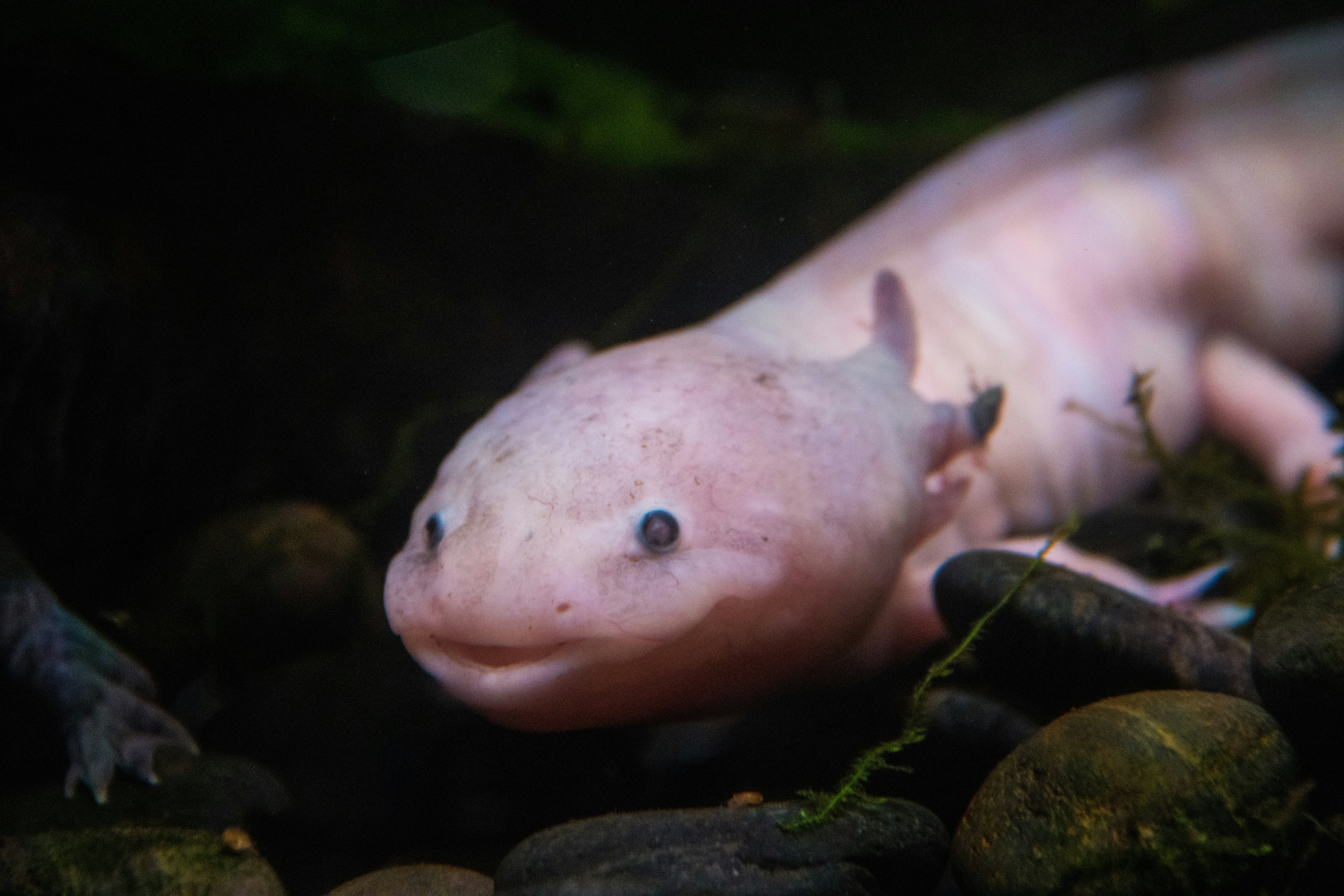
Axolotls

Axolotls

Among vertebrates, the axolotl, a type of amphibian native to Mexico, stands out for its exceptional regenerative abilities. Axolotls can regrow entire limbs, repair their spinal cords, and regenerate parts of their hearts and eyes. What sets axolotls apart is the quality of their regenerated tissues; the new tissue is virtually identical to the original, a trait not commonly found in other organisms. This regeneration occurs as the axolotl’s matured tissues revert to an undifferentiated state, similar to stem cells, which then develop into the necessary body parts. Axolotls can repeat this process indefinitely, making them a key model organism for scientific research on regeneration. However, despite their regenerative abilities, axolotls face a critical threat to their natural habitat, now limited to a few areas near Mexico City.

ADVERTISEMENT

Additional Examples

Planarians

Flatworms like planarians are known for their remarkable regenerative abilities. They can regrow entire bodies from just a small fragment of their tissue. A cut planarian can regenerate a new head, tail, and other body parts, making it a subject of intense study in regeneration research.

Starfish

Starfish can regenerate lost arms, and in some cases, an entire starfish can regrow from a single severed limb. This ability helps them recover from predation and injuries.

Lizards

Certain lizard species can regrow their tails when lost to predators. The new tail is usually made of cartilage rather than bone, but it provides a functional replacement that helps the lizard survive.

These animals, with their unique regenerative powers, continue to captivate scientists and researchers, offering insights into the possibilities of regenerative medicine and the potential for healing in other species, including humans.Certainly! Here are additional examples of animals with remarkable regenerative abilities,

Explained In Detail

Planarians

Planarians are a type of flatworm known for their exceptional regenerative capacity. These creatures can regenerate any part of their body, including their head, tail, and even internal organs. If a planarian is cut into pieces, each piece can grow into a complete, fully functional organism. This remarkable ability is due to their large number of pluripotent stem cells, known as neoblasts, which can differentiate into any cell type required for regeneration. Planarians are often used in studies of regeneration and stem cell biology because of their simplicity and regenerative prowess.

Starfish (Sea Stars)

Starfish, or sea stars, are well-known for their ability to regenerate lost arms. If a starfish loses an arm due to predation or injury, it can regrow the arm over time. In some species, a single lost arm can regenerate into a whole new starfish, provided a portion of the central disc is attached to the arm. This regenerative process is slow but highly effective, involving the growth of new tissue, muscles, nerves, and even the starfish’s unique hydraulic system, which allows for movement and feeding.

Lizards

Several species of lizards, such as geckos and anoles, have the ability to regenerate their tails when they are lost due to predation or injury. The regenerated tail is often not as perfect as the original; it is usually composed of cartilage rather than bone and may differ in coloration and texture. However, the ability to regrow a tail can be crucial for a lizard’s survival, allowing it to escape predators and continue living. This process involves the formation of a blastema, a mass of undifferentiated cells that forms at the site of the lost tail and eventually grows into a new tail.

Salamanders

Salamanders, like the axolotl, are famous for their regenerative abilities. Beyond just regrowing limbs, salamanders can regenerate their spinal cord, retina, heart, and even parts of their brain. This capability is particularly advanced among vertebrates and involves a complex process of dedifferentiation, where cells at the site of injury revert to a stem cell-like state, followed by proliferation and differentiation into the required tissues. Researchers study salamanders extensively to understand how such complex regenerative processes can be applied to human medicine.

Deer

While not commonly discussed in the context of regeneration, male deer (bucks) exhibit a form of regenerative ability when they regrow their antlers annually. Antlers are among the fastest-growing tissues in the animal kingdom, capable of regenerating at a rate of up to an inch per day during the peak growth period. This process involves rapid cell proliferation and differentiation, supported by a rich supply of blood vessels. Although antlers are not internal body parts, this regenerative process is of great interest to scientists studying tissue regeneration and growth.

Sponges

Sponges are one of the simplest multicellular organisms, yet they have an extraordinary ability to regenerate. If a sponge is broken into tiny pieces, each fragment can reorganize itself and grow into a fully functional new sponge. This process, called somatic embryogenesis, involves the cells of the sponge reaggregating and differentiating to form a new organism. Sponges have no complex tissues or organs, which allows them this incredible regenerative flexibility.

Zebrafish

Zebrafish, a small freshwater fish, are another vertebrate with significant regenerative abilities. They can regenerate their fins, heart, and even parts of their brain and spinal cord. When a zebrafish’s heart is damaged, the surrounding heart cells begin to proliferate, filling in the damaged area with new, functional heart tissue. This regenerative ability has made zebrafish a popular model organism for studying heart disease and regeneration in humans.

Flatworms

Flatworms, similar to planarians, also possess remarkable regenerative abilities. They can regenerate entire bodies from small fragments of their tissue. Flatworms can even restore complex organs and structures, making them a subject of extensive research in the field of regenerative biology. This ability is largely attributed to their neoblast cells, which are pluripotent and capable of giving rise to all cell types in the organism.

These animals showcase the incredible diversity of regenerative abilities found in nature, each offering unique insights into the potential for healing and regrowth in living organisms. Understanding these processes could one day lead to breakthroughs in regenerative medicine for humans.

Engage with Us:

Stay tuned for more captivating insights and News. Visit our Blogs and Follow Us on social media to never miss an update. Together, let’s unravel the mysteries of the natural world.

  • Share on WhatsApp (Opens in new window) WhatsApp
  • Share on Facebook (Opens in new window) Facebook
  • Share on Reddit (Opens in new window) Reddit
  • Share on X (Opens in new window) X
  • Print (Opens in new window) Print
Shibasis Rath

Shibasis Rath

"𝓒𝓸𝓷𝓷𝓮𝓬𝓽𝓲𝓷𝓰 𝓡𝓮𝓼𝓮𝓪𝓻𝓬𝓱 𝓣𝓸 𝓡𝓮𝓪𝓵𝓲𝓽𝔂" 𝓲𝓼𝓷'𝓽 𝓙𝓾𝓼𝓽 𝓪 𝓜𝓸𝓽𝓽𝓸 - 𝓘𝓽'𝓼 𝓜𝔂 𝓜𝓲𝓼𝓼𝓲𝓸𝓷

Related Posts

37% of US Teens Face Cyberbullying
SCIENCE FEATURED

Shocking New Study Reveals More Than a Third of US Teens Are Being Cyberbullied — And What’s Happening Online Is Worse Than Parents Think

June 30, 2026
man in blue scrub suit standing near white and black office rolling chair
SCIENCE FEATURED

Pineal and Thymus Peptides Associated With Lower Mortality in Elderly Patients, Long-Term Study Reports

June 23, 2026
A Shark That Walks Out of the Water Has Been Found in Papua New Guinea And It’s New to Science
SCIENCE FEATURED

A Shark That Walks Out of the Water Has Been Found in Papua New Guinea And It’s New to Science

June 16, 2026

POPULAR NEWS

Chewing gum releases thousands of microplastic particles directly into your mouth with every piece you chew

Chewing gum releases thousands of microplastic particles directly into your mouth with every piece you chew

by Shibasis Rath
May 8, 2026
0

Microplastics are turning up in places researchers never expected: deep-sea sediments, Arctic ice, and human blood. Now, a UCLA pilot...

grayscale photo of girl in polka dot long sleeve shirt

Yelling Isn’t Just Yelling: How a Hostile Home Rewires a Child’s Brain for Constant Alert

by Shibasis Rath
March 8, 2026
0

To a parent in the heat of the moment, a raised voice may feel like simple frustration. To a child...

72-Hour Fasting Can Reset Your Entire Immune System, USC Study Shows

72-Hour Fasting Can Reset Your Entire Immune System, USC Study Shows

by Shibasis Rath
February 28, 2026
0

A 72-hour fast can trigger a powerful immune system reset. Scientists call this stem cell regeneration. The process clears old...

woman in white tank top lying on bed

New Studys Says Gen Z is the least sexually active young cohort in modern recorded history

by Shibasis Rath
January 24, 2026
0

A generation that grew up with dating apps in their pockets, pornography a tap away, and sex discussed more openly...

a group of gen Z kids walking down a street

Is Gen Z the First Generation Less Intelligent Than Their Parents?

by Shibasis Rath
February 5, 2026
0

Gen Z intelligence decline is emerging as a serious concern among neuroscientists and education researchers. For over a century, each...

EDITOR CHOICE‘S

  • All
  • NEWS
  • SPOTLIGHTS
Choices for Gap Weights: Constant, Affine & Arbitrary Gap Weights in Sequence Alignment

Choices for Gap Weights: Constant, Affine & Arbitrary Gap Weights in Sequence Alignment

by Shibasis Rath
July 4, 2026
0

In alignment problems, the use of gaps in the objective function helps in finding alignments that satisfy an expected shape,...

Gaps in Sequence Alignment and Their Role in cDNA Matching

Gaps in Sequence Alignment and Their Role in cDNA Matching

by Shibasis Rath
July 4, 2026
0

In the study of string alignment and dynamic programming, the basic elements used to evaluate an alignment are matches, mismatches,...

Local Alignment: Finding Substrings of High Similarity

Local Alignment: Finding Substrings of High Similarity | Notes

by Shibasis Rath
July 4, 2026
0

Sequence comparison is one of the fundamental problems in computational biology and string algorithms. While global alignment compares two strings...

Weighted Edit Distance Explained: Operation-Weight & Alphabet-Weight (Notes)

Weighted Edit Distance Explained: Operation-Weight & Alphabet-Weight (Notes)

by Shibasis Rath
July 4, 2026
0

Edit distance measures how many insertions, deletions, and substitutions are required to transform one string into another. The basic edit...

ADVERTISEMENT

RathBiotaClan – RBC

RathBiotaClan – Connecting Research To Reality

Your trusted source for life science news, biology research & discoveries. Covering neuroscience, genetics, ecology, and more — connecting research to reality.

About Us

Privacy Policies

Contact Us

Editorial Standard

Latest Posts

  • Choices for Gap Weights: Constant, Affine & Arbitrary Gap Weights in Sequence Alignment
  • Gaps in Sequence Alignment and Their Role in cDNA Matching
  • Local Alignment: Finding Substrings of High Similarity | Notes
  • Weighted Edit Distance Explained: Operation-Weight & Alphabet-Weight (Notes)

SHIBASIS RATH

Contact Mail

rathbiotaclan@gmail.com

No Result
View All Result
MSME (Udyam) Certified Science Platform
Govt. of India

Get Us On PlayStore

playstore app for rathbiotaclan
  • About Us
  • Advertise With Us
  • Cancellation and Refund Policy
  • Contact Us
  • Contribute
  • Editorial Standards
  • Home
  • Pricing Details
  • Privacy Policies
  • Shipping Policy
  • Terms & Conditions

© 2026 RathBiotaClan. All rights reserved.

Welcome Back!

Sign In with Google
OR

Login to your account below

Forgotten Password? Sign Up

Create New Account!

Sign Up with Google
OR

Fill the forms below to register

*By registering into our website, you agree to the Terms & Conditions and Privacy Policy.
All fields are required. Log In

Retrieve your password

Please enter your username or email address to reset your password.

Log In

Add New Playlist

No Result
View All Result
  • HOME
  • HEALTH SCIENCE
  • NEUROSCIENCE
    • PHYSIOLOGY
    • IMMUNOLOGY
    • CANCER
  • DISCOVERIES
    • SPOTLIGHTS
    • STUDENT PORTAL
    • SCIENCE FEATURED
  • MOLECULAR BIOLOGY
    • GENETICS
    • BIOTECHNOLOGY
    • BIOINFORMATICS
    • BIOCHEMISTRY
    • BIOPHYSICS
  • ZOOLOGY & ECOLOGY
    • ENVIRONMENTAL SCIENCE
    • ECOLOGY
    • EVOLUTION
  • MICRO & PLANT SCIENCE
    • MICROBIOLOGY
    • CELL BIOLOGY
    • DEVELOPMENTAL BIOLOGY
  • PSYCHOLOGY
  • Login
  • Sign Up
SAVED POSTS

© 2026 RathBiotaClan. All rights reserved.

This website uses cookies. By continuing to use this website you are giving consent to cookies being used. Visit our Privacy and Cookie Policy.