

Monday, May 4, 2026
SAVED POSTS
  • Login
  • Register
RathBiotaClan
No Result
View All Result
  • HOME
  • HEALTH SCIENCE

    TRENDING ON HEALTH (TOP)

    Dreams about loved ones can bring comfort before death

    Male G-Spot Found: New Study Identifies Frenular Delta as Penis’s Most Sensitive Area

    New Stem Cell Therapy Rebuilds Bone in Osteoporosis, Shows 30% Density Gain

    Walnut Extract May Help Control Blood Sugar Naturally, New Study Finds

    NOW ON AIR (RBC)

    Smiling Female Child Showing Success While Writing Homework In Front Of Parents
    PSYCHOLOGY

    Recent Study Indicates Constant Praise May Actually Lower a Child’s Academic Risk-Taking.

    May 3, 2026
    SLC38A4 expression was confirmed by western blot in multiple tumor cell lines. In mouse models, liver tissue imaging (H&E staining) showed that overexpression of SLC38A4 reduced metastatic tumor areas, while knockdown increased them across Hepa1-6, MC38, and B16F10 cells. Results were consistent in both immunocompetent and nude mice, with statistically significant differences.
    MOLECULAR BIOLOGY

    Scientists Find Molecule That Wipes Out Liver Cancer

    May 2, 2026
    DISCOVERIES

    Fossil Penguins From New Zealand Reveal Stages of the Birds’ Long Evolutionary History

    May 1, 2026
    Bluebuck antelope with silvery-blue coat and curved horns running across open South African grassland, representing extinct species targeted for de-extinction by scientists
    MOLECULAR BIOLOGY

    Colossal Biosciences Announces De-Extinction of Bluebuck Antelope, 226 Years After Its Extinction

    May 1, 2026
  • NEUROSCIENCE
    • PHYSIOLOGY
    • IMMUNOLOGY
    • CANCER
  • DISCOVERIES
    • SPOTLIGHTS
    • STUDENT PORTAL
    • SCIENCE FEATURED
  • MOLECULAR BIOLOGY
    • GENETICS
    • BIOTECHNOLOGY
    • BIOINFORMATICS
    • BIOCHEMISTRY
    • BIOPHYSICS
  • ZOOLOGY & ECOLOGY
    • ENVIRONMENTAL SCIENCE
    • ECOLOGY
    • EVOLUTION
  • MICRO & PLANT SCIENCE
    • MICROBIOLOGY
    • CELL BIOLOGY
    • DEVELOPMENTAL BIOLOGY
  • PSYCHOLOGY
RBC Interactive Sticky Bar
RathBiotaClan Logo
Shop Resources
Life Science Whole Spectrum Focus
24/7 Digital Access
Pro Resources For Students & Researchers
Premium Articles
Research-backed insights for the curious mind.
eBooks
Digital books covering lab protocols.
RBC Magazines
Deep dives and science innovations.
Research Guides
Methodologies and application frameworks.
Pro Notes PDF
High-yield study notes for quick review.
View All Resources
Browse the complete digital library.
RathBiotaClan Seal

Connecting Research to Reality

Science is our safest secret. Explore the life science spectrum with insights for the curious mind.

RathBiotaClan
No Result
View All Result
Home GENETICS

RNA Interference and Its Role

Shibasis Rath by Shibasis Rath
August 13, 2025
in GENETICS, MOLECULAR BIOLOGY, STUDENT PORTAL
Reading Time: 4 mins read
0
A A
0

RNA interference (RNAi) is a conserved process that regulates gene expression using small silencing RNAs acting in a sequence-specific manner. Fire and Mello first described this phenomenon in C. elegans in 1998. Earlier, researchers called it post-transcriptional gene silencing (PTGS), transgene silencing, or quelling. RNAi occurs in all eukaryotes—from yeast to mammals—and plays crucial roles in regulating gene expression, controlling transposons, and protecting cells against viral infections. The two main classes of small silencing RNAs involved are microRNAs (miRNAs) and small interfering RNAs (siRNAs).

miRNAs in RNAi

MiRNAs are small non-coding RNAs encoded by the genomes of plants, animals, and their viruses. These molecules, typically 20-25 nucleotides long, regulate gene expression by binding to the 3′-untranslated regions (3′-UTR) of specific messenger RNAs (mRNAs). The first miRNA, lin-4, was discovered by Victor Ambros and his team in C. elegans. Unlike protein-coding genes, lin-4 produces a short RNA complementary to target mRNAs, preventing gene translation. Later in 2000, Gary Ruvkun’s group discovered another miRNA, let-7, which showed similar gene-regulating activity.

MiRNAs influence developmental timing, cell differentiation, proliferation, cell death, and oncogenesis. Their biogenesis begins in the nucleus when RNA polymerase II transcribes a long primary transcript (pri-miRNA). Next, the RNase III enzyme Drosha, along with DGCR8 in mammals (or Pasha in Drosophila), processes pri-miRNAs into 70-100 nucleotide hairpin structures called pre-miRNAs. Exportin-5 then transports these pre-miRNAs to the cytoplasm for further processing.

In the cytoplasm, the enzyme Dicer cleaves the pre-miRNAs into mature miRNA duplexes. These duplexes load into the RNA-induced silencing complex (RISC). Argonaute (Ago) proteins play a critical role within RISC by facilitating gene silencing. Specifically, the PAZ domain of Ago interacts with the miRNA’s 3′ end, while its PIWI domain, similar to ribonuclease-H, executes the silencing function.

ADVERTISEMENT

Differences in miRNA Biogenesis Between Plants and Animals

Plant miRNA biogenesis differs from that in animals. Plants rely on a single enzyme, DCL1, which performs the functions of both Drosha and Dicer. Moreover, before exiting the nucleus, plant miRNA duplexes undergo methylation by the enzyme HEN1. This modification does not occur in animal miRNAs.

READ ALSO

Scientists Find Molecule That Wipes Out Liver Cancer

Colossal Biosciences Announces De-Extinction of Bluebuck Antelope, 226 Years After Its Extinction

miRNAs and Gene Silencing Mechanisms

MiRNAs silence genes either by degrading target mRNAs or inhibiting their translation. This outcome depends on how closely the miRNA complements its target mRNA. High complementarity usually results in mRNA cleavage by Ago proteins, while partial complementarity inhibits translation. Typically, miRNAs recognize targets using their “seed sequence,” a crucial 2-8 nucleotide stretch at the miRNA’s 5′ end.

ADVERTISEMENT

RNAi Mediated by siRNAs

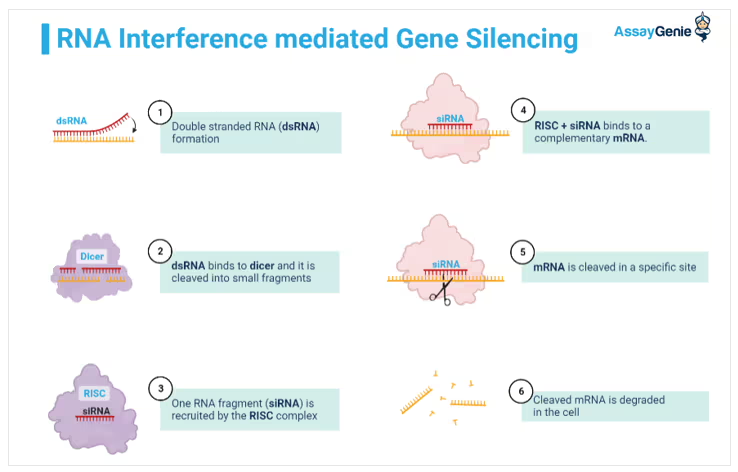
In the siRNA pathway, double-stranded RNAs (dsRNAs) undergo processing into siRNA duplexes by the Dicer enzyme. These siRNAs are approximately 21 nucleotides long, featuring two-nucleotide 3′ overhangs. Dicer, a large multi-domain RNase III enzyme (~200 kDa), cleaves dsRNA into siRNAs and packages them with a dsRNA-binding protein into RISC.

Within RISC, the guide strand of siRNA hybridizes with the target mRNA through full complementarity, allowing RISC to silence the gene. Meanwhile, the passenger (or anti-guide) strand degrades during activation. Argonaute proteins act as endonucleases, cleaving the target mRNA precisely at the complementary site.

Conclusion: Key Differences Between miRNAs and siRNAs

The primary difference between siRNAs and miRNAs lies in their origins. SiRNAs derive from double-stranded RNA precursors, whereas miRNAs come from single, extended transcripts that fold into imperfect hairpin structures. Typically, siRNAs exhibit full complementarity to their targets, causing precise cleavage. Conversely, miRNAs usually show partial complementarity, which leads to translational repression of multiple mRNAs sharing similar sequences.

ADVERTISEMENT

piRNAs: A New Class of Small RNAs

More recently, scientists discovered piRNAs, small RNAs about 25-30 nucleotides long that bind Piwi clade Argonaute proteins. Unlike siRNAs and miRNAs, piRNAs originate from single-stranded RNA precursors and do not require Dicer processing. Most piRNAs are antisense but can be sense as well and feature 2′-O-methylation at their 3′ ends, similar to siRNAs. PiRNAs may suppress transposon expression by either cleaving mRNA or modifying chromatin states at transposon loci.

Engage with Us

Stay tuned for more captivating insights and News. Visit our Blogs , Science paper , Study Portal and Follow Us on social media to never miss an update. Together, let’s unravel the mysteries of the natural world.

  • Share on WhatsApp (Opens in new window) WhatsApp
  • Share on Facebook (Opens in new window) Facebook
  • Share on Reddit (Opens in new window) Reddit
  • Share on X (Opens in new window) X
  • Print (Opens in new window) Print

Did you like this read? Turn on notifications so we can let you know the second a new post goes live.

Turn off Alerts
Shibasis Rath

Shibasis Rath

"𝓒𝓸𝓷𝓷𝓮𝓬𝓽𝓲𝓷𝓰 𝓡𝓮𝓼𝓮𝓪𝓻𝓬𝓱 𝓣𝓸 𝓡𝓮𝓪𝓵𝓲𝓽𝔂" 𝓲𝓼𝓷'𝓽 𝓙𝓾𝓼𝓽 𝓪 𝓜𝓸𝓽𝓽𝓸 - 𝓘𝓽'𝓼 𝓜𝔂 𝓜𝓲𝓼𝓼𝓲𝓸𝓷

Related Posts

SLC38A4 expression was confirmed by western blot in multiple tumor cell lines. In mouse models, liver tissue imaging (H&E staining) showed that overexpression of SLC38A4 reduced metastatic tumor areas, while knockdown increased them across Hepa1-6, MC38, and B16F10 cells. Results were consistent in both immunocompetent and nude mice, with statistically significant differences.
MOLECULAR BIOLOGY

Scientists Find Molecule That Wipes Out Liver Cancer

May 2, 2026
Bluebuck antelope with silvery-blue coat and curved horns running across open South African grassland, representing extinct species targeted for de-extinction by scientists
MOLECULAR BIOLOGY

Colossal Biosciences Announces De-Extinction of Bluebuck Antelope, 226 Years After Its Extinction

May 1, 2026
Stanford Geneticist Warned Humans Are Getting Dumber
GENETICS

Stanford Geneticist Warned Humans Are Getting Dumber

March 25, 2026

POPULAR NEWS

Yelling Isn’t Just Yelling: How a Hostile Home Rewires a Child’s Brain for Constant Alert

Yelling Isn’t Just Yelling: How a Hostile Home Rewires a Child’s Brain for Constant Alert

by Shibasis Rath
March 9, 2026
0

To a parent in the heat of the moment, a raised voice may feel like simple frustration. To a child...

a group of gen Z kids walking down a street

Is Gen Z the First Generation Less Intelligent Than Their Parents?

by Shibasis Rath
March 14, 2026
0

Gen Z intelligence decline is emerging as a serious concern among neuroscientists and education researchers. For over a century, each...

Whole Brain Emulation Achieved: Scientists Run a Fruit Fly Brain in Simulation

by Shibasis Rath
March 9, 2026
0

Scientists have copied an entire biological brain neuron by neuron and synapse by synapse and made it control a simulated...

Male G-spot isn’t where we thought it was

Male G-Spot Found: New Study Identifies Frenular Delta as Penis’s Most Sensitive Area

by Staff Writer
April 27, 2026
0

The study found that human penile innervation develops in distinct fetal stages and shows region-specific patterns in adults, with the...

RNA Interference and Its Role

RNA Interference and Its Role

by Shibasis Rath
August 13, 2025
0

RNA interference (RNAi) is a conserved process that regulates gene expression using small silencing RNAs acting in a sequence-specific manner....

EDITOR CHOICE‘S

  • All
  • NEWS
  • SPOTLIGHTS
Recent Study Indicates Constant Praise May Actually Lower a Child’s Academic Risk-Taking.

Recent Study Indicates Constant Praise May Actually Lower a Child’s Academic Risk-Taking.

by Staff Writer
May 3, 2026
0

Recent studies on types of praise and children's academic motivation show that constantly praising a child's fixed traits, such as their intelligence...

SLC38A4 expression was confirmed by western blot in multiple tumor cell lines. In mouse models, liver tissue imaging (H&E staining) showed that overexpression of SLC38A4 reduced metastatic tumor areas, while knockdown increased them across Hepa1-6, MC38, and B16F10 cells. Results were consistent in both immunocompetent and nude mice, with statistically significant differences.

Scientists Find Molecule That Wipes Out Liver Cancer

by Shibasis Rath
May 2, 2026
0

Researchers investigated this question because metastasis causes most cancer deaths, and the liver is a frequent site of spread for...

Fossil Penguins From New Zealand Reveal Stages of the Birds’ Long Evolutionary History

Fossil Penguins From New Zealand Reveal Stages of the Birds’ Long Evolutionary History

by Shibasis Rath
May 1, 2026
0

The discovery of four new species of fossil penguins in New Zealand in 2025 sheds light on the long evolutionary...

Bluebuck antelope with silvery-blue coat and curved horns running across open South African grassland, representing extinct species targeted for de-extinction by scientists

Colossal Biosciences Announces De-Extinction of Bluebuck Antelope, 226 Years After Its Extinction

by Staff Writer
May 1, 2026
0

It has been 226 years since humans last saw a living bluebuck, an elegant antelope species native to South Africa...

ADVERTISEMENT

RathBiotaClan – RBC

RathBiotaClan – Connecting Research To Reality

Your trusted source for life science news, biology research & discoveries. Covering neuroscience, genetics, ecology, and more — connecting research to reality.

Privacy Policies

Shipping Policy

Cancellation & Refund Policy

Pricing Details

Contact Us

Latest Posts

  • Recent Study Indicates Constant Praise May Actually Lower a Child’s Academic Risk-Taking.
  • Scientists Find Molecule That Wipes Out Liver Cancer
  • Fossil Penguins From New Zealand Reveal Stages of the Birds’ Long Evolutionary History
  • Colossal Biosciences Announces De-Extinction of Bluebuck Antelope, 226 Years After Its Extinction

SHIBASIS RATH

Contact Mail

rathbiotaclan@gmail.com

No Result
View All Result
MSME (Udyam) Certified Science Platform
Govt. of India

Get Us On PlayStore

playstore app for rathbiotaclan
  • About Us
  • Advertise With Us
  • Cancellation and Refund Policy
  • Contact Us
  • Contribute
  • Editorial Standards
  • Home
  • Pricing Details
  • Privacy Policies
  • Shipping Policy
  • Terms & Conditions

© 2026 RathBiotaClan. All rights reserved.

Welcome Back!

Sign In with Google
OR

Login to your account below

Forgotten Password? Sign Up

Create New Account!

Sign Up with Google
OR

Fill the forms below to register

*By registering into our website, you agree to the Terms & Conditions and Privacy Policy.
All fields are required. Log In

Retrieve your password

Please enter your username or email address to reset your password.

Log In
No Result
View All Result
  • HOME
  • HEALTH SCIENCE
  • NEUROSCIENCE
    • PHYSIOLOGY
    • IMMUNOLOGY
    • CANCER
  • DISCOVERIES
    • SPOTLIGHTS
    • STUDENT PORTAL
    • SCIENCE FEATURED
  • MOLECULAR BIOLOGY
    • GENETICS
    • BIOTECHNOLOGY
    • BIOINFORMATICS
    • BIOCHEMISTRY
    • BIOPHYSICS
  • ZOOLOGY & ECOLOGY
    • ENVIRONMENTAL SCIENCE
    • ECOLOGY
    • EVOLUTION
  • MICRO & PLANT SCIENCE
    • MICROBIOLOGY
    • CELL BIOLOGY
    • DEVELOPMENTAL BIOLOGY
  • PSYCHOLOGY
  • Login
  • Sign Up
SAVED POSTS

© 2026 RathBiotaClan. All rights reserved.

This website uses cookies. By continuing to use this website you are giving consent to cookies being used. Visit our Privacy and Cookie Policy.
Are you sure want to unlock this post?
Unlock left : 0
Are you sure want to cancel subscription?