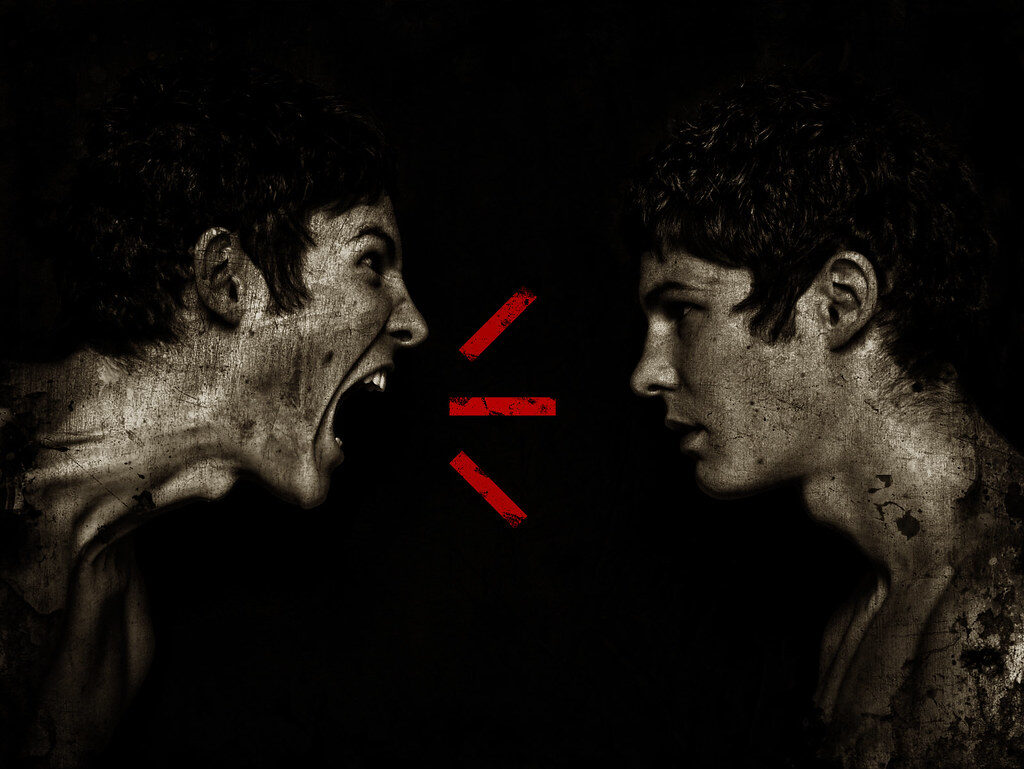








Recent studies on types of praise and children’s academic motivation show that constantly praising a child’s fixed traits, such as their intelligence or identity, can actually have a negative impact on their academic risk-taking. This is because when children are praised for something they can’t control, like their natural abilities, they may feel pressure to live up to these expectations and fear making mistakes. On the other hand, when praise is focused on effort and strategy, children are more likely to stay motivated, take on challenges, and learn from mistakes. For example, a child who is constantly told they are smart may avoid new and difficult tasks to protect that label, while a child praised for hard work and perseverance is more likely to take risks and push toward improvement. It is clear that the type of praise children receive plays a crucial role in shaping their academic mindset and behaviors.
The question is worth studying because praise is one of the most common tools adults use to motivate children, and its use is nearly universal in educational and parenting contexts. The intuition behind it is straightforward: telling children they are smart or talented should make them feel capable and willing to try harder. The research, conducted across multiple countries and age groups over roughly three decades, suggests the reality is considerably more complicated.
By the late 1990s, psychologist Carol Dweck of Stanford University had developed the theoretical framework of “fixed” versus “growth” mindsets the distinction between believing that ability is static and believing it can be developed through effort. What was less clear was whether ordinary praise from parents and teachers could systematically shift children toward one mindset or the other, and what the downstream consequences for behavior and performance might be.
The landmark study was conducted by Claudia Mueller and Carol Dweck and published in the Journal of Personality and Social Psychology in 1998. Across six controlled experiments involving fifth-grade students, children who received intelligence praise — told “You must be smart at these problems” after completing a task subsequently chose easier tasks on follow-up, showed lower enjoyment, and performed significantly worse on later challenges compared to children who were praised for effort.
“Contrary to popular belief, six studies demonstrated that praise for intelligence had more negative consequences for students’ achievement motivation than praise for effort.”
~ Mueller & Dweck, Journal of Personality and Social Psychology, 1998
Intelligence praise also made children more likely to misrepresent their performance to peers and to attribute subsequent failure to a lack of innate ability a pattern that closes down further learning rather than opening it up. Children who received effort praise, by contrast, were more likely to select challenging new problems, showed greater persistence, and maintained their performance levels after encountering difficult tasks.
In 2014, Dutch researcher Eddie Brummelman and colleagues at the University of Amsterdam published two related studies that extended this work in important directions. The first, in Psychological Science, identified what they called “inflated praise” statements such as “You made an incredibly beautiful drawing!” rather than the simpler “You made a beautiful drawing.” Adults, the study found, were significantly more likely to give inflated praise to children they perceived as having low self-esteem an understandable impulse, but one that frequently produced the opposite of the intended effect.
When children with low self-esteem received inflated praise, they were more likely to avoid challenging tasks afterward. The researchers theorized that inflated praise communicates unachievably high standards, making future failure feel more threatening. Only children with high self-esteem appeared to benefit: for them, inflated praise was associated with increased challenge-seeking. For children who already felt uncertain about their abilities, the same words had the reverse effect.
Children most likely to receive inflated or person praise are also the children most harmed by it.
A companion paper from the same group, published in the Journal of Experimental Psychology: General, examined “person praise” — praise directed at the child’s identity rather than their actions (“You are a great artist” versus “That’s a great painting”). Person praise consistently backfired in children with low self-esteem. When a child’s entire sense of worth is placed on the line in relation to a task outcome, the researchers found, failure becomes existentially threatening and risk avoidance becomes a rational response.
A 2018 study in Frontiers in Psychology, conducted by researchers from Capital Normal University and Beijing Normal University, added another behavioral dimension. The study involved 103 fifth-grade students randomly assigned to ability praise, effort praise, or no-praise conditions. Children in the ability-praise group showed significantly higher levels of self-handicapping behaviors such as deliberately spending less time on a task so that poor preparation, rather than low ability, could be blamed for failure. These children made significantly less improvement on subsequent tasks than those in the effort-praise or control conditions.
A 2023 study published in npj Science of Learning a Nature portfolio journal examined what happens in classrooms when children observe how peers are praised. Researchers Emiel Schoneveld and Eddie Brummelman conducted two preregistered experiments with 106 primary school teachers and 63 children aged 10–13. Teachers, they found, tended to give inflated praise more frequently to children from lower socioeconomic backgrounds. But when children watched a peer receive inflated praise for the same performance that earned another child only modest praise, they perceived the inflated-praise recipient as less intelligent — despite identical performance. The researchers concluded that inflated praise may inadvertently signal low expectations, with consequences for how children perceive both themselves and each other.
A preregistered study in the Journal of School Psychology (2024) extended the research beyond praise itself to examine how adults talk about task difficulty. Telling a child “That was easy for you!” what the researchers called “person-easy feedback” had similar harmful effects to ability praise, reducing challenge-seeking by reinforcing fixed-ability beliefs. “Process-easy feedback,” by contrast attributing difficulty to the task rather than to the child (“That task was designed to be easy it has fewer steps”) preserved children’s willingness to take on harder problems. The study’s conclusion was that the damaging mechanism is not praise per se, but any adult communication that locates performance outcomes in stable, fixed child characteristics rather than in effort and strategy.
The harm comes from any communication that locates performance in fixed traits rather than in effort and strategy — not from praise itself.
Across these studies, a consistent pattern emerges. When children repeatedly receive feedback that links their identity or worth to fixed ability, they appear to internalize the belief that intelligence is something they either have or lack. Challenging tasks then become threatening rather than interesting, because failure would expose low ability. Children choose easier tasks where success is guaranteed, sacrificing learning for self-protection. After failure, they are more likely to disengage and use self-handicapping to preserve their self-image, and more preoccupied with appearing capable than with actually developing competence.
Longitudinal data reinforce that this dynamic starts early. A study tracking children from toddlerhood through fourth grade found that children who received a higher proportion of process praise from parents between ages one and three showed significantly stronger growth mindsets, greater challenge-seeking, and higher academic achievement by fourth grade.
The researchers across this literature do not recommend that adults stop praising children. Their consistent conclusion is that what is praised, and how, determines whether praise helps or harms. Effort, strategy, and process the elements of performance that children can control are the appropriate targets of praise. Praise calibrated to actual performance, specific rather than inflated, and framed around what the child did rather than what the child is, consistently produces better motivational outcomes than the reverse.
Several limitations apply across this body of work. Most of the controlled studies involve fifth-grade children, and generalizability across age groups and developmental stages is not fully established. Sample demographics vary across studies, and findings from Dutch and Chinese samples may not transfer directly to other cultural contexts. Most studies rely on relatively short-term behavioral outcomes rather than long-term academic trajectories. The longitudinal study linking early process praise to fourth-grade outcomes is observational and cannot establish causation. And self-report measures of mindset and motivation carry known limitations in child populations. The researchers themselves note these constraints in several of the papers.
References
[1] Mueller, C. M., & Dweck, C. S. (1998). Praise for intelligence can undermine children’s motivation and performance. Journal of Personality and Social Psychology, 75(1), 33–52. https://pubmed.ncbi.nlm.nih.gov/9686450/
[2] Brummelman, E., Thomaes, S., Orobio de Castro, B., Overbeek, G., & Bushman, B. J. (2014). “That’s not just beautiful—that’s incredibly beautiful!”: The adverse impact of inflated praise on children with low self-esteem. Psychological Science, 25(3), 728–735. https://journals.sagepub.com/doi/abs/10.1177/0956797613514251
[3] Brummelman, E., Thomaes, S., Overbeek, G., Orobio de Castro, B., van den Hout, M. A., & Bushman, B. J. (2014). On feeding those hungry for praise: Person praise backfires in children with low self-esteem. Journal of Experimental Psychology: General, 143(1), 9–14. https://pubmed.ncbi.nlm.nih.gov/24434235/
[4] Xing, S., Gao, X., Jiang, Y., Archer, M., & Liu, X. (2018). Effects of ability and effort praise on children’s failure attribution, self-handicapping, and performance. Frontiers in Psychology, 9, 1883. https://www.ncbi.nlm.nih.gov/pmc/articles/PMC6176062/
[5] Schoneveld, E., & Brummelman, E. (2023). “You did incredibly well!”: Teachers’ inflated praise can make children from low-SES backgrounds seem less smart (but more hardworking). npj Science of Learning, 8, 37. https://www.ncbi.nlm.nih.gov/pmc/articles/PMC10474104/
[6] Bennett-Pierre, G., & Haimovitz, K. (2024). Effects of praise and “easy” feedback on children’s persistence and self-evaluations. Journal of School Psychology, 107. https://www.sciencedirect.com/science/article/abs/pii/S0022096524001723
[7] Gunderson, E. A., Gripshover, S. J., Romero, C., Dweck, C. S., Goldin-Meadow, S., & Levine, S. C. (2018). Parent praise to toddlers predicts fourth grade academic achievement via children’s incremental mindsets. Child Development, 89(4), 1139–1153. https://pmc.ncbi.nlm.nih.gov/articles/PMC5826820/
[8] Brummelman, E., & Dweck, C. S. (2020). Paradoxical effects of praise: A transactional model. Psychological Inquiry, 31(2), 106–111. https://eddiebrummelman.com/wp-content/uploads/2020/08/brummelman-dweck-2020.pdf
[9] Brummelman, E., & Crocker, J. (2016). The praise paradox: When and why praise backfires in children with low self-esteem. Child Development Perspectives, 10(2), 111–117. https://onlinelibrary.wiley.com/doi/10.1111/cdep.12171
[10] Dweck, C. S., & Leggett, E. L. (1988). A social-cognitive approach to motivation and personality. Psychological Review, 95(2), 256–273. Referenced via ScienceDirect Topics overview: https://www.sciencedirect.com/topics/psychology/fixed-mindset