






Sunday, May 3, 2026
SAVED POSTS
  • Login
  • Register
RathBiotaClan
No Result
View All Result
  • HOME
  • HEALTH SCIENCE

    TRENDING ON HEALTH (TOP)

    Dreams about loved ones can bring comfort before death

    Male G-Spot Found: New Study Identifies Frenular Delta as Penisโ€™s Most Sensitive Area

    New Stem Cell Therapy Rebuilds Bone in Osteoporosis, Shows 30% Density Gain

    Walnut Extract May Help Control Blood Sugar Naturally, New Study Finds

    NOW ON AIR (RBC)

    Smiling Female Child Showing Success While Writing Homework In Front Of Parents
    PSYCHOLOGY

    Recent Study Indicates Constant Praise May Actually Lower a Childโ€™s Academic Risk-Taking.

    May 3, 2026
    SLC38A4 expression was confirmed by western blot in multiple tumor cell lines. In mouse models, liver tissue imaging (H&E staining) showed that overexpression of SLC38A4 reduced metastatic tumor areas, while knockdown increased them across Hepa1-6, MC38, and B16F10 cells. Results were consistent in both immunocompetent and nude mice, with statistically significant differences.
    MOLECULAR BIOLOGY

    Scientists Find Molecule That Wipes Out Liver Cancer

    May 2, 2026
    DISCOVERIES

    Fossil Penguins From New Zealand Reveal Stages of the Birds’ Long Evolutionary History

    May 1, 2026
    Bluebuck antelope with silvery-blue coat and curved horns running across open South African grassland, representing extinct species targeted for de-extinction by scientists
    MOLECULAR BIOLOGY

    Colossal Biosciences Announces De-Extinction of Bluebuck Antelope, 226 Years After Its Extinction

    May 1, 2026
  • NEUROSCIENCE
    • PHYSIOLOGY
    • IMMUNOLOGY
    • CANCER
  • DISCOVERIES
    • SPOTLIGHTS
    • STUDENT PORTAL
    • SCIENCE FEATURED
  • MOLECULAR BIOLOGY
    • GENETICS
    • BIOTECHNOLOGY
    • BIOINFORMATICS
    • BIOCHEMISTRY
    • BIOPHYSICS
  • ZOOLOGY & ECOLOGY
    • ENVIRONMENTAL SCIENCE
    • ECOLOGY
    • EVOLUTION
  • MICRO & PLANT SCIENCE
    • MICROBIOLOGY
    • CELL BIOLOGY
    • DEVELOPMENTAL BIOLOGY
  • PSYCHOLOGY
  • E STORE
  • HOME
  • HEALTH SCIENCE

    TRENDING ON HEALTH (TOP)

    Dreams about loved ones can bring comfort before death

    Male G-Spot Found: New Study Identifies Frenular Delta as Penisโ€™s Most Sensitive Area

    New Stem Cell Therapy Rebuilds Bone in Osteoporosis, Shows 30% Density Gain

    Walnut Extract May Help Control Blood Sugar Naturally, New Study Finds

    NOW ON AIR (RBC)

    Smiling Female Child Showing Success While Writing Homework In Front Of Parents
    PSYCHOLOGY

    Recent Study Indicates Constant Praise May Actually Lower a Childโ€™s Academic Risk-Taking.

    May 3, 2026
    SLC38A4 expression was confirmed by western blot in multiple tumor cell lines. In mouse models, liver tissue imaging (H&E staining) showed that overexpression of SLC38A4 reduced metastatic tumor areas, while knockdown increased them across Hepa1-6, MC38, and B16F10 cells. Results were consistent in both immunocompetent and nude mice, with statistically significant differences.
    MOLECULAR BIOLOGY

    Scientists Find Molecule That Wipes Out Liver Cancer

    May 2, 2026
    DISCOVERIES

    Fossil Penguins From New Zealand Reveal Stages of the Birds’ Long Evolutionary History

    May 1, 2026
    Bluebuck antelope with silvery-blue coat and curved horns running across open South African grassland, representing extinct species targeted for de-extinction by scientists
    MOLECULAR BIOLOGY

    Colossal Biosciences Announces De-Extinction of Bluebuck Antelope, 226 Years After Its Extinction

    May 1, 2026
  • NEUROSCIENCE
    • PHYSIOLOGY
    • IMMUNOLOGY
    • CANCER
  • DISCOVERIES
    • SPOTLIGHTS
    • STUDENT PORTAL
    • SCIENCE FEATURED
  • MOLECULAR BIOLOGY
    • GENETICS
    • BIOTECHNOLOGY
    • BIOINFORMATICS
    • BIOCHEMISTRY
    • BIOPHYSICS
  • ZOOLOGY & ECOLOGY
    • ENVIRONMENTAL SCIENCE
    • ECOLOGY
    • EVOLUTION
  • MICRO & PLANT SCIENCE
    • MICROBIOLOGY
    • CELL BIOLOGY
    • DEVELOPMENTAL BIOLOGY
  • PSYCHOLOGY
  • E STORE
No Result
View All Result
RathBiotaClan
No Result
View All Result
Home GENETICS

Polygenic Inheritance: Traits, Nilsson-Ehle Experiment, and Additive Genetic Models

Shibasis Rath by Shibasis Rath
August 13, 2025
in GENETICS, STUDENT PORTAL
Reading Time: 7 mins read
0
A A
0
A man and woman in white t-shirts stand against a pink backdrop.

Polygenic inheritance refers to those traits that are controlled by more than one gene that are often at different loci positions on chromosomes. Such genes are termed as non-allele genes. A polygenic trait is complex in expression because the phenotype the observable characteristics is the composite result of multiple genes. Due to this complexity, polygenic traits manifest as continuous variation rather than abrupt categories. This renders the relationship between genotype and phenotype far more complicated than what is described under simple Mendelian inheritance.

Important Characteristics of Polygenic Inheritance

1. Continuous Variation

In polygenic traits, phenotypic categories are not sharply defined. Unlike single gene traits (as observed in Mendelian characters for example, pea plant flower color), polygenic traits present a phenomenon of continuous variation. This simply means that the traits fall within a spectrum, ranging from one extreme to another; such as height, skin color, and kernel color in wheat. Unlike Mendelian traits, which sometimes present abrupt gradations, polygenic traits present smooth gradations.

2. Multiple Non-allelic Genes

Under polygenic inheritance, multiple genes together serve as functional units that contribute to the expression of a single trait. Each of the non-allelic genes has two alleles: one additive and one non-additive. The additive alleles join in the expression of the phenotype, while the non-additive ones contribute nothing in this regard. Collectively, the effects add up to produce the ultimate expression of the trait.

3. Additive Effect of Alleles

In polygenic traits, the alleles at various loci are additive; that means each contributing allele has a small and nearly equal effect on the phenotype. The allelic pairs do not show any dominance. For instance, in the case of the color of wheat kernel, more additive alleles contribute towards darker kernel color and conversely, fewer additive alleles dictate lighter colors.

ADVERTISEMENT

4. No Dominance or Non-allelic Gene Interaction

Unlike Mendelian inheritance, in which dominant and recessive alleles exist, polygenic inheritance shows no dominance. This means that no one allele suppresses the effect of another. Moreover, there is no interaction among the non-allelic genes; every gene acts individually to contribute to the overall phenotype.

READ ALSO

Stanford Geneticist Warned Humans Are Getting Dumber

Fruit Fly Study Challenges 20-Year Epigenetics Theory on Cell Memory

Example: Nilsson-Ehle’s Experiment with Wheat Kernel Color

Probably the best-known experiment on polygenic inheritance was done by Swedish geneticist Herman Nilsson-Ehle, showing that several genes are involved in controlling wheat kernel color.

ADVERTISEMENT

P (Parent) Generation

Nilsson-Ehle crossed one plant having dark red kernels with another having white kernels.

F1 Generation

All the offspring from this cross (F1 generation) produced intermediate pink kernels (RW), with none displaying either of the dark red or white phenotypes that the parents displayed.

F2 Generation

If F1 plants were allowed to self-cross, the F2 generation presented five different phenotypic classes of kernel color: dark red, red, pink, light red, and white. These phenotypes occurred in a ratio of 1:4:6:4:1.

ADVERTISEMENT

Nilsson-Ehle interpreted these results to suggest that two loci of genes control kernel color. From each locus, two alleles existโ€”one red pigment allele and one nonadditive. The two additive alleles express effects in combination. In other words, each gene contributes equally to the overall color so the more additive alleles, the darker the kernel color. This experiment demonstrated continuous variation while still following Mendelian rules despite the polygenic nature of the trait.

Genetic Explanation and Additive Model

The phenotypes in polygenic traits are additive sums of contributions from many genes. Each contributing gene has two alleles, one additive and one non-additive. For illustration, consider three pairs of genes (Aa Bb Cc) that control kernel color:

  • If all six contributing alleles were present (AA BB CC), the phenotype would be dark red kernels.
  • If no additive alleles were present (aa bb cc), the phenotype would be white kernels.
  • If three contributing alleles were present (Aa Bb Cc), the phenotype would be intermediate red kernels.
  • If more gene pairs are added, more phenotypic classes appear, each with different combinations of additive alleles.

Polygenic Traits and Normal Distribution

The distribution of polygenic traits often follows a normal distribution or bell-shaped curve in large populationsโ€”also known as a Gaussian distribution. Most individuals tend to show phenotypes close to the average value for that population, while very few individuals show extreme values. This distribution is symmetric and characterized by its mean and variance. The standard deviation, which is the square root of the variance, measures how spread out the phenotypes are around the average.

Counting the Number of Gene Pairs

The number of gene pairs responsible for a polygenic trait is determined by the phenotypic ratio in the F2 generation. Specifically, the proportion of F2 progeny exhibiting the most extreme phenotypes is used with the formula:

Number of extreme phenotypes = 1 / 4โฟ

For example, if 1/64 of the F2 offspring express extreme phenotypes, then three gene pairs are involved because 1/43=1/641/4^3 = 1/641/43=1/64.

Number of Phenotypic Classes

As the number of gene pairs increases, the number of possible phenotypic classes also increases. The formula for the number of distinct phenotypic classes in the F2 generation is:

Number of phenotypic classes = 2n + 1

Quantitative vs. Qualitative Genetics

Polygenic inheritance differs from Mendelian (qualitative) inheritance in several ways:

1. Nature of Traits

  • Qualitative Genetics: Controlled by single genes; traits fall into distinct categories (e.g., tall or short plants).
  • Quantitative Genetics: Traits have continuous variation and are regulated by many genes, such as height and skin color.

2. Variation

  • Qualitative Traits: Show discontinuous variation with distinct categories.
  • Quantitative Traits: Show continuous variation across a range.

3. Number of Genes

  • Qualitative Traits: Inherited in simple Mendelian patterns, controlled by one or few genes.
  • Quantitative Traits: Inherited in complex patterns, controlled by several genes with small, indistinguishable contributions.

4. Statistical Analysis

  • Qualitative Traits: Analysis is direct, based on counts and ratios.
  • Quantitative Traits: Requires estimation of population parameters like mean and variance using statistical methods.

Practice Problems

1. Calculation of Height

Consider a cross between a plant with genotype aa bb and height 40 cm and a plant with genotype AA BB and height 60 cm. If the dominant alleles add quantitatively to height, then the expected height of the F1 progeny would be 50 cm. The 20 cm difference between the parents is due to dominant alleles, each contributing 5 cm. The F1 progeny, having two contributing alleles, would be 10 cm taller than the base height of 40 cm.

2. Gene Pairs Calculation

In a cross where 2/125 of the F2 offspring are as extreme as one parent, the number of gene pairs involved can be calculated with the formula. Since 143=164โ‰ˆ2125\frac{1}{4^3} = \frac{1}{64} \approx \frac{2}{125}431โ€‹=641โ€‹โ‰ˆ1252โ€‹, it means three gene pairs control the trait.

Summary

This treatise on polygenic inheritance explains its basic principles, Nilsson-Ehleโ€™s experiment, genetic mechanisms, statistical analysis, and differences between qualitative and quantitative traits. Polygenic traits follow Mendelโ€™s laws at the gene level but exhibit complex phenotypic expressions due to multiple gene interactions.


Read More Topics

  • Recent Study Indicates Constant Praise May Actually Lower a Childโ€™s Academic Risk-Taking.
  • Scientists Find Molecule That Wipes Out Liver Cancer
  • Fossil Penguins From New Zealand Reveal Stages of the Birds’ Long Evolutionary History
  • Colossal Biosciences Announces De-Extinction of Bluebuck Antelope, 226 Years After Its Extinction
  • Researchers Identify a Hidden Memory Risk Hiding in Plain Sight for Older Adults

  • Share on WhatsApp (Opens in new window) WhatsApp
  • Share on Facebook (Opens in new window) Facebook
  • Share on Reddit (Opens in new window) Reddit
  • Share on X (Opens in new window) X
  • Print (Opens in new window) Print

Did you like this read? Turn on notifications so we can let you know the second a new post goes live.

Turn off Alerts
Shibasis Rath

Shibasis Rath

"๐“’๐“ธ๐“ท๐“ท๐“ฎ๐“ฌ๐“ฝ๐“ฒ๐“ท๐“ฐ ๐“ก๐“ฎ๐“ผ๐“ฎ๐“ช๐“ป๐“ฌ๐“ฑ ๐“ฃ๐“ธ ๐“ก๐“ฎ๐“ช๐“ต๐“ฒ๐“ฝ๐”‚" ๐“ฒ๐“ผ๐“ท'๐“ฝ ๐“™๐“พ๐“ผ๐“ฝ ๐“ช ๐“œ๐“ธ๐“ฝ๐“ฝ๐“ธ - ๐“˜๐“ฝ'๐“ผ ๐“œ๐”‚ ๐“œ๐“ฒ๐“ผ๐“ผ๐“ฒ๐“ธ๐“ท

Related Posts

Stanford Geneticist Warned Humans Are Getting Dumber
GENETICS

Stanford Geneticist Warned Humans Are Getting Dumber

March 25, 2026
a close up of two bees on a fruit tree
GENETICS

Fruit Fly Study Challenges 20-Year Epigenetics Theory on Cell Memory

March 16, 2026
viral alien DNA in humans
DISCOVERIES

โ€œAlien DNAโ€? The Viral Sequences That Became Part of the Human Genome

March 12, 2026

POPULAR NEWS

Yelling Isnโ€™t Just Yelling: How a Hostile Home Rewires a Childโ€™s Brain for Constant Alert

Yelling Isnโ€™t Just Yelling: How a Hostile Home Rewires a Childโ€™s Brain for Constant Alert

by Shibasis Rath
March 9, 2026
0

To a parent in the heat of the moment, a raised voice may feel like simple frustration. To a child...

a group of gen Z kids walking down a street

Is Gen Z the First Generation Less Intelligent Than Their Parents?

by Shibasis Rath
March 14, 2026
0

Gen Z intelligence decline is emerging as a serious concern among neuroscientists and education researchers. For over a century, each...

Whole Brain Emulation Achieved: Scientists Run a Fruit Fly Brain in Simulation

by Shibasis Rath
March 9, 2026
0

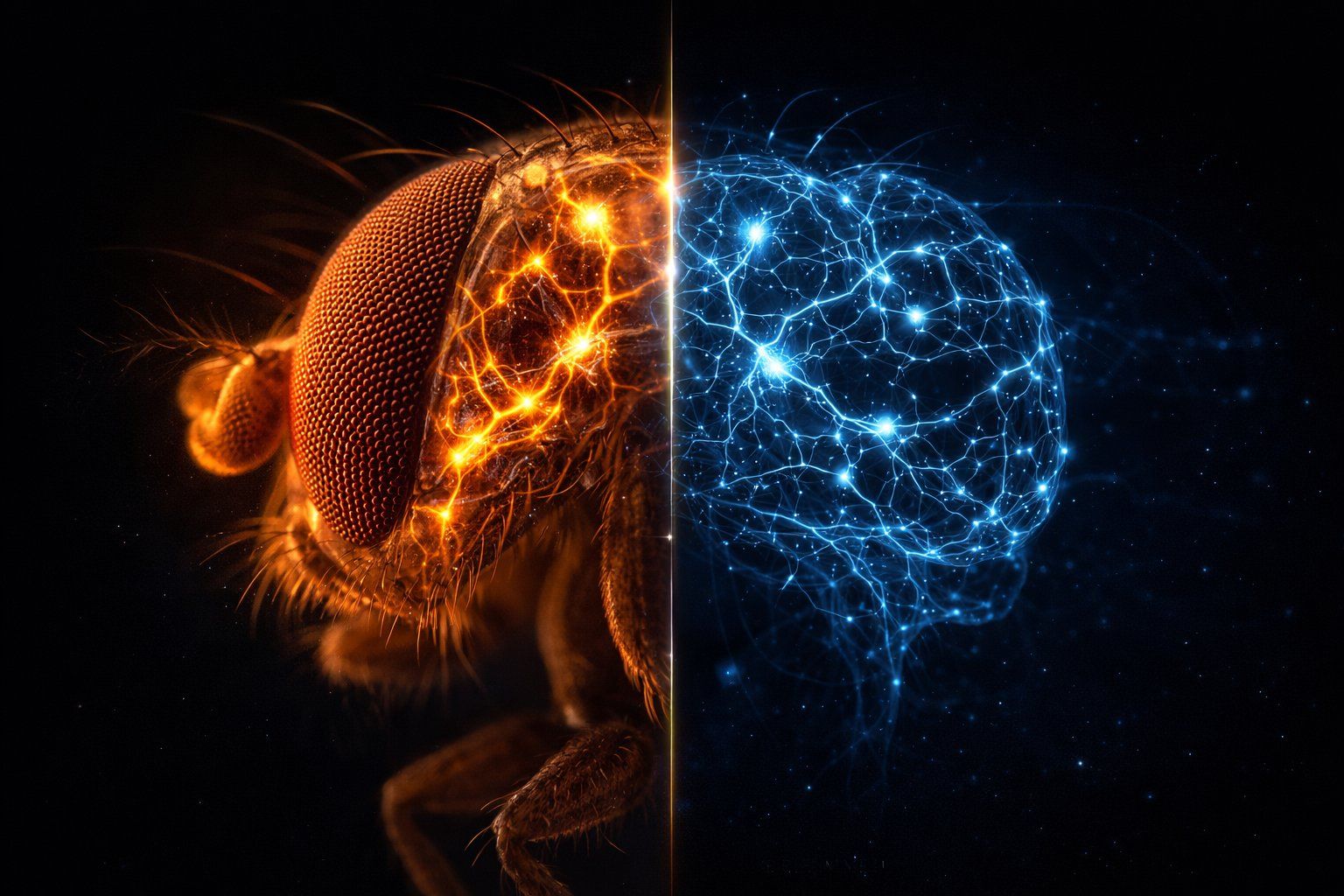
Scientists have copied an entire biological brain neuron by neuron and synapse by synapse and made it control a simulated...

Male G-spot isnโ€™t where we thought it was

Male G-Spot Found: New Study Identifies Frenular Delta as Penisโ€™s Most Sensitive Area

by Staff Writer
April 27, 2026
0

The study found that human penile innervation develops in distinct fetal stages and shows region-specific patterns in adults, with the...

A man and woman in white t-shirts stand against a pink backdrop.

Polygenic Inheritance: Traits, Nilsson-Ehle Experiment, and Additive Genetic Models

by Shibasis Rath
August 13, 2025
0

Polygenic inheritance refers to those traits that are controlled by more than one gene that are often at different loci...

EDITOR CHOICEโ€˜S

  • All
  • NEWS
  • SPOTLIGHTS
Recent Study Indicates Constant Praise May Actually Lower a Childโ€™s Academic Risk-Taking.

Recent Study Indicates Constant Praise May Actually Lower a Childโ€™s Academic Risk-Taking.

by Staff Writer
May 3, 2026
0

Recent studies on types of praise and children's academic motivation show that constantly praising a child's fixed traits, such as their intelligence...

SLC38A4 expression was confirmed by western blot in multiple tumor cell lines. In mouse models, liver tissue imaging (H&E staining) showed that overexpression of SLC38A4 reduced metastatic tumor areas, while knockdown increased them across Hepa1-6, MC38, and B16F10 cells. Results were consistent in both immunocompetent and nude mice, with statistically significant differences.

Scientists Find Molecule That Wipes Out Liver Cancer

by Shibasis Rath
May 2, 2026
0

Researchers investigated this question because metastasis causes most cancer deaths, and the liver is a frequent site of spread for...

Fossil Penguins From New Zealand Reveal Stages of the Birds’ Long Evolutionary History

Fossil Penguins From New Zealand Reveal Stages of the Birds’ Long Evolutionary History

by Shibasis Rath
May 1, 2026
0

The discovery of four new species of fossil penguins in New Zealand in 2025 sheds light on the long evolutionary...

Bluebuck antelope with silvery-blue coat and curved horns running across open South African grassland, representing extinct species targeted for de-extinction by scientists

Colossal Biosciences Announces De-Extinction of Bluebuck Antelope, 226 Years After Its Extinction

by Staff Writer
May 1, 2026
0

It has been 226 years since humans last saw a living bluebuck, an elegant antelope species native to South Africa...

ADVERTISEMENT

RathBiotaClan – RBC

RathBiotaClan – Connecting Research To Reality

Your trusted source for life science news, biology research & discoveries. Covering neuroscience, genetics, ecology, and more โ€” connecting research to reality.

Privacy Policies

Shipping Policy

Cancellation & Refund Policy

Pricing Details

Contact Us

Latest Posts

  • Recent Study Indicates Constant Praise May Actually Lower a Childโ€™s Academic Risk-Taking.
  • Scientists Find Molecule That Wipes Out Liver Cancer
  • Fossil Penguins From New Zealand Reveal Stages of the Birds’ Long Evolutionary History
  • Colossal Biosciences Announces De-Extinction of Bluebuck Antelope, 226 Years After Its Extinction

SHIBASIS RATH

Contact Mail

rathbiotaclan@gmail.com

No Result
View All Result
MSME (Udyam) Certified Science Platform
Govt. of India

Get Us On PlayStore

playstore app for rathbiotaclan
  • About Us
  • Advertise With Us
  • Cancellation and Refund Policy
  • Contact Us
  • Contribute
  • Editorial Standards
  • Home
  • Pricing Details
  • Privacy Policies
  • Shipping Policy
  • Terms & Conditions

ยฉ 2026 RathBiotaClan. All rights reserved.

Welcome Back!

Sign In with Google
OR

Login to your account below

Forgotten Password? Sign Up

Create New Account!

Sign Up with Google
OR

Fill the forms below to register

*By registering into our website, you agree to the Terms & Conditions and Privacy Policy.
All fields are required. Log In

Retrieve your password

Please enter your username or email address to reset your password.

Log In
No Result
View All Result
  • HOME
  • HEALTH SCIENCE
  • NEUROSCIENCE
    • PHYSIOLOGY
    • IMMUNOLOGY
    • CANCER
  • DISCOVERIES
    • SPOTLIGHTS
    • STUDENT PORTAL
    • SCIENCE FEATURED
  • MOLECULAR BIOLOGY
    • GENETICS
    • BIOTECHNOLOGY
    • BIOINFORMATICS
    • BIOCHEMISTRY
    • BIOPHYSICS
  • ZOOLOGY & ECOLOGY
    • ENVIRONMENTAL SCIENCE
    • ECOLOGY
    • EVOLUTION
  • MICRO & PLANT SCIENCE
    • MICROBIOLOGY
    • CELL BIOLOGY
    • DEVELOPMENTAL BIOLOGY
  • PSYCHOLOGY
  • E STORE
  • Login
  • Sign Up
SAVED POSTS

ยฉ 2026 RathBiotaClan. All rights reserved.

This website uses cookies. By continuing to use this website you are giving consent to cookies being used. Visit our Privacy and Cookie Policy.
Are you sure want to unlock this post?
Unlock left : 0
Are you sure want to cancel subscription?