





Thursday, April 30, 2026
SAVED POSTS
  • Login
  • Register
RathBiotaClan
No Result
View All Result
  • HOME
  • HEALTH SCIENCE
    • NEUROSCIENCE
    • PHYSIOLOGY
    • IMMUNOLOGY
    • CANCER
  • DISCOVERIES
    • SPOTLIGHTS
    • STUDENT PORTAL
    • SCIENCE FEATURED
  • MOLECULAR BIOLOGY
    • GENETICS
    • BIOTECHNOLOGY
    • BIOINFORMATICS
    • BIOCHEMISTRY
    • BIOPHYSICS
  • ZOOLOGY & ECOLOGY
    • ENVIRONMENTAL SCIENCE
    • ECOLOGY
    • EVOLUTION
  • MICRO & PLANT SCIENCE
    • MICROBIOLOGY
    • CELL BIOLOGY
    • DEVELOPMENTAL BIOLOGY
  • PSYCHOLOGY
  • E STORE
No Result
View All Result
RathBiotaClan
No Result
View All Result
Home BIOCHEMISTRY

Plant Based Antiviral Chewing Gum Reduce Influenza and Herpes Simplex Virus Transmission

Shibasis Rath by Shibasis Rath
January 29, 2026
in BIOCHEMISTRY, GENETICS, MOLECULAR BIOLOGY, NEWS
Reading Time: 5 mins read
0
A A
0

Imagine popping a piece of gum before heading into a crowded subway or a family gathering during flu season. What if that simple act could neutralize over 95% of certain viruses lurking in your saliva, potentially stopping them from infecting you or spreading to others? It sounds like science fiction, but researchers at the University of Pennsylvania have turned this idea into reality with an innovative antiviral chewing gum derived from humble lablab beans. This 2024 research study published in Molecular Therapy, harnesses a natural protein to combat common yet troublesome viruses like influenza and herpes simplex.

As we navigate ongoing challenges from seasonal outbreaks and emerging threats, this gum represents a low-cost, non-invasive tool that could reshape how we prevent viral transmission.

The Viral Threat in Our Mouths

Viruses don’t just float through the air they thrive in the warm, moist environment of our oral cavity. Saliva is a prime hotspot for transmission, especially during talking, coughing, or sneezing. Oral spread can be thousands of times more efficient than nasal routes, making the mouth a critical battleground for pathogens.

READ ALSO

Colossal Biosciences Announces De-Extinction of Bluebuck Antelope, 226 Years After Its Extinction

Critically Endangered Blue Tarantula Surveyed in India’s Largest Tiger Reserve

Take influenza A strains like H1N1 and H3N2: They cause seasonal flu epidemics, racking up billions in economic losses annually over $11 billion in the U.S. alone from healthcare costs and lost productivity.

Then there’s herpes simplex virus (HSV): HSV-1 affects more than two-thirds of the global population, often causing cold sores, while HSV-2 is linked to genital herpes. Both can lead to serious complications, like infectious blindness from HSV-1, and there’s no vaccine or cure available.

Vaccines help, but they’re not perfect. Influenza vaccination rates hover around 50% in many places, and immunity wanes over time. Even vaccinated people can still shed viruses and infect others. For HSV, systemic treatments exist, but they don’t prevent outbreaks or transmission at the source.

This is where topical, oral interventions shine: They target viruses right where they replicate and spread, without relying on the body’s full immune response.

At the heart of this gum is FRIL (Flt3 Receptor Interacting Lectin), a naturally occurring protein found in lablab beans (Lablab purpureus, also known as hyacinth beans). These beans, commonly grown in tropical regions for food and fodder, contain FRIL as a lectin a type of protein that binds to specific sugar molecules (glycans) on the surfaces of cells or, in this case, viruses.

Many viruses, including influenza and HSV, have envelopes studded with glycoprotein proteins decorated with complex N-glycans. FRIL acts like a molecular Velcro, latching onto these glycans with its tetrameric (four-unit) structure. This binding cross-links multiple virus particles, causing them to clump together in aggregates. Once trapped, the viruses can’t easily attach to host cells, enter them, or escape endosomes (cellular compartments) to replicate.

It’s a mechanical blockade rather than a chemical kill, making it broad-spectrum and less likely to spur resistance.

ADVERTISEMENT

The gum itself is a clinical-grade formulation: A 2-gram tablet incorporates finely ground lablab bean powder (about 79 mg per tablet) mixed with safe excipients like gum base, sorbitol, maltitol, and xylitol. No high heat is used during compression to preserve FRIL’s activity. Importantly, the beans are screened to ensure undetectable levels of potentially harmful compounds like vicine and convicine, which could cause issues in people with certain enzyme deficiencies.

The result is stable, edible product that’s Generally Recognized as Safe (GRAS) by the FDA.

The Lab Tests Led by Henry Daniell, W.D. Miller Professor at Penn’s School of Dental Medicine, the team rigorously tested the gum in controlled lab settings

They started with stability:

ADVERTISEMENT

FRIL remained highly active in bean powder for 683 days at -20°C and in the gum for 790 days at room temperature, with less than 5% loss in potency. It stayed functional for up to 794 days, passing bioburden tests (no bacteria, yeast, or mold) and maintaining low moisture (1.28–5.9%).

Release kinetics were simulated using an ART-5 mastication device, mimicking human chewing with real molars. Over 50% of FRIL was released within 15 minutes, and 95% by 60 minutes perfect for real-world use where people chew gum briefly.

The antiviral punch came from two key assays:

● Aggregation tests: Bean gum extracts trapped 75–94% of HSV-1 and HSV-2 particles in a dose-dependent way, measured via ELISA (enzyme-linked immunosorbent assay).

● Plaque reduction assays: These mimic infection in cell cultures. For about 1,000 virus particles per milliliter (a typical load), the gum neutralized over 95% of H1N1 and H3N2 at just 40 mg/mL. HSV-2 required 74 mg/mL, and HSV-1 160 mg/mL—differences likely due to varying glycan patterns on their surfaces (e.g., HSV-2’s unique gG glycoprotein).

A single 2-gram tablet provides 12–50 times the needed potency, ensuring effectiveness even with partial release.Daniell emphasizes the timeliness: “A broad spectrum antiviral protein (FRIL) present in a natural food product (bean powder) to neutralize not only human flu viruses but also avian (bird) flu is a timely innovation to prevent their infection and transmission.”

This isn’t Daniell’s first rodeo with antiviral gum. In 2021, his team developed a version using plant-produced ACE2 protein to trap SARS-CoV-2, reducing viral loads in COVID-19 patient saliva by over 95%.

That gum advanced to Phase I/II clinical trials (NCT05433181) under FDA Investigational New Drug (IND) approval.

The FRIL gum builds on that foundation, swapping ACE2 for a broader trap that works against enveloped viruses beyond coronaviruses. Lablab bean powder has even shown promise against bird flu strains like H5N1 and H7N9, which recently devastated poultry populations (over 54 million birds affected in U.S. outbreaks).

ADVERTISEMENT

From Lab To Lives

If clinical trials confirm these findings, this bean-based gum could transform infection control in high-risk spaces like schools, clinics, and public transport. It’s affordable, needle-free, shelf-stable, and scalable even with potential use in animal feed to reduce avian flu spillover. While human trials, real-world transmission data, and regulatory approval are still needed, early lab results point to a promising path ahead.

In a pandemic-weary world, this simple chew represents a hopeful shift turning everyday habits into a frontline defense against future viral threats.

Reference

“Debulking influenza and herpes simplex virus strains by a wide-spectrum anti-viral protein formulated in clinical grade chewing gum”

By Henry Daniell, Yuwei Guo, Rahul Singh, Uddhab Karki, Rachel J. Kulchar, Geetanjali Wakade, Juha-Matti Pihlava, Hamid Khazaei and Gary H. Cohen, 10 December 2024, Molecular Therapy.
DOI: 10.1016/j.ymthe.2024.12.008


  • Share on WhatsApp (Opens in new window) WhatsApp
  • Share on Facebook (Opens in new window) Facebook
  • Share on Reddit (Opens in new window) Reddit
  • Share on X (Opens in new window) X
  • Print (Opens in new window) Print

Did you like this read? Turn on notifications so we can let you know the second a new post goes live.

Turn off Alerts
Shibasis Rath

Shibasis Rath

"𝓒𝓸𝓷𝓷𝓮𝓬𝓽𝓲𝓷𝓰 𝓡𝓮𝓼𝓮𝓪𝓻𝓬𝓱 𝓣𝓸 𝓡𝓮𝓪𝓵𝓲𝓽𝔂" 𝓲𝓼𝓷'𝓽 𝓙𝓾𝓼𝓽 𝓪 𝓜𝓸𝓽𝓽𝓸 - 𝓘𝓽'𝓼 𝓜𝔂 𝓜𝓲𝓼𝓼𝓲𝓸𝓷

Related Posts

Bluebuck antelope with silvery-blue coat and curved horns running across open South African grassland, representing extinct species targeted for de-extinction by scientists
NEWS

Colossal Biosciences Announces De-Extinction of Bluebuck Antelope, 226 Years After Its Extinction

April 30, 2026
Rare Peacock Tarantula Image
NEWS

Critically Endangered Blue Tarantula Surveyed in India’s Largest Tiger Reserve

April 30, 2026
great white shark
ENVIRONMENTAL SCIENCE

Mesothermic fish face rising energy stress and overheating risk in warming oceans

April 20, 2026
Scientists remain unclear about how the hectocotylus detects a mate, or delivers sperm to the right location. Photograph: Alexis Rosenfeld/c/o Visa Pour L'Image Perpignan
NEWS

Male Octopuses Sense Progesterone With Mating Arm, Study Finds

April 7, 2026
BIOTECHNOLOGY

Organ-on-a-Chip Ages Human Fat and Liver Tissue in 4 Days Using Old Blood Serum

April 2, 2026
handwriting difference in men and women
NEUROSCIENCE

Why Do Men Tend to Have Worse Handwriting Than Women?

April 27, 2026

POPULAR NEWS

Yelling Isn’t Just Yelling: How a Hostile Home Rewires a Child’s Brain for Constant Alert

Yelling Isn’t Just Yelling: How a Hostile Home Rewires a Child’s Brain for Constant Alert

by Shibasis Rath
March 9, 2026
0

To a parent in the heat of the moment, a raised voice may feel like simple frustration. To a child...

a group of gen Z kids walking down a street

Is Gen Z the First Generation Less Intelligent Than Their Parents?

by Shibasis Rath
March 14, 2026
0

Gen Z intelligence decline is emerging as a serious concern among neuroscientists and education researchers. For over a century, each...

Whole Brain Emulation Achieved: Scientists Run a Fruit Fly Brain in Simulation

by Shibasis Rath
March 9, 2026
0

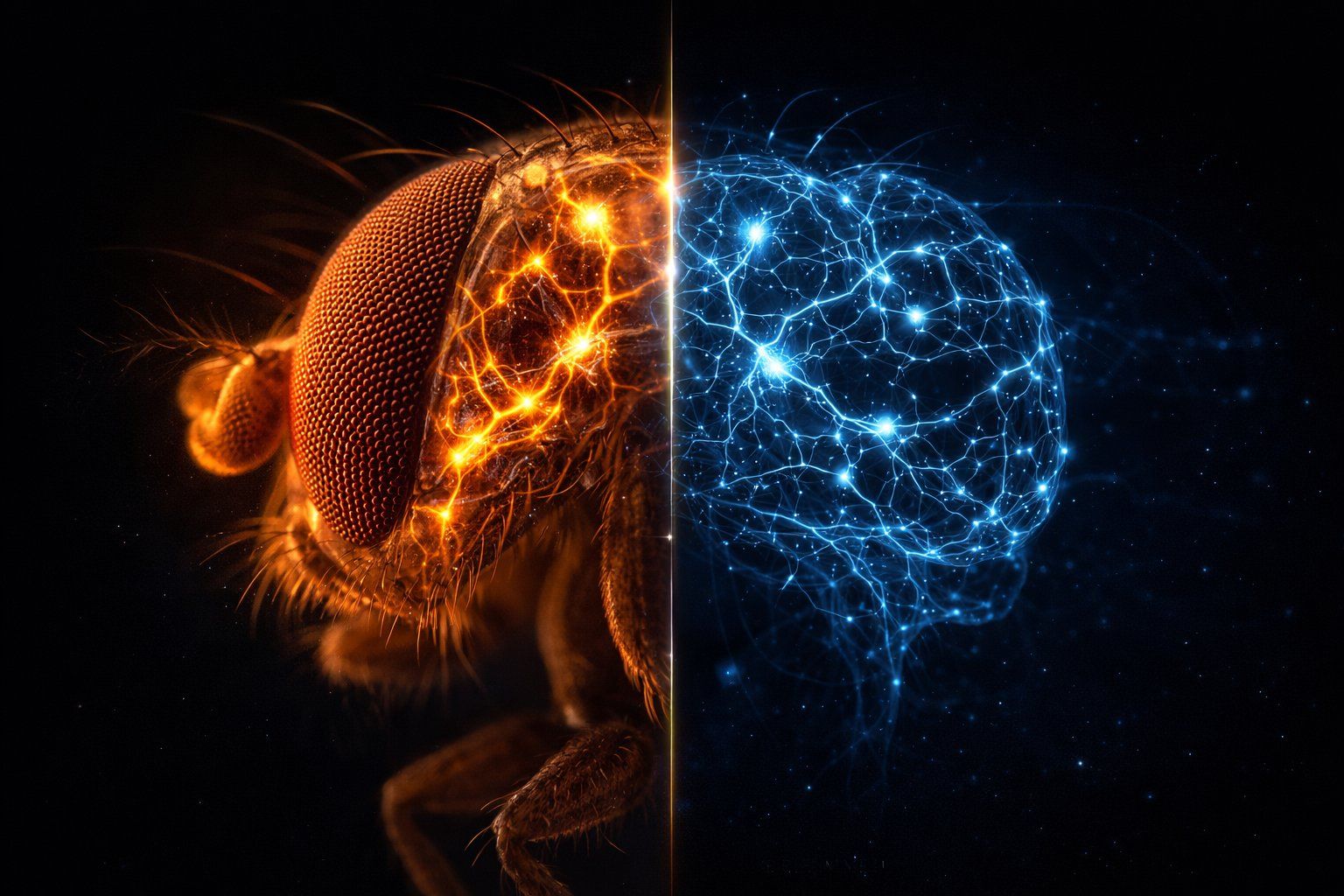
Scientists have copied an entire biological brain neuron by neuron and synapse by synapse and made it control a simulated...

Male G-spot isn’t where we thought it was

Male G-Spot Found: New Study Identifies Frenular Delta as Penis’s Most Sensitive Area

by Staff Writer
April 27, 2026
0

The study found that human penile innervation develops in distinct fetal stages and shows region-specific patterns in adults, with the...

Plant Based Antiviral Chewing Gum Reduce Influenza and Herpes Simplex Virus Transmission

by Shibasis Rath
January 29, 2026
0

Imagine popping a piece of gum before heading into a crowded subway or a family gathering during flu season. What...

EDITOR CHOICE‘S

  • All
  • NEWS
  • SPOTLIGHTS
Bluebuck antelope with silvery-blue coat and curved horns running across open South African grassland, representing extinct species targeted for de-extinction by scientists

Colossal Biosciences Announces De-Extinction of Bluebuck Antelope, 226 Years After Its Extinction

by Staff Writer
April 30, 2026
0

It has been 226 years since humans last saw a living bluebuck, an elegant antelope species native to South Africa...

Group of seniors walking down a city street.

Researchers Identify a Hidden Memory Risk Hiding in Plain Sight for Older Adults

by Shibasis Rath
April 30, 2026
0

More and more research suggests that psychological and behavioral factors can play a role in cognitive decline as people get...

Why Scientists Are Turning to Fish Scales to Restore Human Vision

Why Scientists Are Turning to Fish Scales to Restore Human Vision

by Shibasis Rath
April 30, 2026
0

Researchers at the University of Granada tested decellularized fish scales. They used these scales to create bioartificial corneas. Laboratory and...

Rare Peacock Tarantula Image

Critically Endangered Blue Tarantula Surveyed in India’s Largest Tiger Reserve

by Shibasis Rath
April 30, 2026
0

A new conservation survey has begun for the Peacock Tarantula (Poecilotheria metallica) inside the Nagarjunasagar Srisailam Tiger Reserve (NSTR). This...

ADVERTISEMENT

RathBiotaClan – RBC

RathBiotaClan – Connecting Research To Reality

Your trusted source for life science news, biology research & discoveries. Covering neuroscience, genetics, ecology, and more — connecting research to reality.

Privacy Policies

Shipping Policy

Cancellation & Refund Policy

Pricing Details

Contact Us

Latest Posts

  • Colossal Biosciences Announces De-Extinction of Bluebuck Antelope, 226 Years After Its Extinction
  • Researchers Identify a Hidden Memory Risk Hiding in Plain Sight for Older Adults
  • Why Scientists Are Turning to Fish Scales to Restore Human Vision
  • Critically Endangered Blue Tarantula Surveyed in India’s Largest Tiger Reserve

SHIBASIS RATH

Contact Mail

rathbiotaclan@gmail.com

No Result
View All Result
MSME (Udyam) Certified Science Platform
Govt. of India

Get Us On PlayStore

playstore app for rathbiotaclan
  • About Us
  • Advertise With Us
  • Cancellation and Refund Policy
  • Contact Us
  • Contribute
  • Editorial Standards
  • Home
  • Pricing Details
  • Privacy Policies
  • Shipping Policy
  • Terms & Conditions

© 2026 RathBiotaClan. All rights reserved.

Welcome Back!

Sign In with Google
OR

Login to your account below

Forgotten Password? Sign Up

Create New Account!

Sign Up with Google
OR

Fill the forms below to register

*By registering into our website, you agree to the Terms & Conditions and Privacy Policy.
All fields are required. Log In

Retrieve your password

Please enter your username or email address to reset your password.

Log In
No Result
View All Result
  • HOME
  • HEALTH SCIENCE
    • NEUROSCIENCE
    • PHYSIOLOGY
    • IMMUNOLOGY
    • CANCER
  • DISCOVERIES
    • SPOTLIGHTS
    • STUDENT PORTAL
    • SCIENCE FEATURED
  • MOLECULAR BIOLOGY
    • GENETICS
    • BIOTECHNOLOGY
    • BIOINFORMATICS
    • BIOCHEMISTRY
    • BIOPHYSICS
  • ZOOLOGY & ECOLOGY
    • ENVIRONMENTAL SCIENCE
    • ECOLOGY
    • EVOLUTION
  • MICRO & PLANT SCIENCE
    • MICROBIOLOGY
    • CELL BIOLOGY
    • DEVELOPMENTAL BIOLOGY
  • PSYCHOLOGY
  • E STORE
  • Login
  • Sign Up
SAVED POSTS

© 2026 RathBiotaClan. All rights reserved.

This website uses cookies. By continuing to use this website you are giving consent to cookies being used. Visit our Privacy and Cookie Policy.
Are you sure want to unlock this post?
Unlock left : 0
Are you sure want to cancel subscription?