
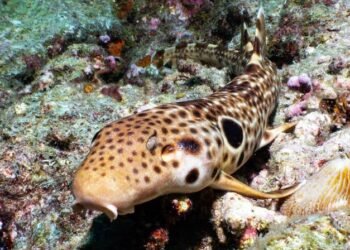





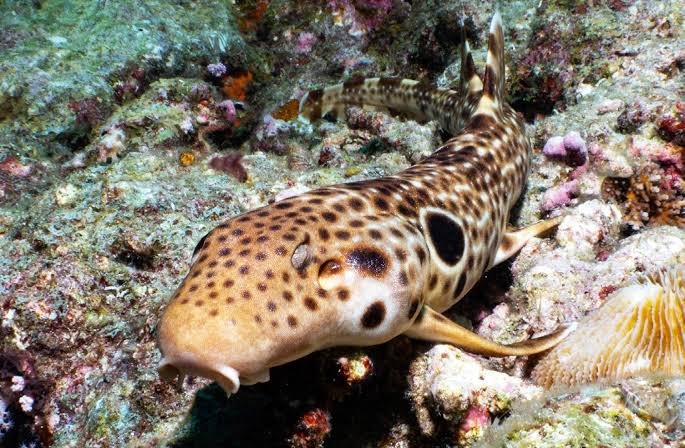
The study sits within research on the genus Hemiscyllium, a group of small carpet sharks endemic to Australia and New Guinea. These sharks are known for using their pectoral and pelvic fins to “walk” across reef flats, often in very shallow water or even with much of their body exposed at low tide. Nine species were previously recognized, identified primarily by their distinctive color patterns, genetic markers, and restricted geographic ranges.
The team, led by researchers from the University of the Sunshine Coast, conducted surveys in Milne Bay and nearby areas between 2023 and 2025. They were originally studying the distribution of known epaulette sharks. On a night survey in March 2025, Christine Dudgeon encountered an individual in about a meter of water over seagrass that did not match the expected H. michaeli. The shark froze when illuminated, allowing capture using a “flip and tuck” technique. Additional specimens were collected at three sites; tissue samples were taken from most, with a few retained for detailed study.
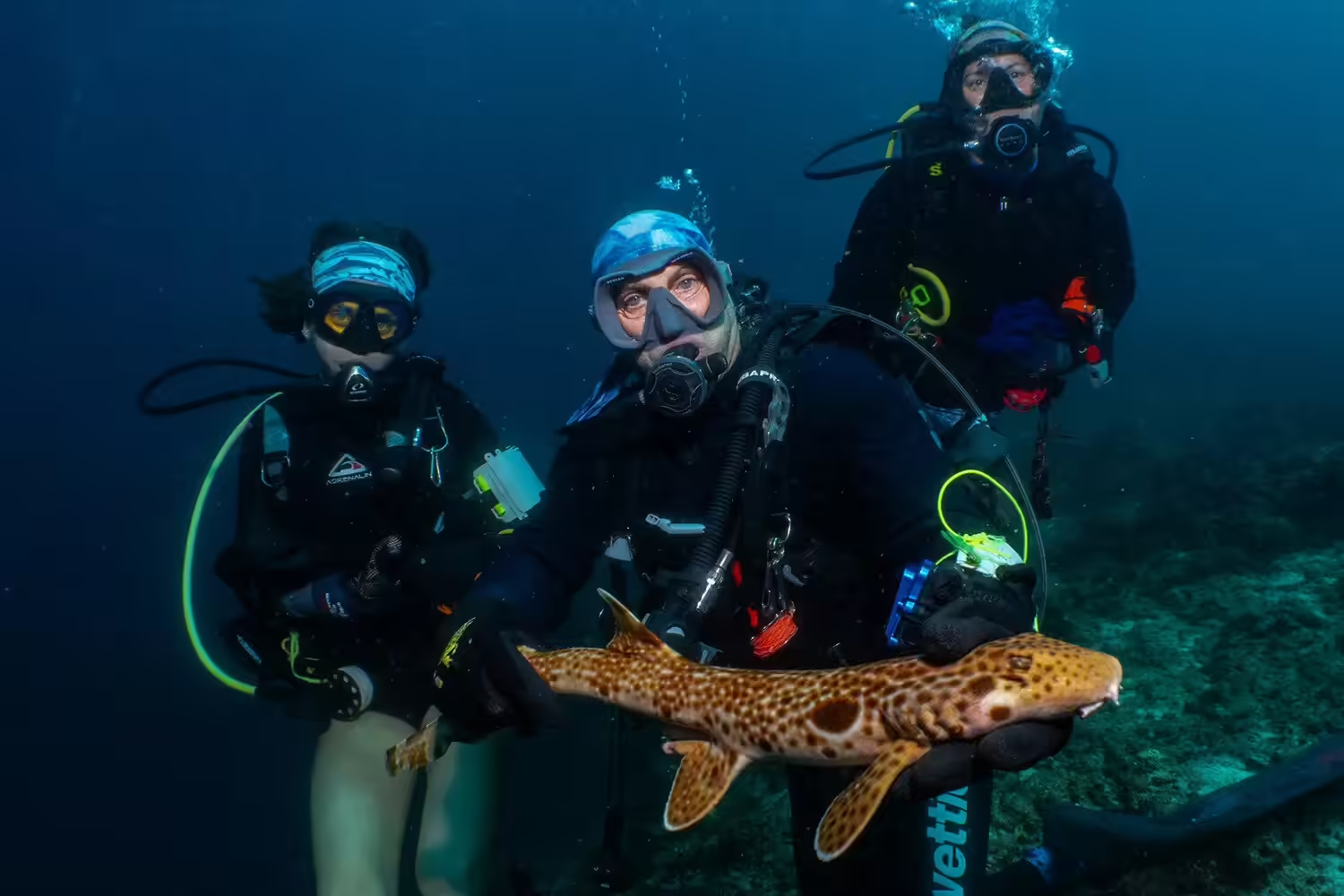
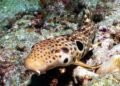
In the lab, morphological examination showed a unique pattern of small brown freckles, white spots, and dashes—described by team members as resembling braille or Morse code—distinct from the leopard-like spots of the related species. DNA analysis confirmed it was genetically distinct. The paper formally names and describes the species, updates distributions for two others, discusses possible speciation mechanisms in the region, and notes conservation implications.
The researchers examined a limited number of individuals from a small geographic area. They conclude that H. dudgeonae appears confined to the coral reefs of Milne Bay, making it likely the most range-restricted and potentially most threatened member of the genus. Five of the ten Hemiscyllium species are already listed as threatened on the IUCN Red List under criteria related to restricted range.

“This species adds to Papua New Guinea’s extraordinary biodiversity, yet it faces local extinction without urgent conservation action.”
— Jess Blakeway, University of the Sunshine Coast
Like most new species descriptions, this study has important limitations. It is based on a relatively small sample of sharks, and the authors acknowledge that the species’ full range is still unknown. The paper points to serious pressures on Milne Bay’s reefs — such as coastal development, palm oil expansion, and climate-driven coral bleaching — but does not provide detailed new data on how severely these threats affect H. dudgeonae itself.
Reference:
J.-A. Blakeway et al. 2026. A review of walking shark (Hemiscylliidae: Hemiscyllium) distributions in Papua New Guinea and description of a new species. Journal of the Ocean Science Foundation 46: 71-110. DOI: 10.5281/zenodo.20575429.