




Thursday, June 18, 2026
SAVED POSTS
  • Login
  • Register
RathBiotaClan
No Result
View All Result
  • HOME
  • HEALTH SCIENCE

    TRENDING ON HEALTH (TOP)

    For People Antidepressants Never Helped, a 30-Minute Home Session Is Now FDA-Approved

    Scientists Say Your Next Tube of Toothpaste Could Be Made From Human Hair

    Your Lungs, Liver, and Pancreas Also Age Faster When You Sleep Wrong

    Cycling Linked to Lower Dementia Risk in Study of Nearly 480,000 Adults

    NOW ON AIR (RBC)

    NEUROSCIENCE

    Step-Synchronized Brain Stimulation Reduces Falls in Small Parkinson’s Trial

    June 16, 2026
    NEWS

    A Father’s Touch in Infancy Can Shape a Child’s Health for Years, New Science Explains Why

    June 9, 2026
    MutExpress
    BIOINFORMATICS

    South Asian Patients Have Been Left Out of Cancer Genomics for Decades & MutExpress-India Is Changing That

    June 8, 2026
    Biodiversity Loss
    ECOLOGY

    Biodiversity Loss Could Bankrupt Nations And Wall Street Hasn’t Noticed Yet

    June 5, 2026
  • NEUROSCIENCE
    • PHYSIOLOGY
    • IMMUNOLOGY
    • CANCER
  • DISCOVERIES
    • SPOTLIGHTS
    • STUDENT PORTAL
    • SCIENCE FEATURED
  • MOLECULAR BIOLOGY
    • GENETICS
    • BIOTECHNOLOGY
    • BIOINFORMATICS
    • BIOCHEMISTRY
    • BIOPHYSICS
  • ZOOLOGY & ECOLOGY
    • ENVIRONMENTAL SCIENCE
    • ECOLOGY
    • EVOLUTION
  • MICRO & PLANT SCIENCE
    • MICROBIOLOGY
    • CELL BIOLOGY
    • DEVELOPMENTAL BIOLOGY
  • PSYCHOLOGY
RathBiotaClan
RathBiotaClan
No Result
View All Result
Home DISCOVERIES

How Climate Change Turned a Meat Eater Into a Bone Cruncher

Shibasis Rath by Shibasis Rath
August 19, 2025
in DISCOVERIES, ECOLOGY, EVOLUTION, NEWS
Reading Time: 4 mins read
0
A A
0
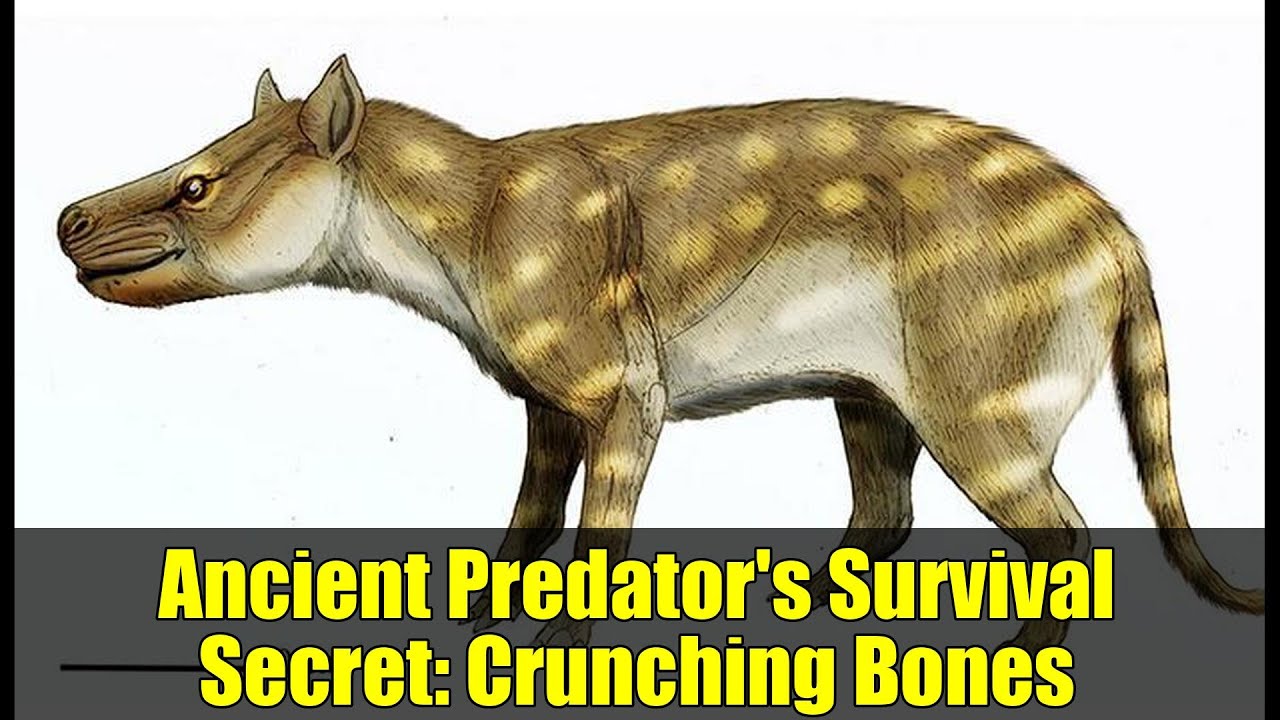
An illustration of an ancient, hyena-like predator with a muscular body, spotted fur, and a strong jaw, highlighting its climate adaptation. Text: Ancient Predators Survival Secret: Crunching Bones.

Scientists reveal how prehistoric carnivores survived extreme climate change through remarkable dietary transformation

In recent study about ancient predator climate adaptation has revealed one of Earth’s most remarkable survival stories. In recent studies, scientists uncovered how a wolf-like creature called Dissacus praenuntius survived devastating global warming 56 million years ago through extraordinary ancient predator climate adaptation strategies. This prehistoric carnivore completely transformed from a meat-eating hunter into a bone-crunching scavenger, demonstrating the incredible lengths animals will go to survive environmental catastrophe.

This research isn’t just another fossil discovery – it’s a window into how modern animals might cope with today’s climate change crisis. The findings, led by Andrew Schwartz from Rutgers University, are both fascinating and honestly a bit unsettling for what they reveal about survival under extreme conditions.
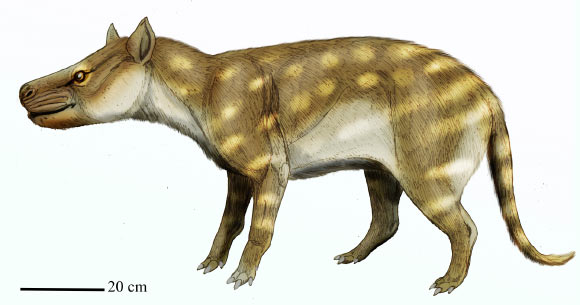
Dissacus praenuntius. Image credit: DiBgd / CC BY 4.0.

Ancient Climate Adaptation During Earth’s Greatest Fever

The period scientists studied is called the Paleocene-Eocene Thermal Maximum, or PETM for short. Think of it as Earth’s most extreme fever that lasted way too long. Temperatures shot up by nearly 6 degrees Celsius in just a few thousand years – which is lightning-fast in geological time. The heat wave persisted for roughly 270,000 years. Rainfall basically disappeared in many regions, creating drought conditions.

Sound familiar? That’s because what happened back then mirrors what’s happening now. Except we’re potentially heading for something even more dramatic. This ancient climate adaptation event serves as a stark preview of environmental challenges.

The Predator’s Remarkable Climate Adaptation Strategy

Dissacus praenuntius was about the size of today’s coyotes, weighing around 12-20 kg. Despite looking like oversized wolves, these creatures were actually more related to horses and deer – which makes their climate adaptation story even more fascinating. Before the climate disaster struck, they hunted like modern cheetahs. They went after fresh meat with precision and speed.

ADVERTISEMENT

But here’s where their ancient predator climate adaptation gets really interesting. The researchers used a technique called dental microwear texture analysis. They basically examined tiny scratches and pits on fossilized teeth under powerful microscopes. These microscopic marks tell the story of what an animal ate in it’s final days. It’s like a prehistoric dietary fingerprint that reveals adaptation strategies.

READ ALSO

Step-Synchronized Brain Stimulation Reduces Falls in Small Parkinson’s Trial

A Father’s Touch in Infancy Can Shape a Child’s Health for Years, New Science Explains Why

The Shocking Climate Adaptation Transformation

When the team analyzed 24 fossil molars from Wyoming’s Bighorn Basin, they expected something different. They thought these predators would stick to their original diet throughout the crisis. They couldn’t have been more wrong about this ancient predator climate adaptation.

ADVERTISEMENT

Before the warming event, tooth wear patterns looked exactly like modern cheetahs. These were smooth surfaces that come from eating soft flesh. But during and after the PETM, everything changed dramatically. The teeth started showing complex scratching patterns that matched lions and bone-crushing hyenas instead.

ADVERTISEMENT

This wasn’t a gradual shift either. The climate adaptation was dramatic and decisive. These animals went from being primarily meat-eaters to creatures that regularly crunched through bones. They had to extract every possible nutrient to survive.

Understanding the Ancient Predator’s Dietary Revolution

The reason behind this remarkable ancient predator climate adaptation is straightforward, though tragic. As temperatures soared, plant life crashed across the landscape. With less vegetation, herbivore populations plummeted drastically. The prey that survived became smaller and weaker than before. For a predator like Dissacus, this meant their usual hunting grounds became barren wastelands.

Faced with starvation, these animals had two stark choices: adapt or die. They chose adaptation through multiple strategies. They shrank their own body size by about 20%. They learned to extract nutrition from sources they’d previously ignored completely. Instead of relying on fresh kills, they likely became more opportunistic scavengers. They used their powerful jaws to crack open bones that other predators left behind.

Modern Lessons from Ancient Predator Climate Adaptation

This research on ancient predator climate adaptation has serious implications for today’s wildlife conservation. The study shows that animals with flexible diets have better chances of surviving rapid environmental changes. These “generalists” consistently outperform “specialists” who depend on specific food sources during climate stress.

However, there’s a sobering reality check about climate adaptation limits. Despite being incredibly adaptable, Dissacus eventually went extinct anyway. They survived for 15 million years after this dietary switch. But environmental pressures and competition finally overwhelmed them. This suggests that even the most successful climate adaptation strategies hit their limits when conditions become too intense.

For conservationists working to protect today’s wildlife, this ancient case study provides a crucial roadmap. It helps identify which species are most vulnerable to current changes. Animals that can’t adapt their feeding strategies quickly might be the first casualties of our changing climate.

The parallels between the PETM and today’s crisis are undeniable. This makes studying ancient predator climate adaptation more relevant than ever.

Reference: Study Published In ScienceDirect


RECENT POSTS

  • Step-Synchronized Brain Stimulation Reduces Falls in Small Parkinson’s Trial
  • A Father’s Touch in Infancy Can Shape a Child’s Health for Years, New Science Explains Why
  • MutExpress
    South Asian Patients Have Been Left Out of Cancer Genomics for Decades & MutExpress-India Is Changing That

  • Biodiversity Loss
    Biodiversity Loss Could Bankrupt Nations And Wall Street Hasn’t Noticed Yet
  • Share on WhatsApp (Opens in new window) WhatsApp
  • Share on Facebook (Opens in new window) Facebook
  • Share on Reddit (Opens in new window) Reddit
  • Share on X (Opens in new window) X
  • Print (Opens in new window) Print
Shibasis Rath

Shibasis Rath

"๐“’๐“ธ๐“ท๐“ท๐“ฎ๐“ฌ๐“ฝ๐“ฒ๐“ท๐“ฐ ๐“ก๐“ฎ๐“ผ๐“ฎ๐“ช๐“ป๐“ฌ๐“ฑ ๐“ฃ๐“ธ ๐“ก๐“ฎ๐“ช๐“ต๐“ฒ๐“ฝ๐”‚" ๐“ฒ๐“ผ๐“ท'๐“ฝ ๐“™๐“พ๐“ผ๐“ฝ ๐“ช ๐“œ๐“ธ๐“ฝ๐“ฝ๐“ธ - ๐“˜๐“ฝ'๐“ผ ๐“œ๐”‚ ๐“œ๐“ฒ๐“ผ๐“ผ๐“ฒ๐“ธ๐“ท

Related Posts

Step-Synchronized Brain Stimulation Reduces Falls in Small Parkinson’s Trial
NEUROSCIENCE

Step-Synchronized Brain Stimulation Reduces Falls in Small Parkinson’s Trial

June 16, 2026
A Father’s Touch in Infancy Can Shape a Child’s Health for Years, New Science Explains Why
NEWS

A Father’s Touch in Infancy Can Shape a Child’s Health for Years, New Science Explains Why

June 9, 2026
Biodiversity Loss
ECOLOGY

Biodiversity Loss Could Bankrupt Nations And Wall Street Hasn’t Noticed Yet

June 5, 2026

POPULAR NEWS

Chewing gum releases thousands of microplastic particles directly into your mouth with every piece you chew

Chewing gum releases thousands of microplastic particles directly into your mouth with every piece you chew

by Shibasis Rath
May 8, 2026
0

Microplastics are turning up in places researchers never expected: deep-sea sediments, Arctic ice, and human blood. Now, a UCLA pilot...

New Studys Says Gen Z is the least sexually active young cohort in modern recorded history

New Studys Says Gen Z is the least sexually active young cohort in modern recorded history

by Shibasis Rath
January 24, 2026
0

A generation that grew up with dating apps in their pockets, pornography a tap away, and sex discussed more openly...

Yelling Isnโ€™t Just Yelling: How a Hostile Home Rewires a Childโ€™s Brain for Constant Alert

Yelling Isnโ€™t Just Yelling: How a Hostile Home Rewires a Childโ€™s Brain for Constant Alert

by Shibasis Rath
March 8, 2026
0

To a parent in the heat of the moment, a raised voice may feel like simple frustration. To a child...

a group of gen Z kids walking down a street

Is Gen Z the First Generation Less Intelligent Than Their Parents?

by Shibasis Rath
February 5, 2026
0

Gen Z intelligence decline is emerging as a serious concern among neuroscientists and education researchers. For over a century, each...

Whole Brain Emulation Achieved: Scientists Run a Fruit Fly Brain in Simulation

by Shibasis Rath
March 9, 2026
0

Scientists have copied an entire biological brain neuron by neuron and synapse by synapse and made it control a simulated...

EDITOR CHOICEโ€˜S

  • All
  • NEWS
  • SPOTLIGHTS
Step-Synchronized Brain Stimulation Reduces Falls in Small Parkinson’s Trial

Step-Synchronized Brain Stimulation Reduces Falls in Small Parkinson’s Trial

by Staff Writer
June 16, 2026
0

Researchers have reported encouraging results from a small feasibility study testing a new form of adaptive deep brain stimulation (aDBS)...

A Father’s Touch in Infancy Can Shape a Child’s Health for Years, New Science Explains Why

A Father’s Touch in Infancy Can Shape a Child’s Health for Years, New Science Explains Why

by Staff Writer
June 9, 2026
0

A study from Penn State University has revealed something startling beneath that simplicity those early interactions carry biological consequences that...

MutExpress

South Asian Patients Have Been Left Out of Cancer Genomics for Decades & MutExpress-India Is Changing That

by Staff Writer
June 8, 2026
0

The databases that underpin modern cancer genomics have a geography problem. The gnomAD database the gold standard for allele frequency...

Biodiversity Loss

Biodiversity Loss Could Bankrupt Nations And Wall Street Hasn’t Noticed Yet

by Staff Writer
June 5, 2026
0

Every year, governments borrow trillions of dollars to function. The interest rate they pay depends almost entirely on their credit...

ADVERTISEMENT

RathBiotaClan – RBC

RathBiotaClan – Connecting Research To Reality

Your trusted source for life science news, biology research & discoveries. Covering neuroscience, genetics, ecology, and more โ€” connecting research to reality.

About Us

Privacy Policies

Contact Us

Editorial Standard

Latest Posts

  • Step-Synchronized Brain Stimulation Reduces Falls in Small Parkinson’s Trial
  • A Father’s Touch in Infancy Can Shape a Child’s Health for Years, New Science Explains Why
  • South Asian Patients Have Been Left Out of Cancer Genomics for Decades & MutExpress-India Is Changing That
  • Biodiversity Loss Could Bankrupt Nations And Wall Street Hasn’t Noticed Yet

SHIBASIS RATH

Contact Mail

rathbiotaclan@gmail.com

No Result
View All Result
MSME (Udyam) Certified Science Platform
Govt. of India

Get Us On PlayStore

playstore app for rathbiotaclan
  • About Us
  • Advertise With Us
  • Cancellation and Refund Policy
  • Contact Us
  • Contribute
  • Editorial Standards
  • Home
  • Pricing Details
  • Privacy Policies
  • Shipping Policy
  • Terms & Conditions

ยฉ 2026 RathBiotaClan. All rights reserved.

Welcome Back!

Sign In with Google
OR

Login to your account below

Forgotten Password? Sign Up

Create New Account!

Sign Up with Google
OR

Fill the forms below to register

*By registering into our website, you agree to the Terms & Conditions and Privacy Policy.
All fields are required. Log In

Retrieve your password

Please enter your username or email address to reset your password.

Log In

Add New Playlist

No Result
View All Result
  • HOME
  • HEALTH SCIENCE
  • NEUROSCIENCE
    • PHYSIOLOGY
    • IMMUNOLOGY
    • CANCER
  • DISCOVERIES
    • SPOTLIGHTS
    • STUDENT PORTAL
    • SCIENCE FEATURED
  • MOLECULAR BIOLOGY
    • GENETICS
    • BIOTECHNOLOGY
    • BIOINFORMATICS
    • BIOCHEMISTRY
    • BIOPHYSICS
  • ZOOLOGY & ECOLOGY
    • ENVIRONMENTAL SCIENCE
    • ECOLOGY
    • EVOLUTION
  • MICRO & PLANT SCIENCE
    • MICROBIOLOGY
    • CELL BIOLOGY
    • DEVELOPMENTAL BIOLOGY
  • PSYCHOLOGY
  • Login
  • Sign Up
SAVED POSTS

ยฉ 2026 RathBiotaClan. All rights reserved.

This website uses cookies. By continuing to use this website you are giving consent to cookies being used. Visit our Privacy and Cookie Policy.