



Wednesday, June 17, 2026
SAVED POSTS
  • Login
  • Register
RathBiotaClan
No Result
View All Result
  • HOME
  • HEALTH SCIENCE

    TRENDING ON HEALTH (TOP)

    For People Antidepressants Never Helped, a 30-Minute Home Session Is Now FDA-Approved

    Scientists Say Your Next Tube of Toothpaste Could Be Made From Human Hair

    Your Lungs, Liver, and Pancreas Also Age Faster When You Sleep Wrong

    Cycling Linked to Lower Dementia Risk in Study of Nearly 480,000 Adults

    NOW ON AIR (RBC)

    NEUROSCIENCE

    Step-Synchronized Brain Stimulation Reduces Falls in Small Parkinson’s Trial

    June 16, 2026
    NEWS

    A Father’s Touch in Infancy Can Shape a Child’s Health for Years, New Science Explains Why

    June 9, 2026
    MutExpress
    BIOINFORMATICS

    South Asian Patients Have Been Left Out of Cancer Genomics for Decades & MutExpress-India Is Changing That

    June 8, 2026
    Biodiversity Loss
    ECOLOGY

    Biodiversity Loss Could Bankrupt Nations And Wall Street Hasn’t Noticed Yet

    June 5, 2026
  • NEUROSCIENCE
    • PHYSIOLOGY
    • IMMUNOLOGY
    • CANCER
  • DISCOVERIES
    • SPOTLIGHTS
    • STUDENT PORTAL
    • SCIENCE FEATURED
  • MOLECULAR BIOLOGY
    • GENETICS
    • BIOTECHNOLOGY
    • BIOINFORMATICS
    • BIOCHEMISTRY
    • BIOPHYSICS
  • ZOOLOGY & ECOLOGY
    • ENVIRONMENTAL SCIENCE
    • ECOLOGY
    • EVOLUTION
  • MICRO & PLANT SCIENCE
    • MICROBIOLOGY
    • CELL BIOLOGY
    • DEVELOPMENTAL BIOLOGY
  • PSYCHOLOGY
RathBiotaClan
RathBiotaClan
No Result
View All Result
Home ECOLOGY

Five Seabirds Added to UK Red List

Shibasis Rath by Shibasis Rath
September 7, 2024
in ECOLOGY, NEWS, ZOOLOGY
Reading Time: 5 mins read
0
A A
0
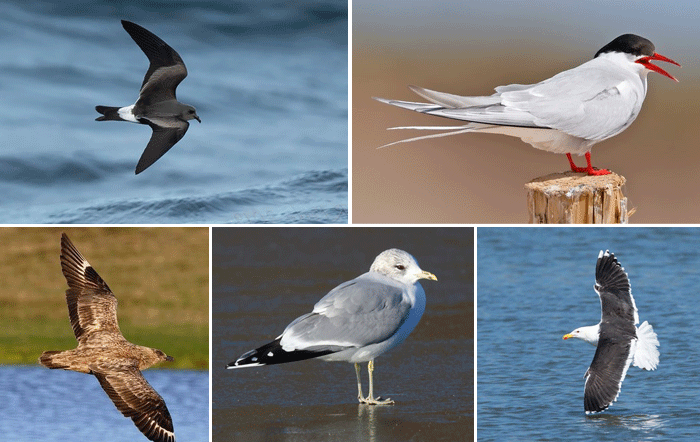
A collage of five UK seabird red list species: a dark bird flying over water, a white and gray bird with a red beak perched on wood, a brown bird in flight, a gray and white wader, and a black-and-white bird soaring above the waves.

Recently, the UK update on the bird’s conservation status has been made known as five seabird species have been added to England’s ‘red list’, putting them at a heightening risk of extinction. The newly red-listed seabirds include the Leach’s Storm-petrel, Common Gull, Great Black-backed Gull, Arctic Tern, and Great Skua. They’ve joined other critically endangered seabirds such as the Kittiwake, Herring Gull, Roseate Tern, Arctic Skua, and Puffin.

SpeciesKey Features & Defining Characteristics
Kittiwake (Rissa tridactyla)Medium size, gentle-looking gull. Small yellow bill, dark eye. Solid black wing-tips, appearing as if “dipped in ink” (a defining feature). Grey back, white underside.
Herring Gull (Larus argentatus)Large gull. Grey back, white head/underside. Heavy yellow bill with a distinctive red spot on the lower mandible (the “gull’s spot”). Typically pink legs.
Roseate Tern (Sterna dougallii)Medium size, very pale tern. Long, deeply forked tail. Black cap, black bill (can develop orange at the base in summer), and bright red legs. Has a hard-to-see rosy tint on the breast.
Arctic Skua (Stercorarius parasiticus)Medium size, predatory seabird. Stocky, streamlined body, pointed wings. Distinct, pointed central tail feathers. Two color phases (light and dark morphs). Noted for chasing other birds to steal food.
Puffin (Fratercula arctica)Unmistakable, stocky black-and-white seabird. During breeding, it has a wonderfully large, multicolored, triangular bill (orange, yellow, and blue/gray) and a pale face with prominent red eye-rings.
Image of Five Seabirds Added to UK Red List

Why Are These Seabird Populations Under Threat ?

The red-listing is the result of an in-depth assessment conducted by a coalition of leading UK bird conservation organizations: 28 seabird species. The update categorizes birds onto the red, amber, or green list according to the level of threat towards their survival. Up-listing of the seabirds onto the red list just underlines the severe and growing threats.

Many factors give rise to a decline in the populations of seabirds:

  1. Climate Change: Changes in sea temperature and weather patterns are the availability of prey, wherein for example, warmer waters reduce plankton and small fish that are vital to be preyed on by seabirds; in this respect it also influences breeding success under changing conditions of nesting and food supplies.
  2. Overfishing: When the overall population of fish declines due to overfishing, this affects seabirds that depend on fish for sustenance. The birds find it very hard to feed on reduced fish populations; hence, their breeding successes are terribly low, while survival rates are also affected.
  3. Entanglement in Fishing Gear: Seabirds become entangled in abandoned or lost fishing gear such as nets and lines. This bycatch can result in injuries or death, further contributing to their population decline.
  4. Alien Predators: Non-native species, notably rats and cats, rank high among the seabird threats, above all for island-nesting species. They can destroy eggs, chicks, and even adult birds, thus breaking up breeding and population stability.
  5. Development of Offshore Renewable Energy: The primary issue here is the expansion of offshore wind farms and other renewable projects into key areas of seabird feeding, thus displacing them and altering their feeding patterns. This may lead to reduced foraging success and increased energy expenditure, adding to their population strain.  

Seabird populations have also been afflicted with outbreaks of avian influenza. The diseases spread quickly among birds, which then die in large numbers, once again adding insult to injury among the already declining populations.

ADVERTISEMENT

Urgency for Action

Katie-Jo Luxton, Global Conservation Director for the RSPB, has called for “urgent action” to reduce these disparate threats and allow seabird populations to recover. Of particular importance, the following actions are crucial for effective conservation:

READ ALSO

Step-Synchronized Brain Stimulation Reduces Falls in Small Parkinson’s Trial

A Father’s Touch in Infancy Can Shape a Child’s Health for Years, New Science Explains Why

  1. Improved Monitoring/Research: There is a pressing need for continuous monitoring of the population and breeding success of seabirds. This enables a fuller understanding of the level of the threat and allows assessments of the effectiveness of conservation measures. Research into the impacts of climate change, fishing practices, and other threats can inform targeted interventions.
  2. Protection of Critical Habitats: Protection of critical breeding and feeding habitats is paramount. This includes the establishment and management of marine protected areas, regulation of invasive species, and carrying out of offshore developments in such a manner that takes into consideration the interest of seabirds.
  3. Mitigation of Bycatch: The establishment of regulations that reduce bycatch-such as the use of bird-friendly fishing gear coupled with good waste management practices-prevents the chances of catching seabirds in fishing gear.
  4. Climate Change: In the light of mitigating climate change, reduce emissions and involve sustainable management of fisheries in order to maintain the habitat of the seabirds as well as their sources of food.
  5. Public Awareness and Participation: Public awareness of the seabird’s plight and the participation of local communities in its conservation may bring about support and positive change. Educational campaigns and citizen science projects can engage people in monitoring and protecting seabird populations.

This inclusion of the five seabird species on the UK’s ‘red list’ is a sobering reminder of the growing number of threats our marine avifauna faces. Challenges go hand in hand with scientific research, habitat protection, changes in policy, and engagement with the public. We now need urgent, concerted action if we are to try to stop the decline of these remarkable birds and ensure their survival for generations to come.

ADVERTISEMENT

Engage with Us:

Stay tuned for more captivating insights and News. Visit our Blogs , Science paper , Study Portal and Follow Us on social media to never miss an update. Together, let’s unravel the mysteries of the natural world.


ADVERTISEMENT
  • Share on WhatsApp (Opens in new window) WhatsApp
  • Share on Facebook (Opens in new window) Facebook
  • Share on Reddit (Opens in new window) Reddit
  • Share on X (Opens in new window) X
  • Print (Opens in new window) Print
Shibasis Rath

Shibasis Rath

"𝓒𝓸𝓷𝓷𝓮𝓬𝓽𝓲𝓷𝓰 𝓡𝓮𝓼𝓮𝓪𝓻𝓬𝓱 𝓣𝓸 𝓡𝓮𝓪𝓵𝓲𝓽𝔂" 𝓲𝓼𝓷'𝓽 𝓙𝓾𝓼𝓽 𝓪 𝓜𝓸𝓽𝓽𝓸 - 𝓘𝓽'𝓼 𝓜𝔂 𝓜𝓲𝓼𝓼𝓲𝓸𝓷

Related Posts

Step-Synchronized Brain Stimulation Reduces Falls in Small Parkinson’s Trial
NEUROSCIENCE

Step-Synchronized Brain Stimulation Reduces Falls in Small Parkinson’s Trial

June 16, 2026
A Father’s Touch in Infancy Can Shape a Child’s Health for Years, New Science Explains Why
NEWS

A Father’s Touch in Infancy Can Shape a Child’s Health for Years, New Science Explains Why

June 9, 2026
Biodiversity Loss
ECOLOGY

Biodiversity Loss Could Bankrupt Nations And Wall Street Hasn’t Noticed Yet

June 5, 2026

POPULAR NEWS

Chewing gum releases thousands of microplastic particles directly into your mouth with every piece you chew

Chewing gum releases thousands of microplastic particles directly into your mouth with every piece you chew

by Shibasis Rath
May 8, 2026
0

Microplastics are turning up in places researchers never expected: deep-sea sediments, Arctic ice, and human blood. Now, a UCLA pilot...

New Studys Says Gen Z is the least sexually active young cohort in modern recorded history

New Studys Says Gen Z is the least sexually active young cohort in modern recorded history

by Shibasis Rath
January 24, 2026
0

A generation that grew up with dating apps in their pockets, pornography a tap away, and sex discussed more openly...

Yelling Isn’t Just Yelling: How a Hostile Home Rewires a Child’s Brain for Constant Alert

Yelling Isn’t Just Yelling: How a Hostile Home Rewires a Child’s Brain for Constant Alert

by Shibasis Rath
March 8, 2026
0

To a parent in the heat of the moment, a raised voice may feel like simple frustration. To a child...

a group of gen Z kids walking down a street

Is Gen Z the First Generation Less Intelligent Than Their Parents?

by Shibasis Rath
February 5, 2026
0

Gen Z intelligence decline is emerging as a serious concern among neuroscientists and education researchers. For over a century, each...

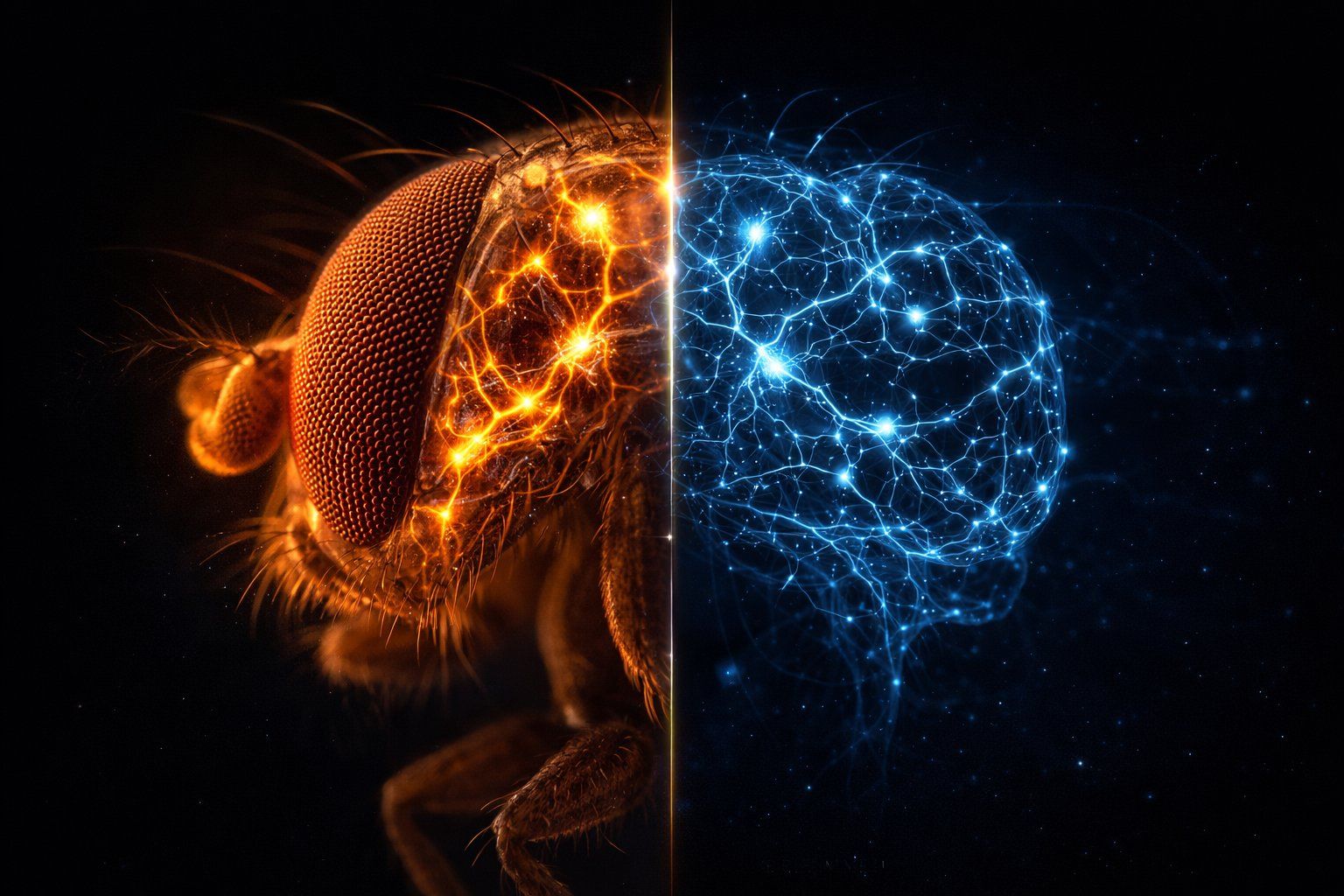
Whole Brain Emulation Achieved: Scientists Run a Fruit Fly Brain in Simulation

by Shibasis Rath
March 9, 2026
0

Scientists have copied an entire biological brain neuron by neuron and synapse by synapse and made it control a simulated...

EDITOR CHOICE‘S

  • All
  • NEWS
  • SPOTLIGHTS
Step-Synchronized Brain Stimulation Reduces Falls in Small Parkinson’s Trial

Step-Synchronized Brain Stimulation Reduces Falls in Small Parkinson’s Trial

by Staff Writer
June 16, 2026
0

Researchers have reported encouraging results from a small feasibility study testing a new form of adaptive deep brain stimulation (aDBS)...

A Father’s Touch in Infancy Can Shape a Child’s Health for Years, New Science Explains Why

A Father’s Touch in Infancy Can Shape a Child’s Health for Years, New Science Explains Why

by Staff Writer
June 9, 2026
0

A study from Penn State University has revealed something startling beneath that simplicity those early interactions carry biological consequences that...

MutExpress

South Asian Patients Have Been Left Out of Cancer Genomics for Decades & MutExpress-India Is Changing That

by Staff Writer
June 8, 2026
0

The databases that underpin modern cancer genomics have a geography problem. The gnomAD database the gold standard for allele frequency...

Biodiversity Loss

Biodiversity Loss Could Bankrupt Nations And Wall Street Hasn’t Noticed Yet

by Staff Writer
June 5, 2026
0

Every year, governments borrow trillions of dollars to function. The interest rate they pay depends almost entirely on their credit...

ADVERTISEMENT

RathBiotaClan – RBC

RathBiotaClan – Connecting Research To Reality

Your trusted source for life science news, biology research & discoveries. Covering neuroscience, genetics, ecology, and more — connecting research to reality.

About Us

Privacy Policies

Contact Us

Editorial Standard

Latest Posts

  • Step-Synchronized Brain Stimulation Reduces Falls in Small Parkinson’s Trial
  • A Father’s Touch in Infancy Can Shape a Child’s Health for Years, New Science Explains Why
  • South Asian Patients Have Been Left Out of Cancer Genomics for Decades & MutExpress-India Is Changing That
  • Biodiversity Loss Could Bankrupt Nations And Wall Street Hasn’t Noticed Yet

SHIBASIS RATH

Contact Mail

rathbiotaclan@gmail.com

No Result
View All Result
MSME (Udyam) Certified Science Platform
Govt. of India

Get Us On PlayStore

playstore app for rathbiotaclan
  • About Us
  • Advertise With Us
  • Cancellation and Refund Policy
  • Contact Us
  • Contribute
  • Editorial Standards
  • Home
  • Pricing Details
  • Privacy Policies
  • Shipping Policy
  • Terms & Conditions

© 2026 RathBiotaClan. All rights reserved.

Welcome Back!

Sign In with Google
OR

Login to your account below

Forgotten Password? Sign Up

Create New Account!

Sign Up with Google
OR

Fill the forms below to register

*By registering into our website, you agree to the Terms & Conditions and Privacy Policy.
All fields are required. Log In

Retrieve your password

Please enter your username or email address to reset your password.

Log In

Add New Playlist

No Result
View All Result
  • HOME
  • HEALTH SCIENCE
  • NEUROSCIENCE
    • PHYSIOLOGY
    • IMMUNOLOGY
    • CANCER
  • DISCOVERIES
    • SPOTLIGHTS
    • STUDENT PORTAL
    • SCIENCE FEATURED
  • MOLECULAR BIOLOGY
    • GENETICS
    • BIOTECHNOLOGY
    • BIOINFORMATICS
    • BIOCHEMISTRY
    • BIOPHYSICS
  • ZOOLOGY & ECOLOGY
    • ENVIRONMENTAL SCIENCE
    • ECOLOGY
    • EVOLUTION
  • MICRO & PLANT SCIENCE
    • MICROBIOLOGY
    • CELL BIOLOGY
    • DEVELOPMENTAL BIOLOGY
  • PSYCHOLOGY
  • Login
  • Sign Up
SAVED POSTS

© 2026 RathBiotaClan. All rights reserved.

This website uses cookies. By continuing to use this website you are giving consent to cookies being used. Visit our Privacy and Cookie Policy.