




Monday, May 4, 2026
SAVED POSTS
  • Login
  • Register
RathBiotaClan
No Result
View All Result
  • HOME
  • HEALTH SCIENCE

    TRENDING ON HEALTH (TOP)

    Dreams about loved ones can bring comfort before death

    Male G-Spot Found: New Study Identifies Frenular Delta as Penis’s Most Sensitive Area

    New Stem Cell Therapy Rebuilds Bone in Osteoporosis, Shows 30% Density Gain

    Walnut Extract May Help Control Blood Sugar Naturally, New Study Finds

    NOW ON AIR (RBC)

    Smiling Female Child Showing Success While Writing Homework In Front Of Parents
    PSYCHOLOGY

    Recent Study Indicates Constant Praise May Actually Lower a Child’s Academic Risk-Taking.

    May 3, 2026
    SLC38A4 expression was confirmed by western blot in multiple tumor cell lines. In mouse models, liver tissue imaging (H&E staining) showed that overexpression of SLC38A4 reduced metastatic tumor areas, while knockdown increased them across Hepa1-6, MC38, and B16F10 cells. Results were consistent in both immunocompetent and nude mice, with statistically significant differences.
    MOLECULAR BIOLOGY

    Scientists Find Molecule That Wipes Out Liver Cancer

    May 2, 2026
    DISCOVERIES

    Fossil Penguins From New Zealand Reveal Stages of the Birds’ Long Evolutionary History

    May 1, 2026
    Bluebuck antelope with silvery-blue coat and curved horns running across open South African grassland, representing extinct species targeted for de-extinction by scientists
    MOLECULAR BIOLOGY

    Colossal Biosciences Announces De-Extinction of Bluebuck Antelope, 226 Years After Its Extinction

    May 1, 2026
  • NEUROSCIENCE
    • PHYSIOLOGY
    • IMMUNOLOGY
    • CANCER
  • DISCOVERIES
    • SPOTLIGHTS
    • STUDENT PORTAL
    • SCIENCE FEATURED
  • MOLECULAR BIOLOGY
    • GENETICS
    • BIOTECHNOLOGY
    • BIOINFORMATICS
    • BIOCHEMISTRY
    • BIOPHYSICS
  • ZOOLOGY & ECOLOGY
    • ENVIRONMENTAL SCIENCE
    • ECOLOGY
    • EVOLUTION
  • MICRO & PLANT SCIENCE
    • MICROBIOLOGY
    • CELL BIOLOGY
    • DEVELOPMENTAL BIOLOGY
  • PSYCHOLOGY
RBC Interactive Sticky Bar
RathBiotaClan Logo
Shop Resources
Life Science Whole Spectrum Focus
24/7 Digital Access
Pro Resources For Students & Researchers
Premium Articles
Research-backed insights for the curious mind.
eBooks
Digital books covering lab protocols.
RBC Magazines
Deep dives and science innovations.
Research Guides
Methodologies and application frameworks.
Pro Notes PDF
High-yield study notes for quick review.
View All Resources
Browse the complete digital library.
RathBiotaClan Seal

Connecting Research to Reality

Science is our safest secret. Explore the life science spectrum with insights for the curious mind.

RathBiotaClan
No Result
View All Result
Home EVOLUTION

Evolution of Parasites

Shibasis Rath by Shibasis Rath
November 21, 2025
in EVOLUTION, MICROBIOLOGY, SCIENCE FEATURED
Reading Time: 8 mins read
0
A A
0

Evolutionary Associations Between Parasites and Hosts

A central concern among parasitologists examining evolution is the intricate relationship patterns between parasites and hosts, as well as their ecological and geographical distribution. Generally, these patterns are shaped by two primary factors:

  • Descent (evolutionary history)
  • Colonization (host switching)

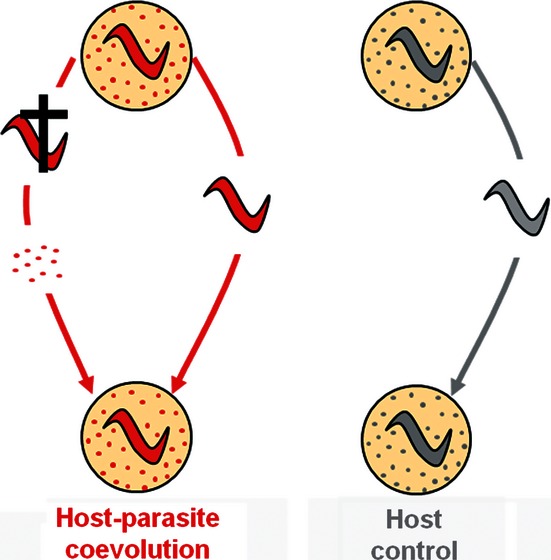
Parasites may align with a host due to a shared lengthy evolutionary history (descent), wherein both have evolved concurrently, or because the parasite has colonized the host in a manner akin to island colonization. This colonization method is also referred to as host switching or host capture.

To elucidate the patterns of host/parasite association, it is imperative to ascertain whether these patterns result from descent, colonization, physical population separation, extinction, or a confluence of these factors. Phenomena like continental drift, orogeny (mountain formation), and island formation have significantly shaped the geographical distributions of hosts and parasites. The nexus between evolutionary progression and enduring geological transformations is termed phylogeography. A notable example of this dynamic appears in Perkins’s study of lizard malaria on Caribbean islands.

Employing various molecular techniques, life cycle traits, and morphology, she demonstrated that two strains of Plasmodium azurophilum in Anolis lizards exhibited distinct dispersal patterns across the Lesser Antilles. Additionally, the presence of this host-parasite system on an archipelago elucidated much of the colonization patterns among lizards, parasites, and participating mosquitoes.

ADVERTISEMENT

Parasitologists apply cladistic methods, also known as phylogenetic systematics or phyletics, to deduce evolutionary histories of hosts and parasites.

READ ALSO

Researchers Identify a Hidden Memory Risk Hiding in Plain Sight for Older Adults

Strict Parenting Linked to Increased Deceptive Behavior in Children, Study Suggests.

Phylogenies represent evolutionary hypotheses, generally depicted as tree-like diagrams generated by computers, with relationships among taxa illustrated in the branching patterns. The characters utilized in constructing these phylogenies can be molecular, structural, ecological, or geographical. These characters are classified as either plesiomorphic (primitive, shared among both ingroup and outgroup members) or apomorphic (derived, evolutionary novelties, present only in the ingroup) by contrasting an ingroup (a taxon of interest) with an outgroup (a related taxon selected specifically for comparison). Apomorphic characters shared by ingroup members.

ADVERTISEMENT

A group defined by synapomorphies encompassing a hypothetical ancestor and all its descendants is termed monophyletic. Conversely, a group containing a hypothetical ancestor but only some of its descendants is termed paraphyletic, and a group comprising taxa that lack a nearest common ancestor is known as polyphyletic.

Taxa (“groups”) may previously been defined based on questionable criteria, making it a priority for evolutionary biologists to identify monophyletic groups and address issues with others. A cladogram, for example, illustrates only nearest relatives rooted in the number of shared derived traits, taken as proof of shared ancestry. Phylogenetic hypotheses can be negated through further research. On the other hand, evolutionary trees have been posed as responses to inquiries concerning the origins or evolutionary histories of plant and animal species.

The work of Janine Caira and her colleagues on the tapeworms of elasmobranchs exemplifies both the excitement and challenges of investigating parasite evolution. These parasitologists concentrated on the tapeworm family, the Onchobothriidae. Initially, they defined a set of criteria by which such studies should be evaluated: both hosts and parasites must constitute monophyletic groups, all taxa should be accurately identified to the level of species, the host taxa must have been properly sampled, phylogenies for both hosts and parasites should be accessible, and parasites should exhibit host specificity. Their aim was to circumvent paraphyletic or polyphyletic groups. They subsequently compiled a data matrix on the tapeworms, utilizing an extensive array of structural features, including those revealed through electron microscopy, before conducting the cladistic analysis. Finally, they sought to rectify the identification challenges concerning both tapeworms and sharks to the best of their ability; the shark phylogeny was derived from the literature on elasmobranchs.

ADVERTISEMENT

The tapeworm family Onchobothriidae encompasses around 200 species that demonstrate high host specificity, with each species found exclusively in a single species of shark. Caira and her team aimed to discern whether the distribution of parasite species among related hosts was attributable to shared descent and speciation or resulted from the colonization of hosts by parasites, disregarding host ancestry. Overall, limited congruence was observed between the evolutionary history of the parasites and their hosts. The parasites’ pronounced host specificity indicated descent association; however, the lack of congruence between phylogenies suggested considerable colonization. Furthermore, species classified under a single genus did not always align as each other’s closest relatives, highlighted by the case of the two Acanthobothrium species.

Parasitism and Sexual Selection

Parasitism plays a significant role in shaping the evolution of host reproductive biology. Indeed, sex has been proposed as a mechanism for mitigating the evolutionary consequences of parasitism.

The detrimental effects of parasitism on reproductive behavior and success have been documented across a diverse range of animals, from insects to mammals. The influence extends to both males and females, impacting egg production and mate choice. Females tend to select males based on their immunocompetence.

Mathematical models suggest that if pathogen prevalence or the types of pathogens fluctuate, females may forego selecting males purely based on disease resistance. Female birds, such as swallows, can discern parasitized from non-parasitized males, choosing mates accordingly.

Parasites often directly affect plumage quality—notably, through lice and acarines. However, infection with haematozoa, potentially affecting plumage indirectly, does not strongly correlate with either vector attraction or plumage quality. Variations in local ecological conditions that influence parasite transmission may easily overshadow any connection between parasitism and mate selection.

Haematozoa infections contracted early in a bird’s life can hinder its capacity to learn the songs vital for mating success. Mammals heavily rely on odors, with female mice eschewing males infected with both coccidians and nematodes. Fecal avoidance among large herbivores, like reindeer, reduces the risk of nematode parasitism. While behavioral responses to parasitism provide intriguing insights, their evolutionary significance remains to be established in numerous cases.

Evolution of Virulence

Life history traits and virulence are subject to evolutionary changes. It stands to reason that parasites should evolve into less virulent forms, as host death negatively impacts parasite survival.

Parasites may develop an optimal virulence that maximizes their numbers, with “optimal” contingent on factors like pathogenicity and transmission dynamics. Transmission occurs both vertically (across generations) and horizontally (within the same generation).

Vertical transmission generally selects for less virulent parasite strains, while horizontal transmission—especially with high transmission rates—favors more virulent strains. Factors like the genetic diversity of both host and parasite, host-parasite interactions, and differing timelines for transmission also influence the evolution of virulence.Parasite-host associations may arise from a long-shared evolutionary history known as descent, during which both have co-evolved. Alternatively, the association might occur because the parasite has colonized the host similarly to island colonization, a process also described as host switching or host capture. Understanding host/parasite association patterns necessitates determining if these patterns are an outcome of descent, colonization, physical population separation, extinction, or a mixture of these elements.


  • Share on WhatsApp (Opens in new window) WhatsApp
  • Share on Facebook (Opens in new window) Facebook
  • Share on Reddit (Opens in new window) Reddit
  • Share on X (Opens in new window) X
  • Print (Opens in new window) Print

Did you like this read? Turn on notifications so we can let you know the second a new post goes live.

Turn off Alerts
Shibasis Rath

Shibasis Rath

"𝓒𝓸𝓷𝓷𝓮𝓬𝓽𝓲𝓷𝓰 𝓡𝓮𝓼𝓮𝓪𝓻𝓬𝓱 𝓣𝓸 𝓡𝓮𝓪𝓵𝓲𝓽𝔂" 𝓲𝓼𝓷'𝓽 𝓙𝓾𝓼𝓽 𝓪 𝓜𝓸𝓽𝓽𝓸 - 𝓘𝓽'𝓼 𝓜𝔂 𝓜𝓲𝓼𝓼𝓲𝓸𝓷

Related Posts

Group of seniors walking down a city street.
NEUROSCIENCE

Researchers Identify a Hidden Memory Risk Hiding in Plain Sight for Older Adults

April 30, 2026
Strict Parenting Linked to Increased Deceptive Behavior in Children, Study Suggests.
PSYCHOLOGY

Strict Parenting Linked to Increased Deceptive Behavior in Children, Study Suggests.

April 25, 2026
Chimpanzees of the Ngogo community in Uganda divided into two groups that clashed aggressively with each other.PHOTO: A. A. SANDEL ET AL.
ECOLOGY

Chimpanzee Group Split Turns Violent in Uganda Study

April 27, 2026

POPULAR NEWS

Yelling Isn’t Just Yelling: How a Hostile Home Rewires a Child’s Brain for Constant Alert

Yelling Isn’t Just Yelling: How a Hostile Home Rewires a Child’s Brain for Constant Alert

by Shibasis Rath
March 9, 2026
0

To a parent in the heat of the moment, a raised voice may feel like simple frustration. To a child...

a group of gen Z kids walking down a street

Is Gen Z the First Generation Less Intelligent Than Their Parents?

by Shibasis Rath
March 14, 2026
0

Gen Z intelligence decline is emerging as a serious concern among neuroscientists and education researchers. For over a century, each...

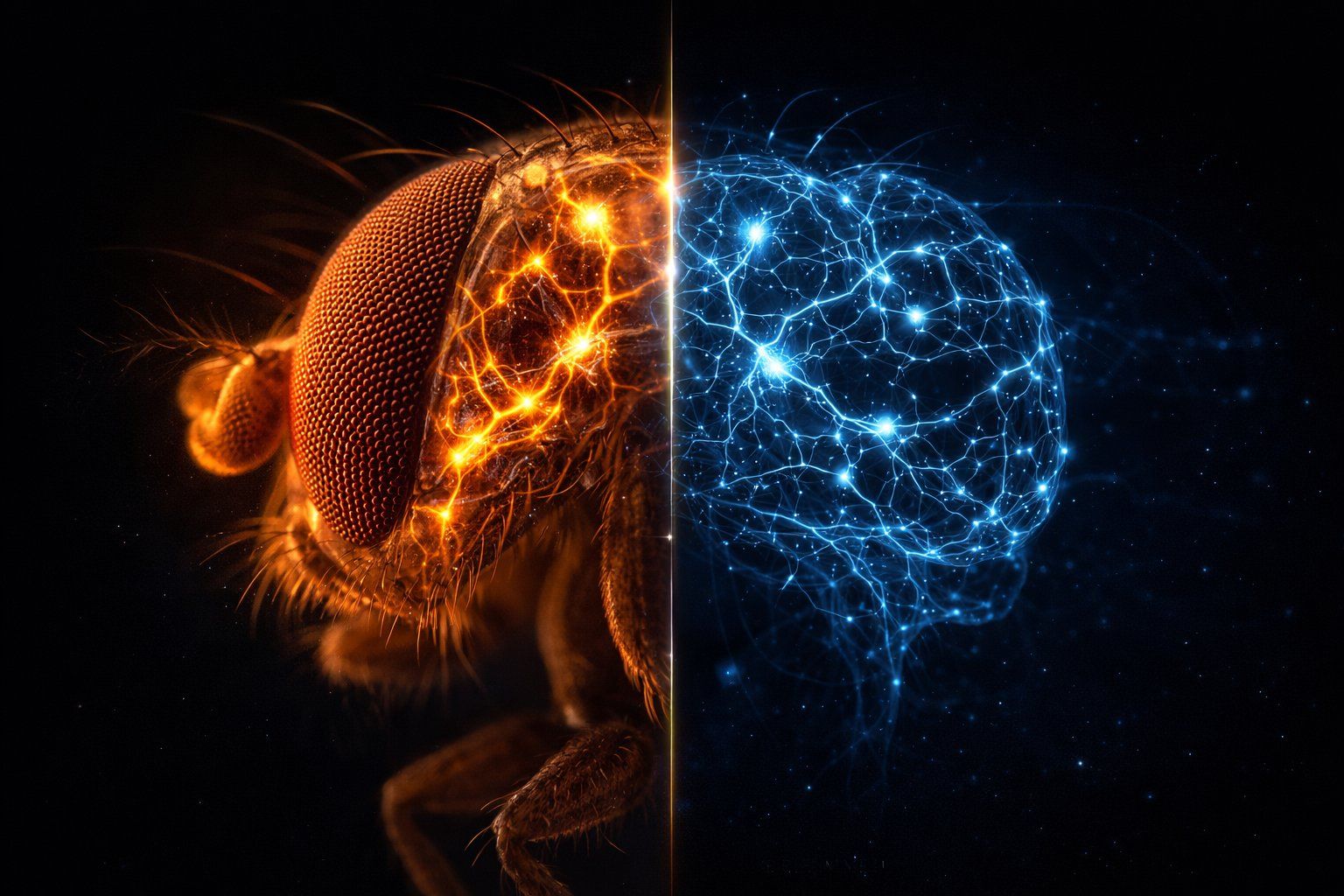
Whole Brain Emulation Achieved: Scientists Run a Fruit Fly Brain in Simulation

by Shibasis Rath
March 9, 2026
0

Scientists have copied an entire biological brain neuron by neuron and synapse by synapse and made it control a simulated...

Male G-spot isn’t where we thought it was

Male G-Spot Found: New Study Identifies Frenular Delta as Penis’s Most Sensitive Area

by Staff Writer
April 27, 2026
0

The study found that human penile innervation develops in distinct fetal stages and shows region-specific patterns in adults, with the...

Evolution of Parasites

by Shibasis Rath
November 21, 2025
0

Evolutionary Associations Between Parasites and Hosts A central concern among parasitologists examining evolution is the intricate relationship patterns between parasites...

EDITOR CHOICE‘S

  • All
  • NEWS
  • SPOTLIGHTS
Recent Study Indicates Constant Praise May Actually Lower a Child’s Academic Risk-Taking.

Recent Study Indicates Constant Praise May Actually Lower a Child’s Academic Risk-Taking.

by Staff Writer
May 3, 2026
0

Recent studies on types of praise and children's academic motivation show that constantly praising a child's fixed traits, such as their intelligence...

SLC38A4 expression was confirmed by western blot in multiple tumor cell lines. In mouse models, liver tissue imaging (H&E staining) showed that overexpression of SLC38A4 reduced metastatic tumor areas, while knockdown increased them across Hepa1-6, MC38, and B16F10 cells. Results were consistent in both immunocompetent and nude mice, with statistically significant differences.

Scientists Find Molecule That Wipes Out Liver Cancer

by Shibasis Rath
May 2, 2026
0

Researchers investigated this question because metastasis causes most cancer deaths, and the liver is a frequent site of spread for...

Fossil Penguins From New Zealand Reveal Stages of the Birds’ Long Evolutionary History

Fossil Penguins From New Zealand Reveal Stages of the Birds’ Long Evolutionary History

by Shibasis Rath
May 1, 2026
0

The discovery of four new species of fossil penguins in New Zealand in 2025 sheds light on the long evolutionary...

Bluebuck antelope with silvery-blue coat and curved horns running across open South African grassland, representing extinct species targeted for de-extinction by scientists

Colossal Biosciences Announces De-Extinction of Bluebuck Antelope, 226 Years After Its Extinction

by Staff Writer
May 1, 2026
0

It has been 226 years since humans last saw a living bluebuck, an elegant antelope species native to South Africa...

ADVERTISEMENT

RathBiotaClan – RBC

RathBiotaClan – Connecting Research To Reality

Your trusted source for life science news, biology research & discoveries. Covering neuroscience, genetics, ecology, and more — connecting research to reality.

Privacy Policies

Shipping Policy

Cancellation & Refund Policy

Pricing Details

Contact Us

Latest Posts

  • Recent Study Indicates Constant Praise May Actually Lower a Child’s Academic Risk-Taking.
  • Scientists Find Molecule That Wipes Out Liver Cancer
  • Fossil Penguins From New Zealand Reveal Stages of the Birds’ Long Evolutionary History
  • Colossal Biosciences Announces De-Extinction of Bluebuck Antelope, 226 Years After Its Extinction

SHIBASIS RATH

Contact Mail

rathbiotaclan@gmail.com

No Result
View All Result
MSME (Udyam) Certified Science Platform
Govt. of India

Get Us On PlayStore

playstore app for rathbiotaclan
  • About Us
  • Advertise With Us
  • Cancellation and Refund Policy
  • Contact Us
  • Contribute
  • Editorial Standards
  • Home
  • Pricing Details
  • Privacy Policies
  • Shipping Policy
  • Terms & Conditions

© 2026 RathBiotaClan. All rights reserved.

Welcome Back!

Sign In with Google
OR

Login to your account below

Forgotten Password? Sign Up

Create New Account!

Sign Up with Google
OR

Fill the forms below to register

*By registering into our website, you agree to the Terms & Conditions and Privacy Policy.
All fields are required. Log In

Retrieve your password

Please enter your username or email address to reset your password.

Log In
No Result
View All Result
  • HOME
  • HEALTH SCIENCE
  • NEUROSCIENCE
    • PHYSIOLOGY
    • IMMUNOLOGY
    • CANCER
  • DISCOVERIES
    • SPOTLIGHTS
    • STUDENT PORTAL
    • SCIENCE FEATURED
  • MOLECULAR BIOLOGY
    • GENETICS
    • BIOTECHNOLOGY
    • BIOINFORMATICS
    • BIOCHEMISTRY
    • BIOPHYSICS
  • ZOOLOGY & ECOLOGY
    • ENVIRONMENTAL SCIENCE
    • ECOLOGY
    • EVOLUTION
  • MICRO & PLANT SCIENCE
    • MICROBIOLOGY
    • CELL BIOLOGY
    • DEVELOPMENTAL BIOLOGY
  • PSYCHOLOGY
  • Login
  • Sign Up
SAVED POSTS

© 2026 RathBiotaClan. All rights reserved.

This website uses cookies. By continuing to use this website you are giving consent to cookies being used. Visit our Privacy and Cookie Policy.
Are you sure want to unlock this post?
Unlock left : 0
Are you sure want to cancel subscription?