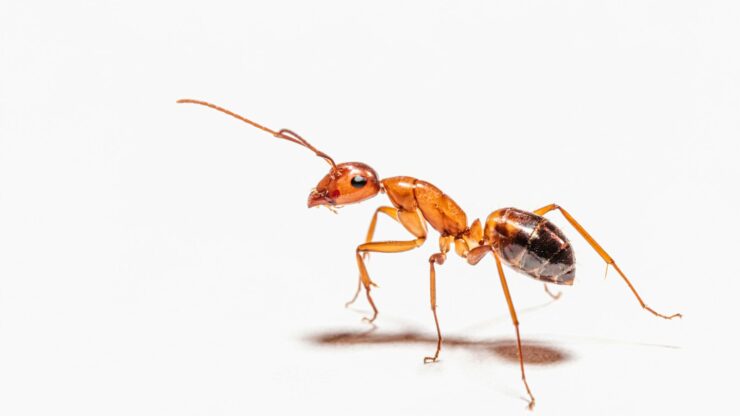
Ants, belonging to the family Formicidae, are incredibly diverse and exhibit highly organized social structures. The following notes summarize common ant types, their feeding behaviors, colony life, life cycle, nest structures, and offer surprising facts and life lessons from their mindset.
Common Types of Ants
| Type | Scientific Name | Key Characteristics | Habitat | Behavior |
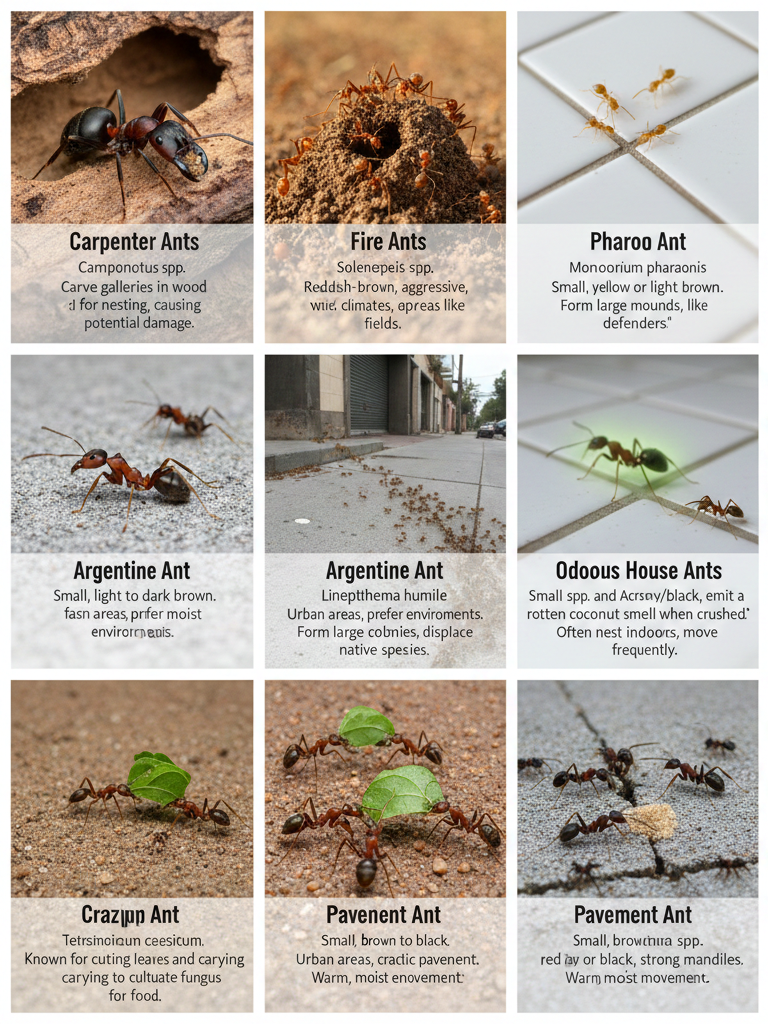
| Carpenter Ants | Camponotus spp. | Large, black/red and black. | Forested areas, wooden structures. | Carve galleries in wood for nesting, causing potential damage. |
| Fire Ants | Solenopsis spp. | Reddish-brown, aggressive, painful sting. | Warm climates, open areas like lawns, fields. | Form large mounds, aggressive defenders. |
| Pharaoh Ants | Monomorium pharaonis | Small, yellow or light brown. | Indoor environments, heated buildings. | Difficult to control due to budding (splitting into new colonies). |
| Argentine Ants | Linepithema humile | Small, light to dark brown, fast-moving. | Urban areas, prefer moist environments. | Form large colonies, displace native species. |
| Odorous House Ants | Tapinoma sessile | Small, dark brown/black, emit a rotten coconut smell when crushed. | Indoor and outdoor, prefer moisture. | Often nest indoors, move nests frequently. |
| Leafcutter Ants | Atta spp. and Acromyrmex spp. | Medium to large, red/brown, powerful mandibles. | Tropical and subtropical regions. | Known for cutting leaves and carrying them to cultivate fungus for food. |
| Pavement Ants | Tetramorium caespitum | Small, brown to black. | Urban areas, cracks in pavement. | Form large colonies in urban settings. |
| Crazy Ants | Paratrechina longicornis | Small, dark brown/black, erratic movement. | Warm, moist environments. | Rapid and unpredictable movement. |
| Harvester Ants | Pogonomyrmex spp. | Medium to large, red or black, strong mandibles. | Dry, open areas like deserts and grasslands. | Collect and store seeds, painful sting. |
| Weaver Ants | Oecophylla spp. | Large, green or red, weave leaves together. | Tropical forests. | Create nests using larval silk, aggressive defenders. |
Ant Feeding Behaviors and Diets
Ants exhibit diverse and specialized feeding strategies, crucial for colony survival.
General Diet & Preferences
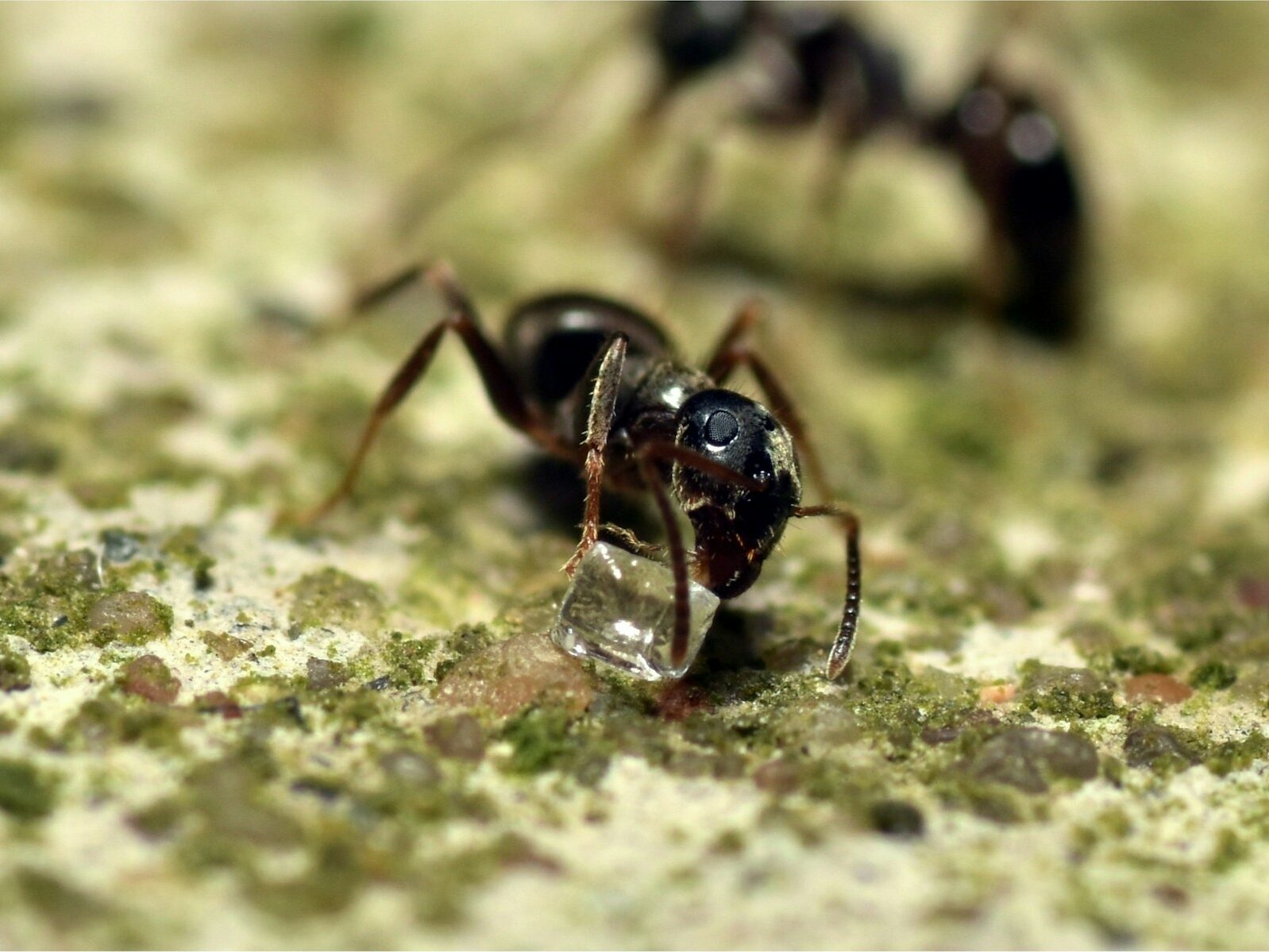
- Omnivorous Diet: Most ants consume a variety of foods, including sugars, proteins, and fats.
- Liquid Feeding: Many prefer nectar or honeydew (sugary secretion from aphids) as a source of carbohydrates.
- Sugar Seekers: Species like Argentine and Odorous House Ants are strongly attracted to sugary foods.
- Protein Hunters: Fire and Carpenter Ants require proteins for their larvae, hunting insects or scavenging.
Specialized Dietary Strategies
- Seed Collectors: Harvester ants primarily gather and store seeds.
- Fungus Farmers: Leafcutter ants use cut leaves to cultivate a specific fungus, which is their primary food source.
Feeding Behavior
- Foraging: Worker ants follow pheromone trails laid by scouts to locate food.
- Food Sharing (Trophallaxis): Ants exchange liquid food mouth-to-mouth, ensuring nutrients reach all colony members, including larvae and the queen.
The Social Life of Ants: Colony & Nest
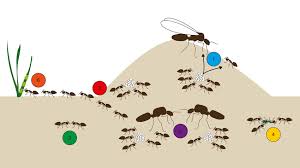
Ants are social insects that live in highly organized colonies for survival, efficiency, and collective strength.
Why Ants Live in Colonies
- Division of labor allows specialization (foraging, defense, brood care), enhancing the colony’s overall efficiency.
- Large groups provide effective collective defense against predators and competitors.
- Cooperative foraging ensures a steady and vast supply of food for the entire colony.
- A centralized system, usually with a single queen, maximizes reproductive success, with workers caring for the young.
- Pheromones enable complex, coordinated activities like foraging and defense.
How Ants Build Their Nests (Ant “Beds”)
Ant nests are complex, multi-functional hubs:
- Underground Nests:
- Examples: Pavement ants, Fire ants.
- Design: Complex networks of tunnels and chambers (nurseries, storage) that regulate temperature and humidity.
- Wood Nests:
- Examples: Carpenter ants.
- Design: Smooth, clean galleries excavated in damp, decaying wood (they do not eat the wood).
- Leaf Nests:
- Examples: Weaver ants.
- Design: Leaves woven together in trees using larval silk for elevation and protection.
- Mound Nests:
- Examples: Fire ants.
- Design: Above-ground mounds with extensive internal tunnels, providing elevation against floods.
Life Cycle of Ants
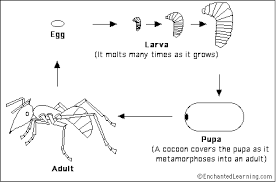
Ants undergo complete metamorphosis, progressing through four distinct stages:
Stage 1: The Egg Stage
- The life begins as a tiny, white or translucent egg laid by the queen.
- Eggs are carefully tended by worker ants to maintain optimal temperature and humidity.
Stage 2: The Larva Stage
- Hatched eggs become legless, white, grub-like larvae.
- They are voracious eaters and are entirely dependent on worker ants, who feed them regurgitated, pre-digested food.
- Larvae undergo several molts as they grow rapidly.
Stage 3: The Pupa Stage
- The larva transforms into a pupa, often encased in a cocoon (species-dependent).
- Metamorphosis occurs inside, forming the adult body structures. The color changes from white to brown.
Stage 4: The Adult Stage
- The final stage where the ant takes on a specialized role.
- Worker Ants: Non-reproducing females; perform tasks (foraging, defense, brood care); live for a few months to a couple of years.
- Queen Ants: Larger females, solely responsible for reproduction; can live for many years.
- Male Ants (Drones): Their only role is to mate with new queens during nuptial flights; die shortly after mating.
Surprising Facts About Ants
- Ants can lift up to 50 times their own body weight due to their high muscle-to-body mass ratio.
- There are over 12,000 known species worldwide.
- They have a digestive stomach for themselves and a social stomach for storing and sharing food (trophallaxis).
- Some ants farm other insects (like aphids for honeydew) or cultivate fungus (leafcutter ants).
- They use pheromones (chemical signals) for all communication (food, danger, trails).
- They are master builders, creating complex underground networks, woven leaf nests, or carved wood galleries.
- Fire ants can form floating rafts with their bodies to survive floods.
- While workers live for months/years, a queen can live for up to 15 years or more.
- Ants don’t have ears, but hear by feeling vibrations through their legs.
The Ant Mindset
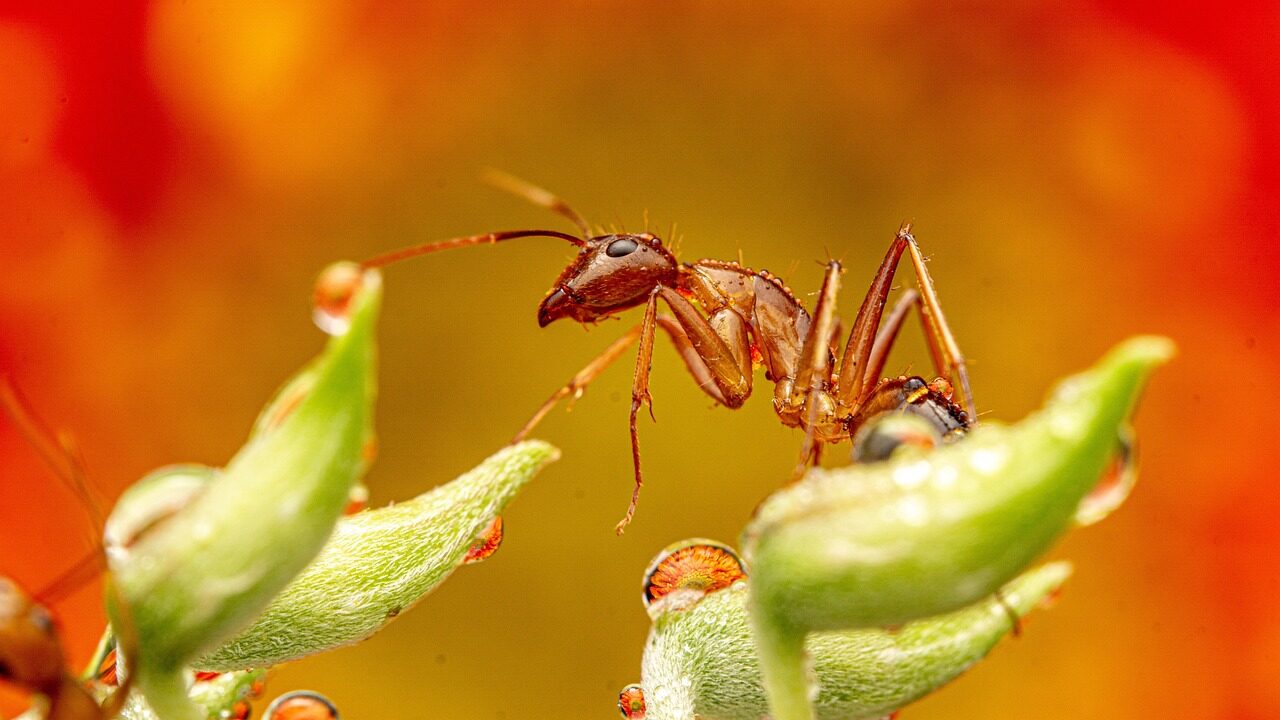
The social organization and behaviors of ants offer valuable lessons in success and resilience:
1. Unwavering Resilience
- Lesson: Persist through difficulties, adapt to changing circumstances, and rebuild after setbacks.
2. Collaborative Teamwork
- Lesson: Value collaboration; success is a collective effort achieved by leveraging each member’s strengths.
3. Efficient Communication
- Lesson: Foster clear communication (like pheromones) to coordinate efforts and ensure alignment towards common goals.
4. Adaptability and Innovation
- Lesson: Cultivate adaptability and be open to new ideas (like fire ants forming rafts or leafcutters farming fungus) to navigate a changing world.
5. Focus on Long-Term Goals
- Lesson: Prioritize long-term planning (storing food, expanding nests) for sustained success and growth.
6. Role Specialization
- Lesson: Recognize and utilize individual strengths and skills for overall productivity and efficiency.
7. Resourcefulness and Ingenuity
- Lesson: Be creative in problem-solving and make the most of available resources to achieve innovative solutions.