



Thursday, June 18, 2026
SAVED POSTS
  • Login
  • Register
RathBiotaClan
No Result
View All Result
  • HOME
  • HEALTH SCIENCE

    TRENDING ON HEALTH (TOP)

    For People Antidepressants Never Helped, a 30-Minute Home Session Is Now FDA-Approved

    Scientists Say Your Next Tube of Toothpaste Could Be Made From Human Hair

    Your Lungs, Liver, and Pancreas Also Age Faster When You Sleep Wrong

    Cycling Linked to Lower Dementia Risk in Study of Nearly 480,000 Adults

    NOW ON AIR (RBC)

    NEUROSCIENCE

    Step-Synchronized Brain Stimulation Reduces Falls in Small Parkinson’s Trial

    June 16, 2026
    NEWS

    A Father’s Touch in Infancy Can Shape a Child’s Health for Years, New Science Explains Why

    June 9, 2026
    MutExpress
    BIOINFORMATICS

    South Asian Patients Have Been Left Out of Cancer Genomics for Decades & MutExpress-India Is Changing That

    June 8, 2026
    Biodiversity Loss
    ECOLOGY

    Biodiversity Loss Could Bankrupt Nations And Wall Street Hasn’t Noticed Yet

    June 5, 2026
  • NEUROSCIENCE
    • PHYSIOLOGY
    • IMMUNOLOGY
    • CANCER
  • DISCOVERIES
    • SPOTLIGHTS
    • STUDENT PORTAL
    • SCIENCE FEATURED
  • MOLECULAR BIOLOGY
    • GENETICS
    • BIOTECHNOLOGY
    • BIOINFORMATICS
    • BIOCHEMISTRY
    • BIOPHYSICS
  • ZOOLOGY & ECOLOGY
    • ENVIRONMENTAL SCIENCE
    • ECOLOGY
    • EVOLUTION
  • MICRO & PLANT SCIENCE
    • MICROBIOLOGY
    • CELL BIOLOGY
    • DEVELOPMENTAL BIOLOGY
  • PSYCHOLOGY
RathBiotaClan
RathBiotaClan
No Result
View All Result
Home DEVELOPMENTAL BIOLOGY

How Baby Kittens Locate Their Mother’s Milk

Shibasis Rath by Shibasis Rath
September 5, 2025
in DEVELOPMENTAL BIOLOGY, NEUROSCIENCE, NEWS, SCIENCE FEATURED, ZOOLOGY
Reading Time: 5 mins read
0
A A
0
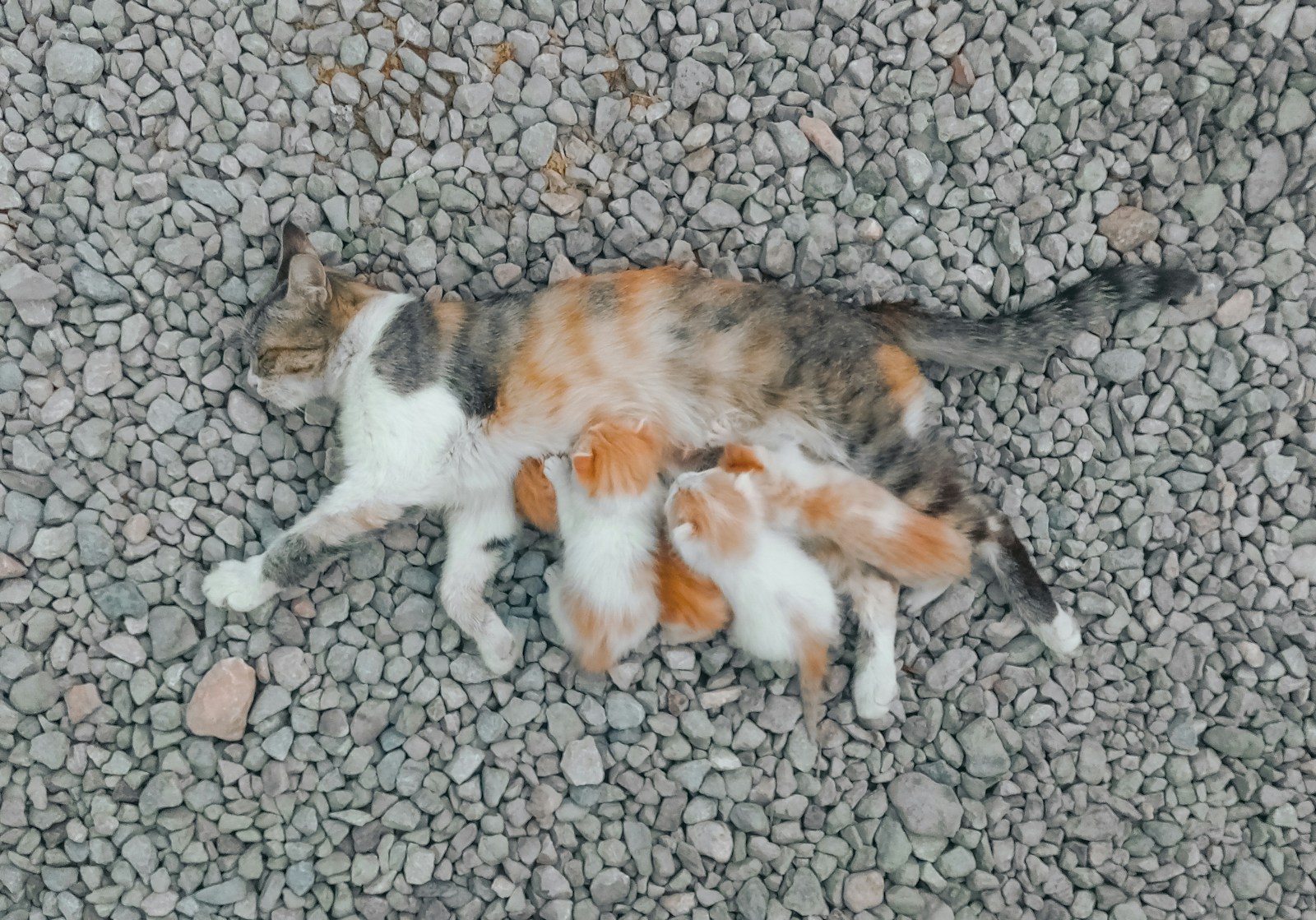
orange and white cat walking on gray concrete floor

Newborn kittens are born blind, deaf, and completely helpless. Yet within minutes, they crawl toward their mother and begin nursing. Since their eyes and ears open only after one to two weeks, kittens must rely on other senses. 

Like many mammalian neonates, they depend heavily on smell and touch to locate their mother’s nipples (Larson & Stein, 1984). Queens (mother cats) produce chemical cues from their mammary glands, and kittens instinctively respond to these signals.

Olfactory Cues (Smell)

Smell plays the most critical role in the early orientation of kittens. The mammary region of the queen secretes odors and pheromones that act as attractants. Even on the first day of life, a kitten will turn and crawl toward a lactating female but not toward a non-lactating cat (Blass & Teicher, 1980).

Just a few days after birth, kittens can already recognize the unique scent of their own mother’s teats. This built-in sense of smell acts like a natural compass, helping them head straight to the right place instead of wandering aimlessly. Researchers have even found that when a kitten’s sense of smell is blocked, it can’t find its mother to nurse—a discovery first highlighted in studies by Larson and Stein back in 1984.

ADVERTISEMENT

Tactile Cues (Touch)

A kitten’s little face, muzzle, and whiskers are full of super-sensitive nerves. When they bump into mom’s fur around the belly, it kicks in what’s called the rooting reflex. The kitten starts burrowing, wiggling its head, and then opens its mouth to grab onto a nipple (Veterinary Key, 2023).

READ ALSO

Step-Synchronized Brain Stimulation Reduces Falls in Small Parkinson’s Trial

A Father’s Touch in Infancy Can Shape a Child’s Health for Years, New Science Explains Why

Researchers found that if kittens can’t really feel things—like when their sense of touch is blocked—they struggle to find the nipple, even though their nose still points them in the right direction (Larson & Stein, 1984). So basically, touch works hand-in-hand with smell for that final step of nursing.

ADVERTISEMENT

Thermal and Social Cues

Warmth also influences neonatal orientation. Kittens are strongly attracted to body heat, both from their mother and their littermates. This thermotaxis helps them maintain body temperature and indirectly brings them into contact with the nursing area (McNair, UC Davis, 2022). Social huddling ensures survival, reinforcing the likelihood of successful feeding.

ADVERTISEMENT

Reflexes: Rooting and Suckling

Newborn kittens are equipped with reflexes designed for survival.

  • Rooting reflex: Touching the cheek or muzzle makes the kitten turn toward the stimulus. The kitten pushes its nose and forelegs against the mother’s ventrum until it encounters a teat (Veterinary Key, 2023).
  • Suckling reflex: Once the nipple touches oral tissues, rhythmic sucking and swallowing begin automatically. This reflex is strongest in the early days and weakens after weaning (Blass & Teicher, 1980).

Even blindfolded kittens and puppies display these reflexes, confirming their innate and hardwired nature.

Neural Mechanisms of Suckling

Suckling behavior is not learned but driven by brainstem circuits known as central pattern generators. These neural networks produce rhythmic suck–swallow actions without conscious control (Blass & Teicher, 1980). Thus, newborn kittens can coordinate jaw, tongue, and swallowing movements from the very first feeding. Higher brain areas refine efficiency later, but the foundational circuitry is present at birth.

Learning Process and Maternal Recognition

Although orientation begins as instinct, kittens quickly learn to recognize their mother’s unique cues. Within the first few days:

  • They begin to favor specific nipples.
  • They discriminate their mother’s odor from that of another lactating female (Larson & Stein, 1984).

This olfactory memory strengthens the innate search process. Even after separation, kittens can reunite with their mother using learned scent profiles.

Conclusion

The ability of newborn kittens to find milk is a finely tuned survival mechanism. Despite being blind and deaf at birth, kittens successfully nurse within minutes thanks to:

  • Olfactory guidance from maternal odors,
  • Tactile cues from whiskers and fur contact,
  • Reflexes such as rooting and suckling, and
  • Rapid learning of maternal scent.

These instinctive and learned mechanisms reflect strong evolutionary pressure, since any delay in nursing reduces survival chances. Together, they ensure that kittens can feed immediately and thrive.


References

  • Blass, E. M., & Teicher, M. H. (1980). Suckling. Science, 210(4465), 15–22. PubMed
  • Larson, C., & Stein, J. (1984). The role of olfactory and tactile cues in nipple orientation of neonatal kittens. Developmental Psychobiology, 17(2), 147–155. PubMed
  • McNair, R. (2022). Neonatal thermoregulation and maternal behavior in cats. UC Davis Veterinary Medicine.
  • Veterinary Key. (2023). Neonatal and pediatric feline development.
  • Share on WhatsApp (Opens in new window) WhatsApp
  • Share on Facebook (Opens in new window) Facebook
  • Share on Reddit (Opens in new window) Reddit
  • Share on X (Opens in new window) X
  • Print (Opens in new window) Print
Shibasis Rath

Shibasis Rath

"𝓒𝓸𝓷𝓷𝓮𝓬𝓽𝓲𝓷𝓰 𝓡𝓮𝓼𝓮𝓪𝓻𝓬𝓱 𝓣𝓸 𝓡𝓮𝓪𝓵𝓲𝓽𝔂" 𝓲𝓼𝓷'𝓽 𝓙𝓾𝓼𝓽 𝓪 𝓜𝓸𝓽𝓽𝓸 - 𝓘𝓽'𝓼 𝓜𝔂 𝓜𝓲𝓼𝓼𝓲𝓸𝓷

Related Posts

Step-Synchronized Brain Stimulation Reduces Falls in Small Parkinson’s Trial
NEUROSCIENCE

Step-Synchronized Brain Stimulation Reduces Falls in Small Parkinson’s Trial

June 16, 2026
A Father’s Touch in Infancy Can Shape a Child’s Health for Years, New Science Explains Why
NEWS

A Father’s Touch in Infancy Can Shape a Child’s Health for Years, New Science Explains Why

June 9, 2026
Soprano pipistrelle (Pipistrellus pygmaeus) emerging from a tree hollow at the moment of take-off.
ECOLOGY

Human-generated electromagnetic noise has long lasting effects on light orientation in bats

June 4, 2026

POPULAR NEWS

Chewing gum releases thousands of microplastic particles directly into your mouth with every piece you chew

Chewing gum releases thousands of microplastic particles directly into your mouth with every piece you chew

by Shibasis Rath
May 8, 2026
0

Microplastics are turning up in places researchers never expected: deep-sea sediments, Arctic ice, and human blood. Now, a UCLA pilot...

New Studys Says Gen Z is the least sexually active young cohort in modern recorded history

New Studys Says Gen Z is the least sexually active young cohort in modern recorded history

by Shibasis Rath
January 24, 2026
0

A generation that grew up with dating apps in their pockets, pornography a tap away, and sex discussed more openly...

Yelling Isn’t Just Yelling: How a Hostile Home Rewires a Child’s Brain for Constant Alert

Yelling Isn’t Just Yelling: How a Hostile Home Rewires a Child’s Brain for Constant Alert

by Shibasis Rath
March 8, 2026
0

To a parent in the heat of the moment, a raised voice may feel like simple frustration. To a child...

a group of gen Z kids walking down a street

Is Gen Z the First Generation Less Intelligent Than Their Parents?

by Shibasis Rath
February 5, 2026
0

Gen Z intelligence decline is emerging as a serious concern among neuroscientists and education researchers. For over a century, each...

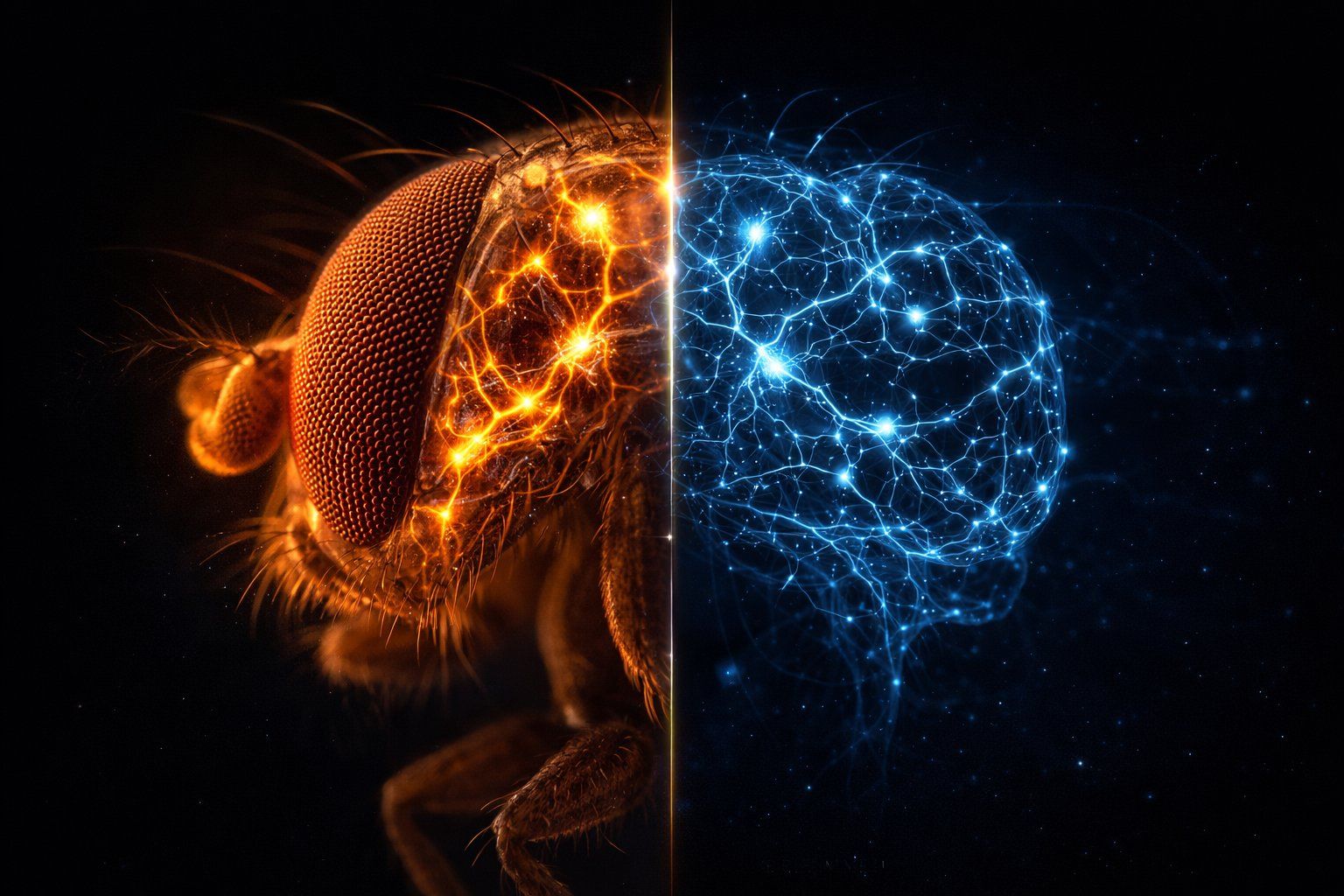
Whole Brain Emulation Achieved: Scientists Run a Fruit Fly Brain in Simulation

by Shibasis Rath
March 9, 2026
0

Scientists have copied an entire biological brain neuron by neuron and synapse by synapse and made it control a simulated...

EDITOR CHOICE‘S

  • All
  • NEWS
  • SPOTLIGHTS
Step-Synchronized Brain Stimulation Reduces Falls in Small Parkinson’s Trial

Step-Synchronized Brain Stimulation Reduces Falls in Small Parkinson’s Trial

by Staff Writer
June 16, 2026
0

Researchers have reported encouraging results from a small feasibility study testing a new form of adaptive deep brain stimulation (aDBS)...

A Father’s Touch in Infancy Can Shape a Child’s Health for Years, New Science Explains Why

A Father’s Touch in Infancy Can Shape a Child’s Health for Years, New Science Explains Why

by Staff Writer
June 9, 2026
0

A study from Penn State University has revealed something startling beneath that simplicity those early interactions carry biological consequences that...

MutExpress

South Asian Patients Have Been Left Out of Cancer Genomics for Decades & MutExpress-India Is Changing That

by Staff Writer
June 8, 2026
0

The databases that underpin modern cancer genomics have a geography problem. The gnomAD database the gold standard for allele frequency...

Biodiversity Loss

Biodiversity Loss Could Bankrupt Nations And Wall Street Hasn’t Noticed Yet

by Staff Writer
June 5, 2026
0

Every year, governments borrow trillions of dollars to function. The interest rate they pay depends almost entirely on their credit...

ADVERTISEMENT

RathBiotaClan – RBC

RathBiotaClan – Connecting Research To Reality

Your trusted source for life science news, biology research & discoveries. Covering neuroscience, genetics, ecology, and more — connecting research to reality.

About Us

Privacy Policies

Contact Us

Editorial Standard

Latest Posts

  • Step-Synchronized Brain Stimulation Reduces Falls in Small Parkinson’s Trial
  • A Father’s Touch in Infancy Can Shape a Child’s Health for Years, New Science Explains Why
  • South Asian Patients Have Been Left Out of Cancer Genomics for Decades & MutExpress-India Is Changing That
  • Biodiversity Loss Could Bankrupt Nations And Wall Street Hasn’t Noticed Yet

SHIBASIS RATH

Contact Mail

rathbiotaclan@gmail.com

No Result
View All Result
MSME (Udyam) Certified Science Platform
Govt. of India

Get Us On PlayStore

playstore app for rathbiotaclan
  • About Us
  • Advertise With Us
  • Cancellation and Refund Policy
  • Contact Us
  • Contribute
  • Editorial Standards
  • Home
  • Pricing Details
  • Privacy Policies
  • Shipping Policy
  • Terms & Conditions

© 2026 RathBiotaClan. All rights reserved.

Welcome Back!

Sign In with Google
OR

Login to your account below

Forgotten Password? Sign Up

Create New Account!

Sign Up with Google
OR

Fill the forms below to register

*By registering into our website, you agree to the Terms & Conditions and Privacy Policy.
All fields are required. Log In

Retrieve your password

Please enter your username or email address to reset your password.

Log In

Add New Playlist

No Result
View All Result
  • HOME
  • HEALTH SCIENCE
  • NEUROSCIENCE
    • PHYSIOLOGY
    • IMMUNOLOGY
    • CANCER
  • DISCOVERIES
    • SPOTLIGHTS
    • STUDENT PORTAL
    • SCIENCE FEATURED
  • MOLECULAR BIOLOGY
    • GENETICS
    • BIOTECHNOLOGY
    • BIOINFORMATICS
    • BIOCHEMISTRY
    • BIOPHYSICS
  • ZOOLOGY & ECOLOGY
    • ENVIRONMENTAL SCIENCE
    • ECOLOGY
    • EVOLUTION
  • MICRO & PLANT SCIENCE
    • MICROBIOLOGY
    • CELL BIOLOGY
    • DEVELOPMENTAL BIOLOGY
  • PSYCHOLOGY
  • Login
  • Sign Up
SAVED POSTS

© 2026 RathBiotaClan. All rights reserved.

This website uses cookies. By continuing to use this website you are giving consent to cookies being used. Visit our Privacy and Cookie Policy.