



Friday, June 12, 2026
SAVED POSTS
  • Login
  • Register
RathBiotaClan
No Result
View All Result
  • HOME
  • HEALTH SCIENCE

    TRENDING ON HEALTH (TOP)

    For People Antidepressants Never Helped, a 30-Minute Home Session Is Now FDA-Approved

    Scientists Say Your Next Tube of Toothpaste Could Be Made From Human Hair

    Your Lungs, Liver, and Pancreas Also Age Faster When You Sleep Wrong

    Cycling Linked to Lower Dementia Risk in Study of Nearly 480,000 Adults

    NOW ON AIR (RBC)

    NEWS

    A Father’s Touch in Infancy Can Shape a Child’s Health for Years, New Science Explains Why

    June 9, 2026
    MutExpress
    BIOINFORMATICS

    South Asian Patients Have Been Left Out of Cancer Genomics for Decades & MutExpress-India Is Changing That

    June 8, 2026
    Biodiversity Loss
    ECOLOGY

    Biodiversity Loss Could Bankrupt Nations And Wall Street Hasn’t Noticed Yet

    June 5, 2026
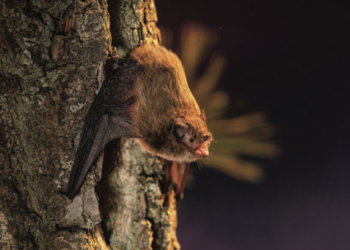
    Soprano pipistrelle (Pipistrellus pygmaeus) emerging from a tree hollow at the moment of take-off.
    ECOLOGY

    Human-generated electromagnetic noise has long lasting effects on light orientation in bats

    June 4, 2026
  • NEUROSCIENCE
    • PHYSIOLOGY
    • IMMUNOLOGY
    • CANCER
  • DISCOVERIES
    • SPOTLIGHTS
    • STUDENT PORTAL
    • SCIENCE FEATURED
  • MOLECULAR BIOLOGY
    • GENETICS
    • BIOTECHNOLOGY
    • BIOINFORMATICS
    • BIOCHEMISTRY
    • BIOPHYSICS
  • ZOOLOGY & ECOLOGY
    • ENVIRONMENTAL SCIENCE
    • ECOLOGY
    • EVOLUTION
  • MICRO & PLANT SCIENCE
    • MICROBIOLOGY
    • CELL BIOLOGY
    • DEVELOPMENTAL BIOLOGY
  • PSYCHOLOGY
RathBiotaClan
RathBiotaClan
No Result
View All Result
Home SCIENCE FEATURED

The World of Ants: Species, Social Life, and Lessons

Shibasis Rath by Shibasis Rath
June 24, 2024
in SCIENCE FEATURED, SPOTLIGHTS, ZOOLOGY
Reading Time: 11 mins read
0
A A
0
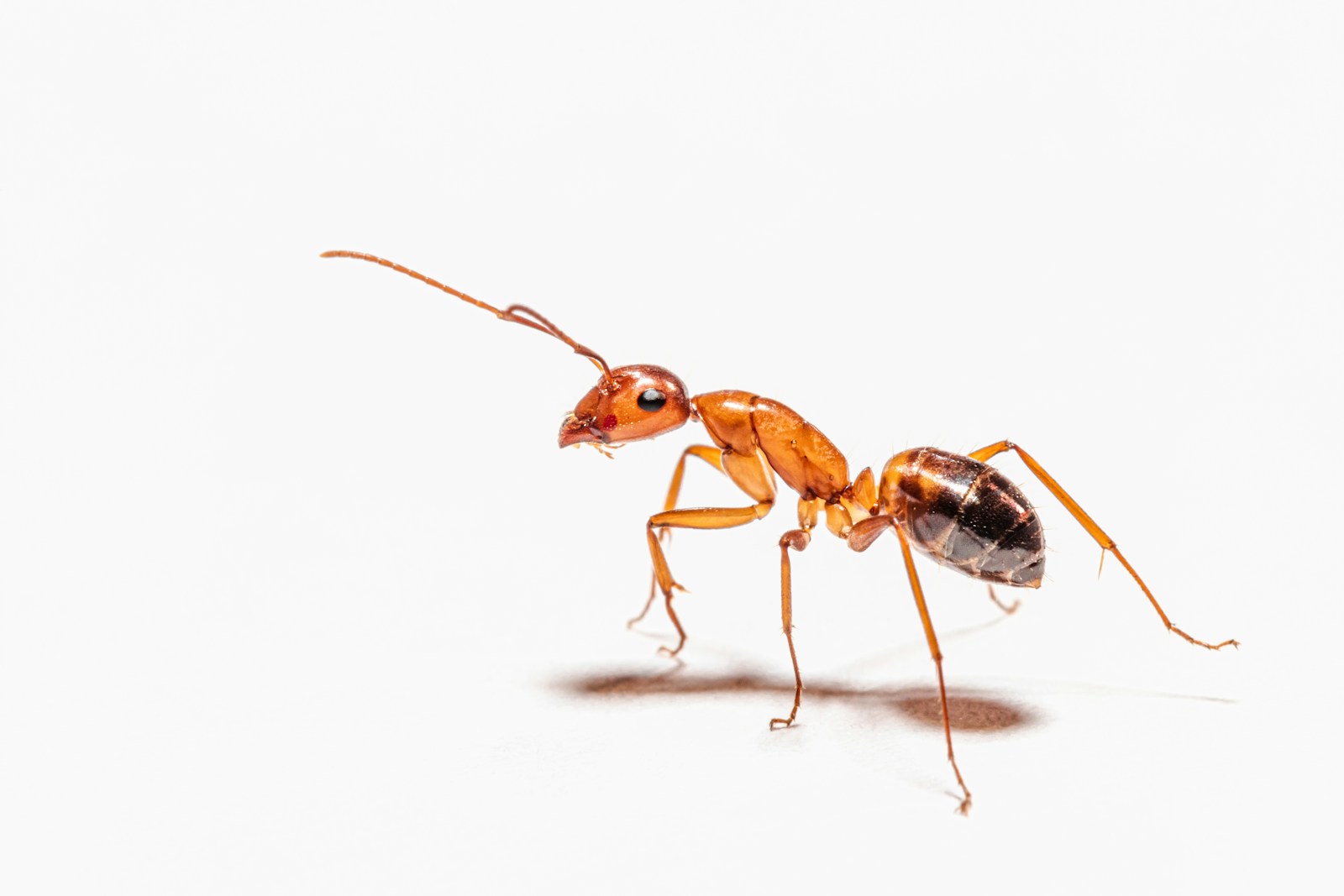
brown ant on white surface

Ants, belonging to the family Formicidae, are incredibly diverse and exhibit highly organized social structures. The following notes summarize common ant types, their feeding behaviors, colony life, life cycle, nest structures, and offer surprising facts and life lessons from their mindset.

Common Types of Ants

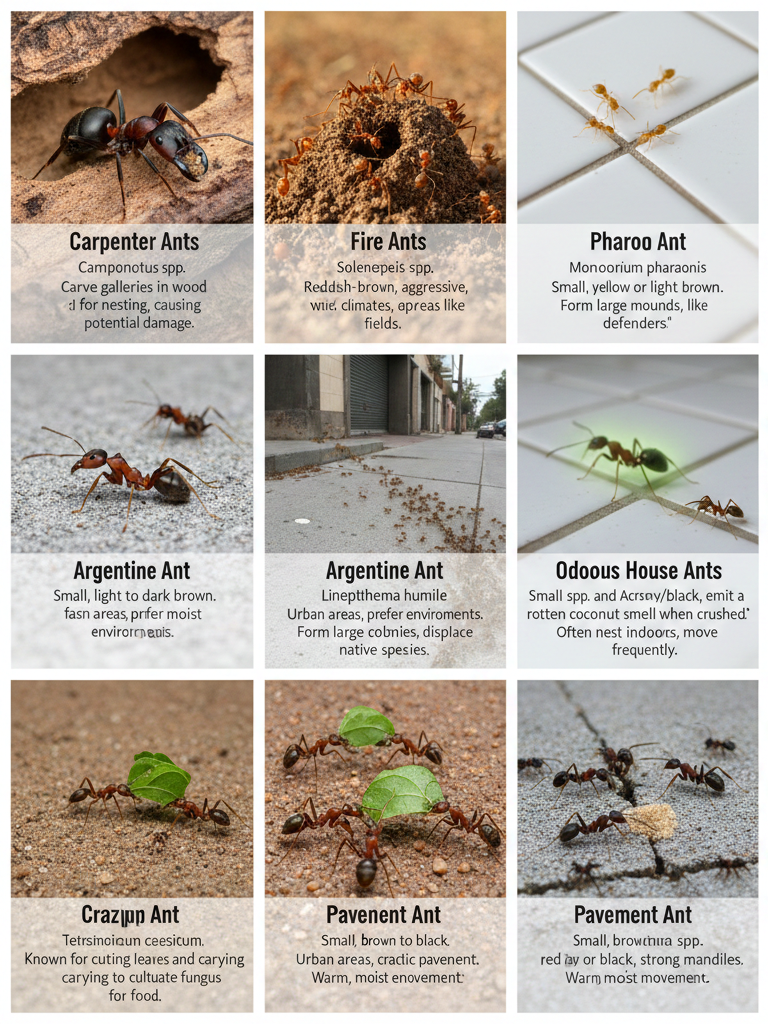
TypeScientific NameKey CharacteristicsHabitatBehavior
Carpenter AntsCamponotus spp.Large, black/red and black.Forested areas, wooden structures.Carve galleries in wood for nesting, causing potential damage.
Fire AntsSolenopsis spp.Reddish-brown, aggressive, painful sting.Warm climates, open areas like lawns, fields.Form large mounds, aggressive defenders.
Pharaoh AntsMonomorium pharaonisSmall, yellow or light brown.Indoor environments, heated buildings.Difficult to control due to budding (splitting into new colonies).
Argentine AntsLinepithema humileSmall, light to dark brown, fast-moving.Urban areas, prefer moist environments.Form large colonies, displace native species.
Odorous House AntsTapinoma sessileSmall, dark brown/black, emit a rotten coconut smell when crushed.Indoor and outdoor, prefer moisture.Often nest indoors, move nests frequently.
Leafcutter AntsAtta spp. and Acromyrmex spp.Medium to large, red/brown, powerful mandibles.Tropical and subtropical regions.Known for cutting leaves and carrying them to cultivate fungus for food.
Pavement AntsTetramorium caespitumSmall, brown to black.Urban areas, cracks in pavement.Form large colonies in urban settings.
Crazy AntsParatrechina longicornisSmall, dark brown/black, erratic movement.Warm, moist environments.Rapid and unpredictable movement.
Harvester AntsPogonomyrmex spp.Medium to large, red or black, strong mandibles.Dry, open areas like deserts and grasslands.Collect and store seeds, painful sting.
Weaver AntsOecophylla spp.Large, green or red, weave leaves together.Tropical forests.Create nests using larval silk, aggressive defenders.
Chart showing various ant types and behavior, including carpenter ants, fire ants, pharaoh ants, and pavement ants.

Ant Feeding Behaviors and Diets

Ants exhibit diverse and specialized feeding strategies, crucial for colony survival.

General Diet & Preferences

  • Omnivorous Diet: Most ants consume a variety of foods, including sugars, proteins, and fats.
  • Liquid Feeding: Many prefer nectar or honeydew (sugary secretion from aphids) as a source of carbohydrates.
  • Sugar Seekers: Species like Argentine and Odorous House Ants are strongly attracted to sugary foods.
  • Protein Hunters: Fire and Carpenter Ants require proteins for their larvae, hunting insects or scavenging.
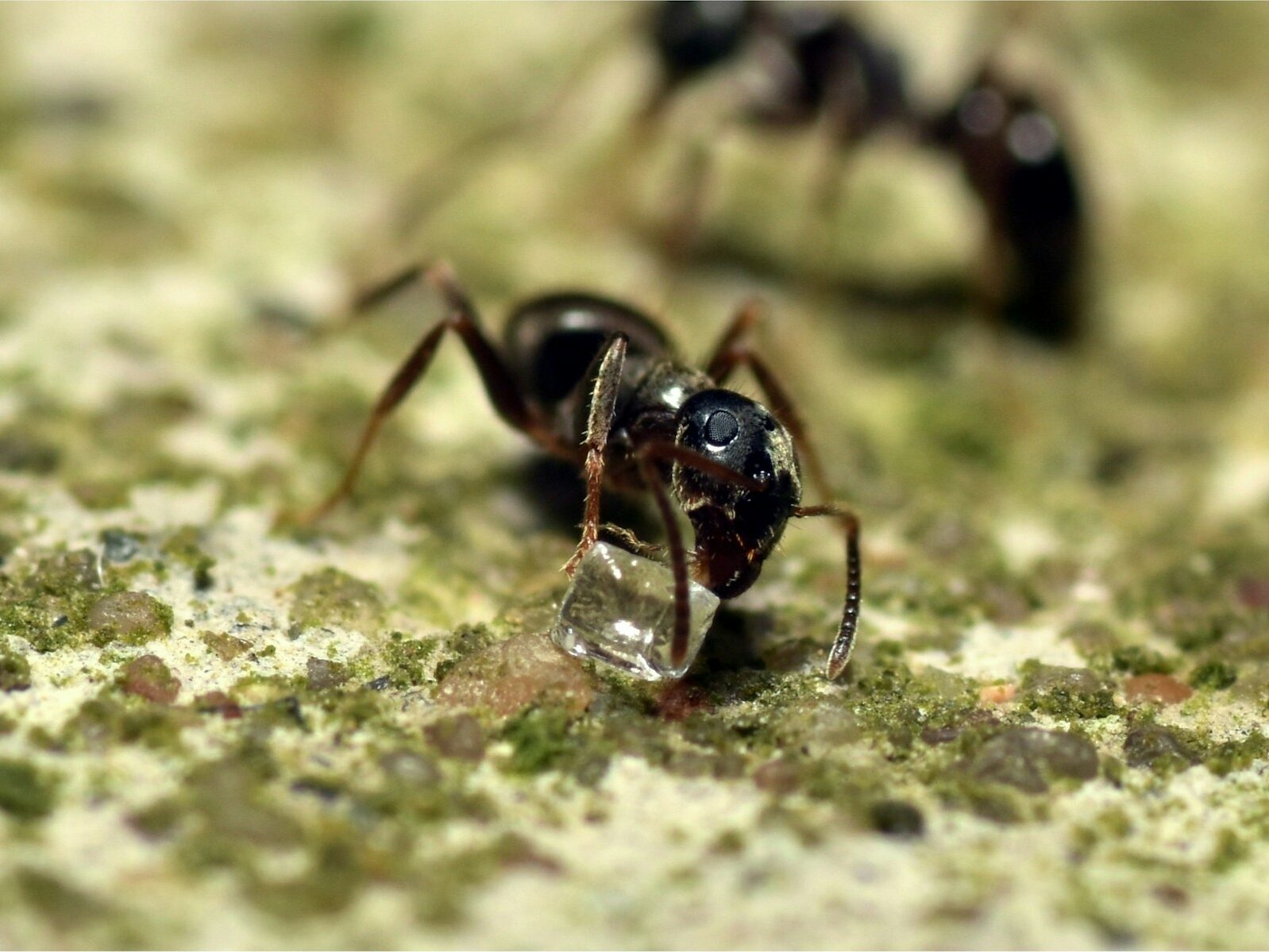
a close up of a small ant ant on a mossy surface

Specialized Dietary Strategies

  • Seed Collectors: Harvester ants primarily gather and store seeds.
  • Fungus Farmers: Leafcutter ants use cut leaves to cultivate a specific fungus, which is their primary food source.

Feeding Behavior

  • Foraging: Worker ants follow pheromone trails laid by scouts to locate food.
  • Food Sharing (Trophallaxis): Ants exchange liquid food mouth-to-mouth, ensuring nutrients reach all colony members, including larvae and the queen.

The Social Life of Ants: Colony & Nest
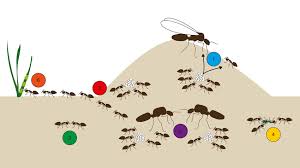
Ant colony illustration showing ant types and behavior, including winged queen, worker ants, and larvae.
Credit: Research Gate

Ants are social insects that live in highly organized colonies for survival, efficiency, and collective strength.

Why Ants Live in Colonies

  • Division of labor allows specialization (foraging, defense, brood care), enhancing the colony’s overall efficiency.
  • Large groups provide effective collective defense against predators and competitors.
  • Cooperative foraging ensures a steady and vast supply of food for the entire colony.
  • A centralized system, usually with a single queen, maximizes reproductive success, with workers caring for the young.
  • Pheromones enable complex, coordinated activities like foraging and defense.

How Ants Build Their Nests (Ant “Beds”)

Ant nests are complex, multi-functional hubs:

ADVERTISEMENT
  • Underground Nests:
    • Examples: Pavement ants, Fire ants.
    • Design: Complex networks of tunnels and chambers (nurseries, storage) that regulate temperature and humidity.
  • Wood Nests:
    • Examples: Carpenter ants.
    • Design: Smooth, clean galleries excavated in damp, decaying wood (they do not eat the wood).
  • Leaf Nests:
    • Examples: Weaver ants.
    • Design: Leaves woven together in trees using larval silk for elevation and protection.
  • Mound Nests:
    • Examples: Fire ants.
    • Design: Above-ground mounds with extensive internal tunnels, providing elevation against floods.

Life Cycle of Ants
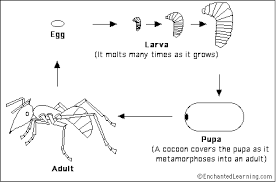
Ant life cycle diagram: egg, larva, pupa, adult. Illustrates ant types and behavior.

Ants undergo complete metamorphosis, progressing through four distinct stages:

READ ALSO

South Asian Patients Have Been Left Out of Cancer Genomics for Decades & MutExpress-India Is Changing That

Human-generated electromagnetic noise has long lasting effects on light orientation in bats

Stage 1: The Egg Stage

  • The life begins as a tiny, white or translucent egg laid by the queen.
  • Eggs are carefully tended by worker ants to maintain optimal temperature and humidity.

Stage 2: The Larva Stage

  • Hatched eggs become legless, white, grub-like larvae.
  • They are voracious eaters and are entirely dependent on worker ants, who feed them regurgitated, pre-digested food.
  • Larvae undergo several molts as they grow rapidly.

Stage 3: The Pupa Stage

  • The larva transforms into a pupa, often encased in a cocoon (species-dependent).
  • Metamorphosis occurs inside, forming the adult body structures. The color changes from white to brown.

Stage 4: The Adult Stage

  • The final stage where the ant takes on a specialized role.
    • Worker Ants: Non-reproducing females; perform tasks (foraging, defense, brood care); live for a few months to a couple of years.
    • Queen Ants: Larger females, solely responsible for reproduction; can live for many years.
    • Male Ants (Drones): Their only role is to mate with new queens during nuptial flights; die shortly after mating.

Surprising Facts About Ants

  • Ants can lift up to 50 times their own body weight due to their high muscle-to-body mass ratio.
  • There are over 12,000 known species worldwide.
  • They have a digestive stomach for themselves and a social stomach for storing and sharing food (trophallaxis).
  • Some ants farm other insects (like aphids for honeydew) or cultivate fungus (leafcutter ants).
  • They use pheromones (chemical signals) for all communication (food, danger, trails).
  • They are master builders, creating complex underground networks, woven leaf nests, or carved wood galleries.
  • Fire ants can form floating rafts with their bodies to survive floods.
  • While workers live for months/years, a queen can live for up to 15 years or more.
  • Ants don’t have ears, but hear by feeling vibrations through their legs.

The Ant Mindset
ant, insect, bug, plants, animal, wildlife, garden, nature

The social organization and behaviors of ants offer valuable lessons in success and resilience:

ADVERTISEMENT

1. Unwavering Resilience

  • Lesson: Persist through difficulties, adapt to changing circumstances, and rebuild after setbacks.

2. Collaborative Teamwork

  • Lesson: Value collaboration; success is a collective effort achieved by leveraging each member’s strengths.

3. Efficient Communication

  • Lesson: Foster clear communication (like pheromones) to coordinate efforts and ensure alignment towards common goals.

4. Adaptability and Innovation

  • Lesson: Cultivate adaptability and be open to new ideas (like fire ants forming rafts or leafcutters farming fungus) to navigate a changing world.

5. Focus on Long-Term Goals

  • Lesson: Prioritize long-term planning (storing food, expanding nests) for sustained success and growth.

6. Role Specialization

  • Lesson: Recognize and utilize individual strengths and skills for overall productivity and efficiency.

7. Resourcefulness and Ingenuity

  • Lesson: Be creative in problem-solving and make the most of available resources to achieve innovative solutions.

ADVERTISEMENT
  • Share on WhatsApp (Opens in new window) WhatsApp
  • Share on Facebook (Opens in new window) Facebook
  • Share on Reddit (Opens in new window) Reddit
  • Share on X (Opens in new window) X
  • Print (Opens in new window) Print
Shibasis Rath

Shibasis Rath

"𝓒𝓸𝓷𝓷𝓮𝓬𝓽𝓲𝓷𝓰 𝓡𝓮𝓼𝓮𝓪𝓻𝓬𝓱 𝓣𝓸 𝓡𝓮𝓪𝓵𝓲𝓽𝔂" 𝓲𝓼𝓷'𝓽 𝓙𝓾𝓼𝓽 𝓪 𝓜𝓸𝓽𝓽𝓸 - 𝓘𝓽'𝓼 𝓜𝔂 𝓜𝓲𝓼𝓼𝓲𝓸𝓷

Related Posts

MutExpress
BIOINFORMATICS

South Asian Patients Have Been Left Out of Cancer Genomics for Decades & MutExpress-India Is Changing That

June 8, 2026
Soprano pipistrelle (Pipistrellus pygmaeus) emerging from a tree hollow at the moment of take-off.
ECOLOGY

Human-generated electromagnetic noise has long lasting effects on light orientation in bats

June 4, 2026
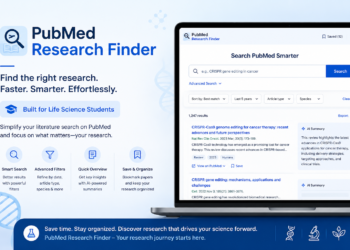
PubMed Research Finder for Life Science Students
BIOINFORMATICS

PubMed Research Finder for Life Science Students

May 26, 2026

POPULAR NEWS

Chewing gum releases thousands of microplastic particles directly into your mouth with every piece you chew

Chewing gum releases thousands of microplastic particles directly into your mouth with every piece you chew

by Shibasis Rath
May 8, 2026
0

Microplastics are turning up in places researchers never expected: deep-sea sediments, Arctic ice, and human blood. Now, a UCLA pilot...

Yelling Isn’t Just Yelling: How a Hostile Home Rewires a Child’s Brain for Constant Alert

Yelling Isn’t Just Yelling: How a Hostile Home Rewires a Child’s Brain for Constant Alert

by Shibasis Rath
March 8, 2026
0

To a parent in the heat of the moment, a raised voice may feel like simple frustration. To a child...

New Studys Says Gen Z is the least sexually active young cohort in modern recorded history

New Studys Says Gen Z is the least sexually active young cohort in modern recorded history

by Shibasis Rath
January 24, 2026
0

A generation that grew up with dating apps in their pockets, pornography a tap away, and sex discussed more openly...

a group of gen Z kids walking down a street

Is Gen Z the First Generation Less Intelligent Than Their Parents?

by Shibasis Rath
February 5, 2026
0

Gen Z intelligence decline is emerging as a serious concern among neuroscientists and education researchers. For over a century, each...

Whole Brain Emulation Achieved: Scientists Run a Fruit Fly Brain in Simulation

by Shibasis Rath
March 9, 2026
0

Scientists have copied an entire biological brain neuron by neuron and synapse by synapse and made it control a simulated...

EDITOR CHOICE‘S

  • All
  • NEWS
  • SPOTLIGHTS
A Father’s Touch in Infancy Can Shape a Child’s Health for Years, New Science Explains Why

A Father’s Touch in Infancy Can Shape a Child’s Health for Years, New Science Explains Why

by Staff Writer
June 9, 2026
0

A study from Penn State University has revealed something startling beneath that simplicity those early interactions carry biological consequences that...

MutExpress

South Asian Patients Have Been Left Out of Cancer Genomics for Decades & MutExpress-India Is Changing That

by Staff Writer
June 8, 2026
0

The databases that underpin modern cancer genomics have a geography problem. The gnomAD database the gold standard for allele frequency...

Biodiversity Loss

Biodiversity Loss Could Bankrupt Nations And Wall Street Hasn’t Noticed Yet

by Staff Writer
June 5, 2026
0

Every year, governments borrow trillions of dollars to function. The interest rate they pay depends almost entirely on their credit...

Soprano pipistrelle (Pipistrellus pygmaeus) emerging from a tree hollow at the moment of take-off.

Human-generated electromagnetic noise has long lasting effects on light orientation in bats

by Shibasis Rath
June 4, 2026
0

A new study has found that soprano pipistrelle bats exposed to low-intensity broadband radiofrequency noise fly in random directions when...

ADVERTISEMENT

RathBiotaClan – RBC

RathBiotaClan – Connecting Research To Reality

Your trusted source for life science news, biology research & discoveries. Covering neuroscience, genetics, ecology, and more — connecting research to reality.

About Us

Privacy Policies

Contact Us

Editorial Standard

Latest Posts

  • A Father’s Touch in Infancy Can Shape a Child’s Health for Years, New Science Explains Why
  • South Asian Patients Have Been Left Out of Cancer Genomics for Decades & MutExpress-India Is Changing That
  • Biodiversity Loss Could Bankrupt Nations And Wall Street Hasn’t Noticed Yet
  • Human-generated electromagnetic noise has long lasting effects on light orientation in bats

SHIBASIS RATH

Contact Mail

rathbiotaclan@gmail.com

No Result
View All Result
MSME (Udyam) Certified Science Platform
Govt. of India

Get Us On PlayStore

playstore app for rathbiotaclan
  • About Us
  • Advertise With Us
  • Cancellation and Refund Policy
  • Contact Us
  • Contribute
  • Editorial Standards
  • Home
  • Pricing Details
  • Privacy Policies
  • Shipping Policy
  • Terms & Conditions

© 2026 RathBiotaClan. All rights reserved.

Welcome Back!

Sign In with Google
OR

Login to your account below

Forgotten Password? Sign Up

Create New Account!

Sign Up with Google
OR

Fill the forms bellow to register

*By registering into our website, you agree to the Terms & Conditions and Privacy Policy.
All fields are required. Log In

Retrieve your password

Please enter your username or email address to reset your password.

Log In

Add New Playlist

No Result
View All Result
  • HOME
  • HEALTH SCIENCE
  • NEUROSCIENCE
    • PHYSIOLOGY
    • IMMUNOLOGY
    • CANCER
  • DISCOVERIES
    • SPOTLIGHTS
    • STUDENT PORTAL
    • SCIENCE FEATURED
  • MOLECULAR BIOLOGY
    • GENETICS
    • BIOTECHNOLOGY
    • BIOINFORMATICS
    • BIOCHEMISTRY
    • BIOPHYSICS
  • ZOOLOGY & ECOLOGY
    • ENVIRONMENTAL SCIENCE
    • ECOLOGY
    • EVOLUTION
  • MICRO & PLANT SCIENCE
    • MICROBIOLOGY
    • CELL BIOLOGY
    • DEVELOPMENTAL BIOLOGY
  • PSYCHOLOGY
  • Login
  • Sign Up
SAVED POSTS

© 2026 RathBiotaClan. All rights reserved.

This website uses cookies. By continuing to use this website you are giving consent to cookies being used. Visit our Privacy and Cookie Policy.