

Monday, May 18, 2026
SAVED POSTS
  • Login
  • Register
RathBiotaClan
No Result
View All Result
  • HOME
  • HEALTH SCIENCE

    TRENDING ON HEALTH (TOP)

    Cycling Linked to Lower Dementia Risk in Study of Nearly 480,000 Adults

    First oral GLP-1 weight-loss pill approved a new era for accessible treatment

    Chewing gum releases thousands of microplastic particles directly into your mouth with every piece you chew

    Single-Cell Study of Over a Million Immune Cells Reveals Why Women Are More Prone to Autoimmune Disease

    NOW ON AIR (RBC)

    A new study has found that men’s brains shrink faster than women’s as they age.
    NEUROSCIENCE

    12,638 MRI Scans Confirm Men’s Brains Shrink Faster in PNAS Study

    May 14, 2026
    ENVIRONMENTAL SCIENCE

    Volcanic Eruptions Can Destroy Their Own Methane — Tonga’s Plume Shows How

    May 13, 2026
    3 men standing on rocky shore during daytime
    MOLECULAR BIOLOGY

    For Future Space Missions, Molecular Ecology Finally Offers a Clear Biosignature Target

    May 12, 2026
    Babies Yawn in the Womb
    DEVELOPMENTAL BIOLOGY

    Scientists Say Babies May Learn to Yawn Before Birth

    May 11, 2026
  • NEUROSCIENCE
    • PHYSIOLOGY
    • IMMUNOLOGY
    • CANCER
  • DISCOVERIES
    • SPOTLIGHTS
    • STUDENT PORTAL
    • SCIENCE FEATURED
  • MOLECULAR BIOLOGY
    • GENETICS
    • BIOTECHNOLOGY
    • BIOINFORMATICS
    • BIOCHEMISTRY
    • BIOPHYSICS
  • ZOOLOGY & ECOLOGY
    • ENVIRONMENTAL SCIENCE
    • ECOLOGY
    • EVOLUTION
  • MICRO & PLANT SCIENCE
    • MICROBIOLOGY
    • CELL BIOLOGY
    • DEVELOPMENTAL BIOLOGY
  • PSYCHOLOGY
RathBiotaClan
RathBiotaClan
No Result
View All Result
Home ENVIRONMENTAL SCIENCE

Why Humpback Whales Struggle to Survive in a Human-Altered Ocean

Staff Writer by Staff Writer
May 21, 2025
in ENVIRONMENTAL SCIENCE, SCIENCE FEATURED, ZOOLOGY
Reading Time: 4 mins read
0
A A
0
whale tail on blue sea during daytime

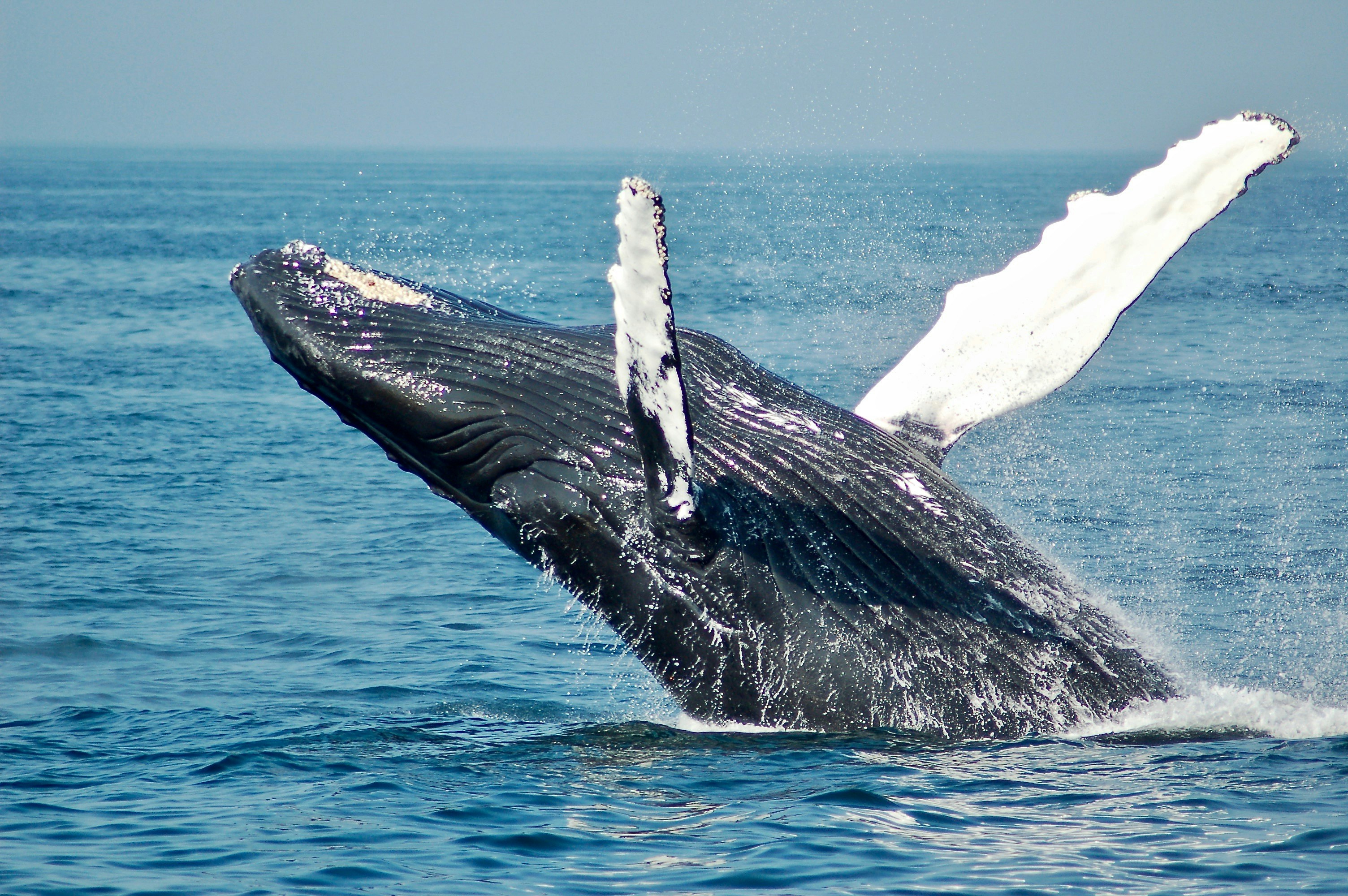
Humpback Whales Struggle to Survive in a Human-Altered Ocean has less to do with changing climates and more to do with a hidden sensory weakness and due to poor vision. Despite their massive eyes, humpback whales are quite blind to the most dangerous threats introduced by humans: fishing nets, ship hulls, and other underwater obstacles. The anatomy of whales eyes reveals a hidden vulnerability one that may be silently killing these gentle giants.

They do not see the danger.

In a report which was published in Proceedings of the Royal Society B researchers report that which is put to question is the poor eyesight of the humpback whale, in particular their ability to see through or over obstacles like nets and ships. This isn’t a small scale issue of evolution may in fact be a large scale issue for the whale’s survival in today’s environment.

Marine biologist Jacob Bolin from the University of North Carolina Wilmington reports that although humpback whales have large easy to see eyes it is in fact below what we would think which is the case for their performance. Whales’ vision is a issue of not only poor resolution but also in how their eyes are formed and how they make sense of what little they do see.

A Big Eye Doesn’t Mean Better Sight

Humpback eyes do in fact have a large size, which may be quite an impressive trait at first look but what we see is that which takes up much of that space is a thick non visual tissue called the sclera. Also, what does do in terms of vision is the retina which isn\’t very dense in it’s collection of sensory cells. In that which regards the density of retinal ganglion cells which put visual info into the brain, this is very low.

ADVERTISEMENT

At their greatest density we see in humpbacks which have only around 180 ganglion cells per square millimeter. In comparison we have in the human 35,000 to 40,000 and birds of prey may have over 70, 000. These ganglion cells are what we may call the eye’s pixels which determine how clearly an image is processed.

READ ALSO

Volcanic Eruptions Can Destroy Their Own Methane — Tonga’s Plume Shows How

Scientists Say Babies May Learn to Yawn Before Birth

Bolin likens this low cell count to watching a film in ultra-low resolution—where everything is a blur, and details are nearly impossible to distinguish unless they’re extremely close. It’s no wonder that delicate, translucent fishing nets go unnoticed until it’s too late.
ADVERTISEMENT
blue whale on sea

Simulating the Whale’s World

To explore how humpbacks visually perceive their environment, the research team used computer simulations to recreate typical underwater scenes. Two objects were modeled in grayscale the only spectrum humpbacks can see: a school of small fish, and a commercial fishing gillnet.

At distances beyond 150–200 feet (roughly four times the length of a whale), these objects quickly dissolved into vague shapes. The fish became an indistinct cloud. The gillnet? Practically invisible.

This discovery has chilling implications. If a whale can’t detect a gillnet even 100 feet away, avoiding entanglement becomes a matter of luck, not instinct.

ADVERTISEMENT

Anatomy Preserved in Time

The whale eye which Bolin studied was from a juvenile humpback that beached in North Carolina in 2011.

This whale had not gone through the decomposition process which most stranding do it was put to sleep on land which in turn gave scientists a rare look at very intact whale anatomy. Humpbacks have poor eyesight.

Evolution Didn’t Prepare Them for Us

If their vision is so poor, how did humpbacks ever survive?

According to Dr. Lorian Schweikert a co author and sensory biologist which is what they are. Whales which at the time of evolution had open and obstacle free oceans which made eyesight a non issue. Also they do not have natural predators as adults and they use other senses like smell and perhaps vibrations to find prey.Unlike toothed whales like dolphins or sperm whales which have the ability to echolocate, humpbacks do not. Our preoccupation with whale acoustics has put the issue of their eyes in the shade, which is what Dr. Sönke Johnsen reported. Also a professor at Duke University he notes that we are only now to see that those large eyes of theirs do not in fact do well in the noisy dangerous waters we have created.

A Call to Make the Seas More Visible

This research doesn’t just answer a biological puzzle—it offers a potential path forward.

By better understanding how whales see—or fail to see—we can begin designing fishing gear that’s more visible in the whale’s perceptual world. Modifications in material, reflectivity, or pattern could help prevent entanglements. Likewise, knowledge of their visual limits might guide shipping practices or sonar alerts to reduce fatal collisions.

For a species that once roamed in peaceful blue, the modern ocean is a noisy, perilous place. And for animals that can’t see the nets and hulls closing in, a change in human behavior may be the only hope.

  • Share on WhatsApp (Opens in new window) WhatsApp
  • Share on Facebook (Opens in new window) Facebook
  • Share on Reddit (Opens in new window) Reddit
  • Share on X (Opens in new window) X
  • Print (Opens in new window) Print
Staff Writer

Staff Writer

Related Posts

Volcanic Eruptions Can Destroy Their Own Methane — Tonga’s Plume Shows How
ENVIRONMENTAL SCIENCE

Volcanic Eruptions Can Destroy Their Own Methane — Tonga’s Plume Shows How

May 13, 2026
Babies Yawn in the Womb
DEVELOPMENTAL BIOLOGY

Scientists Say Babies May Learn to Yawn Before Birth

May 11, 2026
Low Sexual Frequency Linked to Worse Cardiovascular Outcomes, Two US Studies Find
SCIENCE FEATURED

Low Sexual Frequency Linked to Worse Cardiovascular Outcomes, Two US Studies Find

May 5, 2026

POPULAR NEWS

Chewing gum releases thousands of microplastic particles directly into your mouth with every piece you chew

Chewing gum releases thousands of microplastic particles directly into your mouth with every piece you chew

by Shibasis Rath
May 8, 2026
0

Microplastics are turning up in places researchers never expected: deep-sea sediments, Arctic ice, and human blood. Now, a UCLA pilot...

Yelling Isn’t Just Yelling: How a Hostile Home Rewires a Child’s Brain for Constant Alert

Yelling Isn’t Just Yelling: How a Hostile Home Rewires a Child’s Brain for Constant Alert

by Shibasis Rath
March 8, 2026
0

To a parent in the heat of the moment, a raised voice may feel like simple frustration. To a child...

a group of gen Z kids walking down a street

Is Gen Z the First Generation Less Intelligent Than Their Parents?

by Shibasis Rath
February 5, 2026
0

Gen Z intelligence decline is emerging as a serious concern among neuroscientists and education researchers. For over a century, each...

Whole Brain Emulation Achieved: Scientists Run a Fruit Fly Brain in Simulation

by Shibasis Rath
March 9, 2026
0

Scientists have copied an entire biological brain neuron by neuron and synapse by synapse and made it control a simulated...

Global Sperm Counts Have Dropped 50% in 50 Years Now 128 Men Are Racing Their Way to a $100,000 Prize to Prove the Point

Global Sperm Counts Have Dropped 50% in 50 Years Now 128 Men Are Racing Their Way to a $100,000 Prize to Prove the Point

by Staff Writer
May 5, 2026
0

A group of technology entrepreneurs is staging a competitive event in San Francisco in which semen samples from 128 men...

EDITOR CHOICE‘S

  • All
  • NEWS
  • SPOTLIGHTS
A new study has found that men’s brains shrink faster than women’s as they age.

12,638 MRI Scans Confirm Men’s Brains Shrink Faster in PNAS Study

by Staff Writer
May 14, 2026
0

A large-scale analysis of brain scans taken over time has found that men's brains shrink faster than women's across a...

Volcanic Eruptions Can Destroy Their Own Methane — Tonga’s Plume Shows How

Volcanic Eruptions Can Destroy Their Own Methane — Tonga’s Plume Shows How

by Shibasis Rath
May 13, 2026
0

A study published in Nature Communications analyzed the Hunga Tonga-Hunga Ha'apai volcano eruption's impact on methane in the atmosphere. It...

3 men standing on rocky shore during daytime

For Future Space Missions, Molecular Ecology Finally Offers a Clear Biosignature Target

by Shibasis Rath
May 12, 2026
0

When the next generation of probes scoops up dust from the icy shell of Europa or the surface of Mars,...

Babies Yawn in the Womb

Scientists Say Babies May Learn to Yawn Before Birth

by Shibasis Rath
May 11, 2026
0

Mothers can spread yawns to their yet-to-be-born offspring during pregnancy, researchers report May 5 in Current Biology  the first empirical evidence...

ADVERTISEMENT

RathBiotaClan – RBC

RathBiotaClan – Connecting Research To Reality

Your trusted source for life science news, biology research & discoveries. Covering neuroscience, genetics, ecology, and more — connecting research to reality.

Privacy Policies

Contact Us

About Us

Editorial Standards

Latest Posts

  • 12,638 MRI Scans Confirm Men’s Brains Shrink Faster in PNAS Study
  • Volcanic Eruptions Can Destroy Their Own Methane — Tonga’s Plume Shows How
  • For Future Space Missions, Molecular Ecology Finally Offers a Clear Biosignature Target
  • Scientists Say Babies May Learn to Yawn Before Birth

SHIBASIS RATH

Contact Mail

rathbiotaclan@gmail.com

No Result
View All Result
MSME (Udyam) Certified Science Platform
Govt. of India

Get Us On PlayStore

playstore app for rathbiotaclan
  • About Us
  • Advertise With Us
  • Cancellation and Refund Policy
  • Contact Us
  • Contribute
  • Editorial Standards
  • Home
  • Pricing Details
  • Privacy Policies
  • Shipping Policy
  • Terms & Conditions

© 2026 RathBiotaClan. All rights reserved.

Welcome Back!

Sign In with Google
OR

Login to your account below

Forgotten Password? Sign Up

Create New Account!

Sign Up with Google
OR

Fill the forms bellow to register

*By registering into our website, you agree to the Terms & Conditions and Privacy Policy.
All fields are required. Log In

Retrieve your password

Please enter your username or email address to reset your password.

Log In

Add New Playlist

No Result
View All Result
  • HOME
  • HEALTH SCIENCE
  • NEUROSCIENCE
    • PHYSIOLOGY
    • IMMUNOLOGY
    • CANCER
  • DISCOVERIES
    • SPOTLIGHTS
    • STUDENT PORTAL
    • SCIENCE FEATURED
  • MOLECULAR BIOLOGY
    • GENETICS
    • BIOTECHNOLOGY
    • BIOINFORMATICS
    • BIOCHEMISTRY
    • BIOPHYSICS
  • ZOOLOGY & ECOLOGY
    • ENVIRONMENTAL SCIENCE
    • ECOLOGY
    • EVOLUTION
  • MICRO & PLANT SCIENCE
    • MICROBIOLOGY
    • CELL BIOLOGY
    • DEVELOPMENTAL BIOLOGY
  • PSYCHOLOGY
  • Login
  • Sign Up
SAVED POSTS

© 2026 RathBiotaClan. All rights reserved.

This website uses cookies. By continuing to use this website you are giving consent to cookies being used. Visit our Privacy and Cookie Policy.