




Saturday, May 23, 2026
SAVED POSTS
  • Login
  • Register
RathBiotaClan
No Result
View All Result
  • HOME
  • HEALTH SCIENCE

    TRENDING ON HEALTH (TOP)

    Scientists Say Your Next Tube of Toothpaste Could Be Made From Human Hair

    Your Lungs, Liver, and Pancreas Also Age Faster When You Sleep Wrong

    Cycling Linked to Lower Dementia Risk in Study of Nearly 480,000 Adults

    First oral GLP-1 weight-loss pill approved a new era for accessible treatment

    NOW ON AIR (RBC)

    GENETICS

    Childhood Trauma Leaves Distinct Marks on Fathers’ Sperm, Study Shows

    May 22, 2026
    woman in black jacket sitting on gray concrete wall during daytime
    PSYCHOLOGY

    Psychology Study Says, Why People Who Enjoy Being Alone Often Build Stronger Minds and Deeper Connections

    May 21, 2026
    COCKROACH JANTA PARTY OFFICIAL LOGO
    SPOTLIGHTS

    ‘Cockroach Janta Party’: Judge’s comment triggers online satire and protest movement in India

    May 20, 2026
    toothbrush, toothpaste, dental care, clean, dental hygiene, oral hygiene, oral care, tube, paste, brushing, dentistry, toothbrush, toothbrush, toothbrush, toothpaste, toothpaste, toothpaste, toothpaste, toothpaste
    BIOTECHNOLOGY

    Scientists Say Your Next Tube of Toothpaste Could Be Made From Human Hair

    May 19, 2026
  • NEUROSCIENCE
    • PHYSIOLOGY
    • IMMUNOLOGY
    • CANCER
  • DISCOVERIES
    • SPOTLIGHTS
    • STUDENT PORTAL
    • SCIENCE FEATURED
  • MOLECULAR BIOLOGY
    • GENETICS
    • BIOTECHNOLOGY
    • BIOINFORMATICS
    • BIOCHEMISTRY
    • BIOPHYSICS
  • ZOOLOGY & ECOLOGY
    • ENVIRONMENTAL SCIENCE
    • ECOLOGY
    • EVOLUTION
  • MICRO & PLANT SCIENCE
    • MICROBIOLOGY
    • CELL BIOLOGY
    • DEVELOPMENTAL BIOLOGY
  • PSYCHOLOGY
RathBiotaClan
RathBiotaClan
No Result
View All Result
Home EVOLUTION

Sensory Evolution in Sea Robins: Fish with Legs

Shibasis Rath by Shibasis Rath
September 27, 2024
in EVOLUTION, NEWS, ZOOLOGY
Reading Time: 7 mins read
0
A A
0
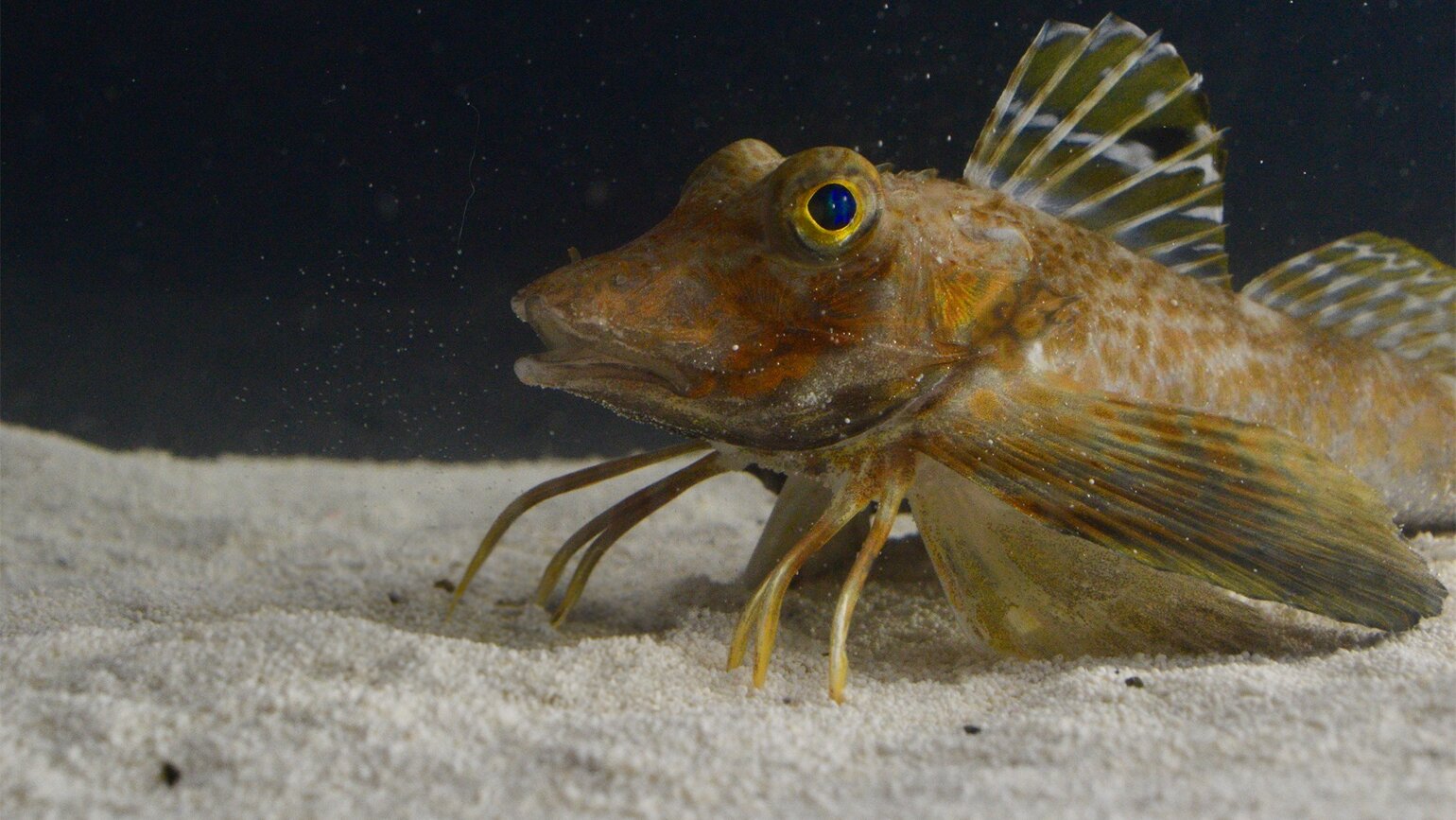
A close-up of a brown, spiny sea robin with blue eyes and wing-like pectoral fins resting on the sandy ocean floor, with dark water in the background.

Sea robins are one of these species scientists have been fascinated with for decades. These creatures have such a fascinating combination of a fish body, birdlike wings, and crab-like legs that the scientific world calls them “aquatic centaurs.” At least, says David Kingsley, a developmental biologist at Stanford University, who has devoted himself to these marine creatures.

Very recently, papers published in Current Biology noted that sea robins use their legs both for swimming and tasting. This team of researchers was led by Dr. Kingsley to better understand the genetic and developmental factors controlling this evolutionary appendage development.
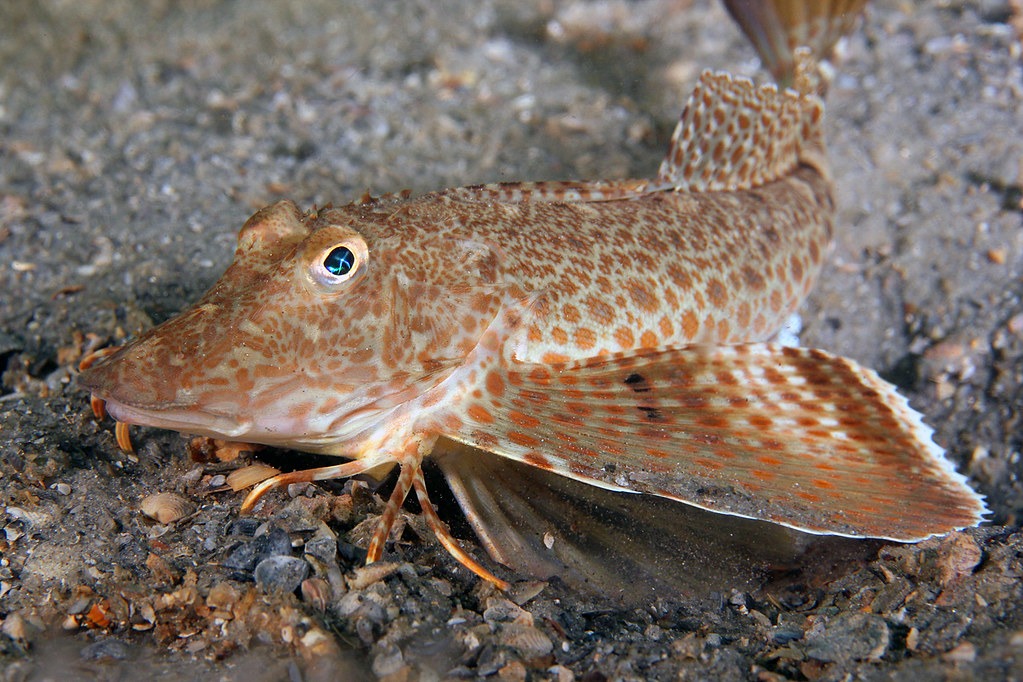
robin fish with legs

A major discovery was that a gene known as tbx3a, a variant of the human gene responsible for limb formation, is integral to the development of sea robin legs. This gene was edited using the CRISPR gene editing techniques and the effect on the fish appendage was observed. They found that mutation of tbx3a generated alterations in the number and type of legs, which therefore could give a clue to just how evolution can reuse existing genetic elements in novel ways.

Previous studies suggested that sea robin legs can be used to find food buried under the seabed. To check that, the researchers performed experiments in which mollusks were buried under various depths of sand and marked down the ability of different species of fish to find them. They also used small capsules of amino acids and the smell of the mollusk to verify that it is actually the chemicals from the buried prey that the fish were detecting, and not relying on eyesight or vision.
ADVERTISEMENT
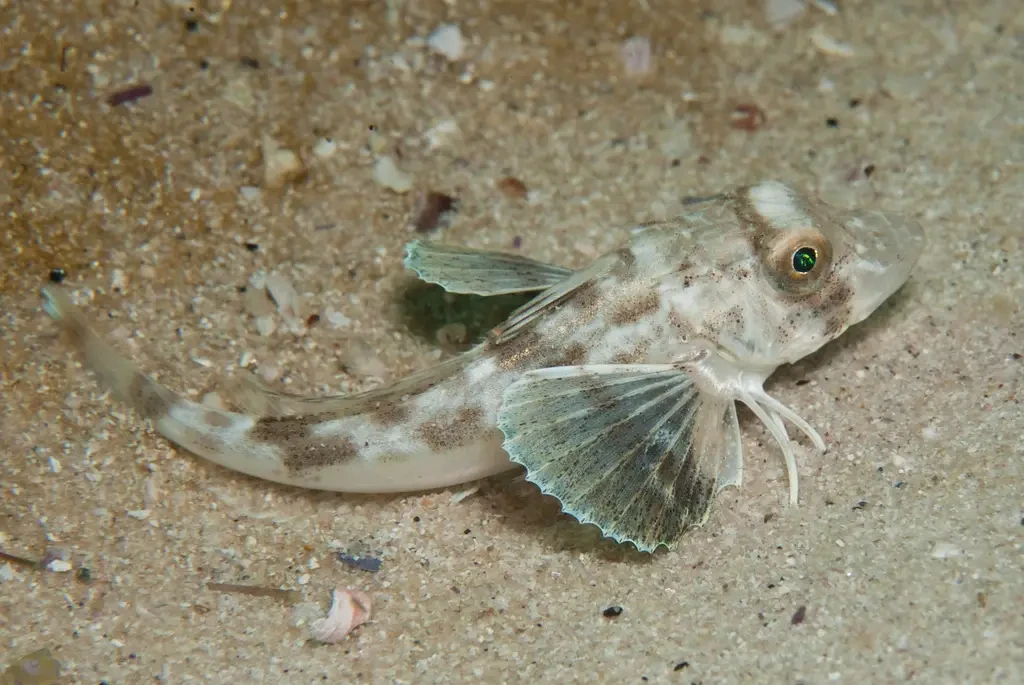
a fish fish with leg in the water

One species, Prionotus carolinus was especially good at finding buried food. Examining the molecules responsible for this capability it was found that shovel-shaped legs of this species had appendages which were utilised in tasting, a function similar to human tongue papillae. These appendages act as taste receptors for the fish and enable it to “taste” its prey before digging it out.

READ ALSO

12,638 MRI Scans Confirm Men’s Brains Shrink Faster in PNAS Study

For Future Space Missions, Molecular Ecology Finally Offers a Clear Biosignature Target

Although the taste receptors of sea robin legs share much in common with humans, there are some differences as well. This, says Thomas Finger, from the University of Colorado, who was not involved in this research, is a unique flavor form of chemical sensory system. In humans, similar cells throughout our digestive system use taste molecule receptors to sense chemicals which give food and drink flavor, but this does not elicit any sensations of taste in the human body.

ADVERTISEMENT

Conceptually similar” is how Nicholas Bellono from Harvard University described how the taste receptors of the legs of sea robins change with evolution, tasting food with the arms as octopuses do. However, sea robins’ sensory receptors and their connections to the central nervous system are totally different from those in other organisms, indicating that evolution reused and combined existing elements in peculiar ways to create a specific sensory system for detecting food.

ADVERTISEMENT

Importantly, the taste receptors are present only in some species of sea robins. This means legs first evolved as appendages before any particular species developed sensory adaptations to exploit that new food detection method. Corey Allard from Dr. Bellono’s lab spoke about how mysterious the fact was that other sea robins could sense those chemicals without having taste receptors or papilla-like projections.

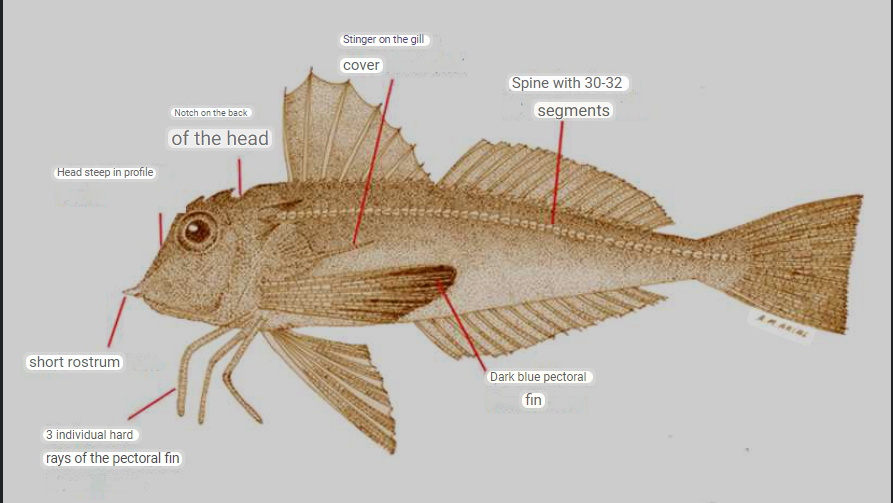
LABELLING OF ROBIN FISH
University of Chicago’s Neil Shubin also commented on the wider implications from these discoveries. He notes that fish like catfish and goatfish also have taste receptors along barbel-like whiskers protruding from their heads. Shubin suggested that this ability to taste through different parts of the body increases the varieties of sensations that are available and represents further evolutionary advantage.

In this case, the adaptation of sensory adaptations in the legs of the sea robin is a prime example of how natural selection will alter existing genetic elements into a special sense. To understand such mechanisms driving evolutionary change as well as how an organism adapts to its environment, study of such adaptations is required.

READ MORE TOPICS

  • New DNA Evidence on Ancient Horse Domestication
  • Rare Stripey Piglets Born in Breeding Program
  • Artificial Hearts-Innovations and Future Impact on Heart Failure Treatment
  • Phototransduction: How Rods and Cones Work in the Eye
  • Can Cloning Techniques Save Endangered Species from Extinction?
  • Share on WhatsApp (Opens in new window) WhatsApp
  • Share on Facebook (Opens in new window) Facebook
  • Share on Reddit (Opens in new window) Reddit
  • Share on X (Opens in new window) X
  • Print (Opens in new window) Print
Shibasis Rath

Shibasis Rath

"𝓒𝓸𝓷𝓷𝓮𝓬𝓽𝓲𝓷𝓰 𝓡𝓮𝓼𝓮𝓪𝓻𝓬𝓱 𝓣𝓸 𝓡𝓮𝓪𝓵𝓲𝓽𝔂" 𝓲𝓼𝓷'𝓽 𝓙𝓾𝓼𝓽 𝓪 𝓜𝓸𝓽𝓽𝓸 - 𝓘𝓽'𝓼 𝓜𝔂 𝓜𝓲𝓼𝓼𝓲𝓸𝓷

Related Posts

A new study has found that men’s brains shrink faster than women’s as they age.
NEUROSCIENCE

12,638 MRI Scans Confirm Men’s Brains Shrink Faster in PNAS Study

May 14, 2026
3 men standing on rocky shore during daytime
MOLECULAR BIOLOGY

For Future Space Missions, Molecular Ecology Finally Offers a Clear Biosignature Target

May 12, 2026
Global Sperm Counts Have Dropped 50% in 50 Years Now 128 Men Are Racing Their Way to a $100,000 Prize to Prove the Point
NEWS

Global Sperm Counts Have Dropped 50% in 50 Years Now 128 Men Are Racing Their Way to a $100,000 Prize to Prove the Point

May 5, 2026

POPULAR NEWS

Chewing gum releases thousands of microplastic particles directly into your mouth with every piece you chew

Chewing gum releases thousands of microplastic particles directly into your mouth with every piece you chew

by Shibasis Rath
May 8, 2026
0

Microplastics are turning up in places researchers never expected: deep-sea sediments, Arctic ice, and human blood. Now, a UCLA pilot...

Yelling Isn’t Just Yelling: How a Hostile Home Rewires a Child’s Brain for Constant Alert

Yelling Isn’t Just Yelling: How a Hostile Home Rewires a Child’s Brain for Constant Alert

by Shibasis Rath
March 8, 2026
0

To a parent in the heat of the moment, a raised voice may feel like simple frustration. To a child...

a group of gen Z kids walking down a street

Is Gen Z the First Generation Less Intelligent Than Their Parents?

by Shibasis Rath
February 5, 2026
0

Gen Z intelligence decline is emerging as a serious concern among neuroscientists and education researchers. For over a century, each...

Whole Brain Emulation Achieved: Scientists Run a Fruit Fly Brain in Simulation

by Shibasis Rath
March 9, 2026
0

Scientists have copied an entire biological brain neuron by neuron and synapse by synapse and made it control a simulated...

COCKROACH JANTA PARTY OFFICIAL LOGO

‘Cockroach Janta Party’: Judge’s comment triggers online satire and protest movement in India

by Staff Writer
May 20, 2026
0

⚖️ Editorial Note — RathBiotaClan: We are a science and science-education platform. We are not aligned with any political party....

EDITOR CHOICE‘S

  • All
  • NEWS
  • SPOTLIGHTS
Childhood Trauma Leaves Distinct Marks on Fathers’ Sperm, Study Shows

Childhood Trauma Leaves Distinct Marks on Fathers’ Sperm, Study Shows

by Shibasis Rath
May 22, 2026
0

About one in five adults in Europe and the United States grew up with some form of childhood maltreatment and...

woman in black jacket sitting on gray concrete wall during daytime

Psychology Study Says, Why People Who Enjoy Being Alone Often Build Stronger Minds and Deeper Connections

by Staff Writer
May 21, 2026
0

Psychologists have noticed for years that spending time alone stirs up all kinds of conflicting results. Daily tracking studies often...

COCKROACH JANTA PARTY OFFICIAL LOGO

‘Cockroach Janta Party’: Judge’s comment triggers online satire and protest movement in India

by Staff Writer
May 20, 2026
0

⚖️ Editorial Note — RathBiotaClan: We are a science and science-education platform. We are not aligned with any political party....

toothbrush, toothpaste, dental care, clean, dental hygiene, oral hygiene, oral care, tube, paste, brushing, dentistry, toothbrush, toothbrush, toothbrush, toothpaste, toothpaste, toothpaste, toothpaste, toothpaste

Scientists Say Your Next Tube of Toothpaste Could Be Made From Human Hair

by Shibasis Rath
May 19, 2026
0

A 2025 study from King's College London found that keratin extracted from wool can guide the growth of an enamel-like...

ADVERTISEMENT

RathBiotaClan – RBC

RathBiotaClan – Connecting Research To Reality

Your trusted source for life science news, biology research & discoveries. Covering neuroscience, genetics, ecology, and more — connecting research to reality.

About Us

Privacy Policies

Contact Us

Editorial Standard

Latest Posts

  • Childhood Trauma Leaves Distinct Marks on Fathers’ Sperm, Study Shows
  • Psychology Study Says, Why People Who Enjoy Being Alone Often Build Stronger Minds and Deeper Connections
  • ‘Cockroach Janta Party’: Judge’s comment triggers online satire and protest movement in India
  • Scientists Say Your Next Tube of Toothpaste Could Be Made From Human Hair

SHIBASIS RATH

Contact Mail

rathbiotaclan@gmail.com

No Result
View All Result
MSME (Udyam) Certified Science Platform
Govt. of India

Get Us On PlayStore

playstore app for rathbiotaclan
  • About Us
  • Advertise With Us
  • Cancellation and Refund Policy
  • Contact Us
  • Contribute
  • Editorial Standards
  • Home
  • Pricing Details
  • Privacy Policies
  • Shipping Policy
  • Terms & Conditions

© 2026 RathBiotaClan. All rights reserved.

Welcome Back!

Sign In with Google
OR

Login to your account below

Forgotten Password? Sign Up

Create New Account!

Sign Up with Google
OR

Fill the forms bellow to register

*By registering into our website, you agree to the Terms & Conditions and Privacy Policy.
All fields are required. Log In

Retrieve your password

Please enter your username or email address to reset your password.

Log In

Add New Playlist

No Result
View All Result
  • HOME
  • HEALTH SCIENCE
  • NEUROSCIENCE
    • PHYSIOLOGY
    • IMMUNOLOGY
    • CANCER
  • DISCOVERIES
    • SPOTLIGHTS
    • STUDENT PORTAL
    • SCIENCE FEATURED
  • MOLECULAR BIOLOGY
    • GENETICS
    • BIOTECHNOLOGY
    • BIOINFORMATICS
    • BIOCHEMISTRY
    • BIOPHYSICS
  • ZOOLOGY & ECOLOGY
    • ENVIRONMENTAL SCIENCE
    • ECOLOGY
    • EVOLUTION
  • MICRO & PLANT SCIENCE
    • MICROBIOLOGY
    • CELL BIOLOGY
    • DEVELOPMENTAL BIOLOGY
  • PSYCHOLOGY
  • Login
  • Sign Up
SAVED POSTS

© 2026 RathBiotaClan. All rights reserved.

This website uses cookies. By continuing to use this website you are giving consent to cookies being used. Visit our Privacy and Cookie Policy.