
Monday, July 20, 2026
SAVED POSTS
  • Login
  • Register
RathBiotaClan
No Result
View All Result
  • HOME
  • HEALTH SCIENCE

    TRENDING ON HEALTH (TOP)

    Fick Method Underestimates Heart Problems in Children After Heart Transplant, Study Finds

    For Women on Antidepressants, Creatine Showed a Possible Extra Boost

    Did the iPhone Quietly Reshape When and Whether Americans Have Children?

    For People Antidepressants Never Helped, a 30-Minute Home Session Is Now FDA-Approved

    NOW ON AIR (RBC)

    Oona McGee, "Japan now has human refrigerators inspired by Japanese vending machines," SoraNews24, July 17–18, 2026, citing Yahoo! News Japan.
    NEWS

    Japan built a ‘human refrigerator’ that cools your body in just 5 minutes, and it could transform how workers beat extreme heat

    July 20, 2026
    AI CRISPR Gene
    BIOTECHNOLOGY

    AI Designs Better CRISPR Gene Editors Than Nature, Doudna Team Reports

    July 20, 2026
    The parsimony criterion
    BIOINFORMATICS

    The Parsimony Criterion in Phylogenetics: Morphological & Molecular Methods

    July 15, 2026
    maximum-likelihood-criterion
    BIOINFORMATICS

    Maximum Likelihood Criterion in Phylogenetic Tree Reconstruction

    July 15, 2026
  • NEUROSCIENCE
    • PHYSIOLOGY
    • IMMUNOLOGY
    • CANCER
  • DISCOVERIES
    • SPOTLIGHTS
    • STUDENT PORTAL
    • SCIENCE FEATURED
  • MOLECULAR BIOLOGY
    • GENETICS
    • BIOTECHNOLOGY
    • BIOINFORMATICS
    • BIOCHEMISTRY
    • BIOPHYSICS
  • ZOOLOGY & ECOLOGY
    • ENVIRONMENTAL SCIENCE
    • ECOLOGY
    • EVOLUTION
  • MICRO & PLANT SCIENCE
    • MICROBIOLOGY
    • CELL BIOLOGY
    • DEVELOPMENTAL BIOLOGY
  • PSYCHOLOGY
RathBiotaClan
RathBiotaClan
No Result
View All Result
Home DISCOVERIES

Oldest Known Microbial DNA Recovered from Mammoths Remains

Shibasis Rath by Shibasis Rath
September 12, 2025
in DISCOVERIES, EVOLUTION, MICROBIOLOGY, SCIENCE FEATURED
Reading Time: 4 mins read
0
A A
0
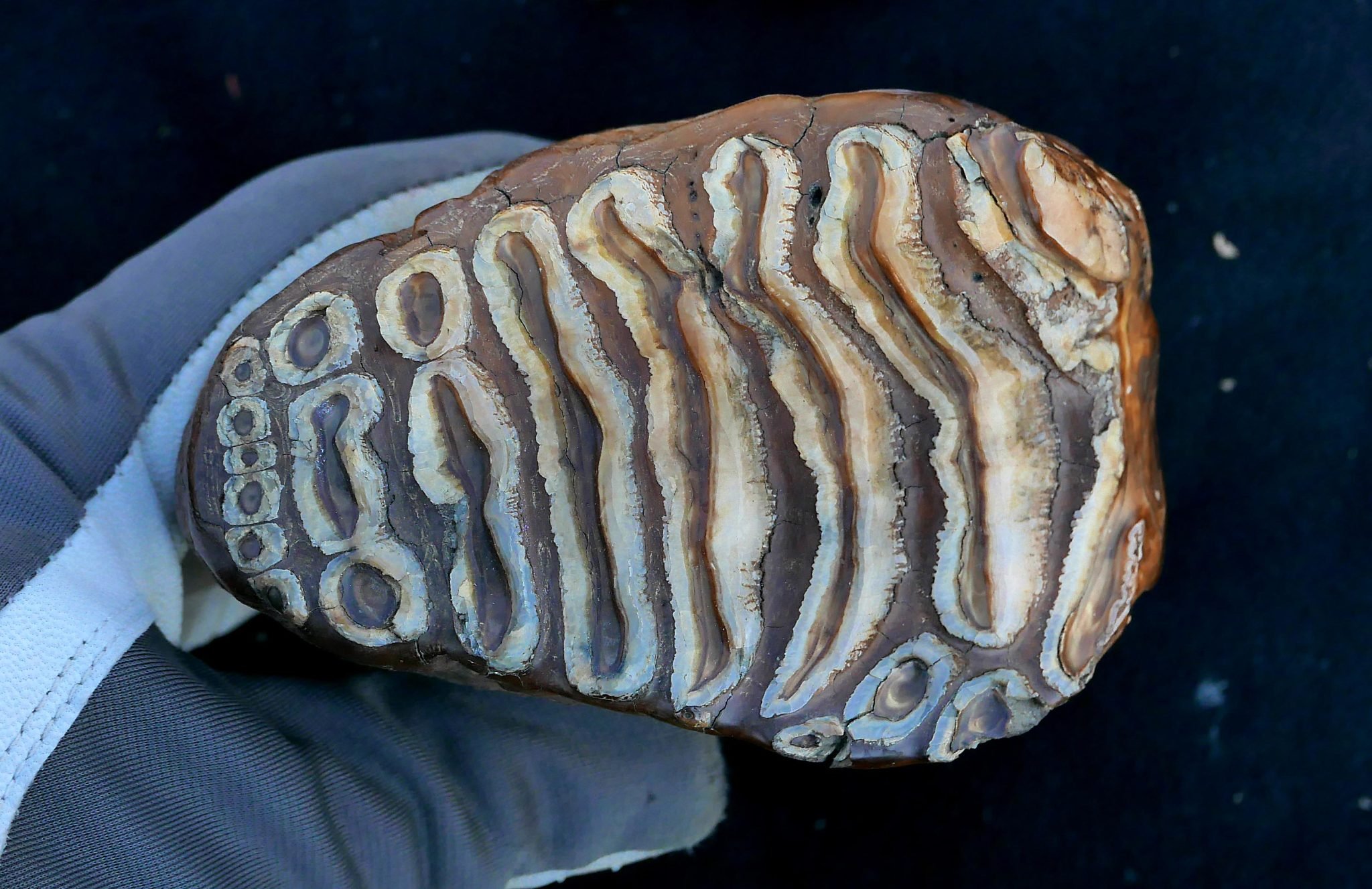
A gloved hand holds a large, brown fossil containing million year old microbial DNA, with distinct, parallel ridges and oval shapes embedded in its surface against a dark background.

READ ALSO

Shocking New Study Reveals More Than a Third of US Teens Are Being Cyberbullied — And What’s Happening Online Is Worse Than Parents Think

Pineal and Thymus Peptides Associated With Lower Mortality in Elderly Patients, Long-Term Study Reports

Scientists discovered microbial DNA in woolly and steppe mammoth remains that date back more than one million years. This finding marks some of the oldest host-associated microbial DNA ever sequenced. The research opens new vistas in how microbes may have co-evolved with large mammals and possibly shaped their health, disease, and extinction.

What Was Studied

An international team led by the Centre for Palaeogenetics (Stockholm University & Swedish Museum of Natural History) examined 483 mammoth specimens. Out of those, 440 had never been sequenced before. They covered a broad temporal span: from the Early Pleistocene (about 1.1 million years ago) to the final woolly mammoths on Wrangel Island (~4,000 years ago). The specimens came from multiple regions (Siberia, North America, Britain etc.). The tissues included teeth, skull fragments, and bone.

Key Findings

  • The team reconstructed parts of an Erysipelothrix genome from a steppe mammoth that lived ~1.1 million years ago. That represents the oldest example of microbe DNA known to have lived in connection with a host rather than simply in the environment.
  • They found six microbial lineages that appeared repeatedly across many mammoth remains. These lineages include relatives of Actinobacillus, Pasteurella, Streptococcus, and Erysipelothrix.
  • One Pasteurella-like bacterium is closely similar to a pathogen that causes deadly septicaemia in modern African elephants, suggesting mammoths may have faced related bacterial threats. Erysipelothrix DNA appeared not just in dental material but also in bone, which indicates it may have colonized various tissues.
  • Because remains usually accumulate environmental microbes after death, the researchers used genomic and bioinformatic methods to filter out those post-mortem invaders. They thus focused on microbes that likely lived in or on mammoths while the animals were alive.

Why This Matters

  • The temporal boundary for how far back host-associated microbial DNA can be recovered has been pushed back substantially. This study shows DNA can survive one million years or more in sufficient condition to identify taxa, lineages, and partial genomes.
  • The findings offer deep evolutionary perspective: knowing which microbes remained with mammoths over many generations gives insight into disease pressures, microbiome evolution, and possibly physiological traits that affected resilience or vulnerability.
  • This may also inform extinction biology. If pathogens persisted across time and geography, they could have imposed stress on mammoth populations. Of course, climate change, habitat shifts, human hunting etc. also mattered. The microbes are one piece in a larger puzzle.

Limitations & Open Questions

  • DNA degradation remains a serious issue: even where DNA survives, it is often fragmented and damaged, which limits reconstruction of full genomes.
  • Comparative data is scarce. Ancient microbial reference genomes are few, especially for microbes that depend heavily on hosts. That hampers precise assessments of similarity to modern pathogenic strains.
  • We cannot yet determine how pathogenic these microbes were in mammoths. Just because one microbe resembles a modern pathogen does not mean it behaved identically. Factors like immune response, environment, co-infections are unknown.
  • Geographic sampling may be biased. Specimens preserving microbial DNA well tend to come from cold climates or permafrost. Mammoth populations in other settings may not preserve DNA so richly.

Did mammoth microbes influence their extinction?

This work breaks new ground. Microbial DNA from mammoth hosts has been retrieved from remains older than one million years. Consistent microbial lineages persisted over vast stretches of time and space. While the exact impact on mammoth health and extinction remains speculative, the study adds a vital dimension: extinct megafauna carried microbial communities that shaped, and were shaped by, their biology.

REFERENCE

Guinet, B. et al. Ancient host-associated microbes obtained from mammoth remains. Cell 186, 1–15 (2025). https://doi.org/10.1016/j.cell.2025.08.003

ADVERTISEMENT
ADVERTISEMENT
ADVERTISEMENT
  • Share on WhatsApp (Opens in new window) WhatsApp
  • Share on Facebook (Opens in new window) Facebook
  • Share on Reddit (Opens in new window) Reddit
  • Share on X (Opens in new window) X
  • Print (Opens in new window) Print
Shibasis Rath

Shibasis Rath

"𝓒𝓸𝓷𝓷𝓮𝓬𝓽𝓲𝓷𝓰 𝓡𝓮𝓼𝓮𝓪𝓻𝓬𝓱 𝓣𝓸 𝓡𝓮𝓪𝓵𝓲𝓽𝔂" 𝓲𝓼𝓷'𝓽 𝓙𝓾𝓼𝓽 𝓪 𝓜𝓸𝓽𝓽𝓸 - 𝓘𝓽'𝓼 𝓜𝔂 𝓜𝓲𝓼𝓼𝓲𝓸𝓷

Related Posts

37% of US Teens Face Cyberbullying
SCIENCE FEATURED

Shocking New Study Reveals More Than a Third of US Teens Are Being Cyberbullied — And What’s Happening Online Is Worse Than Parents Think

June 30, 2026
man in blue scrub suit standing near white and black office rolling chair
SCIENCE FEATURED

Pineal and Thymus Peptides Associated With Lower Mortality in Elderly Patients, Long-Term Study Reports

June 23, 2026
A Shark That Walks Out of the Water Has Been Found in Papua New Guinea And It’s New to Science
SCIENCE FEATURED

A Shark That Walks Out of the Water Has Been Found in Papua New Guinea And It’s New to Science

June 16, 2026

POPULAR NEWS

Chewing gum releases thousands of microplastic particles directly into your mouth with every piece you chew

Chewing gum releases thousands of microplastic particles directly into your mouth with every piece you chew

by Shibasis Rath
May 8, 2026
0

Microplastics are turning up in places researchers never expected: deep-sea sediments, Arctic ice, and human blood. Now, a UCLA pilot...

grayscale photo of girl in polka dot long sleeve shirt

Yelling Isn’t Just Yelling: How a Hostile Home Rewires a Child’s Brain for Constant Alert

by Shibasis Rath
March 8, 2026
0

To a parent in the heat of the moment, a raised voice may feel like simple frustration. To a child...

72-Hour Fasting Can Reset Your Entire Immune System, USC Study Shows

72-Hour Fasting Can Reset Your Entire Immune System, USC Study Shows

by Shibasis Rath
February 28, 2026
0

A 72-hour fast can trigger a powerful immune system reset. Scientists call this stem cell regeneration. The process clears old...

woman in white tank top lying on bed

New Studys Says Gen Z is the least sexually active young cohort in modern recorded history

by Shibasis Rath
January 24, 2026
0

A generation that grew up with dating apps in their pockets, pornography a tap away, and sex discussed more openly...

a group of gen Z kids walking down a street

Is Gen Z the First Generation Less Intelligent Than Their Parents?

by Shibasis Rath
February 5, 2026
0

Gen Z intelligence decline is emerging as a serious concern among neuroscientists and education researchers. For over a century, each...

EDITOR CHOICE‘S

  • All
  • NEWS
  • SPOTLIGHTS
Oona McGee, "Japan now has human refrigerators inspired by Japanese vending machines," SoraNews24, July 17–18, 2026, citing Yahoo! News Japan.

Japan built a ‘human refrigerator’ that cools your body in just 5 minutes, and it could transform how workers beat extreme heat

by Shibasis Rath
July 20, 2026
0

Japan's summers have grown severe enough that the government recently coined new terminology just to describe days when temperatures climb...

AI CRISPR Gene

AI Designs Better CRISPR Gene Editors Than Nature, Doudna Team Reports

by Shibasis Rath
July 20, 2026
0

Researchers at UC Berkeley used artificial intelligence to design new versions of a small CRISPR enzyme called TnpB. Several of...

The parsimony criterion

The Parsimony Criterion in Phylogenetics: Morphological & Molecular Methods

by Shibasis Rath
July 15, 2026
0

The parsimony criterion is one of the oldest and most widely used methods of constructing phylogenetic trees, having its roots...

maximum-likelihood-criterion

Maximum Likelihood Criterion in Phylogenetic Tree Reconstruction

by Shibasis Rath
July 15, 2026
0

The maximum-likelihood (ML) criterion is one of the most important and statistically rigorous approaches used for phylogenetic tree reconstruction, first...

ADVERTISEMENT

RathBiotaClan – RBC

RathBiotaClan – Connecting Research To Reality

Your trusted source for life science news, biology research & discoveries. Covering neuroscience, genetics, ecology, and more — connecting research to reality.

About Us

Privacy Policies

Contact Us

Editorial Standard

Latest Posts

  • Japan built a ‘human refrigerator’ that cools your body in just 5 minutes, and it could transform how workers beat extreme heat
  • AI Designs Better CRISPR Gene Editors Than Nature, Doudna Team Reports
  • The Parsimony Criterion in Phylogenetics: Morphological & Molecular Methods
  • Maximum Likelihood Criterion in Phylogenetic Tree Reconstruction

SHIBASIS RATH

Contact Mail

rathbiotaclan@gmail.com

No Result
View All Result
MSME (Udyam) Certified Science Platform
Govt. of India

Get Us On PlayStore

playstore app for rathbiotaclan
  • About Us
  • Advertise With Us
  • Cancellation and Refund Policy
  • Contact Us
  • Contribute
  • Editorial Standards
  • Home
  • Pricing Details
  • Privacy Policies
  • Shipping Policy
  • Terms & Conditions

© 2026 RathBiotaClan. All rights reserved.

Welcome Back!

Sign In with Google
OR

Login to your account below

Forgotten Password? Sign Up

Create New Account!

Sign Up with Google
OR

Fill the forms below to register

*By registering into our website, you agree to the Terms & Conditions and Privacy Policy.
All fields are required. Log In

Retrieve your password

Please enter your username or email address to reset your password.

Log In

Add New Playlist

No Result
View All Result
  • HOME
  • HEALTH SCIENCE
  • NEUROSCIENCE
    • PHYSIOLOGY
    • IMMUNOLOGY
    • CANCER
  • DISCOVERIES
    • SPOTLIGHTS
    • STUDENT PORTAL
    • SCIENCE FEATURED
  • MOLECULAR BIOLOGY
    • GENETICS
    • BIOTECHNOLOGY
    • BIOINFORMATICS
    • BIOCHEMISTRY
    • BIOPHYSICS
  • ZOOLOGY & ECOLOGY
    • ENVIRONMENTAL SCIENCE
    • ECOLOGY
    • EVOLUTION
  • MICRO & PLANT SCIENCE
    • MICROBIOLOGY
    • CELL BIOLOGY
    • DEVELOPMENTAL BIOLOGY
  • PSYCHOLOGY
  • Login
  • Sign Up
SAVED POSTS

© 2026 RathBiotaClan. All rights reserved.

This website uses cookies. By continuing to use this website you are giving consent to cookies being used. Visit our Privacy and Cookie Policy.