



Friday, July 17, 2026
SAVED POSTS
  • Login
  • Register
RathBiotaClan
No Result
View All Result
  • HOME
  • HEALTH SCIENCE

    TRENDING ON HEALTH (TOP)

    Fick Method Underestimates Heart Problems in Children After Heart Transplant, Study Finds

    For Women on Antidepressants, Creatine Showed a Possible Extra Boost

    Did the iPhone Quietly Reshape When and Whether Americans Have Children?

    For People Antidepressants Never Helped, a 30-Minute Home Session Is Now FDA-Approved

    NOW ON AIR (RBC)

    The parsimony criterion
    BIOINFORMATICS

    The Parsimony Criterion in Phylogenetics: Morphological & Molecular Methods

    July 15, 2026
    maximum-likelihood-criterion
    BIOINFORMATICS

    Maximum Likelihood Criterion in Phylogenetic Tree Reconstruction

    July 15, 2026
    Tree Optimization Criteria and Search Methods in Phylogenetics – NNI, SPR, TBR Explained
    BIOINFORMATICS

    Tree Optimization Criteria and Tree Search Methods in Phylogenetics

    July 15, 2026
    Bootstrapping in Phylogenetics
    BIOINFORMATICS

    Bootstrapping in Phylogenetics – Tree Reliability, Resampling & Bootstrap Values

    July 15, 2026
  • NEUROSCIENCE
    • PHYSIOLOGY
    • IMMUNOLOGY
    • CANCER
  • DISCOVERIES
    • SPOTLIGHTS
    • STUDENT PORTAL
    • SCIENCE FEATURED
  • MOLECULAR BIOLOGY
    • GENETICS
    • BIOTECHNOLOGY
    • BIOINFORMATICS
    • BIOCHEMISTRY
    • BIOPHYSICS
  • ZOOLOGY & ECOLOGY
    • ENVIRONMENTAL SCIENCE
    • ECOLOGY
    • EVOLUTION
  • MICRO & PLANT SCIENCE
    • MICROBIOLOGY
    • CELL BIOLOGY
    • DEVELOPMENTAL BIOLOGY
  • PSYCHOLOGY
RathBiotaClan
RathBiotaClan
No Result
View All Result
Home EVOLUTION

New DNA Evidence Suggests Native American Ancestors Started in Northern Coastal China

Shibasis Rath by Shibasis Rath
October 18, 2025
in EVOLUTION, GENETICS, NEWS, SCIENCE FEATURED
Reading Time: 4 mins read
0
A A
0
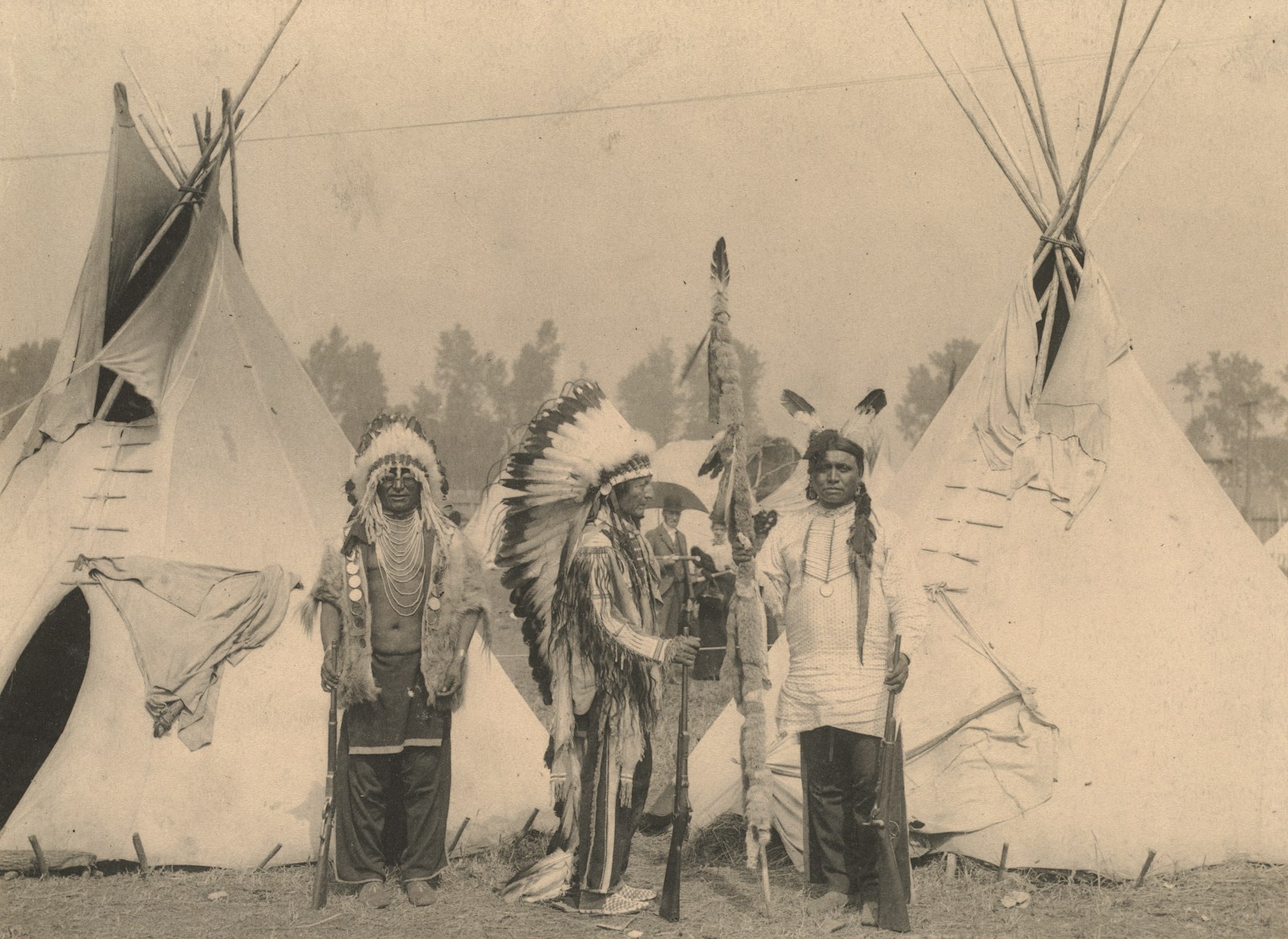
3 men in white and black coat standing on snow covered ground

For many years, scientists accepted a simple story about the first Native Americans (NAs). Groups moved from Asia and crossed the Beringia land bridge. This dry land connected Siberia and Alaska during the Ice Age. Major Native American founder types strongly support this traditional view. These include mitochondrial DNA (mtDNA) haplogroups A2, B2, C1, and D1. All trace their roots back to Siberia.

A recent study analyzed mitogenomes (the complete DNA sequence of the mitochondria). The mother’s line passes down this DNA almost exclusively. The study identified a crucial ancestral source far from Siberia: northern coastal China. This region contributed to the gene pools of both Native Americans and the Japanese archipelago.

The Genetic Clue: Haplogroup D4h

A rare mtDNA lineage called D4h provides the key evidence in this discovery. Specifically, researchers focused on D4h3a. Scientists know this as a distinctive founder lineage for Native Americans.

D4h3a has a closely related “sister lineage,” D4h3b. This lineage surprised researchers. Until recently, scientists had only observed D4h3b in populations in East China and Thailand. This genetic relationship suggested something important. The maternal ancestors of early Native Americans might have come from a much wider geographic range in Asia than just Siberia.

ADVERTISEMENT

Scientists investigated this deep connection. They collected and analyzed data from over 101,319 Eurasian individuals. They identified 216 modern and 39 ancient D4h mitogenomes.

READ ALSO

Scientists say cockroach milk is 3x more nutritious than human breast milk

Negotiating with women builds more trust, even in anonymous online chats, Study finds

Tracing the Ancestral Homeland

The results strongly suggest an ancestral homeland for D4h and its important sub-branch D4h3. This homeland lay in Central or North China, specifically in a region near the northern coast. More than two-thirds (69.57%) of the contemporary D4h samples in North/Central China came from provinces along or near the northern coast. These include Hebei, Liaoning, Tianjin, and Shandong.

ADVERTISEMENT

Ancient mtDNA samples further support this location. These samples belong to D4h3 and date back as far as 14–15 kilo years ago (kya). Scientists discovered them in the Amur River Valley in northern North China. One ancient sample from this area (~14 kya) represents the closest known Asian maternal link to the Native American founder D4h3a.

ADVERTISEMENT

Two Major Waves of Expansion

The study identified two significant population radiation events. These are periods of population expansion and dispersal. Both originated from this northern coastal area of China.

The First Radiation (The Ice Age Wave)

This wave occurred during the Last Glacial Maximum (LGM), roughly 26.5–19.0 kya. The far north of Asia experienced an extremely cold climate. Despite this harsh climate, D4h sub-haplogroups, including D4h3, began to separate and expand. The lineage D4h3a traveled eastward during this dispersal. It eventually became one of the established pan-American haplogroups in Native Americans. This timing aligns with genetic evidence. American branches split from ancient East Asians around 23–20 kya.

The Second Radiation (The Post-Ice Age Wave)

This wave happened during the last deglaciation (19.0–11.5 kya). The climate improved after the LGM. This expansion led to the origin and spread of other D4h lineages. It most notably influenced the Japanese Archipelago. Haplogroups D4h1a and D4h2 are prevalent in Japan. D4h2 dates back to 20.05 kya. Scientists have found D4h2 in ancient Jomons. Experts see these people as descendants of the Paleolithic settlers of Japan. Temporary land bridges existed between China and the Japanese Archipelago until about 12 kya. The movement into Japan likely used these bridges.

Supporting the Coastal Route

The geographical distribution of these lineages strongly supports the coastal dispersal scenario (or “coastal route”). D4h3a appears in the Americas. D4h1a and D4h2 appear in Japan. All cluster along the Pacific coast. This theory suggests that the earliest Americans traveled along the eastern Pacific coastline. They did not wait for an inland ice-free corridor to open.

Parallel evidence from the paternal side reinforces the maternal findings. The Y chromosome haplogroup C2a-L1373 appears to have differentiated in northern China near the coast. This happened at a similar time to the first D4h radiation. C2a-L1373 is an ancestor to certain Native American founder lineages. Ancient samples from northern China (~14 kya) have shown the coexistence of both mtDNA D4h3 and Y chromosome C2a-L1373. This links the maternal and paternal ancestors of Native Americans to this region.

Archaeological similarities also support a historical connection along the Pacific rim. Scientists have found distinct stemmed projectile points and microblades in North China, Japan, and the Americas. These artifacts date back to the Pleistocene period. They align with the coastal dispersal hypothesis.

Conclusion

This research reveals a more complex ancestral story for early Native Americans than scientists previously thought. Northern coastal China served as an important, additional source of genetic ancestry. This ancestry spread across the Pacific rim during two major population radiation events. D4h3a only makes up a small portion of the Native American gene pool. However, it plays a vital role in completing the full picture of early Native American origins.

REFERENCE

CELL REPORTS

  • Share on WhatsApp (Opens in new window) WhatsApp
  • Share on Facebook (Opens in new window) Facebook
  • Share on Reddit (Opens in new window) Reddit
  • Share on X (Opens in new window) X
  • Print (Opens in new window) Print
Shibasis Rath

Shibasis Rath

"𝓒𝓸𝓷𝓷𝓮𝓬𝓽𝓲𝓷𝓰 𝓡𝓮𝓼𝓮𝓪𝓻𝓬𝓱 𝓣𝓸 𝓡𝓮𝓪𝓵𝓲𝓽𝔂" 𝓲𝓼𝓷'𝓽 𝓙𝓾𝓼𝓽 𝓪 𝓜𝓸𝓽𝓽𝓸 - 𝓘𝓽'𝓼 𝓜𝔂 𝓜𝓲𝓼𝓼𝓲𝓸𝓷

Related Posts

Scientists say cockroach milk is 3x more nutritious than human breast milk
NEWS

Scientists say cockroach milk is 3x more nutritious than human breast milk

July 12, 2026
Negotiating with women builds more trust, even in anonymous online chats, Study finds
NEWS

Negotiating with women builds more trust, even in anonymous online chats, Study finds

July 3, 2026
fick principle
HEALTH SCIENCE

Fick Method Underestimates Heart Problems in Children After Heart Transplant, Study Finds

July 2, 2026

POPULAR NEWS

Chewing gum releases thousands of microplastic particles directly into your mouth with every piece you chew

Chewing gum releases thousands of microplastic particles directly into your mouth with every piece you chew

by Shibasis Rath
May 8, 2026
0

Microplastics are turning up in places researchers never expected: deep-sea sediments, Arctic ice, and human blood. Now, a UCLA pilot...

grayscale photo of girl in polka dot long sleeve shirt

Yelling Isn’t Just Yelling: How a Hostile Home Rewires a Child’s Brain for Constant Alert

by Shibasis Rath
March 8, 2026
0

To a parent in the heat of the moment, a raised voice may feel like simple frustration. To a child...

72-Hour Fasting Can Reset Your Entire Immune System, USC Study Shows

72-Hour Fasting Can Reset Your Entire Immune System, USC Study Shows

by Shibasis Rath
February 28, 2026
0

A 72-hour fast can trigger a powerful immune system reset. Scientists call this stem cell regeneration. The process clears old...

woman in white tank top lying on bed

New Studys Says Gen Z is the least sexually active young cohort in modern recorded history

by Shibasis Rath
January 24, 2026
0

A generation that grew up with dating apps in their pockets, pornography a tap away, and sex discussed more openly...

a group of gen Z kids walking down a street

Is Gen Z the First Generation Less Intelligent Than Their Parents?

by Shibasis Rath
February 5, 2026
0

Gen Z intelligence decline is emerging as a serious concern among neuroscientists and education researchers. For over a century, each...

EDITOR CHOICE‘S

  • All
  • NEWS
  • SPOTLIGHTS
The parsimony criterion

The Parsimony Criterion in Phylogenetics: Morphological & Molecular Methods

by Shibasis Rath
July 15, 2026
0

The parsimony criterion is one of the oldest and most widely used methods of constructing phylogenetic trees, having its roots...

maximum-likelihood-criterion

Maximum Likelihood Criterion in Phylogenetic Tree Reconstruction

by Shibasis Rath
July 15, 2026
0

The maximum-likelihood (ML) criterion is one of the most important and statistically rigorous approaches used for phylogenetic tree reconstruction, first...

Tree Optimization Criteria and Search Methods in Phylogenetics – NNI, SPR, TBR Explained

Tree Optimization Criteria and Tree Search Methods in Phylogenetics

by Shibasis Rath
July 15, 2026
0

Distance-matrix clustering methods such as UPGMA and Neighbor-Joining construct a phylogenetic tree directly through a fixed, well-defined algorithm, without explicitly...

Bootstrapping in Phylogenetics

Bootstrapping in Phylogenetics – Tree Reliability, Resampling & Bootstrap Values

by Shibasis Rath
July 15, 2026
0

Bootstrapping is a statistical method used to assess the reliability of a phylogenetic tree, introduced by Felsenstein in 1985. Since...

ADVERTISEMENT

RathBiotaClan – RBC

RathBiotaClan – Connecting Research To Reality

Your trusted source for life science news, biology research & discoveries. Covering neuroscience, genetics, ecology, and more — connecting research to reality.

About Us

Privacy Policies

Contact Us

Editorial Standard

Latest Posts

  • The Parsimony Criterion in Phylogenetics: Morphological & Molecular Methods
  • Maximum Likelihood Criterion in Phylogenetic Tree Reconstruction
  • Tree Optimization Criteria and Tree Search Methods in Phylogenetics
  • Bootstrapping in Phylogenetics – Tree Reliability, Resampling & Bootstrap Values

SHIBASIS RATH

Contact Mail

rathbiotaclan@gmail.com

No Result
View All Result
MSME (Udyam) Certified Science Platform
Govt. of India

Get Us On PlayStore

playstore app for rathbiotaclan
  • About Us
  • Advertise With Us
  • Cancellation and Refund Policy
  • Contact Us
  • Contribute
  • Editorial Standards
  • Home
  • Pricing Details
  • Privacy Policies
  • Shipping Policy
  • Terms & Conditions

© 2026 RathBiotaClan. All rights reserved.

Welcome Back!

Sign In with Google
OR

Login to your account below

Forgotten Password? Sign Up

Create New Account!

Sign Up with Google
OR

Fill the forms below to register

*By registering into our website, you agree to the Terms & Conditions and Privacy Policy.
All fields are required. Log In

Retrieve your password

Please enter your username or email address to reset your password.

Log In

Add New Playlist

No Result
View All Result
  • HOME
  • HEALTH SCIENCE
  • NEUROSCIENCE
    • PHYSIOLOGY
    • IMMUNOLOGY
    • CANCER
  • DISCOVERIES
    • SPOTLIGHTS
    • STUDENT PORTAL
    • SCIENCE FEATURED
  • MOLECULAR BIOLOGY
    • GENETICS
    • BIOTECHNOLOGY
    • BIOINFORMATICS
    • BIOCHEMISTRY
    • BIOPHYSICS
  • ZOOLOGY & ECOLOGY
    • ENVIRONMENTAL SCIENCE
    • ECOLOGY
    • EVOLUTION
  • MICRO & PLANT SCIENCE
    • MICROBIOLOGY
    • CELL BIOLOGY
    • DEVELOPMENTAL BIOLOGY
  • PSYCHOLOGY
  • Login
  • Sign Up
SAVED POSTS

© 2026 RathBiotaClan. All rights reserved.

This website uses cookies. By continuing to use this website you are giving consent to cookies being used. Visit our Privacy and Cookie Policy.