

Wednesday, June 10, 2026
SAVED POSTS
  • Login
  • Register
RathBiotaClan
No Result
View All Result
  • HOME
  • HEALTH SCIENCE

    TRENDING ON HEALTH (TOP)

    For People Antidepressants Never Helped, a 30-Minute Home Session Is Now FDA-Approved

    Scientists Say Your Next Tube of Toothpaste Could Be Made From Human Hair

    Your Lungs, Liver, and Pancreas Also Age Faster When You Sleep Wrong

    Cycling Linked to Lower Dementia Risk in Study of Nearly 480,000 Adults

    NOW ON AIR (RBC)

    NEWS

    A Father’s Touch in Infancy Can Shape a Child’s Health for Years, New Science Explains Why

    June 9, 2026
    MutExpress
    BIOINFORMATICS

    South Asian Patients Have Been Left Out of Cancer Genomics for Decades & MutExpress-India Is Changing That

    June 8, 2026
    Biodiversity Loss
    ECOLOGY

    Biodiversity Loss Could Bankrupt Nations And Wall Street Hasn’t Noticed Yet

    June 5, 2026
    Soprano pipistrelle (Pipistrellus pygmaeus) emerging from a tree hollow at the moment of take-off.
    ECOLOGY

    Human-generated electromagnetic noise has long lasting effects on light orientation in bats

    June 4, 2026
  • NEUROSCIENCE
    • PHYSIOLOGY
    • IMMUNOLOGY
    • CANCER
  • DISCOVERIES
    • SPOTLIGHTS
    • STUDENT PORTAL
    • SCIENCE FEATURED
  • MOLECULAR BIOLOGY
    • GENETICS
    • BIOTECHNOLOGY
    • BIOINFORMATICS
    • BIOCHEMISTRY
    • BIOPHYSICS
  • ZOOLOGY & ECOLOGY
    • ENVIRONMENTAL SCIENCE
    • ECOLOGY
    • EVOLUTION
  • MICRO & PLANT SCIENCE
    • MICROBIOLOGY
    • CELL BIOLOGY
    • DEVELOPMENTAL BIOLOGY
  • PSYCHOLOGY
RathBiotaClan
RathBiotaClan
No Result
View All Result
Home ENVIRONMENTAL SCIENCE

Impact of insecticides and pesticides on plants which affects human beings

Shibasis Rath by Shibasis Rath
September 26, 2024
in ENVIRONMENTAL SCIENCE, PLANT SCIENCE, SCIENCE FEATURED, SPOTLIGHTS
Reading Time: 5 mins read
0
A A
0
a man walking through a field covered in fog

Chemicals that are used to kill insects are generally called insecticides. Insecticides have a wide application in the field of medicine, agriculture, and industry. The possibility of disturbing ecosystem components predominantly can be found among insecticides and are toxic to animals as well as humans. Some insecticides become concentrated when they spread in the food chain.

Pesticides are chemical substances intended to kill pests. Generally, a pesticide is a chemical or a biological agent such as a virus, bacterium, antimicrobial, or disinfectant that deters, incapacitates kills, pests.

Types of insecticides

There are three kinds of insecticides as follows:
  1. Systemic Insecticide: It is a kind of insecticide that is applied into the soil so that it can seep easily to the roots of the plant. When the insecticide has soaked into the roots, it moves to outer parts like leaves, fruits, flowers, twigs, stem, and branches. It forms a thin film on the surface area of the plant. It acts like poison to any insect. This surface area protects the plant from chewing by an insect coming to munch the plant.
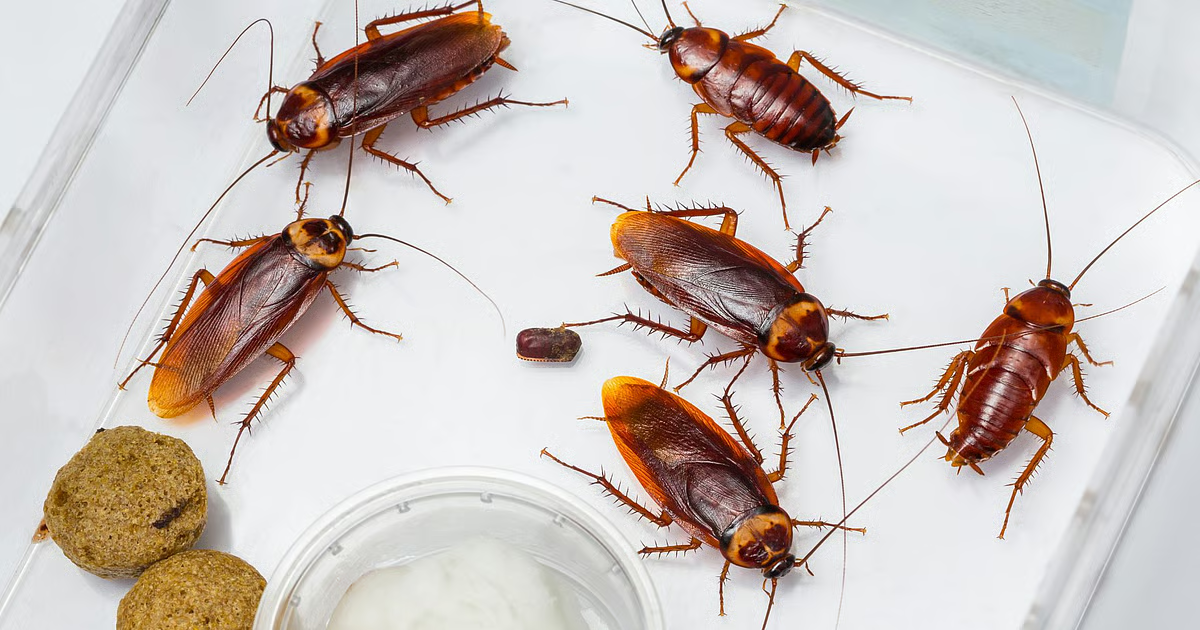
  2. Ingested Insecticide – Some examples of ingested pesticides are rat, roach and many more.
  3. Contact Insecticide – These types of insecticides act like bullets. These bullets aim only at a particular target to kill insects by their application. Generally, household insect spray works like contact insecticides as if it directly hits the insect that is in the target.

Classification of Insecticide based on:

  • Chemical composition: This insecticide is classified as organic and inorganic.
  • The mode of entry in the insects: This insecticide is classified as contact poisons, fumigants poisons, stomach poisons, and systemic poisons.
  • The mode of action: This insecticide is classified as physical poisons, nerve poisons, respiratory poisons, protoplasmic poisons, general poisons, and chitin inhibitors.

Toxicity: It is classified into four types:

  • Extremely toxic – Colour: red, symbol: skull and poison, oral LD50: 1-50
  • Slightly poisonous – Colour: blue, symbol: danger, oral LD50: 501 – 5000
  • Very toxic – Colour: yellow, symbol: poison, oral LD50: 51 – 50
  • Practically nontoxic – Colour: green, symbol: caution, oral LD50: >5000
  • The specificity stage. This pesticide falls under ovicides, pupicides, larvicides, and adulticides.

Types of pesticides

Pesticides can be seen as:

Biodegradable:

ADVERTISEMENT

Those pesticides that can be degraded by microorganisms and other living things to non-harmful chemicals are referred to as biodegradable

READ ALSO

South Asian Patients Have Been Left Out of Cancer Genomics for Decades & MutExpress-India Is Changing That

Biodiversity Loss Could Bankrupt Nations And Wall Street Hasn’t Noticed Yet

Persists:

ADVERTISEMENT

The persistent types are those which might take months or years to degrade.

ADVERTISEMENT

Another way of classifying these is to consider those which are chemical forms or derived from a common source or production method.

Chemically-related pesticides:

Organophosphate :

Most organophosphates are pesticides, they work in the body by interfering with the activity of the enzyme which regulates a neurotransmitter.

Carbamate:

The carbamate pesticides just like the organophosphorus pesticides also work by interfering with the nervous system but their effects on an enzyme regulating the neurotransmitter are usually reversible.

Organochlorine insecticides:

They were widely used in the past, but many countries have prohibited the application of organochlorine insecticides because of their health and environmental effects and their persistence. Examples include DDT, chlordane, and toxaphene .

Pyrethroid:

These are synthetic pyrethrin analogs, a natural pesticide obtained from chrysanthemum(Flower). These were designed to provide a maximum persistence of these compounds in the environment.

Sulfonylurea herbicides:

This class of herbicides has been commercialized for weed control including pyrithiobac-sodium, cyclosulfamuron, bispyribac-sodium, terbacil, sulfometuron-methyl Sulfosulfuron, rimsulfuron, pyrazosulfuron-ethyl, imazosulfuron, nicosulfuron, oxasulfuron, nicosulfuron, flazasulfuron, primisulfuron-methyl, halosulfuron-methyl, flupyrsulfuron-methyl-sodium, ethoxysulfuron, chlorimuron-ethyl, bensulfuron-methyl, azimsulfuron, and amidosulfuron.

Biopesticides:

There are certain types of pesticides called biopesticides derived from such natural materials as animals, plants, bacteria, and certain minerals.

Harmful effects of insecticides and pesticides on human health

All these contain pesticide residues-fresh fruits and vegetables, processed foods, water, air, and soil. Acute and chronic health effects from dietary exposure and agricultural pesticides are serious public health concerns, especially in developing countries. Chemical pesticides can be carcinogenic, cytotoxic, and mutagenic to human health. Because pesticides mode of action is not specific to a single species, they often eliminate or damage organisms other than pests, including humans. A WHO and United Nations Environment Programme report shows that globally, three million people are poisoned while 200,000 die from pesticides. Most of the incidents occur in developing countries.

Pesticides cause reactive oxygen species, and these significantly lower the level of antioxidant and its cellular ability to protect the cell from oxidative damage. This imbalance leads to the impact on signaling pathways of proteins, lipids, and nucleic acids as well. Reactive oxygen species and oxidative stress cause long-term health effects.

Pesticides are commonly applied with low precision which results in many adverse human health impacts which range from acute intoxication to chronic diseases that include various kinds of cancer (brain cancer, breast cancer, prostate cancer, bladder cancer, and colon cancer), Alzheimer’s disease (AD) ,Parkinson’s disease, neurotoxicity, infertility,leukemia and diabetes.

Pesticides, however have various benefits to agricultural productivity. They aid in growing crops yield since they minimized losses from attacks of pests, diseases, and weeds. They further help in food security through protection of the quantity and quality of crops obtained. In public health, pesticides are used to control the population of disease-transmitting insects such as ticks, mosquitoes, and fleas; these prevented several diseases, for example, dengue fever, malaria, and Lyme disease. Although it is well established that agrochemicals play a role in increasing agricultural production, the trade in pesticides of the developed world has experienced tremendous growth in the production and development of environment-friendly pesticides with different formulations such as powder, solution, and emulsifiable concentrates. However, the use of pesticides must also be balanced with the environment and health considerations, and pesticide practice must be responsible so that effective, sustainable methods for controlling pests are assured by promoting examples such as integrated pest management.
  • Share on WhatsApp (Opens in new window) WhatsApp
  • Share on Facebook (Opens in new window) Facebook
  • Share on Reddit (Opens in new window) Reddit
  • Share on X (Opens in new window) X
  • Print (Opens in new window) Print
Shibasis Rath

Shibasis Rath

"𝓒𝓸𝓷𝓷𝓮𝓬𝓽𝓲𝓷𝓰 𝓡𝓮𝓼𝓮𝓪𝓻𝓬𝓱 𝓣𝓸 𝓡𝓮𝓪𝓵𝓲𝓽𝔂" 𝓲𝓼𝓷'𝓽 𝓙𝓾𝓼𝓽 𝓪 𝓜𝓸𝓽𝓽𝓸 - 𝓘𝓽'𝓼 𝓜𝔂 𝓜𝓲𝓼𝓼𝓲𝓸𝓷

Related Posts

MutExpress
BIOINFORMATICS

South Asian Patients Have Been Left Out of Cancer Genomics for Decades & MutExpress-India Is Changing That

June 8, 2026
Biodiversity Loss
ECOLOGY

Biodiversity Loss Could Bankrupt Nations And Wall Street Hasn’t Noticed Yet

June 5, 2026
PubMed Research Finder for Life Science Students
BIOINFORMATICS

PubMed Research Finder for Life Science Students

May 26, 2026

POPULAR NEWS

Chewing gum releases thousands of microplastic particles directly into your mouth with every piece you chew

Chewing gum releases thousands of microplastic particles directly into your mouth with every piece you chew

by Shibasis Rath
May 8, 2026
0

Microplastics are turning up in places researchers never expected: deep-sea sediments, Arctic ice, and human blood. Now, a UCLA pilot...

Yelling Isn’t Just Yelling: How a Hostile Home Rewires a Child’s Brain for Constant Alert

Yelling Isn’t Just Yelling: How a Hostile Home Rewires a Child’s Brain for Constant Alert

by Shibasis Rath
March 8, 2026
0

To a parent in the heat of the moment, a raised voice may feel like simple frustration. To a child...

New Studys Says Gen Z is the least sexually active young cohort in modern recorded history

New Studys Says Gen Z is the least sexually active young cohort in modern recorded history

by Shibasis Rath
January 24, 2026
0

A generation that grew up with dating apps in their pockets, pornography a tap away, and sex discussed more openly...

a group of gen Z kids walking down a street

Is Gen Z the First Generation Less Intelligent Than Their Parents?

by Shibasis Rath
February 5, 2026
0

Gen Z intelligence decline is emerging as a serious concern among neuroscientists and education researchers. For over a century, each...

Whole Brain Emulation Achieved: Scientists Run a Fruit Fly Brain in Simulation

by Shibasis Rath
March 9, 2026
0

Scientists have copied an entire biological brain neuron by neuron and synapse by synapse and made it control a simulated...

EDITOR CHOICE‘S

  • All
  • NEWS
  • SPOTLIGHTS
A Father’s Touch in Infancy Can Shape a Child’s Health for Years, New Science Explains Why

A Father’s Touch in Infancy Can Shape a Child’s Health for Years, New Science Explains Why

by Staff Writer
June 9, 2026
0

A study from Penn State University has revealed something startling beneath that simplicity those early interactions carry biological consequences that...

MutExpress

South Asian Patients Have Been Left Out of Cancer Genomics for Decades & MutExpress-India Is Changing That

by Staff Writer
June 8, 2026
0

The databases that underpin modern cancer genomics have a geography problem. The gnomAD database the gold standard for allele frequency...

Biodiversity Loss

Biodiversity Loss Could Bankrupt Nations And Wall Street Hasn’t Noticed Yet

by Staff Writer
June 5, 2026
0

Every year, governments borrow trillions of dollars to function. The interest rate they pay depends almost entirely on their credit...

Soprano pipistrelle (Pipistrellus pygmaeus) emerging from a tree hollow at the moment of take-off.

Human-generated electromagnetic noise has long lasting effects on light orientation in bats

by Shibasis Rath
June 4, 2026
0

A new study has found that soprano pipistrelle bats exposed to low-intensity broadband radiofrequency noise fly in random directions when...

ADVERTISEMENT

RathBiotaClan – RBC

RathBiotaClan – Connecting Research To Reality

Your trusted source for life science news, biology research & discoveries. Covering neuroscience, genetics, ecology, and more — connecting research to reality.

About Us

Privacy Policies

Contact Us

Editorial Standard

Latest Posts

  • A Father’s Touch in Infancy Can Shape a Child’s Health for Years, New Science Explains Why
  • South Asian Patients Have Been Left Out of Cancer Genomics for Decades & MutExpress-India Is Changing That
  • Biodiversity Loss Could Bankrupt Nations And Wall Street Hasn’t Noticed Yet
  • Human-generated electromagnetic noise has long lasting effects on light orientation in bats

SHIBASIS RATH

Contact Mail

rathbiotaclan@gmail.com

No Result
View All Result
MSME (Udyam) Certified Science Platform
Govt. of India

Get Us On PlayStore

playstore app for rathbiotaclan
  • About Us
  • Advertise With Us
  • Cancellation and Refund Policy
  • Contact Us
  • Contribute
  • Editorial Standards
  • Home
  • Pricing Details
  • Privacy Policies
  • Shipping Policy
  • Terms & Conditions

© 2026 RathBiotaClan. All rights reserved.

Welcome Back!

Sign In with Google
OR

Login to your account below

Forgotten Password? Sign Up

Create New Account!

Sign Up with Google
OR

Fill the forms bellow to register

*By registering into our website, you agree to the Terms & Conditions and Privacy Policy.
All fields are required. Log In

Retrieve your password

Please enter your username or email address to reset your password.

Log In

Add New Playlist

No Result
View All Result
  • HOME
  • HEALTH SCIENCE
  • NEUROSCIENCE
    • PHYSIOLOGY
    • IMMUNOLOGY
    • CANCER
  • DISCOVERIES
    • SPOTLIGHTS
    • STUDENT PORTAL
    • SCIENCE FEATURED
  • MOLECULAR BIOLOGY
    • GENETICS
    • BIOTECHNOLOGY
    • BIOINFORMATICS
    • BIOCHEMISTRY
    • BIOPHYSICS
  • ZOOLOGY & ECOLOGY
    • ENVIRONMENTAL SCIENCE
    • ECOLOGY
    • EVOLUTION
  • MICRO & PLANT SCIENCE
    • MICROBIOLOGY
    • CELL BIOLOGY
    • DEVELOPMENTAL BIOLOGY
  • PSYCHOLOGY
  • Login
  • Sign Up
SAVED POSTS

© 2026 RathBiotaClan. All rights reserved.

This website uses cookies. By continuing to use this website you are giving consent to cookies being used. Visit our Privacy and Cookie Policy.