In the macroscopic world, Sir Isaac Newton’s third law of motion is inescapable: if you push a wall, it pushes back. Forces come in equal and opposite pairs. But in the chaotic, microscopic fluids where human life begins, these rules appear to bend.
Study published in PRX Life has provided a comprehensive mathematical framework termed “Odd Elastohydrodynamics” to explain how human sperm and single-celled algae (Chlamydomonas) effectively bypass Newton’s third law. By analyzing the “non-reciprocal” interactions within their flagella, researchers have identified a new material property called the odd-elastic modulus, which allows these cells to generate propulsion in highly viscous fluids without provoking the equal “push back” that standard physics predicts.
The Scallop Theorem and the Viscosity Trap

To understand the magnitude of this feat, one must understand the environment. Microscopic swimmers like sperm operate at a “low Reynolds number,” a regime where fluid viscosity (thickness) dominates over inertia.
In this world, water feels as thick as corn syrup. If a swimmer stops moving, they stop instantly; there is no gliding. Furthermore, simple back-and-forth movements are useless. This is known as the “Scallop Theorem“: a scallop opening and closing its shell in honey would simply move back and forth in place. To move forward, a microswimmer must deform its body in a “non-reciprocal” way—performing a motion that looks different when played in reverse, like a traveling wave moving down a whip.
The Engine of Violation: Odd Elasticity
Standard elastic materials (like a rubber band) are “conservative.” If you deform them, they store energy and release it reciprocally. This is “even elasticity”.
However, living cells are “active matter.” They burn chemical energy to generate internal forces. The researchers discovered that sperm flagella exhibit “odd elasticity,” a phenomenon where the internal interactions are non-symmetrical. When a sperm tail bends, it doesn’t just react to the fluid; it injects energy into the system, creating a self-sustained wave that drives against the fluid’s drag.
To quantify this, the team introduced the Odd-Elastic Modulus, a complex mathematical function defined by a spatial Fourier transform. It decomposes the cell’s mechanics into two distinct parts:
- The Real Part (Even Elasticity): This represents the passive stiffness of the flagellum—its natural tendency to return to a straight line.
- The Imaginary Part (Odd Elasticity): This represents the active, non-reciprocal forces. It measures how the flagellum generates the “odd” loops of energy required to swim.
Crucially, the study found that the imaginary part is what sustains the wave. In their models, the odd elasticity effectively “pumps” energy into the deformation cycle to overcome fluid damping.
Modeling Life: From Spheres to Sperm

The researchers validated this theory using several distinct models:
1. The Sphere-Spring System They began with a simplified theoretical model: a chain of spheres connected by springs. In an “overdamped” environment (high viscosity), they found that a standard spring could not sustain a wave. To keep a wave moving, the springs required “odd” behavior specifically, an antisymmetric elasticity matrix that injects energy to counter the drag.
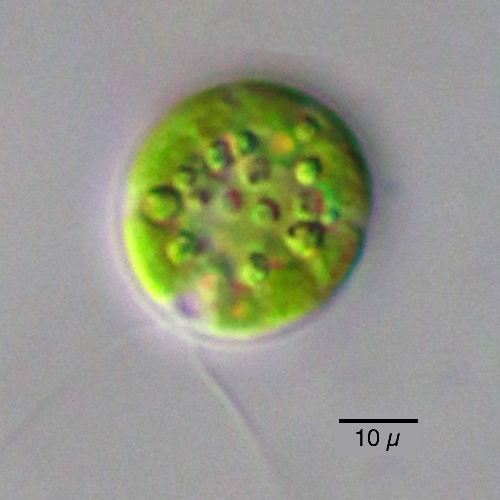
2. The Chlamydomonas Breaststroke Moving to biology, they modeled Chlamydomonas, an algae that swims using two flagella in a breaststroke pattern. By clamping the model at one end, they observed that the “odd” component of the elasticity peaked exactly at the wavenumber of the flagellum’s beat. This confirmed that odd elasticity was the driving force behind the algae’s asymmetric stroke.
3. Human Sperm and the “Noisy Limit Cycle” Using experimental data from human sperm, the team used Principal Component Analysis (PCA) to map the flagellum’s complex motion into a simpler 2D “shape space”.
They found that the sperm’s beat forms a “limit cycle” a stable, repeating loop in this shape space. However, biological systems are messy. The sperm data showed a “noisy limit cycle,” where the beat pattern fluctuates due to internal biological noise.
Thermodynamics of the Microscopic
The study went even deeper, linking this “odd” mechanics to the laws of thermodynamics. By applying gauge-field formulation (a concept borrowed from particle physics), they calculated that the swimming velocity is proportional to the “flux” or area enclosed by this limit cycle in shape space.
When they factored in the “noise” of the sperm’s beat, they discovered a link to entropy. The “odd elasticity” is directly responsible for the system’s entropy production the thermodynamic cost of breaking the symmetry of equilibrium. Essentially, the sperm “pays” for its violation of Newton’s law with entropy, generated by the metabolic energy it consumes.
Why It Matters
This research offers a unified framework for “active matter physics”. It proves that the chaotic swimming of a sperm cell and the theoretical motion of odd-elastic materials are governed by the same non-reciprocal mathematics.
The implications extend beyond biology. Engineers designing micro-robots for drug delivery face the same “viscosity trap” as sperm. By programming “odd elasticity” into artificial materials—creating soft robots that internally cycle energy we could build microscopic machines that swim through our bloodstream with the efficiency of nature’s most persistent travelers.
REFERENCES:
Ishimoto, K., Moreau, C., & Yasuda, K. (2023). Odd Elastohydrodynamics: Non-Reciprocal Living Material in a Viscous Fluid. PRX Life, 1, 023002. DOI: 10.1103/PRXLife.1.023002