





Monday, May 18, 2026
SAVED POSTS
  • Login
  • Register
RathBiotaClan
No Result
View All Result
  • HOME
  • HEALTH SCIENCE

    TRENDING ON HEALTH (TOP)

    Cycling Linked to Lower Dementia Risk in Study of Nearly 480,000 Adults

    First oral GLP-1 weight-loss pill approved a new era for accessible treatment

    Chewing gum releases thousands of microplastic particles directly into your mouth with every piece you chew

    Single-Cell Study of Over a Million Immune Cells Reveals Why Women Are More Prone to Autoimmune Disease

    NOW ON AIR (RBC)

    A new study has found that men’s brains shrink faster than women’s as they age.
    NEUROSCIENCE

    12,638 MRI Scans Confirm Men’s Brains Shrink Faster in PNAS Study

    May 14, 2026
    ENVIRONMENTAL SCIENCE

    Volcanic Eruptions Can Destroy Their Own Methane — Tonga’s Plume Shows How

    May 13, 2026
    3 men standing on rocky shore during daytime
    MOLECULAR BIOLOGY

    For Future Space Missions, Molecular Ecology Finally Offers a Clear Biosignature Target

    May 12, 2026
    Babies Yawn in the Womb
    DEVELOPMENTAL BIOLOGY

    Scientists Say Babies May Learn to Yawn Before Birth

    May 11, 2026
  • NEUROSCIENCE
    • PHYSIOLOGY
    • IMMUNOLOGY
    • CANCER
  • DISCOVERIES
    • SPOTLIGHTS
    • STUDENT PORTAL
    • SCIENCE FEATURED
  • MOLECULAR BIOLOGY
    • GENETICS
    • BIOTECHNOLOGY
    • BIOINFORMATICS
    • BIOCHEMISTRY
    • BIOPHYSICS
  • ZOOLOGY & ECOLOGY
    • ENVIRONMENTAL SCIENCE
    • ECOLOGY
    • EVOLUTION
  • MICRO & PLANT SCIENCE
    • MICROBIOLOGY
    • CELL BIOLOGY
    • DEVELOPMENTAL BIOLOGY
  • PSYCHOLOGY
RathBiotaClan
RathBiotaClan
No Result
View All Result
Home ECOLOGY

Europe’s Late Neanderthals Traced to a Single Population in Southwestern France

Staff Writer by Staff Writer
April 3, 2026
in ECOLOGY
Reading Time: 4 mins read
0
A A
0

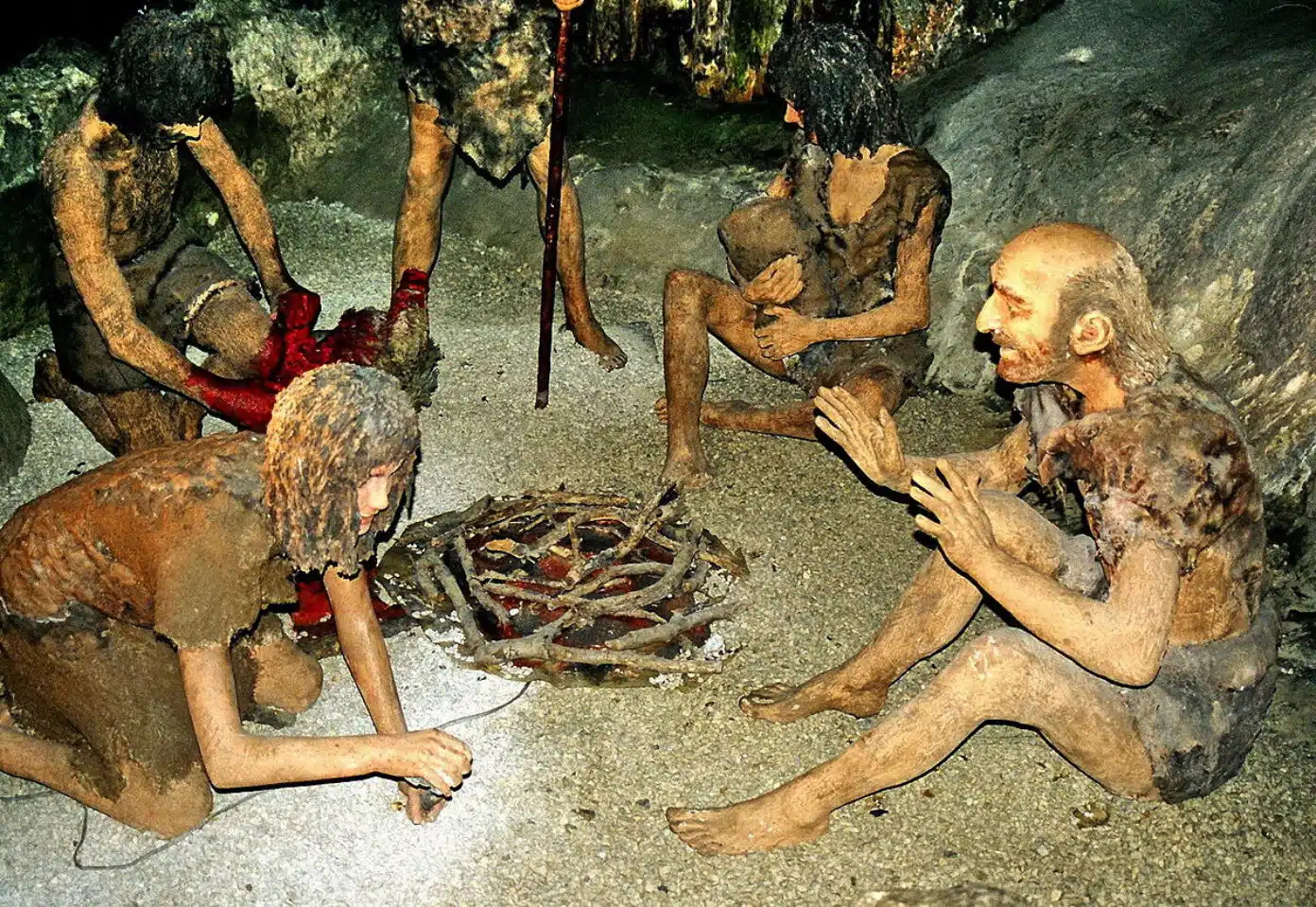
A new genetic study of Neanderthal remains found that nearly all Late Neanderthals in Europe descended from one lineage that diversified around 65,000 years ago, most likely in what is now southwestern France, following a major population contraction driven by glacial conditions.

Neanderthals occupied Europe for roughly 360,000 years before disappearing around 40,000 years ago. Despite sustained research effort, the population history leading up to that disappearance has remained poorly understood. Prior studies established that some degree of genetic continuity existed among European Neanderthals from at least 120,000 years ago and that multiple diversification events occurred over that span. It had also been proposed that a population turnover preceded the emergence of what researchers call Late Neanderthals those living roughly between 60,000 and 40,000 years ago but the timing, extent, and geographic location of that event were not established. As Professor Cosimo Posth of the Senckenberg Centre for Human Evolution and Palaeoenvironment at the University of Tübingen, who led the research, noted: “We have evidence that Neanderthals inhabited Europe continuously between 400,000 and 40,000 years ago. However, we have only fragmentary details of their population history.”

Earlier ancient DNA work had established that Neanderthals were genetically distinct from anatomically modern humans, that limited interbreeding occurred between the two groups, and that regional genetic diversity existed among Neanderthal populations across Europe and western Asia. What had not been characterized in detail was the specific demographic structure of the final 20,000 years of Neanderthal existence in Europe.

The team sequenced mitochondrial DNA (mtDNA) from ten Neanderthal individuals across six archaeological sites in Belgium, France, Germany, and Serbia, and analyzed these alongside 49 previously published Neanderthal mtDNA sequences. Mitochondrial DNA is inherited through the maternal line and captures only one lineage of an individual’s ancestry. As first author Charoula M. Fotiadou, a researcher in Posth’s group at the University of Tübingen, explained: “Mitochondrial DNA does not contain nearly as much genetic information as the entire genome of a human being, but it usually survives longer and is easier to obtain.”

ADVERTISEMENT

The genetic data were integrated with archaeological site records from the ROAD database, a large-scale dataset documenting Neanderthal presence across western Eurasia, compiled by the ROCEEH project (The Role of Culture in Early Expansions of Humans). Phylogenetic analysis and molecular dating were applied to establish the timing and branching structure of the mtDNA lineages. Co-author Jesper Borre Pedersen, also part of the ROCEEH project, described the value of this approach: “This allowed us to combine the two lines of evidence and reconstruct the demographic history of Neanderthals in terms of space and time.”

READ ALSO

Fossil Penguins From New Zealand Reveal Stages of the Birds’ Long Evolutionary History

Scientists spot signs of cannibal killer whales in Russian waters

Remarkably, nearly all Late Neanderthal individuals across Europe belong to a single mtDNA lineage that diversified recently, confirming a large-scale genetic replacement. The analyses placed the origin of this lineage at approximately 65,000 years ago in southwestern France. During the harsh climatic conditions of the Ice Age around 75,000 years ago, archaeological sites declined in number and became increasingly concentrated in southwestern Europe, consistent with a population retreating to a glacial refugium in that region. Professor Posth stated: “Our data enabled us to reconstruct geographically that Neanderthals retreated to what is now southwestern France. There, around 65,000 years ago, a new population emerged and later spread across the whole of Europe.”

ADVERTISEMENT

The researchers also found that these Neanderthals later suffered a sharp decline in population around 45,000 years ago, reaching a minimum around 42,000 years ago shortly before Neanderthals became extinct altogether.

The authors concluded that the high genetic homogeneity observed among Late Neanderthals was the result of this contraction-and-expansion sequence, with climate as a likely contributing driver. The study does not identify a cause for the final extinction, nor does it address the role of contact with modern humans in the population’s decline.

The primary limitation the researchers noted is the use of mitochondrial DNA alone. Because mtDNA is maternally inherited and represents only a fraction of an individual’s total genetic history, it cannot capture the full complexity of population structure or admixture events. The study is also geographically bounded to western Eurasia, and the sample, while the largest mtDNA dataset yet assembled for this analysis, remains small relative to the span of time and territory involved. The geographic placement of the refugium in southwestern France is a reconstruction based on the convergence of genetic and archaeological signals, not a direct observation.

ADVERTISEMENT

Reference:

Charoula M. Fotiadou, Jesper Borre Pedersen, Hélène Rougier, Mirjana Roksandic, Maria A. Spyrou, Kathrin Nägele, Ella Reiter, Hervé Bocherens, Andrew W. Kandel, Miriam N. Haidle, Timo P. Streicher, Nicholas J. Conard, Flora Schilt, Ricardo Miguel Godinho, Thorsten Uthmeier, Luc Doyon, Patrick Semal, Johannes Krause, Alvise Barbieri, Dušan Mihailović, Isabelle Crevecoeur, and Cosimo Posth. “Archaeogenetic insights into the demographic history of Late Neanderthals.” Proceedings of the National Academy of Sciences, Vol. 123, No. 13, e2520565123 (2026).
  • Share on WhatsApp (Opens in new window) WhatsApp
  • Share on Facebook (Opens in new window) Facebook
  • Share on Reddit (Opens in new window) Reddit
  • Share on X (Opens in new window) X
  • Print (Opens in new window) Print
Staff Writer

Staff Writer

Related Posts

The oldest penguin species yet discovered, Daniadyptes primaevus, was a flightless bird that spent much of its time in the ocean, just like modern penguins. However, fossil evidence of the species’ long beaks suggests that it used hunting practices more like those of modern seabirds, such as cormorants, which stay near the water’s surface because they cannot swallow their prey underwater. Traces of the many varieties of ancient penguins that lived in New Zealand are al- lowing paleontologists to track their evolution into the semiaquatic birds found today.
DISCOVERIES

Fossil Penguins From New Zealand Reveal Stages of the Birds’ Long Evolutionary History

May 1, 2026
Cannibal killer whales in Russian waters
ECOLOGY

Scientists spot signs of cannibal killer whales in Russian waters

April 30, 2026
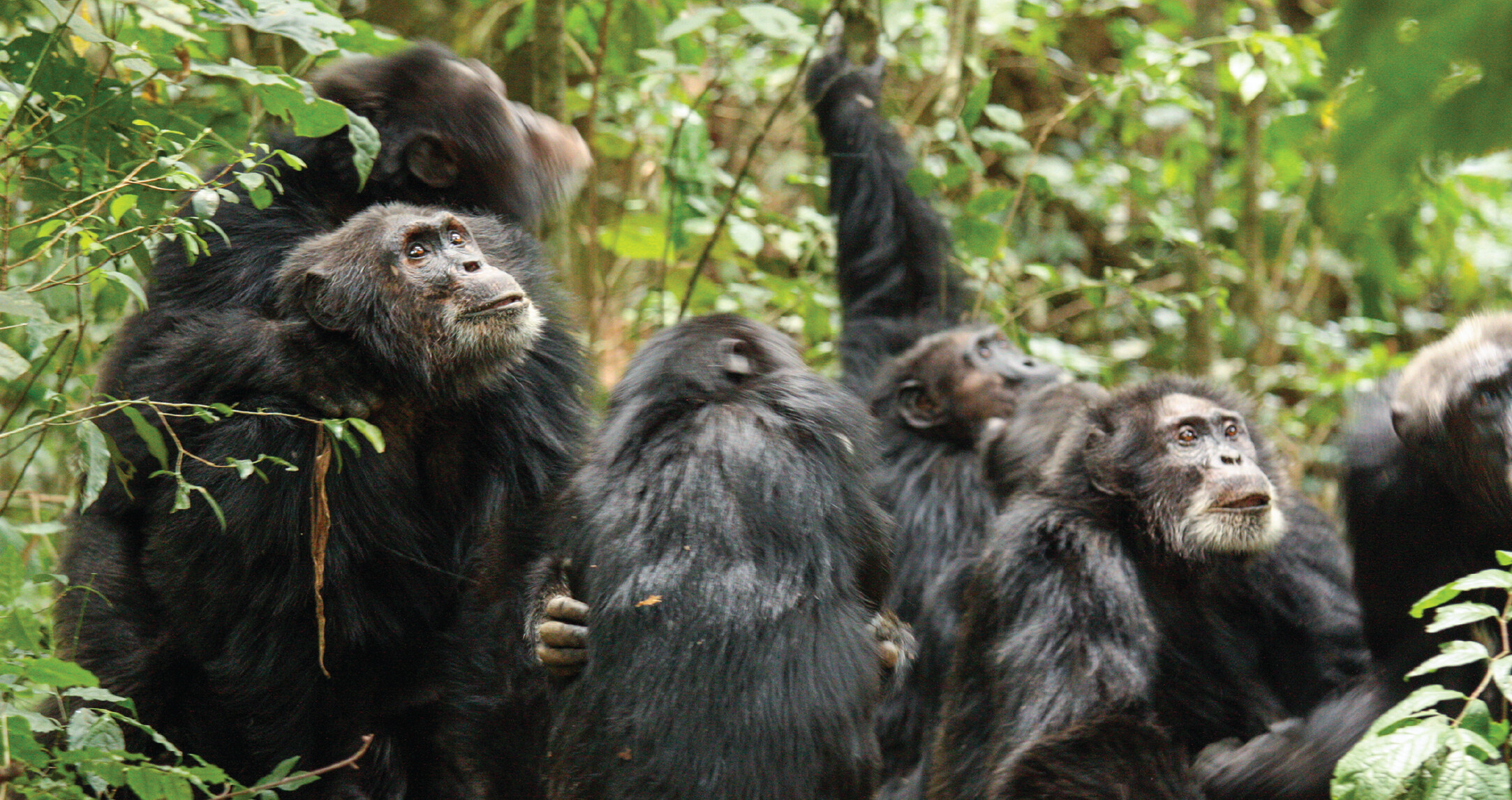
Chimpanzees of the Ngogo community in Uganda divided into two groups that clashed aggressively with each other.PHOTO: A. A. SANDEL ET AL.
ECOLOGY

Chimpanzee Group Split Turns Violent in Uganda Study

April 22, 2026

POPULAR NEWS

Chewing gum releases thousands of microplastic particles directly into your mouth with every piece you chew

Chewing gum releases thousands of microplastic particles directly into your mouth with every piece you chew

by Shibasis Rath
May 8, 2026
0

Microplastics are turning up in places researchers never expected: deep-sea sediments, Arctic ice, and human blood. Now, a UCLA pilot...

Yelling Isn’t Just Yelling: How a Hostile Home Rewires a Child’s Brain for Constant Alert

Yelling Isn’t Just Yelling: How a Hostile Home Rewires a Child’s Brain for Constant Alert

by Shibasis Rath
March 8, 2026
0

To a parent in the heat of the moment, a raised voice may feel like simple frustration. To a child...

a group of gen Z kids walking down a street

Is Gen Z the First Generation Less Intelligent Than Their Parents?

by Shibasis Rath
February 5, 2026
0

Gen Z intelligence decline is emerging as a serious concern among neuroscientists and education researchers. For over a century, each...

Whole Brain Emulation Achieved: Scientists Run a Fruit Fly Brain in Simulation

by Shibasis Rath
March 9, 2026
0

Scientists have copied an entire biological brain neuron by neuron and synapse by synapse and made it control a simulated...

Global Sperm Counts Have Dropped 50% in 50 Years Now 128 Men Are Racing Their Way to a $100,000 Prize to Prove the Point

Global Sperm Counts Have Dropped 50% in 50 Years Now 128 Men Are Racing Their Way to a $100,000 Prize to Prove the Point

by Staff Writer
May 5, 2026
0

A group of technology entrepreneurs is staging a competitive event in San Francisco in which semen samples from 128 men...

EDITOR CHOICE‘S

  • All
  • NEWS
  • SPOTLIGHTS
A new study has found that men’s brains shrink faster than women’s as they age.

12,638 MRI Scans Confirm Men’s Brains Shrink Faster in PNAS Study

by Staff Writer
May 14, 2026
0

A large-scale analysis of brain scans taken over time has found that men's brains shrink faster than women's across a...

Volcanic Eruptions Can Destroy Their Own Methane — Tonga’s Plume Shows How

Volcanic Eruptions Can Destroy Their Own Methane — Tonga’s Plume Shows How

by Shibasis Rath
May 13, 2026
0

A study published in Nature Communications analyzed the Hunga Tonga-Hunga Ha'apai volcano eruption's impact on methane in the atmosphere. It...

3 men standing on rocky shore during daytime

For Future Space Missions, Molecular Ecology Finally Offers a Clear Biosignature Target

by Shibasis Rath
May 12, 2026
0

When the next generation of probes scoops up dust from the icy shell of Europa or the surface of Mars,...

Babies Yawn in the Womb

Scientists Say Babies May Learn to Yawn Before Birth

by Shibasis Rath
May 11, 2026
0

Mothers can spread yawns to their yet-to-be-born offspring during pregnancy, researchers report May 5 in Current Biology  the first empirical evidence...

ADVERTISEMENT

RathBiotaClan – RBC

RathBiotaClan – Connecting Research To Reality

Your trusted source for life science news, biology research & discoveries. Covering neuroscience, genetics, ecology, and more — connecting research to reality.

Privacy Policies

Contact Us

About Us

Editorial Standards

Latest Posts

  • 12,638 MRI Scans Confirm Men’s Brains Shrink Faster in PNAS Study
  • Volcanic Eruptions Can Destroy Their Own Methane — Tonga’s Plume Shows How
  • For Future Space Missions, Molecular Ecology Finally Offers a Clear Biosignature Target
  • Scientists Say Babies May Learn to Yawn Before Birth

SHIBASIS RATH

Contact Mail

rathbiotaclan@gmail.com

No Result
View All Result
MSME (Udyam) Certified Science Platform
Govt. of India

Get Us On PlayStore

playstore app for rathbiotaclan
  • About Us
  • Advertise With Us
  • Cancellation and Refund Policy
  • Contact Us
  • Contribute
  • Editorial Standards
  • Home
  • Pricing Details
  • Privacy Policies
  • Shipping Policy
  • Terms & Conditions

© 2026 RathBiotaClan. All rights reserved.

Welcome Back!

Sign In with Google
OR

Login to your account below

Forgotten Password? Sign Up

Create New Account!

Sign Up with Google
OR

Fill the forms bellow to register

*By registering into our website, you agree to the Terms & Conditions and Privacy Policy.
All fields are required. Log In

Retrieve your password

Please enter your username or email address to reset your password.

Log In

Add New Playlist

No Result
View All Result
  • HOME
  • HEALTH SCIENCE
  • NEUROSCIENCE
    • PHYSIOLOGY
    • IMMUNOLOGY
    • CANCER
  • DISCOVERIES
    • SPOTLIGHTS
    • STUDENT PORTAL
    • SCIENCE FEATURED
  • MOLECULAR BIOLOGY
    • GENETICS
    • BIOTECHNOLOGY
    • BIOINFORMATICS
    • BIOCHEMISTRY
    • BIOPHYSICS
  • ZOOLOGY & ECOLOGY
    • ENVIRONMENTAL SCIENCE
    • ECOLOGY
    • EVOLUTION
  • MICRO & PLANT SCIENCE
    • MICROBIOLOGY
    • CELL BIOLOGY
    • DEVELOPMENTAL BIOLOGY
  • PSYCHOLOGY
  • Login
  • Sign Up
SAVED POSTS

© 2026 RathBiotaClan. All rights reserved.

This website uses cookies. By continuing to use this website you are giving consent to cookies being used. Visit our Privacy and Cookie Policy.