Drinking coffee on an empty stomach is a morning ritual for millions but one that has come under intense scrutiny in wellness circles. Viral claims suggest that starting the day with black coffee before any food can dramatically raise levels of cortisol, the body’s primary stress hormone, potentially fuelling anxiety, jitters and energy crashes later in the day. But what does the scientific evidence actually tell us?
What exactly is the cortisol awakening response – and why does timing matter?
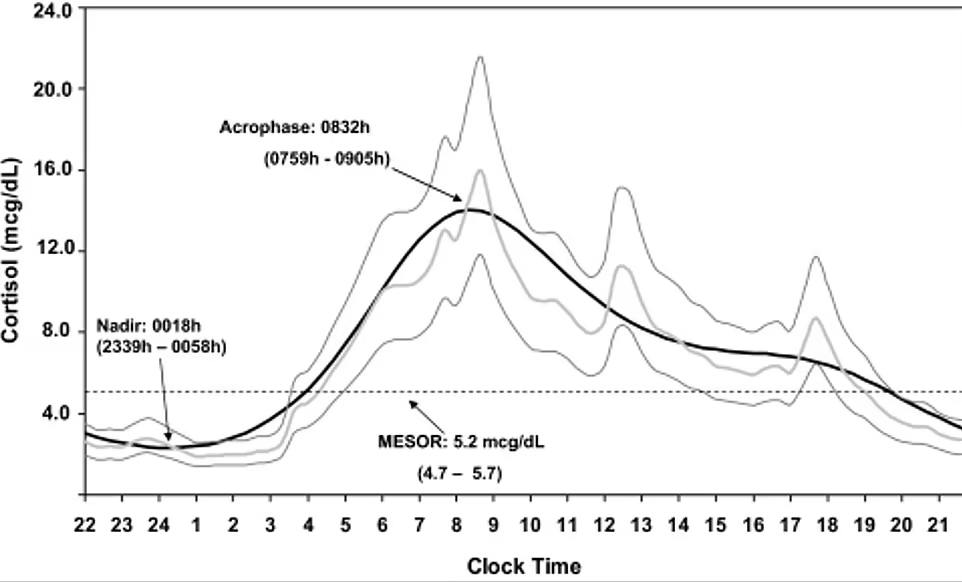
Cortisol follows a pronounced circadian rhythm. Levels begin rising in the final hours of sleep and reach their daily peak 30–45 minutes after waking a phenomenon known as the cortisol awakening response (CAR). This natural surge helps mobilise energy and sharpen alertness. The question is whether layering a potent stimulant like caffeine precisely on top of that peak pushes the hypothalamic pituitary adrenal (HPA) axis HPA axis into overdrive.
Does drinking coffee on an empty stomach actually raise cortisol levels?
The short answer is: it depends on your habits.
Landmark research published in Psychosomatic Medicine (Lovallo et al., 2005) showed that, after five days of caffeine abstinence, a moderate dose (equivalent to two strong cups) produced a robust, sustained elevation in plasma cortisol across the entire waking day (p < 0.0001). Yet after five days of regular intake, morning tolerance developed: the first cup no longer triggered a measurable spike – although a second dose in the early afternoon still raised levels significantly (p = 0.02–0.002).
A complementary randomised crossover trial in the Journal of Nutrition (Gavrieli et al., 2011) added a crucial detail: when healthy men drank caffeinated coffee (≈200–250 mg caffeine) with breakfast, cortisol remained significantly higher from 60 minutes onward compared with water or decaf (intervention effect p = 0.04). In other words, food did not block the effect; it simply changed its shape – preventing the normal post-meal decline.
What did the University of Bath study actually reveal – and what did it not measure?

The paper most frequently mis-cited in this debate is the 2020 British Journal of Nutrition study from James Betts’ team at the University of Bath (Smith et al.). After a night of hourly sleep fragmentation, participants drank strong black coffee 30 minutes before a sugary breakfast-mimicking drink. The result: a roughly 50 % larger blood-glucose excursion. Crucially, no cortisol was measured. The authors explicitly framed the finding as one of impaired glucose tolerance after poor sleep – not a direct demonstration of a cortisol “spike on an empty stomach”.
How does an empty stomach change caffeine absorption and subjective stress?

Caffeine is absorbed more rapidly from an empty stomach, producing a sharper plasma peak. For caffeine-naïve individuals, those prone to anxiety, or people who slept poorly, this faster uptake can amplify the subjective experience of jitteriness and racing heart – even when objective cortisol changes remain modest. The combination of the natural CAR peak plus rapid caffeine delivery simply feels more intense.
Who benefits most from eating before their morning coffee?
Evidence points to clear practical advice for specific groups:
- People who experience morning anxiety or panic symptoms
- Anyone managing blood-sugar or insulin sensitivity
- Individuals who notice mid-morning energy crashes
- Shift workers or those with frequent poor sleep
For the majority of habitual coffee drinkers in good health, the body’s partial tolerance to morning caffeine means the risk is low.
Should you change your morning routine?

The data do not support abandoning coffee. Systematic safety reviews confirm that up to 400 mg of caffeine daily (roughly four cups) poses no major risk for healthy adults. Yet both the metabolic data from Bath and the hormonal data from Lovallo and Gavrieli converge on a simple, low-effort optimisation: eat a balanced breakfast containing protein and complex carbohydrate before or with your coffee. This moderates the speed of caffeine absorption and supports more stable blood sugar and hormonal profiles particularly valuable after disrupted sleep.

Ultimately, biology is individual. Track how you feel. If drinking coffee on an empty stomach leaves you wired then wiped, simply swap the order. The peer-reviewed record shows your morning brew can remain a pleasure; it simply doesn’t have to be the very first thing your metabolism encounters.
References
- Lovallo WR et al. (2005) Caffeine stimulation of cortisol secretion across the waking hours in relation to caffeine intake levels. Psychosomatic Medicine 67(5):734–739.
- Gavrieli A et al. (2011) Caffeinated coffee does not acutely affect energy intake, appetite, or inflammation but prevents serum cortisol concentrations from falling in healthy men. Journal of Nutrition 141(4):703–707.
- Smith HA et al. (2020) Glucose control upon waking is unaffected by hourly sleep fragmentation during the night, but is impaired by morning caffeinated coffee. British Journal of Nutrition 124(10):1114–1120.