





Avian migration stands as one of nature’s most astounding displays of biological adaptation. Birds undergo metabolic and physical shifts that far exceed typical human training regimes. These extreme endurance tests require birds to radically modify their physiology, body chemistry, and physical structure. They must traverse immense distances between their breeding and wintering habitats.
The High Stakes of Migration
The energy demands of migration are vast. There is very little room for error. Migratory routes expose birds to severe weather, daunting navigational puzzles, and the constant need to find enough food. The peril is evident in the statistics. In North America alone, about 2.6 billion birds disappear annually between fall and spring migration cycles. Researchers attribute many of these losses directly to the hazardous journey itself.
The Bar-Tailed Godwit: Master of Long-Distance Flight
An Unmatched Champion
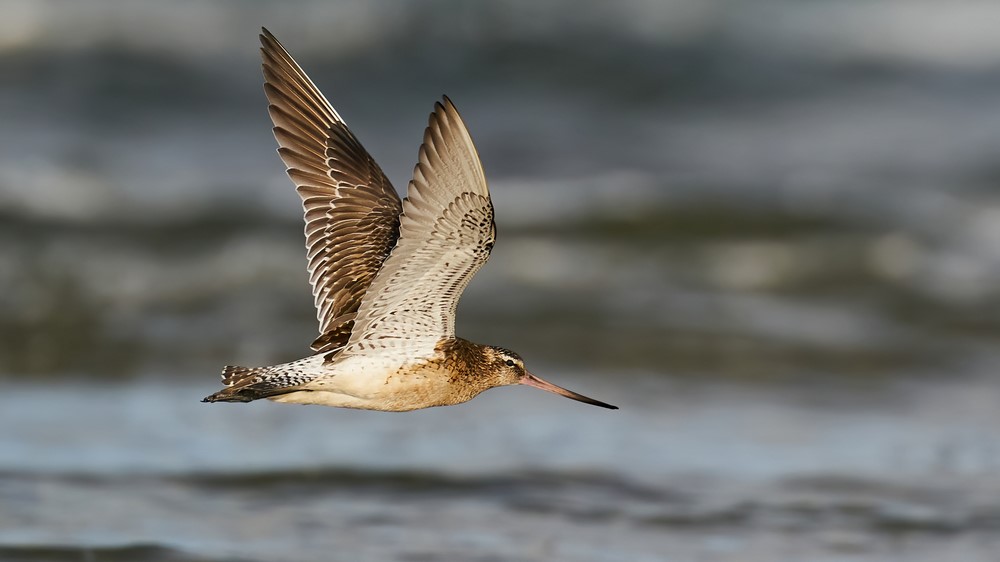
The bar-tailed godwit (Limosa lapponica) stands out among winged adventurers. This robust shorebird undertakes the longest non-stop flight of any animal on record. The bird must remain airborne for more than a week without any access to food, water, or rest. To survive this trans-oceanic transit, the bird must literally consume parts of itself.
The species includes at least five recognized subspecies. Each follows its own specific migratory path between the Arctic and the Southern Hemisphere.
What is the World Record for the Longest Non-Stop Bird Flight?
The bar-tailed godwit holds the undisputed world record for the longest non-stop migratory flight. Researchers have definitively measured this achievement. While scientists traditionally cited the distance at 11,000 kilometers (6,800 miles), modern tracking technology has documented even more staggering journeys.
When September arrives, Arctic temperatures begin to plummet. The godwits initiate their southward journey. They migrate the entire length of the ocean without making any intermediate pit stops. They finally make landfall in destinations as distant as Australia or New Zealand.
The 2022 Record-Breaking Flight
In 2022, satellite tracking provided evidence of a new, phenomenal record. Researchers tracked one bar-tailed godwit flying an astonishing 13,560 kilometers (8,435 miles). The bird completed this monumental non-stop flight between Alaska and Tasmania. It took only 11 days to achieve, surpassing the previous record of 13,050 km.
Researchers from the Pūkorokoro Miranda Naturalists’ Trust documented this new record. They have spent years monitoring the New Zealand cohort of these birds using satellite trackers. The record-breaking godwit was a juvenile born during the Alaskan spring of that year.
Intriguingly, this young bird did not proceed to New Zealand. Instead, it executed a sharp right turn once it reached the Tasman Sea. It ultimately landed in Ansons Bay, Tasmania.
The Significance of This Achievement
Sean Dooley of BirdLife Australia confirmed the subspecies involved. Limosa lapponica baueri has a wide range across coastal eastern Australia. Tasmania represents the furthest point these birds typically travel from their Arctic breeding territories.
Dooley suggested this incredible distance record might eventually be broken. However, he believes another bird is unlikely to surpass it by any significant margin.
Fueling the Journey: Extreme Fat Storage
How Do Bar-Tailed Godwits Store Over 50% of Their Body Weight in Fat?
Bar-tailed godwits must accumulate immense reserves of fat. This provides the necessary fuel for their non-stop, trans-Pacific marathon flights. The preparation begins with a neurological shift. Shortening daylight hours typically trigger this change. This initiates a critical period known as hyperphagia.
During this phase, the birds engage in excessive eating. They do this for two weeks or more to maximize pre-migratory fat storage. Godwits gorge on their energy-rich diet. This includes small crustaceans, snails, and bristle worms. They metabolize this food and store it as fat.
Why Fat is the Perfect Fuel
Birds rely on fat as their primary fuel source. This is an essential adaptation for endurance flight. In contrast, humans predominantly use carbohydrates. Fat offers distinct advantages for birds.
Fat is significantly lighter and less bulky than equivalent amounts of stored protein or carbohydrates. This is crucial for a small body that must remain airborne for days. Furthermore, fat contains more energy per gram than either protein or carbohydrates.
Record-Breaking Fat Levels
In 1998, scientists analyzed a subspecies, Limosa lapponica baueri. These birds had tragically died after colliding with a radar dome in Alaska. They had just commenced their migration. The birds exhibited astonishingly high fat stores.
Over half of their total body mass was composed of fat. This reached up to 55 percent. Scientists noted this is among the highest levels of fat accumulation ever recorded in any bird species. This tremendous reserve is the sole power source enabling their 11-day, 13,560-kilometer non-stop journey.
Radical Body Restructuring
What is Autophagy?
Bar-tailed godwits possess an astonishing ability. They can shrink and subsequently re-grow their internal organs. This accommodates the staggering volume of fat and distributes it efficiently.
Flight is the most energy-intensive form of locomotion. The bird’s body must strategically prioritize fuel. Before departing the Arctic, godwits break down and reabsorb components of their internal “metabolic machinery.” They eliminate parts not crucial while airborne.
How Much Do Their Organs Shrink?
The analysis of the godwits that died in Alaska revealed dramatic changes. Along with their massive fat reserves, their organs were drastically shrunken. This specifically affected their kidneys, intestines, livers, and gizzards.
Autophagy achieves this process of recycling unnecessary bodily tissue. The term derives from Greek words meaning “self-eating.” Autophagy is a fundamental process that allows the body to recycle its own tissues. Intense physiological stress often activates it.
For the bar-tailed godwit, this adaptation involves absorbing approximately 25 percent of tissue. This comes from their digestive tract, liver, and kidneys. By shrinking these organs, the bird creates vital internal space for fat storage. It also redirects energy to the critical flight muscles.
The Physical Cost
Flying 13,560 kilometers without landing carries a clear physiological cost. The birds lose the bulk of their gizzards and potentially half of their liver.
While the digestive organs shrink dramatically, other essential organs remain robust. The study noted that the godwits maintained strong, sturdy hearts and breast muscles. These provide the primary power source for flight. They are crucial for distributing the increased oxygen and energy required during the extended flight.
Sleeping on the Wing
How Do Birds Sleep While Flying Long Distances?
For human endurance athletes, the need for sleep is often the most difficult barrier. For migratory birds, however, a neurological shift allows them to adapt. They can adopt nocturnal habits and drastically reduce their sleep time.
Birds can rest while remaining airborne through a highly specialized process. For instance, Swainson’s Thrushes complete 3,000-mile migrations. They can enter a brief, sleep-like state, sometimes for only about nine seconds at a time.
Unihemispheric Slow-Wave Sleep
They achieve this using unihemispheric slow-wave sleep. This mechanism allows them to keep one half of their brain active and alert. This is necessary for navigation or avoiding collisions. Meanwhile, the other half rests.
Paul Bartell, a professor of avian biology, considers this adaptation vital. It’s as important as their metabolic changes. Bartell notes that birds undergoing this transition are “somehow resilient” to the detrimental effects of staying up almost all night. In fact, he suggests they perform better in this migratory state.
Burning Muscle as Emergency Fuel
When human athletes exhaust their fuel, dehydration and starvation halt their performance. Birds, however, possess a desperate final contingency plan. They can burn their own muscles (protein) for energy. Some species even use this strategically.
Wind tunnel experiments in 2011 involved Swainson’s Thrushes. These experiments showed that birds sometimes burn muscle seemingly “unnecessarily.” They do this to strategically extend their range. This ensures they can reach the most advantageous stopover sites.
However, scientists noted that burning muscle is highly risky. This is especially true if the bird cannot quickly recover the lost protein after it lands.
The Recovery Phase
How Fast Do Godwits Regrow Their Internal Organs?
Once these champion migrants reach their destination, rapid physiological recovery becomes their immediate priority. They must instantaneously begin to replenish their drastically depleted fat stores. They must regain lost protein and water. Perhaps most remarkably, they must stimulate their internal organs to grow back to full function.
This regrowth is a crucial component of the godwit’s biological cycle. After landing, their drastically shrunken organs quickly grow back to full size. This includes their livers, kidneys, gizzards, and intestines. This rapid recovery allows the godwit to resume normal feeding. It prepares them for the next migration cycle.
Recovery Timing Varies by Season
The urgency of this recovery process depends on the season.
Recovery After Spring Migration: The task is most urgent following the spring migration. Birds arrive at their breeding grounds and must immediately commence the demanding work of the breeding season. This includes establishing territories, attracting mates, and raising chicks.
Professor Bartell emphasized that birds “need to instantly start making territories and reproducing.” If a bird is delayed in finding food, it faces severe risk. Even a delay of “a couple hours after landing” can mean the bird cannot rapidly restore its body. In this case, it risks starving to death.
Recovery After Fall Migration: The stakes are generally lower when the birds arrive during the fall migration. Birds reaching warmer, tropical wintering areas typically find food more readily available. Professor McWilliams explained that their primary goal during winter is usually just to maintain body mass. They need to successfully make it through the season.
Regardless of the season, birds must restore significant body mass. This includes fat, water, and protein lost during the flight.
Threats and Conservation
What Are the Biggest Threats to Bar-Tailed Godwits?
Despite their extraordinary ability to remain airborne for over a week, bar-tailed godwits still face significant dangers. This protects them from many land-based threats. However, these specialized shorebirds face particular risks from human activity at critical refueling sites.
Natural Threats and Navigation
The migratory journey itself is inherently perilous. Birds must survive potentially devastating storms and cold snaps. While they are highly skilled navigators, their success often links to favorable atmospheric conditions.
Sean Dooley of BirdLife Australia noted that godwits are “definitely responsive to atmospheric conditions.” Researchers have tracked birds heading toward specific locations. Some encounter severe bad weather that forces them to backtrack a “long way.”
Although researchers have spotted some godwits resting on Pacific Islands, their survival relies heavily on their massive internal fat reserves. These sustain them across the immense open ocean.
Habitat Destruction at Refueling Stops
A critical and escalating human-caused threat emerges during the godwits’ return route north. When traveling back toward their Arctic breeding grounds, godwits utilize a longer route. They follow the Asian coast along with many other migratory species. They rely heavily on the Yellow Sea as a vital stopover point to rest and refuel.
However, widespread industrial development in this region has catastrophically degraded these coastal flats. This has devastated the migratory species that depend on them for survival. Although international agreements exist to protect wetlands, many key habitats remain severely threatened. The Ramsar Convention is designed to protect these areas, but enforcement varies.
Conservation Status Varies
The conservation status of the godwits varies by subspecies. The L. lapponica baueri subspecies (the record-breaker) is currently classified as only threatened. In stark contrast, their close relatives face more dire circumstances. The menzbieri subspecies migrate from Siberia to Northwestern Australia. They are categorized as critically endangered.
The Role of Satellite Tracking
Satellite tracking technology has fundamentally transformed scientific knowledge of these migrations. Previously, researchers “used to think they stopped en route” across the Pacific. However, tracking confirmed there are few, if any, suitable landing places for these shorebirds mid-Pacific.
The technology has not only confirmed the incredible non-stop distances. It has also highlighted which specific locations are absolutely essential for the godwits’ survival. The coastal flats are particularly critical.
Differences in Juvenile and Adult Timing
The timing of departure also plays a crucial role in survival. Adult godwits depart Alaska approximately four to six weeks before the juveniles begin their first journey. This difference means the younger birds have several extra weeks with reduced competition. They have better access to their primary food sources (molluscs and bristleworms).
Sean Dooley noted that this extended feeding period likely provides the critical time needed. The young birds need this time to fuel up and pack on the enormous fat stores necessary. This enables them to attempt their first epic, trans-oceanic flight.