




Sunday, June 21, 2026
SAVED POSTS
  • Login
  • Register
RathBiotaClan
No Result
View All Result
  • HOME
  • HEALTH SCIENCE

    TRENDING ON HEALTH (TOP)

    For People Antidepressants Never Helped, a 30-Minute Home Session Is Now FDA-Approved

    Scientists Say Your Next Tube of Toothpaste Could Be Made From Human Hair

    Your Lungs, Liver, and Pancreas Also Age Faster When You Sleep Wrong

    Cycling Linked to Lower Dementia Risk in Study of Nearly 480,000 Adults

    NOW ON AIR (RBC)

    NEUROSCIENCE

    Step-Synchronized Brain Stimulation Reduces Falls in Small Parkinson’s Trial

    June 16, 2026
    NEWS

    A Father’s Touch in Infancy Can Shape a Child’s Health for Years, New Science Explains Why

    June 9, 2026
    MutExpress
    BIOINFORMATICS

    South Asian Patients Have Been Left Out of Cancer Genomics for Decades & MutExpress-India Is Changing That

    June 8, 2026
    Biodiversity Loss
    ECOLOGY

    Biodiversity Loss Could Bankrupt Nations And Wall Street Hasn’t Noticed Yet

    June 5, 2026
  • NEUROSCIENCE
    • PHYSIOLOGY
    • IMMUNOLOGY
    • CANCER
  • DISCOVERIES
    • SPOTLIGHTS
    • STUDENT PORTAL
    • SCIENCE FEATURED
  • MOLECULAR BIOLOGY
    • GENETICS
    • BIOTECHNOLOGY
    • BIOINFORMATICS
    • BIOCHEMISTRY
    • BIOPHYSICS
  • ZOOLOGY & ECOLOGY
    • ENVIRONMENTAL SCIENCE
    • ECOLOGY
    • EVOLUTION
  • MICRO & PLANT SCIENCE
    • MICROBIOLOGY
    • CELL BIOLOGY
    • DEVELOPMENTAL BIOLOGY
  • PSYCHOLOGY
RathBiotaClan
RathBiotaClan
No Result
View All Result
Home NEWS

Brains of Estuarine Dolphins Show Signs of Alzheimer’s Disease

Shibasis Rath by Shibasis Rath
October 9, 2025
in NEWS, SCIENCE FEATURED, ZOOLOGY
Reading Time: 5 mins read
0
A A
0
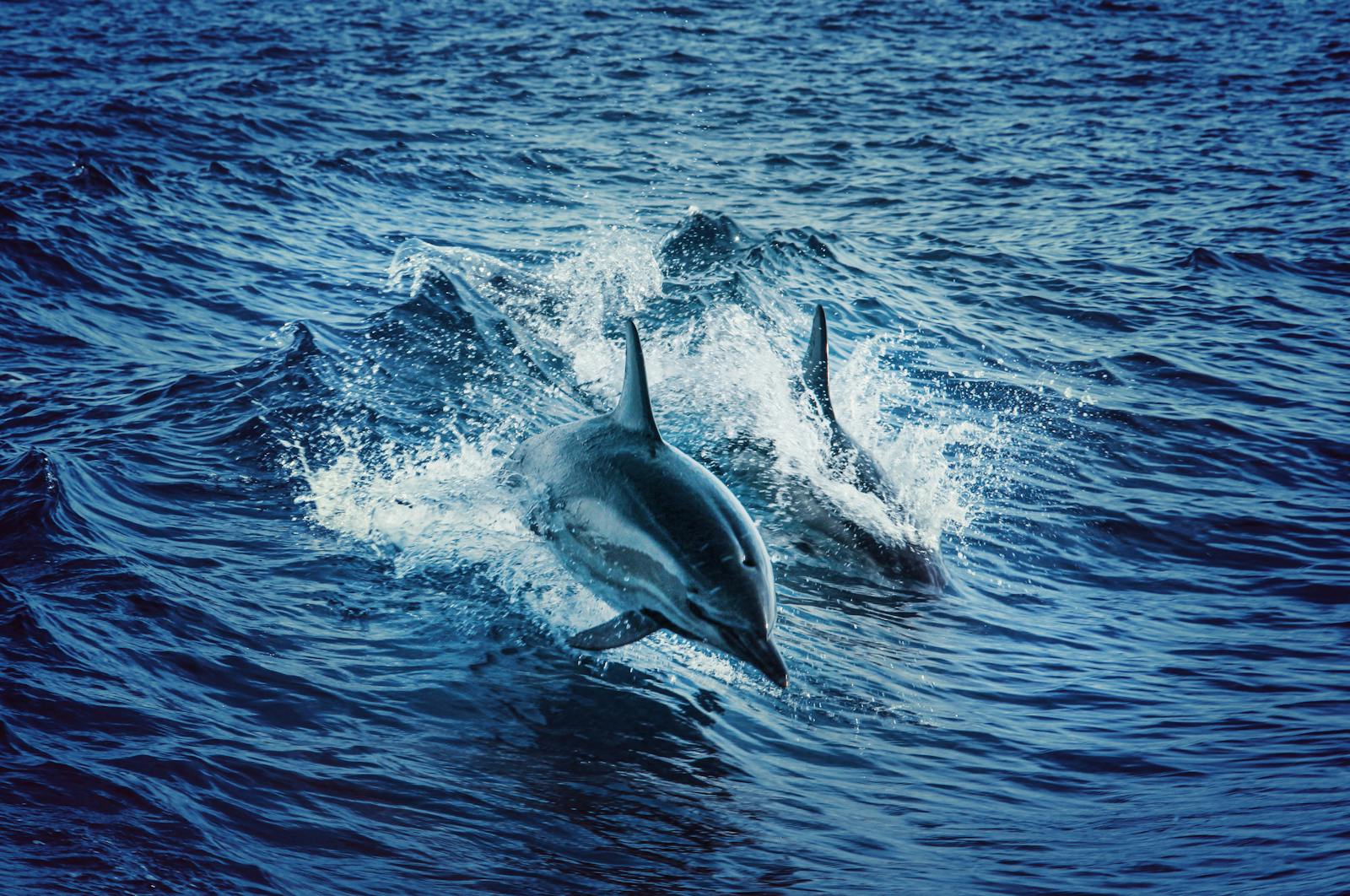
Two dolphins gracefully leap through the vibrant blue waters of the Atlantic Ocean, showcasing aquatic wildlife beauty.

A new study shows massive seasonal exposure to a specific neurotoxin originating from harmful algal blooms (HABs) accelerates Alzheimer’s disease (AD) like pathology in the brains of estuarine dolphins, potentially contributing to stranding events.

The research, published in Communications Biology in 2025, examined common bottlenose dolphins (Tursiops truncatus) found stranded in Florida’s Indian River Lagoon (IRL) between 2010 and 2019. The findings provide new insight into how converging factors such as HAB toxins and the natural development of AD pathology in dolphins impact brain health.

How Do Seasonal Algal Blooms Affect Toxin Levels in Dolphins?
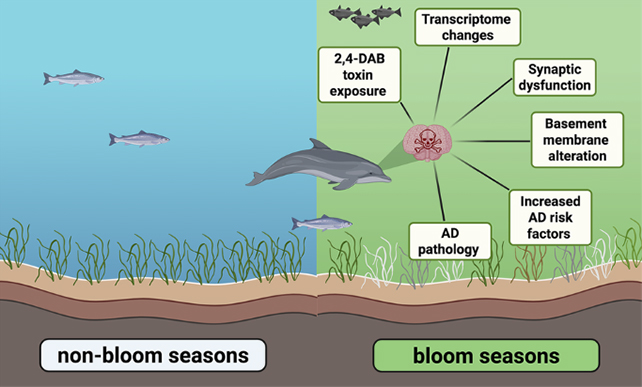
The study focused on the neurotoxin 2,4-diaminobutyric acid (2,4-DAB), which is produced by cyanobacteria, diatoms, and dinoflagellates. HABs in the IRL, often intensifying due to climate warming and nutrient pollution, typically occur during warm-weather bloom seasons (June–November).

ADVERTISEMENT

Researchers found an extreme difference in toxin concentration based on the date of stranding:

READ ALSO

Step-Synchronized Brain Stimulation Reduces Falls in Small Parkinson’s Trial

A Father’s Touch in Infancy Can Shape a Child’s Health for Years, New Science Explains Why

The median concentration of 2,4-DAB in the brains of dolphins stranded during bloom seasons was approximately 2,900 times more concentrated than in those stranded during non-bloom seasons (December–May).

2,4-DAB was detected in all dolphin cerebral cortex samples. The highest concentrations were recorded in dolphins stranded in June and August. This disproportionate seasonal exposure to 2,4-DAB is deemed evidence of the harmful effects of blooms filled with cyanobacteria and is linked to subsequent brain damage.

ADVERTISEMENT
Seasonal Comparison of 2,4-DAB Toxin Exposure in Dolphins
Bloom SeasonJune – November
Non-Bloom SeasonDecember – May
Toxin ConcentrationApprox. 2,900x higher during Bloom Season
Peak Concentration MonthsJune and August

Can Algal Blooms Cause Alzheimer’s-Like Brain Damage in Dolphins?

Dolphins are considered a natural model of Alzheimer’s disease (AD) because, like humans, they naturally develop hallmark neuropathological changes, including amyloid beta (Aβ) plaques and tau neurofibrillary tangles (NFTs), as they age. The study found that exposure to 2,4-DAB during bloom seasons exacerbates these issues, inducing concurrent AD-like neuropathological changes and elevated AD gene expression.

ADVERTISEMENT

Key molecular changes observed in dolphins stranded during bloom seasons included:

  • Differentially Expressed Genes: A total of 536 differentially expressed (DE) protein encoding genes were identified, with 420 upregulated and 116 downregulated.
  • Elevated AD Markers: Genes encoding for major AD hallmark changes, such as the amyloid-β precursor protein (APP), microtubule-associated protein tau (MAPT), and TAR DNA binding protein (TARDBP), were elevated with increased brain concentrations of 2,4-DAB and bloom season. This gene elevation was supported by physical pathology, including intracellular Aβ deposits, Aβ plaques, phosphorylated tau, and phosphorylated TDP-43 inclusions.
  • AD Risk Factors: Transcription of the AD risk factor gene apolipoprotein E (APOE) was increased, in some cases up to 6.5-fold. Other neurodegenerative markers, such as MT-ND1 (linked to mitochondrial dysfunction and early stage AD biomarker), were also increased.

How Does the Algal Neurotoxin Lead to Dolphin Strandings?

Gene enrichment analysis revealed critical functional impairments linked to the toxin exposure:

  • GABAergic Synapse Impairment: There was significant enrichment for impairment in GABAergic synapses. Dolphins stranded during bloom seasons showed decreased expression of glutamate decarboxylase (GAD), an enzyme essential for GABA synthesis. 2,4-DAB is known to act as a non-competitive inhibitor of GABA transaminase, potentially leading to neurotoxicity and elevated GABA levels in the synapse.
  • Blood-Brain Barrier Alteration: Upregulation was observed in transcripts associated with the laminin-3 complex. Laminins are part of the basement membrane and interact with integrins.15 The upregulation of the laminin-3 complex suggests a potential response to blood-brain barrier (BBB) injury and neuroinflammation in the dolphins.

These neurodegenerative changes—including the loss of navigational skills and memory—may be the mechanism leading to the stranding of the dolphins.

Are Algal Blooms a Risk for Alzheimer’s in Humans?

The findings underscore the significant health risks posed by HABs, which produce toxins that bio-magnify in the aquatic food web, affecting marine life, terrestrial mammals, and humans.

As dolphins are a sentinel species for toxic exposures in marine environments, researchers expressed concerns about potential human health issues associated with cyanobacterial blooms, especially as climate warming continues to intensify HABs. While the study focuses on dolphins, the Alzheimer’s-like shifts observed are fundamental, and previous research suggests cyanobacterial exposures may be a risk factor for neurodegeneration in humans, including dementia.

REFERENCE

NATURE: COMMUNICATION BIOLOGY
  • Share on WhatsApp (Opens in new window) WhatsApp
  • Share on Facebook (Opens in new window) Facebook
  • Share on Reddit (Opens in new window) Reddit
  • Share on X (Opens in new window) X
  • Print (Opens in new window) Print
Shibasis Rath

Shibasis Rath

"𝓒𝓸𝓷𝓷𝓮𝓬𝓽𝓲𝓷𝓰 𝓡𝓮𝓼𝓮𝓪𝓻𝓬𝓱 𝓣𝓸 𝓡𝓮𝓪𝓵𝓲𝓽𝔂" 𝓲𝓼𝓷'𝓽 𝓙𝓾𝓼𝓽 𝓪 𝓜𝓸𝓽𝓽𝓸 - 𝓘𝓽'𝓼 𝓜𝔂 𝓜𝓲𝓼𝓼𝓲𝓸𝓷

Related Posts

Step-Synchronized Brain Stimulation Reduces Falls in Small Parkinson’s Trial
NEUROSCIENCE

Step-Synchronized Brain Stimulation Reduces Falls in Small Parkinson’s Trial

June 16, 2026
A Father’s Touch in Infancy Can Shape a Child’s Health for Years, New Science Explains Why
NEWS

A Father’s Touch in Infancy Can Shape a Child’s Health for Years, New Science Explains Why

June 9, 2026
Soprano pipistrelle (Pipistrellus pygmaeus) emerging from a tree hollow at the moment of take-off.
ECOLOGY

Human-generated electromagnetic noise has long lasting effects on light orientation in bats

June 4, 2026

POPULAR NEWS

Chewing gum releases thousands of microplastic particles directly into your mouth with every piece you chew

Chewing gum releases thousands of microplastic particles directly into your mouth with every piece you chew

by Shibasis Rath
May 8, 2026
0

Microplastics are turning up in places researchers never expected: deep-sea sediments, Arctic ice, and human blood. Now, a UCLA pilot...

New Studys Says Gen Z is the least sexually active young cohort in modern recorded history

New Studys Says Gen Z is the least sexually active young cohort in modern recorded history

by Shibasis Rath
January 24, 2026
0

A generation that grew up with dating apps in their pockets, pornography a tap away, and sex discussed more openly...

Yelling Isn’t Just Yelling: How a Hostile Home Rewires a Child’s Brain for Constant Alert

Yelling Isn’t Just Yelling: How a Hostile Home Rewires a Child’s Brain for Constant Alert

by Shibasis Rath
March 8, 2026
0

To a parent in the heat of the moment, a raised voice may feel like simple frustration. To a child...

a group of gen Z kids walking down a street

Is Gen Z the First Generation Less Intelligent Than Their Parents?

by Shibasis Rath
February 5, 2026
0

Gen Z intelligence decline is emerging as a serious concern among neuroscientists and education researchers. For over a century, each...

Whole Brain Emulation Achieved: Scientists Run a Fruit Fly Brain in Simulation

by Shibasis Rath
March 9, 2026
0

Scientists have copied an entire biological brain neuron by neuron and synapse by synapse and made it control a simulated...

EDITOR CHOICE‘S

  • All
  • NEWS
  • SPOTLIGHTS
Step-Synchronized Brain Stimulation Reduces Falls in Small Parkinson’s Trial

Step-Synchronized Brain Stimulation Reduces Falls in Small Parkinson’s Trial

by Staff Writer
June 16, 2026
0

Researchers have reported encouraging results from a small feasibility study testing a new form of adaptive deep brain stimulation (aDBS)...

A Father’s Touch in Infancy Can Shape a Child’s Health for Years, New Science Explains Why

A Father’s Touch in Infancy Can Shape a Child’s Health for Years, New Science Explains Why

by Staff Writer
June 9, 2026
0

A study from Penn State University has revealed something startling beneath that simplicity those early interactions carry biological consequences that...

MutExpress

South Asian Patients Have Been Left Out of Cancer Genomics for Decades & MutExpress-India Is Changing That

by Staff Writer
June 8, 2026
0

The databases that underpin modern cancer genomics have a geography problem. The gnomAD database the gold standard for allele frequency...

Biodiversity Loss

Biodiversity Loss Could Bankrupt Nations And Wall Street Hasn’t Noticed Yet

by Staff Writer
June 5, 2026
0

Every year, governments borrow trillions of dollars to function. The interest rate they pay depends almost entirely on their credit...

ADVERTISEMENT

RathBiotaClan – RBC

RathBiotaClan – Connecting Research To Reality

Your trusted source for life science news, biology research & discoveries. Covering neuroscience, genetics, ecology, and more — connecting research to reality.

About Us

Privacy Policies

Contact Us

Editorial Standard

Latest Posts

  • Step-Synchronized Brain Stimulation Reduces Falls in Small Parkinson’s Trial
  • A Father’s Touch in Infancy Can Shape a Child’s Health for Years, New Science Explains Why
  • South Asian Patients Have Been Left Out of Cancer Genomics for Decades & MutExpress-India Is Changing That
  • Biodiversity Loss Could Bankrupt Nations And Wall Street Hasn’t Noticed Yet

SHIBASIS RATH

Contact Mail

rathbiotaclan@gmail.com

No Result
View All Result
MSME (Udyam) Certified Science Platform
Govt. of India

Get Us On PlayStore

playstore app for rathbiotaclan
  • About Us
  • Advertise With Us
  • Cancellation and Refund Policy
  • Contact Us
  • Contribute
  • Editorial Standards
  • Home
  • Pricing Details
  • Privacy Policies
  • Shipping Policy
  • Terms & Conditions

© 2026 RathBiotaClan. All rights reserved.

Welcome Back!

Sign In with Google
OR

Login to your account below

Forgotten Password? Sign Up

Create New Account!

Sign Up with Google
OR

Fill the forms below to register

*By registering into our website, you agree to the Terms & Conditions and Privacy Policy.
All fields are required. Log In

Retrieve your password

Please enter your username or email address to reset your password.

Log In

Add New Playlist

No Result
View All Result
  • HOME
  • HEALTH SCIENCE
  • NEUROSCIENCE
    • PHYSIOLOGY
    • IMMUNOLOGY
    • CANCER
  • DISCOVERIES
    • SPOTLIGHTS
    • STUDENT PORTAL
    • SCIENCE FEATURED
  • MOLECULAR BIOLOGY
    • GENETICS
    • BIOTECHNOLOGY
    • BIOINFORMATICS
    • BIOCHEMISTRY
    • BIOPHYSICS
  • ZOOLOGY & ECOLOGY
    • ENVIRONMENTAL SCIENCE
    • ECOLOGY
    • EVOLUTION
  • MICRO & PLANT SCIENCE
    • MICROBIOLOGY
    • CELL BIOLOGY
    • DEVELOPMENTAL BIOLOGY
  • PSYCHOLOGY
  • Login
  • Sign Up
SAVED POSTS

© 2026 RathBiotaClan. All rights reserved.

This website uses cookies. By continuing to use this website you are giving consent to cookies being used. Visit our Privacy and Cookie Policy.