






For decades, autism has been understood as a condition that overwhelmingly affects boys. Walk into any specialist clinic, scan any epidemiological database, and the ratio stares back at you: roughly four males diagnosed for every one female. Scientists have long accepted this disparity as a basic fact of the condition.
A sweeping new meta-analysis the largest of its kind, drawing on data from more than 1.2 million people across 34 studies now offers the clearest answer yet and it comes with a twist that challenges everything we thought we knew about autism and sex. It turns out that when females do develop autism, their brains show a far more dramatic departure from the typical female profile than autistic males show from the typical male profile. Put simply: autism may be rarer in women, but when it arrives, it arrives harder.
The research, conducted by Cory Szakal and Bernard Crespi at Simon Fraser University and published in the journal Autism Research in early 2026, is grounded in one of the most influential and controversial theories in autism science: the Extreme Male Brain hypothesis.
What Is the Extreme Male Brain?
To understand what this study found, you first need to understand the theory it was testing.
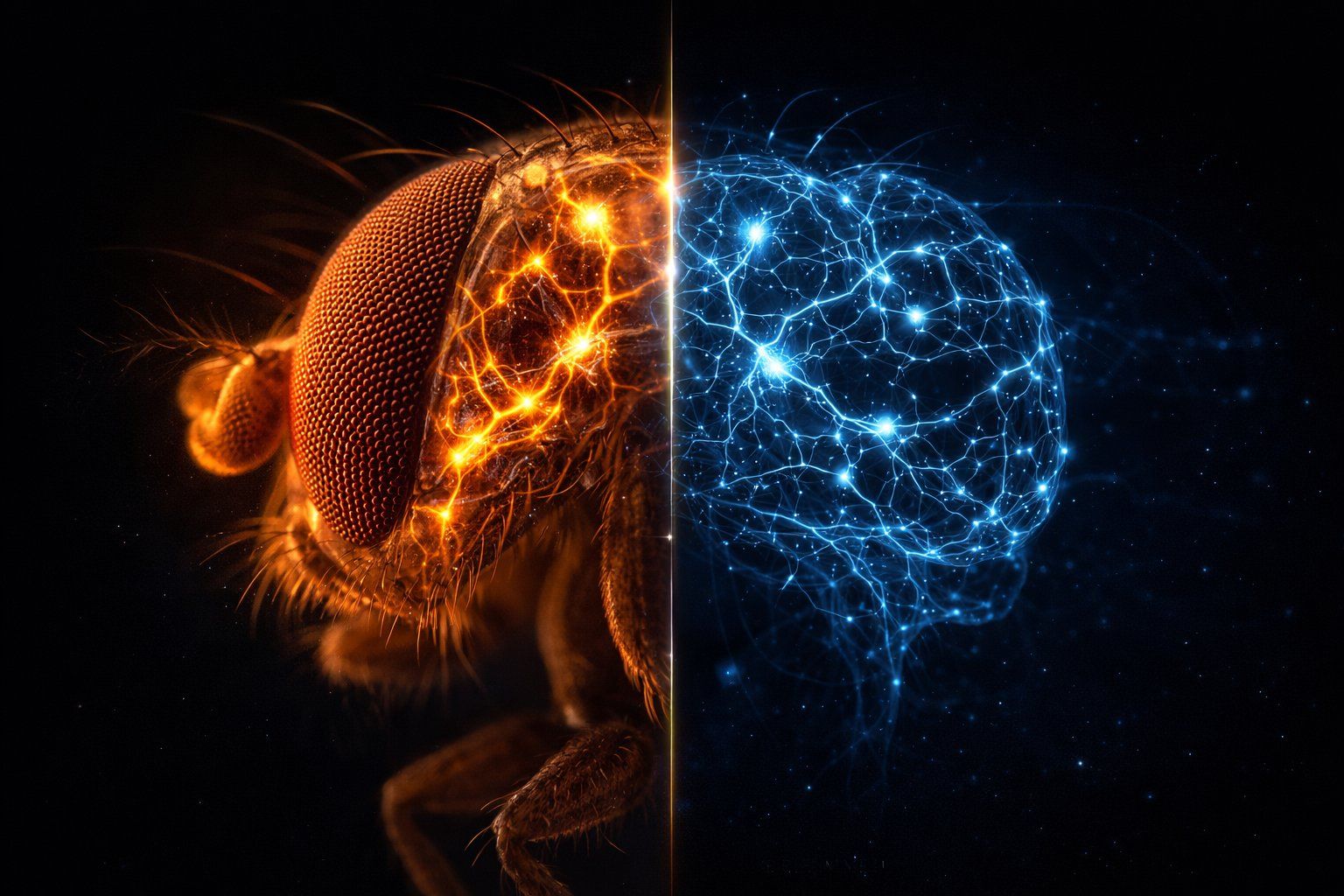
In the early 2000s, Cambridge psychologist Simon Baron-Cohen proposed that autism could be understood as an exaggeration of typically male cognitive traits. His framework centred on two psychological dimensions. The first is empathising — the drive to read, understand, and respond to other people’s thoughts and feelings. The second is systemising — the drive to analyse and construct rule-based systems, whether in mathematics, music, computers, or mechanics.
On average, he argued, neurotypical females score higher on empathising and neurotypical males score higher on systemising. Autistic individuals of both sexes, according to his Extreme Male Brain (EMB) hypothesis, sit at the extreme end of this spectrum: unusually low on empathy, unusually high on systemising. Their cognitive profile, in other words, resembles an intensified version of the typical male brain driven in part, he proposed, by elevated testosterone exposure in the womb.
The theory generated substantial debate. Critics questioned whether it reinforced gender stereotypes. Supporters pointed to consistent empirical patterns. What nobody had done, until now, was ask a deceptively simple follow-up question: does the EMB pattern apply equally to males and females with autism? Or does it look different and more extreme in women?
The Study: 1.2 Million People, 34 Studies, One Question
The scale of this research is almost without precedent in the field. Szakal and Crespi conducted a systematic review of all published studies measuring EQ, SQ, and AQ in both autistic and neurotypical individuals searching three major academic databases (PubMed, Web of Science, and PsycINFO) and applying strict inclusion criteria. After screening, 34 studies met the bar, encompassing a total of 1,234,560 participants 757,726 female and 476,834 male.
Because different studies used different versions of the questionnaires (some EQ versions have 40 items, others 60), the researchers standardised all scores by converting them to percentages of the maximum possible score. This allowed genuine comparison across all studies.
The resulting dataset is the most comprehensive examination of EMB theory ever assembled.
Finding One: Women With Autism Show a More Extreme Shift
The headline finding is striking. Autistic females showed significantly larger departures from their neurotypical female peers on both the EQ and SQ than autistic males showed from their neurotypical male peers. In statistical terms, the effect sizes were larger in females across both measures.
This is the pattern the female protective effect predicts, and it is now confirmed at scale. If females require a greater accumulation of risk factors genetic, hormonal, environmental to cross the diagnostic threshold, then the women who do cross it should be sitting further along the spectrum of cognitive difference. They are.
“The apparent requirement for larger shifts in empathy and systemising among females than males may be a key reason autism is diagnosed so much more often in boys.”
Szakal & Crespi, Autism Research, 2026
Finding Two: It’s Empathy, Not Systemising, That Drives the Diagnosis
The second major finding reshuffles the theoretical deck. For years, elevated systemising has been treated as a defining marker of autistic cognition — the intense, absorbing focus on rules, patterns, and systems that many autistic people describe as central to their inner lives. But when Szakal and Crespi ran the numbers, it was the empathy dimension that dominated.
On a proportional basis, the gap in EQ scores between autistic and neurotypical individuals is three to five times larger than the equivalent gap in SQ scores. Reduced empathising is not merely a feature of autism it is, by this analysis, the dominant cognitive signature. Systemising may be part of the picture, but it is a far smaller part than many theorists have assumed.
This asymmetry matters for more than theoretical reasons. If clinical diagnostic tools are designed around the systemising profile the stereotypical image of the child obsessively cataloguing train timetables or memorising prime numbers they may be systematically missing autistic individuals, especially females, whose most pronounced cognitive difference lies in the empathy domain rather than the analytical one.
Finding Three: Autism Erases the Usual Differences Between Men and Women
In the general population, males and females differ meaningfully in both empathy and systemising. These are not huge differences the psychologists’ usual caveat applies, that variation within each sex far exceeds variation between sexes but they are consistent, replicable, and well-documented. Females, on average, score higher on EQ. Males, on average, score higher on SQ.
In autistic populations, those differences largely disappear. Autistic males and autistic females score almost identically on the SQ. Their EQ scores are still somewhat different, but the gap is a fraction of what you see between neurotypical men and women. Autism, in cognitive terms, appears to level the sexes.
This is exactly what the EMB hypothesis predicts: if autism pushes both males and females toward the extreme male end of the E-S spectrum, then the typical sex differences should be eroded. The data confirm this at a scale that settles the question.
Finding Four: In Autism, Empathy and Systemising Trade Off
Here is perhaps the most intellectually surprising result. In neurotypical people, EQ and SQ scores tend to move in the same direction people who are higher on one tend to be somewhat higher on the other. There is a modest positive correlation between the two.
In autistic individuals, that relationship reverses. Higher systemising is associated with lower empathising, and vice versa. The two dimensions trade off against each other.
This inverse relationship points toward something genuinely interesting about the cognitive architecture of autism: it is not simply that autistic individuals score at an extreme end of a single spectrum. There appears to be a real tension between the two systems — as if the neural or cognitive resources devoted to hyper-analytical processing come at a cost to the social and emotional circuitry, or vice versa.
Finding Five: The Effects Are Steeper in Autism
The meta-regression analyses uncovered one more layer of complexity. For neurotypical individuals, changes in empathy or systemising scores have a modest effect on overall autism trait scores. But for autistic individuals, the slopes are steeper — the same shift in EQ or SQ produces a larger change in AQ. Once a person is on the spectrum, the relationship between these cognitive dimensions and the overall severity of autistic trait expression becomes more sensitive, more tightly coupled.
This suggests the cognitive profile of autism is not just a more extreme version of the neurotypical profile it operates by different rules, with different internal dynamics.
The Diagnostic Blind Spot
Taken together, these five findings converge on a concern that has been building in the autism research community for years: the diagnostic tools and clinical frameworks used to identify autism were built primarily around the male presentation. If the cognitive signature of autism in females is both larger in magnitude and somewhat different in character, then tools calibrated to the male pattern will systematically miss a substantial proportion of autistic women and girls.
The numbers bear this out. Studies consistently show that autistic females are diagnosed later, more often misdiagnosed with anxiety, depression, or personality disorders, and more likely to go entirely undiagnosed. Behind these statistics lies a concrete human cost: years, sometimes decades, of struggling without appropriate support or understanding.
“Our study suggests we may be able to identify women at elevated risk for autism far earlier than is currently the case that kind of lead time opens the door to more targeted support and monitoring.”
Bernard Crespi, Simon Fraser University
The Camouflage Problem
There is a further complication. Autistic females are significantly more likely than autistic males to engage in camouflaging the deliberate, effortful masking of autistic traits to fit into neurotypical social environments. Camouflaging can involve mimicking observed social behaviours, suppressing stimming, forcing eye contact, or scripting conversations in advance. It is exhausting and, over time, can contribute to anxiety, burnout, and poor mental health outcomes.
From a research standpoint, camouflaging creates a measurement problem. If an autistic woman has spent years carefully learning to perform neurotypical empathy, she may score artificially high on the Empathy Quotient. This means the EQ gaps this study found may actually underestimate the true cognitive differences in autistic females the reality may be even more pronounced than the data capture.
Future studies, the researchers suggest, will need to measure and correct for camouflaging to obtain a cleaner picture of the underlying cognitive architecture in autistic women.
What This Means and What Comes Next
This meta-analysis does not close the book on the Extreme Male Brain hypothesis. It opens several new chapters. The inverse EQ–SQ relationship in autistic individuals needs deeper investigation — what brain mechanisms produce it? How does it develop across the lifespan? Does it vary by sex, age, or subtype of autism?
The female protective effect, confirmed here at cognitive level, still needs to be fully explained at the biological level. What genetic buffering mechanisms protect females from autism? How does prenatal hormonal environment interact with these protections? Can they be better understood to improve outcomes for both sexes?
And most urgently, from a clinical perspective: how do we build better diagnostic tools for autistic females? The current standard assessment instruments were developed and validated largely in male populations. The data from this study showing that autistic females exhibit larger EQ and SQ shifts than autistic males point toward the need for sex-specific thresholds, or entirely redesigned assessment frameworks that capture the female autistic experience on its own terms.
The male bias in autism diagnoses is not going away quickly. But science is now, at last, asking the right questions about why it exists and what it costs the millions of women who have spent their lives being told there was nothing wrong, when in fact they were simply being measured by the wrong ruler.
Summary Results Table
E-S Theory: Statistical Findings
| Finding | Result | Significance |
|---|---|---|
| EQ shift: Autistic females vs neurotypical females | Larger than in males | p < 0.05 |
| SQ shift: Autistic females vs neurotypical females | Larger than in males | p < 0.05 |
| EQ vs SQ proportional difference in ASD | EQ is 3–5× larger | p < 0.01 |
| Sex differences in EQ and SQ in ASD | Markedly attenuated | p < 0.001 |
| EQ–AQ regression slope: ASD vs NT | Steeper in ASD | p < 0.05 |
| EQ–SQ correlation in ASD | Inverse (negative r) | p < 0.05 |
References
Szakal C, Crespi B. Does the Extreme Male Brain Hypothesis of Autism Apply More to Females Than Males? A Systematic and Meta-Analytic Approach. Autism Research. 2026.
https://doi.org/10.1002/aur.70198
Greenberg DM, Warrier V, Allison C, Baron-Cohen S. Testing the Empathizing–Systemizing theory of sex differences and the Extreme Male Brain theory of autism in half a million people. Proceedings of the National Academy of Sciences. 2018;115(48):12152–12157.
https://doi.org/10.1073/pnas.1811032115
Baron-Cohen S, Wheelwright S. The Empathy Quotient: An investigation of adults with Asperger syndrome or high-functioning autism. Journal of Autism and Developmental Disorders. 2004;34(2):163–175.
https://doi.org/10.1023/B:JADD.0000022607.19833.00
Baron-Cohen S, Wheelwright S, Skinner R, Martin J, Clubley E. The Autism-Spectrum Quotient (AQ). Journal of Autism and Developmental Disorders. 2001;31(1):5–17.
https://doi.org/10.1023/A:1005653411471
Wigdor EM, Weiner DJ, Grove J, et al. The female protective effect against autism spectrum disorder. Cell Genomics. 2022;2(6):100134.
https://doi.org/10.1016/j.xgen.2022.100134
Lai M-C, Lombardo MV, Auyeung B, Chakrabarti B, Baron-Cohen S. Sex/gender differences and autism. Journal of the American Academy of Child and Adolescent Psychiatry. 2015;54(1):11–24.
https://doi.org/10.1016/j.jaac.2014.10.003
Cook J, Hull L, Crane L, Mandy W. Camouflaging in autism: a systematic review. Clinical Psychology Review. 2021;89:102080.
https://doi.org/10.1016/j.cpr.2021.102080
Stein MB, Stein DJ. Social anxiety disorder. The Lancet. 2008;371(9618):1115–1125.
https://doi.org/10.1016/S0140-6736(08)60488-2
Wheelwright S, Baron-Cohen S, Goldenfeld N, et al. Predicting Autism Spectrum Quotient (AQ) from the Systemizing Quotient-Revised (SQ-R) and Empathy Quotient (EQ). Brain Research. 2006;1079(1):47–56.
https://doi.org/10.1016/j.brainres.2006.01.012
Cruz S, et al. Is there a bias towards males in the diagnosis of autism? A systematic review and meta-analysis. Neuropsychology Review. 2025;35(1):153–176.
https://doi.org/10.1007/s11065-023-09630-2
All references drawn from peer-reviewed literature. Based on: Szakal & Crespi, Autism Research, Wiley, 2026. DOI: 10.1002/aur.70198