
Dreams have captivated humanity for millennia. These vivid nocturnal experiences feel so real, so emotionally charged, that throughout history people have wondered: Are they messages from the gods? Windows into other worlds? Or simply meaningless mental noise?
Recent neuroscience research is finally providing concrete answers and they’re more fascinating than fiction. While dreams don’t appear to be portals to parallel universes, the latest discoveries reveal they’re far more complex and widespread than we ever imagined. Let’s find out what scientists have uncovered about the true origins of our dream experiences.
Breaking the REM Sleep Myth
For decades, neuroscience textbooks taught that dreams occurred almost exclusively during Rapid Eye Movement (REM) sleep that distinctive stage where eyes dart beneath closed lids and brain activity surges to near-waking levels. Dreams during other sleep stages were thought to be rare, fragmentary, or nonexistent.
A 2025 study has shattered this assumption. Researchers at Monash University compiled the DREAM database, the largest collection of dream data ever assembled, analyzing brain recordings from over 2,600 awakenings across 505 participants in 20 studies worldwide. Using machine learning algorithms to decode EEG patterns, they discovered complex dream experiences occurring throughout all sleep stages including the deepest phases of non-REM sleep.
The numbers are striking:
| Sleep Stage | Dream Recall Frequency |
| Light Sleep | 88% |
| Moderate Sleep | 56% |
| Deepest Sleep (Non-REM) | 48% |
Brain wave patterns during these non-REM dreams showed activity resembling wakefulness, suggesting our minds construct rich narratives even when we’re in supposed downtime.

This revelation fundamentally changes our understanding of where dreams originate. Rather than being confined to one sleep stage, dreams appear to emerge from broader brain networks active throughout the night. The implications extend beyond dream theory to practical applications: better sleep tracking technology, new insights into consciousness for coma patients, and improved treatments for sleep disorders.
Communicating With Dreamers in Real Time
Perhaps the most science-fiction-worthy breakthrough involves two-way communication with people while they’re dreaming. Researchers have successfully achieved interactive dialogue with lucid dreamers individuals who become aware they’re dreaming and can exert some control over the dream narrative.
Initial experiments in 2021 established proof of concept. By 2024, the technology had evolved considerably: Scientists trained lucid dreamers to steer virtual vehicles using subtle muscle twitches, with signals transmitted both into and out of the dream state. Research published in 2025 showed that frequent lucid dreamers demonstrate enhanced metacognition (the ability to think about one’s own thinking) and superior cognitive control even during waking hours.
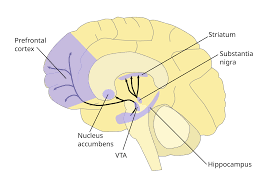
These interactive experiments provide unprecedented insight into dream generation. Functional brain imaging during lucid dreams reveals heightened activity in the prefrontal cortex—the brain region responsible for executive function and self-awareness. This suggests dreams originate from a complex interplay between memory systems, sensory processing centers, and higher-order cognitive networks.
The practical applications are already emerging. Researchers are exploring techniques to “engineer” dreams for therapeutic purposes: reducing nightmare frequency in PTSD patients, enhancing creative problem-solving, and even treating phobias through controlled dream exposure.
The Real Purpose of Dreams
Understanding where dreams come from means asking not just “how” but “why.” What evolutionary advantage could justify spending roughly six years of our lives in vivid hallucination?
Several compelling theories have emerged from recent research:
| Theory | Proposed Origin/Purpose | Key Researcher |
| Social Simulation | Dreams evolved as social bonding tools to build empathy and group cohesion. | Mark Blagrove |
| Threat-Simulation | Dreams function as a virtual reality training ground for rehearsing survival skills. | Antti Revonsuo |
| Emotional Processing | Dreams originate as adaptive mechanisms to integrate difficult experiences and mental health markers. | Penn State Study (2025) |
Modern nightmares might represent this ancient system misfiring in response to contemporary stressors. Long-term dream journal analyses, including one researcher’s examination of over 12,000 dream entries, demonstrate that dream content mirrors waking concerns with remarkable fidelity from climate anxiety to relationship worries to professional challenges. This firmly roots dream generation in our daily experiences rather than mystical sources.
Individual Differences in Dream Recall
Not everyone remembers dreams with equal clarity. Why do some people wake with vivid recollections while others insist they never dream at all?
A comprehensive French study identified key differences between high and low dream recallers. Individuals who frequently remember dreams show distinctive attentional patterns: They’re more easily distracted during waking tasks and demonstrate different resting-state brain connectivity, particularly in regions linking attention and memory systems.
Intriguingly, attitudes toward dreaming influence recall. People who value dreams and view them as meaningful remember significantly more than those who dismiss them as meaningless. This suggests dream recall is a partially learnable skill keeping a dream journal consistently increases recall frequency over time.
The Neuroscience of Dream Generation
Synthesizing these discoveries, neuroscientists now understand dreams as emerging from intricate brain choreography involving multiple systems:
- The hippocampus replays daily experiences during sleep, fragmenting and recombining memories in novel ways. This explains why dreams feel familiar yet strange—they’re creative remixes of real experiences.
- The amygdala and limbic system remain highly active during dreaming, processing emotional content without the dampening influence of stress hormones like norepinephrine (which decrease during REM sleep).
- Sensory cortices generate perceptual experiences without external input, drawing on stored patterns to construct dream imagery, sounds, and sensations.
- During most dreams, the prefrontal cortex shows reduced activity, explaining bizarre dream logic. During lucid dreams, this region activates, restoring critical thinking.
- Pattern Recognition in brain’s default mode network generates narrative structures and makes associations between seemingly unrelated concepts.
What Dreams Are Not
Despite recurring speculation, current evidence doesn’t support several popular ideas about dream origins:
- While some dreams seem predictive, this reflects our brains’ pattern-recognition capabilities processing subtle waking cues, not precognition.
- The “familiar but never-visited places” result from memory recombination and pattern completion, not interdimensional travel.
- Dreams originate internally from our neural architecture, not from external sources supernatural or otherwise.
Emerging technologies promise deeper insights into dream generation:
- Advanced brain imaging during sleep will map dream networks with unprecedented resolution.
- AI dream decoding may eventually reconstruct dream content from brain activity patterns.
- Targeted dream modification through electrical stimulation or sensory cues could treat nightmares and enhance creativity.
- Dream-based diagnostics might identify early cognitive decline or mental health issues.
The scientific answer to “where dreams come from” is both concrete and wondrous: They emerge from the most complex structure in the known universe the human brain engaging in remarkable nocturnal activity that consolidates memories, processes emotions, simulates threats, and generates creative insights.
Dreams don’t require supernatural explanations to be profound. They’re biological phenomena that help us navigate waking life, integrate difficult experiences, and occasionally glimpse solutions our conscious minds missed. Each dream is a unique performance by billions of neurons, creating private universes that feel as real as any waking moment.
The next time you wake from a vivid dream, remember: You’ve just witnessed your brain’s extraordinary capacity to generate entire worlds from pure thought. No parallel universes required—though the one inside your skull is remarkable enough.