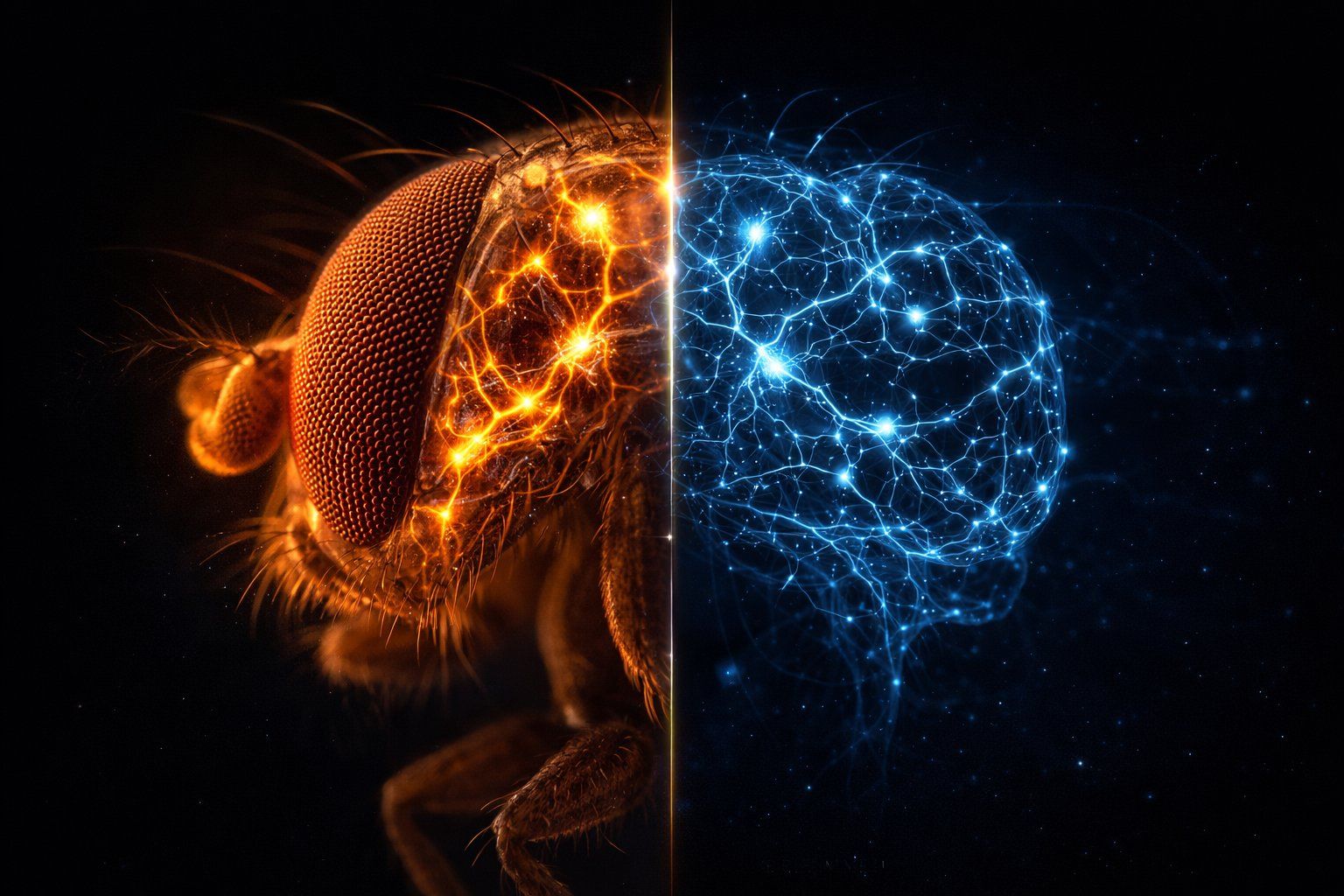







On recent research from Ruhr University Bochum, published in the Philosophical Transactions of the Royal Society B, concerning the evolutionary function of consciousness. The core question addressed is: Why did consciousness develop in some species (like humans) but not others? The findings, spearheaded by researchers including Albert Newen and Onur Güntürkün, suggest that consciousness is likely older and more widespread than previously believed.
Why Did Consciousness Evolve?
Our lives are composed of conscious experiences, often involving positive pleasure, such as feeling the warm sun or hearing birds singing, but also frequent experiences of pain and suffering, such as a hurting knee or pessimism. The question arises: why have living creatures developed a perception capable of involving both positive experiences and pain, sometimes even unbearable suffering?.
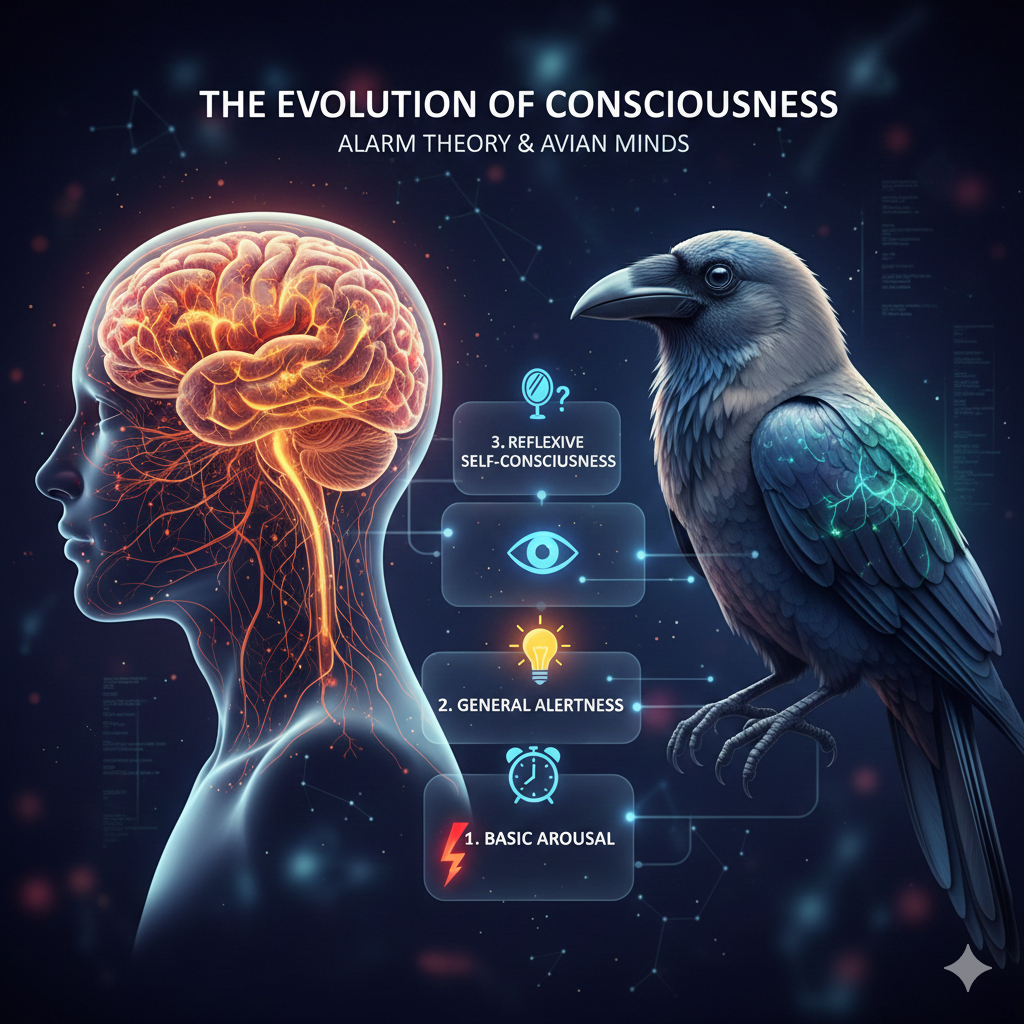
To address the function of consciousness, Albert Newen and Carlos Montemayor propose the ALARM theory, which distinguishes between three core phenomena of phenomenal consciousness: basic arousal, general alertness, and reflexive (self-)consciousness. They contend that constraining contemporary theories of consciousness with this evolutionary and functional approach will help inform the search for distinct neural correlates of consciousness (NCCs).
What Are the Three Types of Phenomenal Consciousness According to ALARM Theory?
The ALARM theory provides a framework for understanding the evolutionary trajectory and functional roles of consciousness.
1. Basic Arousal (BA) Basic arousal is believed to have developed first evolutionarily. Its base function is to put the body in a state of ALARM in life-threatening situations so that the organism can stay alive.
- Basic arousal alarms the body and secures survival by intervening in the slow updating of homeostatic processes (e.g., temperature regulation). Pain serves as an extremely efficient means for perceiving body damage and signaling an associated threat to continued life, often triggering survival responses such as fleeing or freezing.
- Although survival reactions can occur unconsciously (e.g., withdrawing a hand from a hot stove before pain is felt), the addition of conscious pain experience offers several crucial advantages. These advantages include: (i) continuing to keep the injured area away from the threat; (ii) prompting the agent to care for the body to support healing; and (iii) initiating a generalized learning process, as pain is a more general indicator of body challenges across a wide variety of cases and new situations compared to limited unconscious implicit learning. BA also enables one-shot learning.
- Basic arousal is a fundamental type of consciousness that can be realized by non-cortical processes. Evidence, such as studies on hydranencephalic children and deep brain stimulation of the central lateral thalamus in macaques, suggests that the neural correlates of BA can be based on processes in the upper brainstem and thalamus.
2. General Alertness (GA) The development of general alertness represents a second step in evolution. It is a type of consciousness that involves the ability to focus on one item in a simultaneous flow of different information (e.g., seeing smoke while someone is speaking and focusing on the smoke).
- General alertness enables the identification of new correlations, ranging from simple causal correlations (smoke comes from fire) to complex scientific correlations. It fosters advanced learning and decision-making processes, allowing the development of new behavioral strategies in challenging situations.
- GA is characterized as attention-guided consciousness. It allows the agent to select and focus on specific aspects of a situation. This boost in learning abilities involves keeping sensory input for a time, compressing the information, and transferring it to higher levels of processing. GA is connected to the interaction between short-term memory and long-term memory.
3. Reflexive (Self-)Consciousness (RSC) Reflexive consciousness, in its simple forms, developed parallel to the two basic forms. In its complex form, it means that an agent is able to reflect on the self, including its past and future, and form a self-image that is incorporated into actions and plans.
- While BA and GA focus on the environment or immediate threats, RSC focuses on the conscious registration of aspects of oneself, including the state of one’s body, perception, sensations, thoughts, and actions.
- Reflexive self-consciousness is best described as a specific form of general alertness. It is GA where the attention is directed toward self-related content involving metacognition (meta-representation).
- RSC is demonstrated non-linguistically, such as through mirror self-recognition. Children develop this skill around 18 months, and some animals, including chimpanzees, dolphins, and magpies, have also shown this ability. Non-linguistic tests also include tasks where chimpanzees exhibit meta-knowledge about their own memory ability by opting out of difficult tests.
- RSC enables future-directed long-term planning, accounting for the mindset of oneself and other agents. This ability, closely intertwined with the ability to consciously attribute mindsets to others, leads to a significant boost in social learning in complex social environments, such as reputation management.
Do Birds Have Consciousness?
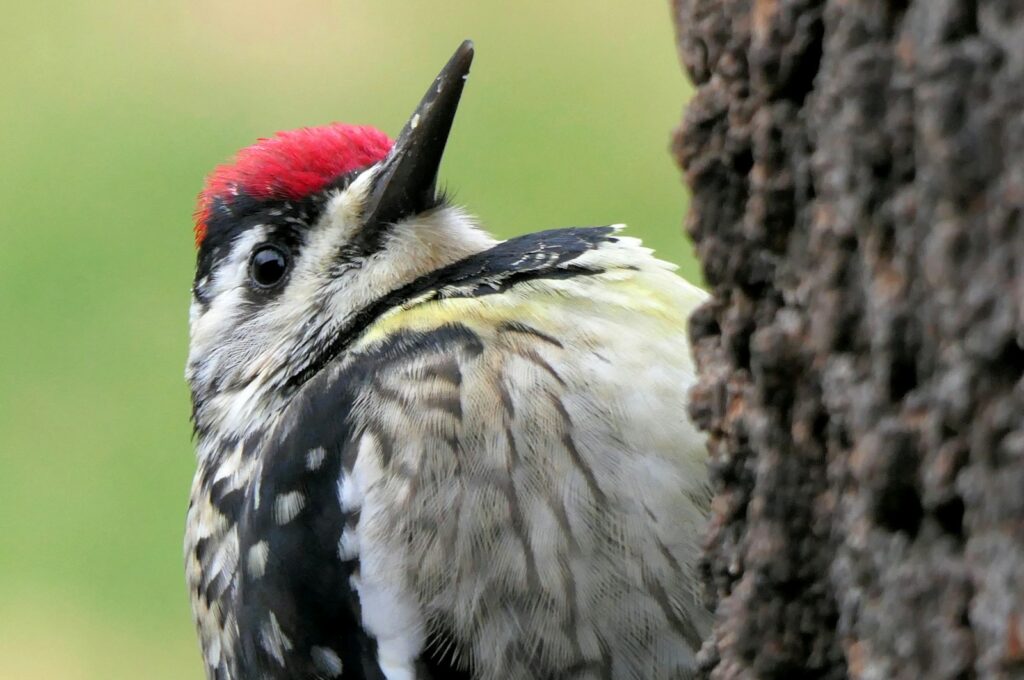
Research by Gianmarco Maldarelli and Onur Güntürkün indicates that birds may possess fundamental forms of conscious perception, highlighting remarkable parallels to conscious experience in mammals across three central areas: sensory consciousness, neurobiological foundations, and accounts of self-consciousness. The findings demonstrated in birds support the conclusion that conscious processing is possible without a cerebral cortex and that different brain structures can achieve similar functional solutions.
1. Studies show that birds do not merely process stimuli automatically but subjectively experience them. When pigeons are presented with ambiguous visual stimuli, they shift between various interpretations, similar to human experience. Furthermore, crows exhibit nerve signals that reflect the animal’s subjective perception rather than just the physical presence of a stimulus. Specific nerve cells react precisely according to whether the crow consciously perceives a stimulus or not.
2. Birds’ brains contain functional structures that meet the theoretical requirements of conscious processing, despite having a different brain structure than mammals.
- The avian equivalent to the prefrontal cortex, known as the NCL (Nidopallium caudolaterale), is immensely connected. This connectivity allows the brain to integrate and flexibly process information.
- The connectome of the avian forebrain—the totality of information flows between brain regions—shares many similarities with mammals. Consequently, birds fulfill many criteria of established theories of consciousness, such as the Global Neuronal Workspace theory (GNWT).
3. More recent experiments suggest that birds possess different types of self-perception. While some corvids pass the traditional mirror test, other ecologically significant tests have revealed further types of self-consciousness in other bird species. Experiments show that pigeons and chickens differentiate between their reflection in a mirror and a real fellow member of their species, reacting according to the context. This behavior is considered a sign of situational, basic self-consciousness.
The Three Functional Roles of Phenomenal Consciousness
The ALARM theory’s distinction between basic arousal (BA), general alertness (GA), and reflexive self-consciousness (RSC) results in not one function of phenomenal consciousness but at least three different functional roles. These roles are often conceptualized through a managerial analogy to illustrate their interactions:
- The BA Manager: This is the first and most influential ‘conscious manager,’ whose essential role is preventing major (or even existential) costs to the system. It activates standard survival behavior based on situational threats, relying on rather rigid behavioral programs without choices or regard for long-term planning.
- The GA Manager: This more specialized manager controls the signals of basic arousal to modulate them via top-down attention routines required for new habituations and long-term learning. Choices emerge at this level, focusing on environmental challenges (e.g., accepting a small immediate cost, like a small burn, to avoid a worse long-term cost, like being fired).
- The RSC Manager: This third level manager is based on GA but includes meta-representations of oneself. Its dominant functional role is enabling future-directed long-term planning, accounting for the mindsets of oneself and others. This enables complex social abilities like reputation management, advanced planning, and, in linguistic beings, narrative self-models.
The phylogenetically later developed phenomena (GA and RSC) are based on the earlier ones (BA) and can only operate if they are not overridden by the older, more basic functions.
| Phenomena of consciousness | Neural basis | Functional role |
|---|---|---|
| Basic arousal | Upper brainstem, thalamus (non-cortical) | Alarming the bodily agent, triggering survival, caring for the body, initiating generalized learning |
| General alertness | Cortical structures (e.g., prefrontal cortex, NCL in birds) | Enabling advanced learning and decision-making strategies, opening up new action possibilities, improving social interaction |
| Reflexive self-consciousness (Special case of GA with self-related content) | Cortical structures (overlaps substantially with awareness of others’ mindsets) | Enabling future-directed long-term planning, accounting for one’s own mindset or that of others (reputation management, self-models) |
Table: Three phenomena of consciousness and their functional roles (Based on Newen and Montemayor’s research).
REFERENCES
Albert Newen et al, “Three types of phenomenal consciousness and their functional roles: unfolding the ALARM theory of consciousness,” Philosophical Transactions of the Royal Society B (2025). DOI: 10.1098/rstb.2024.0314
Gianmarco Maldarelli et al, “Conscious birds,” Philosophical Transactions of the Royal Society B (2025). DOI: 10.1098/rstb.2024.0308