




Friday, May 15, 2026
SAVED POSTS
  • Login
  • Register
RathBiotaClan
No Result
View All Result
  • HOME
  • HEALTH SCIENCE

    TRENDING ON HEALTH (TOP)

    Cycling Linked to Lower Dementia Risk in Study of Nearly 480,000 Adults

    First oral GLP-1 weight-loss pill approved a new era for accessible treatment

    Chewing gum releases thousands of microplastic particles directly into your mouth with every piece you chew

    Single-Cell Study of Over a Million Immune Cells Reveals Why Women Are More Prone to Autoimmune Disease

    NOW ON AIR (RBC)

    A new study has found that men’s brains shrink faster than women’s as they age.
    NEUROSCIENCE

    12,638 MRI Scans Confirm Men’s Brains Shrink Faster in PNAS Study

    May 14, 2026
    ENVIRONMENTAL SCIENCE

    Volcanic Eruptions Can Destroy Their Own Methane — Tonga’s Plume Shows How

    May 13, 2026
    3 men standing on rocky shore during daytime
    MOLECULAR BIOLOGY

    For Future Space Missions, Molecular Ecology Finally Offers a Clear Biosignature Target

    May 12, 2026
    Babies Yawn in the Womb
    DEVELOPMENTAL BIOLOGY

    Scientists Say Babies May Learn to Yawn Before Birth

    May 11, 2026
  • NEUROSCIENCE
    • PHYSIOLOGY
    • IMMUNOLOGY
    • CANCER
  • DISCOVERIES
    • SPOTLIGHTS
    • STUDENT PORTAL
    • SCIENCE FEATURED
  • MOLECULAR BIOLOGY
    • GENETICS
    • BIOTECHNOLOGY
    • BIOINFORMATICS
    • BIOCHEMISTRY
    • BIOPHYSICS
  • ZOOLOGY & ECOLOGY
    • ENVIRONMENTAL SCIENCE
    • ECOLOGY
    • EVOLUTION
  • MICRO & PLANT SCIENCE
    • MICROBIOLOGY
    • CELL BIOLOGY
    • DEVELOPMENTAL BIOLOGY
  • PSYCHOLOGY
RathBiotaClan
RathBiotaClan
No Result
View All Result
Home EVOLUTION

We Finally Know Why We Grow Wisdom Teeth as Adults

Shibasis Rath by Shibasis Rath
October 8, 2024
in EVOLUTION, HEALTH SCIENCE, SCIENCE FEATURED
Reading Time: 5 mins read
0
A A
0
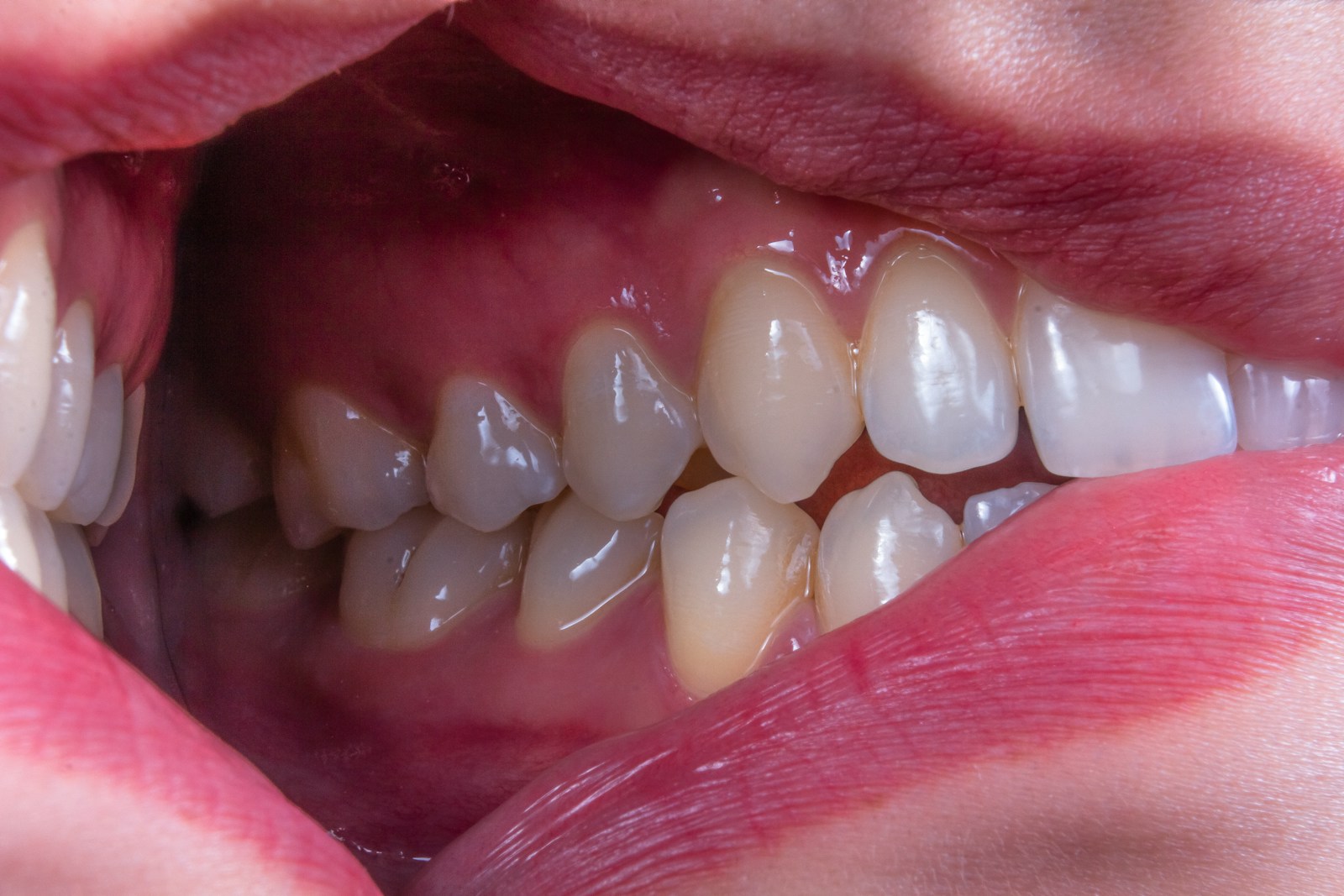
a person's mouth with teeth showing

The rhythm of human life is inextricably tied to biology. One of the many badges on our journey from infancy to adulthood is the successes and failures of a physiologically awkward process: our wisdom teeth. While the arrival of the baby’s first teeth is mostly forgotten, the emergence of wisdom teeth in early adulthood makes a lot of an impression—and an often painful impression if extraction is necessary. For decades, it remained unclear why humans develop their last set of teeth so much later than any other species. But a study published recently in Science Advances now finally explains the mystery: it’s all about how slowly and uniquely our jaws grow.

Why Do Wisdom Teeth Emerge So Late?

The mystery of human jaw development is the key to this riddle. Unlike most species whose jaws burst open quickly, human jaws take their own sweet time, maturing slowly, like the human body generally does. Due to such slow growth, by the time they reach their mature stage, the jaw would have developed sufficiently enough to safely accommodate wisdom teeth, that is, those third molars.

As paleoanthropologist Gary Schwartz of Arizona State University postulates, “Our jaws grow very slowly, probably owing to our overall slow life histories and, in concert with our short faces, delays when a mechanically safe space—or a ‘sweet spot’—is available, resulting in our very late ages at molar emergence.” In other words, the jaws of these people have to grow to a certain size so they may be able to structurally support those molars. If the wisdom teeth erupt sooner, they can intrude on the development of the jaw and disrupt its activity, causing damage from crowding and insufficient power because of the insufficient space.

Wisdom Teeth and Mechanical Tension: A Good Balance

Because our wisdom teeth are located way in the back of our mouths, they have to endure extreme mechanical tension when we chew. This put a lot of weight on the jaw structure, which had to be strong enough to support such teeth without causing injury or misalignment. Since the molars are sitting close to the TMJ that joins the jaw to the skull, the possible early eruption could throw the entire joint out of balance. This kind of interference would not only disturb the molars but could probably cause long-term complications; these include a condition known as temporomandibular joint disorder or TMJ disorder that occurs when one experiences pain and clicking along the jaw line and sometimes migraines.

ADVERTISEMENT

So, the wisdom teeth erupt only at the stage when the jaw has become strong and mature enough that it would not be adversely affected by increased stress from these two extra molars. It is quite an elegant solution to a potentially harmful problem.

READ ALSO

Volcanic Eruptions Can Destroy Their Own Methane — Tonga’s Plume Shows How

Scientists Say Babies May Learn to Yawn Before Birth

Wisdom Development: Evolution’s Hand in There

Two of man’s most well-known evolutionary traits are slow maturation and a relatively flat facial structure. The two go hand-in-hand, so to speak, to determine when the wisdoms show up.

ADVERTISEMENT

After all, in the animals of our class, humankind is distinct with their extended period of development. Being a species, we prolong our childhood stage up to adulthood. Other species develop rapidly, such as the primates, and reach physical maturity much earlier than humans do. The slow developmental process allows many parts of our bodies to grow progressively without causing undue stress and is coordinated to favor each step of development that matches proper physical health.

Third, our faces are rather shallow. Unlike the projecting jaws of a chimpanzee or gorilla that poke out from under the braincase, our jaws line up underneath our braincase. This is the “retracted” human face. Although this makes us more aesthetically pleasing, it does make dental development a bit more complicated. Because there is not much space in our relatively shortened faces, our jaws must reschedule the eruption of our third molars, also known as wisdom teeth, until there is room. In primates with longer jaws, wisdom teeth can appear before it is too late without risking damage, but in humans patience is the key.

Are the Wisdom Teeth Evolutionary Byproducts?

In fact, since virtually everyone has their wisdom teeth removed, it might seem that they are simply evolutionary leftovers-that is, litter from a time when people were slightly different in regard to the amount they needed to grind or otherwise manipulate their food. Indeed not infrequently it is wisdom teeth that impinge, resulting in infections, malpositions, and so forth that require surgical treatment. But this tendency for wisdom teeth to remain impacted when they fail to grow in properly as is so often the case certainly outweighs their status as evolutionary relics.

ADVERTISEMENT

Although it is true that the softer, more processed foods of our diets are not comparable to the tougher, more fibrous diets of our ancestors in terms of requiring similar molar power, wisdom teeth are far from useless. Their development serves as an important phase in human growth and is closely related to our evolutionary success. Indeed, in most parts of the world, wisdom teeth are left alone unless they cause problems. The NHS will simply recommend that impacted wisdom teeth or those that potentially threaten the health of the patient are removed; there is no evidence to indicate that they should be removed otherwise.

Wisdom teeth are considered as a vestigial organ, part of our genetic evolution. Not so. They are actually the apparent result of slow, steady pace of human growth. Their late arrival points to a careful balancing between growth, development, and function that has allowed humans to succeed.

Role of Diet and Cultural Practices

It is paradoxical, then, that wisdom tooth extraction is not entirely a requirement. In some cultures, diets resemble what our ancestors consumed-days when diets were full of tough, fibrous plants and relatively few processed foods -their wisdom teeth have a good likelihood of coming in without pain in the jaw at all. The jaw muscles have been exercised continually since early years in use, which therefore shape and expand this bone to accommodate more molars. On the other hand, wisdom teeth in western societies with dominantly softer and processed diets are known to be smaller, making impacted wisdom teeth quite common.

This variation explains that problems do not come with the individuality of wisdom teeth but is formed by both biological as well as cultural influences. Changing diets from generation to generation have resulted in the reduction of jaw size, making wisdom teeth a challenge for the modern man.

Wisdom Teeth in The Future of Evolution

So, are wisdom teeth completely doomed to disappear as the human species continues to evolve? According to a few scientists, the frontiers of advanced medicine and diet will adapt by decreasing the number of molars and the general size of the jaw. It is also true that some babies are born without wisdom teeth-a condition known as agenesis. But this is an extremely slow process, so at least for now, wisdom teeth have a place in our development timeline.

As such, wisdom teeth are not leftovers of an evolutionary process. Instead, they form part of what makes someone human. Their late emergence is a direct result of our unique anatomy, slow growth, and diet in evolution. Now, although they may cause discomfort, they show wonderful signs of the marvelous evolutionary journey of humankind.


  • Share on WhatsApp (Opens in new window) WhatsApp
  • Share on Facebook (Opens in new window) Facebook
  • Share on Reddit (Opens in new window) Reddit
  • Share on X (Opens in new window) X
  • Print (Opens in new window) Print
Shibasis Rath

Shibasis Rath

"𝓒𝓸𝓷𝓷𝓮𝓬𝓽𝓲𝓷𝓰 𝓡𝓮𝓼𝓮𝓪𝓻𝓬𝓱 𝓣𝓸 𝓡𝓮𝓪𝓵𝓲𝓽𝔂" 𝓲𝓼𝓷'𝓽 𝓙𝓾𝓼𝓽 𝓪 𝓜𝓸𝓽𝓽𝓸 - 𝓘𝓽'𝓼 𝓜𝔂 𝓜𝓲𝓼𝓼𝓲𝓸𝓷

Related Posts

Volcanic Eruptions Can Destroy Their Own Methane — Tonga’s Plume Shows How
ENVIRONMENTAL SCIENCE

Volcanic Eruptions Can Destroy Their Own Methane — Tonga’s Plume Shows How

May 13, 2026
Babies Yawn in the Womb
DEVELOPMENTAL BIOLOGY

Scientists Say Babies May Learn to Yawn Before Birth

May 11, 2026
man riding bicycle on top of mountain
HEALTH SCIENCE

Cycling Linked to Lower Dementia Risk in Study of Nearly 480,000 Adults

May 10, 2026

POPULAR NEWS

Chewing gum releases thousands of microplastic particles directly into your mouth with every piece you chew

Chewing gum releases thousands of microplastic particles directly into your mouth with every piece you chew

by Shibasis Rath
May 8, 2026
0

Microplastics are turning up in places researchers never expected: deep-sea sediments, Arctic ice, and human blood. Now, a UCLA pilot...

Yelling Isn’t Just Yelling: How a Hostile Home Rewires a Child’s Brain for Constant Alert

Yelling Isn’t Just Yelling: How a Hostile Home Rewires a Child’s Brain for Constant Alert

by Shibasis Rath
March 8, 2026
0

To a parent in the heat of the moment, a raised voice may feel like simple frustration. To a child...

a group of gen Z kids walking down a street

Is Gen Z the First Generation Less Intelligent Than Their Parents?

by Shibasis Rath
February 5, 2026
0

Gen Z intelligence decline is emerging as a serious concern among neuroscientists and education researchers. For over a century, each...

Whole Brain Emulation Achieved: Scientists Run a Fruit Fly Brain in Simulation

by Shibasis Rath
March 9, 2026
0

Scientists have copied an entire biological brain neuron by neuron and synapse by synapse and made it control a simulated...

Global Sperm Counts Have Dropped 50% in 50 Years Now 128 Men Are Racing Their Way to a $100,000 Prize to Prove the Point

Global Sperm Counts Have Dropped 50% in 50 Years Now 128 Men Are Racing Their Way to a $100,000 Prize to Prove the Point

by Staff Writer
May 5, 2026
0

A group of technology entrepreneurs is staging a competitive event in San Francisco in which semen samples from 128 men...

EDITOR CHOICE‘S

  • All
  • NEWS
  • SPOTLIGHTS
A new study has found that men’s brains shrink faster than women’s as they age.

12,638 MRI Scans Confirm Men’s Brains Shrink Faster in PNAS Study

by Staff Writer
May 14, 2026
0

A large-scale analysis of brain scans taken over time has found that men's brains shrink faster than women's across a...

Volcanic Eruptions Can Destroy Their Own Methane — Tonga’s Plume Shows How

Volcanic Eruptions Can Destroy Their Own Methane — Tonga’s Plume Shows How

by Shibasis Rath
May 13, 2026
0

A study published in Nature Communications analyzed the Hunga Tonga-Hunga Ha'apai volcano eruption's impact on methane in the atmosphere. It...

3 men standing on rocky shore during daytime

For Future Space Missions, Molecular Ecology Finally Offers a Clear Biosignature Target

by Shibasis Rath
May 12, 2026
0

When the next generation of probes scoops up dust from the icy shell of Europa or the surface of Mars,...

Babies Yawn in the Womb

Scientists Say Babies May Learn to Yawn Before Birth

by Shibasis Rath
May 11, 2026
0

Mothers can spread yawns to their yet-to-be-born offspring during pregnancy, researchers report May 5 in Current Biology  the first empirical evidence...

ADVERTISEMENT

RathBiotaClan – RBC

RathBiotaClan – Connecting Research To Reality

Your trusted source for life science news, biology research & discoveries. Covering neuroscience, genetics, ecology, and more — connecting research to reality.

Privacy Policies

Contact Us

About Us

Editorial Standards

Latest Posts

  • 12,638 MRI Scans Confirm Men’s Brains Shrink Faster in PNAS Study
  • Volcanic Eruptions Can Destroy Their Own Methane — Tonga’s Plume Shows How
  • For Future Space Missions, Molecular Ecology Finally Offers a Clear Biosignature Target
  • Scientists Say Babies May Learn to Yawn Before Birth

SHIBASIS RATH

Contact Mail

rathbiotaclan@gmail.com

No Result
View All Result
MSME (Udyam) Certified Science Platform
Govt. of India

Get Us On PlayStore

playstore app for rathbiotaclan
  • About Us
  • Advertise With Us
  • Cancellation and Refund Policy
  • Contact Us
  • Contribute
  • Editorial Standards
  • Home
  • Pricing Details
  • Privacy Policies
  • Shipping Policy
  • Terms & Conditions

© 2026 RathBiotaClan. All rights reserved.

Welcome Back!

Sign In with Google
OR

Login to your account below

Forgotten Password? Sign Up

Create New Account!

Sign Up with Google
OR

Fill the forms bellow to register

*By registering into our website, you agree to the Terms & Conditions and Privacy Policy.
All fields are required. Log In

Retrieve your password

Please enter your username or email address to reset your password.

Log In

Add New Playlist

No Result
View All Result
  • HOME
  • HEALTH SCIENCE
  • NEUROSCIENCE
    • PHYSIOLOGY
    • IMMUNOLOGY
    • CANCER
  • DISCOVERIES
    • SPOTLIGHTS
    • STUDENT PORTAL
    • SCIENCE FEATURED
  • MOLECULAR BIOLOGY
    • GENETICS
    • BIOTECHNOLOGY
    • BIOINFORMATICS
    • BIOCHEMISTRY
    • BIOPHYSICS
  • ZOOLOGY & ECOLOGY
    • ENVIRONMENTAL SCIENCE
    • ECOLOGY
    • EVOLUTION
  • MICRO & PLANT SCIENCE
    • MICROBIOLOGY
    • CELL BIOLOGY
    • DEVELOPMENTAL BIOLOGY
  • PSYCHOLOGY
  • Login
  • Sign Up
SAVED POSTS

© 2026 RathBiotaClan. All rights reserved.

This website uses cookies. By continuing to use this website you are giving consent to cookies being used. Visit our Privacy and Cookie Policy.