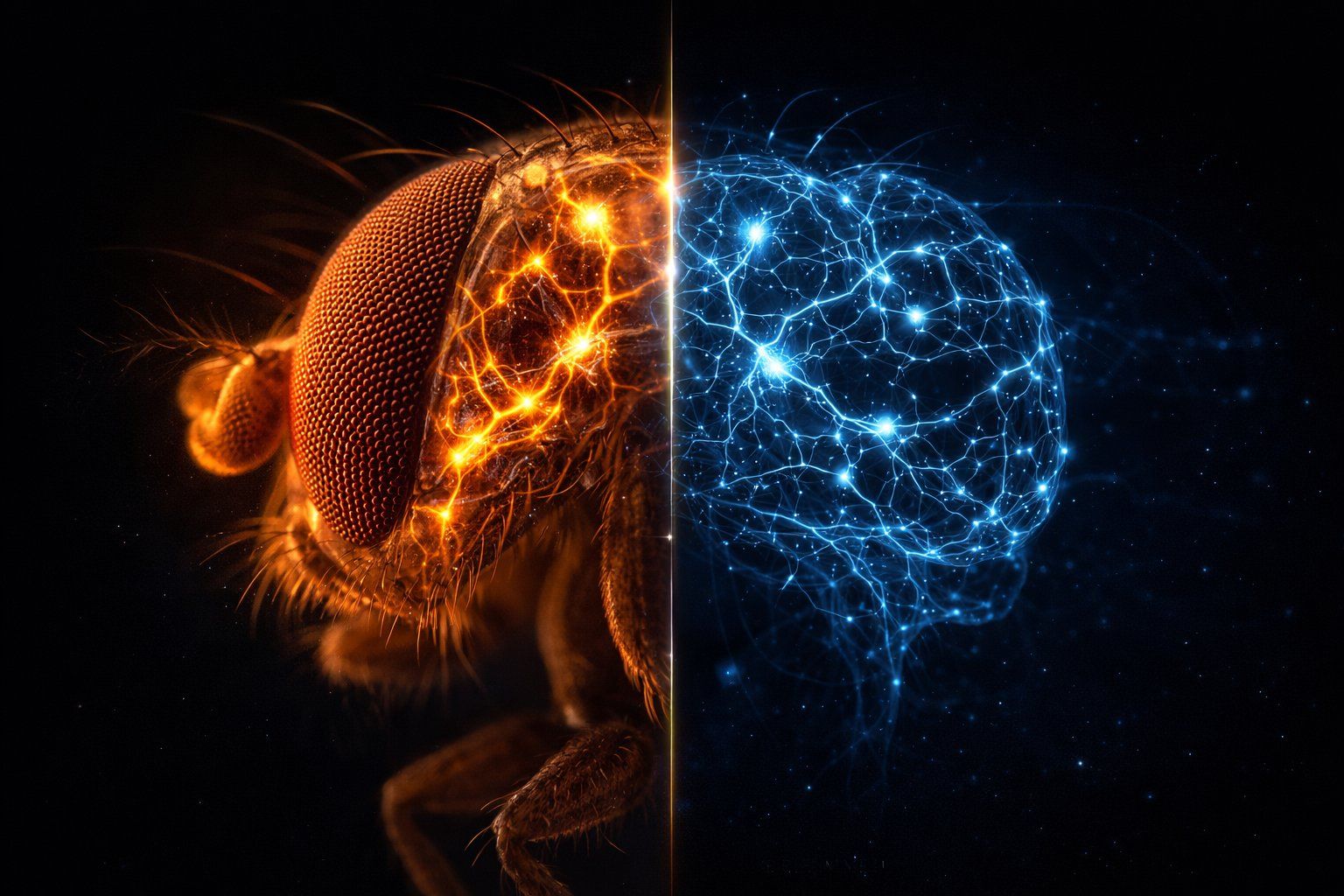







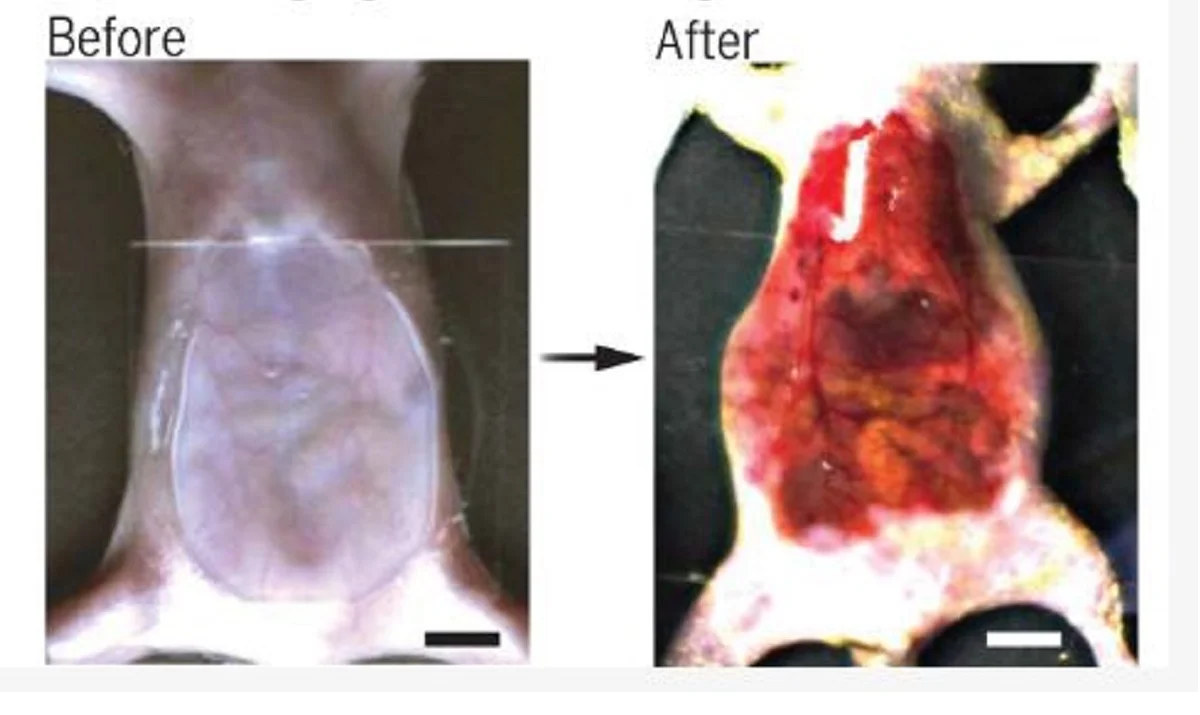
Imagine a world where scientists can look inside an animal’s organs without making a single incision. That sounds like the realm of science fiction, but thanks to cutting-edge research, it’s now possible to make mice transparent and observe their organs in real time. Equipped with highly specialized dyes that absorb light and an array of advanced imaging techniques, scientists are unlocking new ways to understand complex biological processes. This breakthrough may revolutionize medical research and drug development by providing insights that no one has ever seen into how our body works.
The Experiment: The Journey to Creating Transparent Mice
The transparent mice require an elaborate series of procedures in chemical engineering, molecular biology, and using advanced imaging technology for their preparation. The basis of this experiment is to make the tissues of the body of the mouse transparent to allow researchers to view internal organs without necessarily having to do invasive surgery. The explanation below describes how this experiment is conducted.
1. Tissue Clearing: Laying the Foundation for Transparency
This is the process of tissue clearing, a methodology attempting to remove the natural opacity in animal tissues. The major reason tissues appear opaque is due to lipids that scatter light. While lipids are essential for cell structure, they hinder the passage of light internally and make it difficult to see what’s inside.
To work around this problem, scientists treat the tissues in a chemical that will actually melt the lipids without destroying other important cellular structures. This is classically achieved by treatment with various mixtures of detergents and solvents, including Triton X-100 and SDS. These chemicals strip away the lipids, leaving just a backbone or skeleton of proteins, cells, and organs behind. However, this skeleton, although free of lipids, is further not quite transparent because of the light-scattering properties of the residual tissue components such as collagen and cellular proteins.
2. Light-Absorbing Dye: Engineering Precision in Transparency
To achieve this, the research then introduced light-absorbing dye, which was put to work with the intention of reducing light scattering in remaining tissue. This dye is specifically engineered at a molecular level to absorb specific wavelengths of light while leaving other wavelengths unaffected. Their efforts create a hindrance to the reflection of light at tissue surfaces and subsequent scattering within the body, therefore making internal structures obscure from observation.
Because every experiment is different, this special dye is tailored according to the specific biological and chemical composition of the mouse’s tissues. The engineering that surrounds this dye is a careful balance between polarity and solubility since it needs to be non-toxic and biocompatible but powerful enough to interact with the optical properties of the tissue. Scientists will often modify the dye’s molecular structure so that it actually binds to the particular areas of tissue, enabling highly targeted transparency.
3. Dual-Layer Dye for Deep Tissues
Where most of the light-absorbing dyes are pretty effective and guarantee transparency at the surface level, deep organs like the brain, liver, or pancreas are different stories altogether. One of the new avenues of exploration is having dual-layer dye systems. The first dye will rid the superficial tissues of their obscurity, while for much denser or deeper organs, a second layer would be directly applied to them. This latter dye works on a different wavelength, one especially designed to penetrate through thicker and more complicated tissues in order to ensure optimized light absorption within.
That has been a game-changer in dual-layer approaches toward the imaging of deep organs and has allowed scientists to see things like the hippocampus in the brain or detailed networks inside the cardiovascular system that were previously unreachable. Each dye layer can have its properties changed to dial transparency for any type of tissue and depth.
4. Fluorescent Tagging: Adding Specificity to Transparency
In addition to light-absorbing stains, biologists use fluorescent tagging of specific biological structures. Such tags are molecular probes that bind proteins, cells or tissues under study. When illuminated with a wavelength specific for a particular tag, they fluoresce becoming visible against the transparent background of the tissue.
By introducing fluorescent tags that bind to markers on the surface of immune cells, for example, researchers are able to track their migration in the course of an infection. Viewed under the microscope, the immune cells will glow and their movement across transparent tissues can be monitored. Such tagging allows the investigation of the mechanisms of disease, like how cancer cells metastasize or how neurons communicate in the brain.
5. 3D and 4D Imaging: Capturing Real-Time Activity
Following the manipulation of mice into being transparent, advanced imaging techniques are done, particularly light-sheet microscopy by scientists, in order to see and capture the internal workings of organs. Light-sheet microscopy would illuminate the tissue with a thin sheet of light while taking 3D images through scanning in the transparent layers of the animal. These imaging techniques, through the method described above, can achieve remarkable resolutions such as structure details in blood vessels and nerve networks down to individual cells.
However, the experiment does not stay within the bounds of static three-dimensional pictures. In 4D imaging, it is possible to trace the temporal behavior of organs and cells. By taking pictures successively, they will be able to document in real time how the cells move or the flow of blood, or the working pattern of organs. Examples include the monitoring of heartbeats, the spread of neuronal impulses in the brain, or the growth and spread of tumors within the body. Data of this nature is invaluable in the study of disease processes and treatment testing.
6. Algorithms for Motion Correction: Image Stabilization of Cellular Movements
Indeed, compensation for natural cell and tissue movements represents one of the principal challenges in real-time 4D imaging. Even very small motions, such as the beating of a heart or the pulsing of a blood vessel, may blur an image and distort the data. To that effect, researchers have been able to establish sophisticated motion correction algorithms.
These algorithms analyze the movement patterns and, therefore, stabilize the images captured in real time. They help scientists in separating meaningful biological activities from noise due to movement, much as would be needed for the proper representation of cellular processes in the final imagery.
7. Applications for the Study of Diseases and the Development of Drugs
The technology of making transparent mice already holds enormous promise for studying a wide range of diseases, from cancer, in which tumor formation and metastasis can be watched in real time, to providing vital insight into one of the most challenging features of the disease, metastasis, in the treatment of cancer. Watching how the cancer cells invade other tissues and organs lets researchers test in real life the effectiveness of new drugs, maybe accelerating the route toward better treatments.
This technology enables neuroscientists to trace the activities of neurons and synapses in the brain, for example, without causing actual damage to the surrounding tissue. It may also disclose new pathways implicated in diseases, such as Alzheimer’s, Parkinson’s, and epilepsy, which up until now have been invisible in living organisms.
8. Challenges and Future Improvements
The experiment with the transparent mouse has gone extraordinarily well, but some challenges must still be overcome. The techniques do have some limitations at present, one of which is irreversibility in tissue clearing-once the mouse’s tissues are made transparent, they stay that way for the remainder of the study. Researchers are working on techniques that could make the transparency reversible so the same animal could be observed at different stages in a disease, restoring normal tissue opacity in between imaging sessions.
Besides, this process currently is optimized for smaller animals such as mice. Scaling up to larger animals-and human tissues-introduces further challenges. Future improvements in dye chemistry and tissue-clearing technology will likely consider scalability, along with a decrease in side effects on living organisms.
Medical Advancement Opportunities
This opens up a wide realm of possibilities that medical science can undertake because one will be able to observe the functioning organs in real time. Normally, in order to comprehend a disease or to test new drugs, it has to rely on invasive procedures such as biopsies or, worse still, post-mortem analyses. Transparent mice break that mold. For the first time, it is possible to see from the beginning how a disease develops and the response of the body to treatments without perturbing natural biological processes in the animal.
This could mean some huge leaps in drug testing. Pharmaceutical companies will be able to use transparent mice to monitor in real time exactly how new drugs interact with certain organs or tissues. By following how a drug is absorbed, how it moves through the body, and how it affects the progression of disease, researchers can design more effective treatments faster and with fewer side effects.
Ethical Considerations and Future Directions
With all these obvious benefits, however, the use of transparent mice also brings forth critical questions of ethics. While tissue-clearing and dye-infusion methods reduce the need for invasive surgeries, they nonetheless involve the modification of living animals for research purposes. Balancing scientific progress with ethical treatment of the animals will be important as this technology moves forward.
The reversibility of the tissue-clearing process is another aspect being explored for the future. During the experimental period, a mouse remains transparent for as long as it is being made transparent in current experiments. Though some scientists are working on techniques that would allow the tissues to return to their native opacity. This would be particularly useful in studies where the same animal is observed multiple times over the course of a disease, thus offering even more comprehensive data.
A Transparent Future for Science
Making mice transparent by using light-absorbing dyes represents a sea-change in biological research. Allowing organs and cellular processes to be visible in real time to scientists ushers in a new era of insight into the ways in which life works at its most fundamental levels. Whether it comes to improving our understanding of diseases or hastening drug development, the potential is boundless.
This approach from scientists, therefore, promises a more open future in medical research—that of literal and figurative visibility. Every single new discovery brings us one step closer to the full unlocking: that of detailed organ functionality analysis, advanced treatment of diseases, and advanced ethics in animal research.
READ MORE TOPIC:
- Childhood Trauma Leaves Distinct Marks on Fathers’ Sperm, Study Shows
- Psychology Study Says, Why People Who Enjoy Being Alone Often Build Stronger Minds and Deeper Connections
- ‘Cockroach Janta Party’: Judge’s comment triggers online satire and protest movement in India
- Scientists Say Your Next Tube of Toothpaste Could Be Made From Human Hair
- Your Lungs, Liver, and Pancreas Also Age Faster When You Sleep Wrong