



Saturday, May 16, 2026
SAVED POSTS
  • Login
  • Register
RathBiotaClan
No Result
View All Result
  • HOME
  • HEALTH SCIENCE

    TRENDING ON HEALTH (TOP)

    Cycling Linked to Lower Dementia Risk in Study of Nearly 480,000 Adults

    First oral GLP-1 weight-loss pill approved a new era for accessible treatment

    Chewing gum releases thousands of microplastic particles directly into your mouth with every piece you chew

    Single-Cell Study of Over a Million Immune Cells Reveals Why Women Are More Prone to Autoimmune Disease

    NOW ON AIR (RBC)

    A new study has found that menโ€™s brains shrink faster than womenโ€™s as they age.
    NEUROSCIENCE

    12,638 MRI Scans Confirm Men’s Brains Shrink Faster in PNAS Study

    May 14, 2026
    ENVIRONMENTAL SCIENCE

    Volcanic Eruptions Can Destroy Their Own Methane โ€” Tonga’s Plume Shows How

    May 13, 2026
    3 men standing on rocky shore during daytime
    MOLECULAR BIOLOGY

    For Future Space Missions, Molecular Ecology Finally Offers a Clear Biosignature Target

    May 12, 2026
    Babies Yawn in the Womb
    DEVELOPMENTAL BIOLOGY

    Scientists Say Babies May Learn to Yawn Before Birth

    May 11, 2026
  • NEUROSCIENCE
    • PHYSIOLOGY
    • IMMUNOLOGY
    • CANCER
  • DISCOVERIES
    • SPOTLIGHTS
    • STUDENT PORTAL
    • SCIENCE FEATURED
  • MOLECULAR BIOLOGY
    • GENETICS
    • BIOTECHNOLOGY
    • BIOINFORMATICS
    • BIOCHEMISTRY
    • BIOPHYSICS
  • ZOOLOGY & ECOLOGY
    • ENVIRONMENTAL SCIENCE
    • ECOLOGY
    • EVOLUTION
  • MICRO & PLANT SCIENCE
    • MICROBIOLOGY
    • CELL BIOLOGY
    • DEVELOPMENTAL BIOLOGY
  • PSYCHOLOGY
RathBiotaClan
RathBiotaClan
No Result
View All Result
Home EVOLUTION

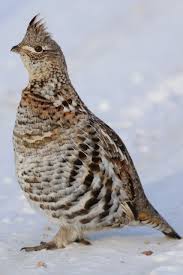
The Extinct Quelili: Caracara lutosa

Shibasis Rath by Shibasis Rath
September 3, 2024
in EVOLUTION, SCIENCE FEATURED, ZOOLOGY
Reading Time: 5 mins read
0
A A
0

Scientific Classification:

Scientific name: Caracara lutosa

  • Phylum: Chordata
  • Class: Aves
  • Order: Falconiformes
  • Family: Falconidae

When did it become extinct?

The last reliable sighting of this bird was in 1901.

Where did it live?

This bird of prey was found only on the island of Guadalupe. Two hundred and forty miles off the northwest coast of Mexico lies the island of Guadalupe, a small volcanic island, 35 km long and about 9 km at its widest point. Even though it is barely a speck in the vastness of the Pacific Ocean, Guadalupe was once home to a number of animals that were found nowhere else. One of the most famous Guadalupe residents was the quelili. This bird of prey was very closely related to the caracaras of Central and South America, and perhaps the ancestors of the quelili found themselves on the remote, rocky outpost of Guadalupe after being blown from the mainland during a storm.

ADVERTISEMENT

Behavior and Ecology:

The caracaras are all meat eaters, but they donโ€™t have the hunting prowess of eagles or falcons. They are quite feeble fliers and are unable to swoop on their prey from a great height. Instead, they prefer to catch and eat small prey that can be easily overpowered, and they often resort to scavenging. The English-speaking inhabitants of Guadalupe called the quelili the โ€œeagle,โ€ but like the other caracaras, the quelili was no formidable aerial hunter. It apparently fed on small birds, mice, shellfish, worms, insects, and carrion when the opportunity arose.

READ ALSO

Volcanic Eruptions Can Destroy Their Own Methane โ€” Tonga’s Plume Shows How

Scientists Say Babies May Learn to Yawn Before Birth

There are a few accounts of how the living quelili behaved. Its broad wings were suited to loping flight quite close to the ground, and like the other caracara species, it may have been equally at home on the ground, stalking among the low vegetation on its long legs. Small flocks of these birds were often seen in flight, but it is unclear if there was an ordered social structure. Living caracaras are normally solitary, but they will tolerate each other around a carcass, albeit with bouts of noisy quarreling. Perhaps the quelili was a little friendlier to others of its kind. They were known to communicate with complex displays, one of which involved the bird extending its neck to full length and then arching backward until its head almost touched its back (the crested caracara displays in the same way). Unfortunately, the significance of these displays is now lost, but perhaps it was the way that one quelili asserted dominance over another.

ADVERTISEMENT

Impact of Human Activity:

The quelili was probably the dominant predatory land animal on Guadalupe for tens of thousands of years, but due to its position in the food chain and the small size of its island home, it would never have been very common. An island like Guadalupe could have never supported more than a couple hundred quelili, but in the narrow geological window in which it lived, this bird was a successful scavenger and predator.

This success continued up until the early eighteenth century, at which time humans appeared on the scene. The first humans to make any real difference to the ecology of Guadalupe were whalers and hunters, who came to catch and kill sea otters, fur seals, and elephant seals. On their ships, they carried goats as a source of meat and milk, and as a way of caching supplies on their hunting routes, they left some goats on Guadalupe.

The idea was that the goats would survive and the whalers could pick up some fresh meat and milk the next time they were passing. Not only did the goats survive, but they bred in profusion, and before long, there were thousands of them running riot over the once virginal land. Goats in the wrong place can be devastating, as any gardener will attest. They eat anything and everything, and the numerous unique plants that covered Guadalupe were stripped away by thousands of hungry mouths. This in itself was not the nail in the coffin of the quelili, but the huge herds of goats soon attracted people. Some came to herd the goats and others came to hunt them, and herder and hunter alike both considered the quelili to be a meddlesome foe that would kill and eat goat kids whenever the opportunity arose. It is very unlikely that the quelili could have captured and killed a healthy goat kid, but it was probably partial to the flesh of a goat carcass. Goatherders may have seen a group of quelili tearing at the carcass of a dead goat kid and presumed the birds were responsible for its death.

ADVERTISEMENT

By the nineteenth century, the quelili was goat enemy number one and it was hunted mercilessly. By the 1860s, rifles and poison had pushed it to the brink of extinction. As if angry goatherders were not bad enough, the quelili soon found itself pitted against an even more relentless foe: the ornithological collector. The age of discovery gripped the educated world, and the race to collect and catalogue the worldโ€™s treasures was well and truly on. Rarities are coveted by collectors, and institutions and wealthy individuals soon got wind of the disappearing Guadalupe bird fauna, including the quelili. Back in the nineteenth century, the word conservation didnโ€™t really exist, and the collectors systematically exterminated the quelili; the skins were sold to the highest bidder.

Amazingly, one small group of quelilis survived this onslaught, but these were accounted for by Rollo Beck, an ornithologist and collector who landed on the island on December 1, 1900. No sooner had he landed on the island than he saw a flock of 11 quelili heading straight for him. In the mistaken belief that the bird was still common, he shot all but two of the flock, and in doing so, Rollo Beck consigned the quelili to extinction.

Current Status of Guadalupe:

  • Guadalupe was once home to an array of unique plants and animals, but we know only a fraction of what species the island once supported. At least six species and subspecies of bird have become extinct since humans first colonized the island.
  • Guadalupe was covered in distinct vegetation types, ranging from areas of succulent herbs to forests of endemic cypress. Today, almost all of this has disappeared and most of the vegetation is little more than a few centimeters tall, all thanks to the tireless mouths of the introduced goats.
  • Guadalupe is governed by Mexico, and even though the island has been a protected reserve since 1928, only recently has anything been done to restore the habitats on the island. In 2005, a scheme was initiated to remove the goats from the island, and it is hoped that once these destructive herbivores are gone, the islandโ€™s vegetation will regenerate naturally.
  • Caracara bones from the Rancho La Brea asphalt deposits, approximately 40,000 years old, are supposedly very similar to quelili bones, and as California is so close to Guadalupe, it is possible that the quelili’s ancestors once lived there.

  • Share on WhatsApp (Opens in new window) WhatsApp
  • Share on Facebook (Opens in new window) Facebook
  • Share on Reddit (Opens in new window) Reddit
  • Share on X (Opens in new window) X
  • Print (Opens in new window) Print
Shibasis Rath

Shibasis Rath

"๐“’๐“ธ๐“ท๐“ท๐“ฎ๐“ฌ๐“ฝ๐“ฒ๐“ท๐“ฐ ๐“ก๐“ฎ๐“ผ๐“ฎ๐“ช๐“ป๐“ฌ๐“ฑ ๐“ฃ๐“ธ ๐“ก๐“ฎ๐“ช๐“ต๐“ฒ๐“ฝ๐”‚" ๐“ฒ๐“ผ๐“ท'๐“ฝ ๐“™๐“พ๐“ผ๐“ฝ ๐“ช ๐“œ๐“ธ๐“ฝ๐“ฝ๐“ธ - ๐“˜๐“ฝ'๐“ผ ๐“œ๐”‚ ๐“œ๐“ฒ๐“ผ๐“ผ๐“ฒ๐“ธ๐“ท

Related Posts

Volcanic Eruptions Can Destroy Their Own Methane โ€” Tonga’s Plume Shows How
ENVIRONMENTAL SCIENCE

Volcanic Eruptions Can Destroy Their Own Methane โ€” Tonga’s Plume Shows How

May 13, 2026
Babies Yawn in the Womb
DEVELOPMENTAL BIOLOGY

Scientists Say Babies May Learn to Yawn Before Birth

May 11, 2026
Low Sexual Frequency Linked to Worse Cardiovascular Outcomes, Two US Studies Find
SCIENCE FEATURED

Low Sexual Frequency Linked to Worse Cardiovascular Outcomes, Two US Studies Find

May 5, 2026

POPULAR NEWS

Chewing gum releases thousands of microplastic particles directly into your mouth with every piece you chew

Chewing gum releases thousands of microplastic particles directly into your mouth with every piece you chew

by Shibasis Rath
May 8, 2026
0

Microplastics are turning up in places researchers never expected: deep-sea sediments, Arctic ice, and human blood. Now, a UCLA pilot...

Yelling Isnโ€™t Just Yelling: How a Hostile Home Rewires a Childโ€™s Brain for Constant Alert

Yelling Isnโ€™t Just Yelling: How a Hostile Home Rewires a Childโ€™s Brain for Constant Alert

by Shibasis Rath
March 8, 2026
0

To a parent in the heat of the moment, a raised voice may feel like simple frustration. To a child...

a group of gen Z kids walking down a street

Is Gen Z the First Generation Less Intelligent Than Their Parents?

by Shibasis Rath
February 5, 2026
0

Gen Z intelligence decline is emerging as a serious concern among neuroscientists and education researchers. For over a century, each...

Whole Brain Emulation Achieved: Scientists Run a Fruit Fly Brain in Simulation

by Shibasis Rath
March 9, 2026
0

Scientists have copied an entire biological brain neuron by neuron and synapse by synapse and made it control a simulated...

Global Sperm Counts Have Dropped 50% in 50 Years Now 128 Men Are Racing Their Way to a $100,000 Prize to Prove the Point

Global Sperm Counts Have Dropped 50% in 50 Years Now 128 Men Are Racing Their Way to a $100,000 Prize to Prove the Point

by Staff Writer
May 5, 2026
0

A group of technology entrepreneurs is staging a competitive event in San Francisco in which semen samples from 128 men...

EDITOR CHOICEโ€˜S

  • All
  • NEWS
  • SPOTLIGHTS
A new study has found that menโ€™s brains shrink faster than womenโ€™s as they age.

12,638 MRI Scans Confirm Men’s Brains Shrink Faster in PNAS Study

by Staff Writer
May 14, 2026
0

A large-scale analysis of brain scans taken over time has found that men's brains shrink faster than women's across a...

Volcanic Eruptions Can Destroy Their Own Methane โ€” Tonga’s Plume Shows How

Volcanic Eruptions Can Destroy Their Own Methane โ€” Tonga’s Plume Shows How

by Shibasis Rath
May 13, 2026
0

A study published in Nature Communications analyzed the Hunga Tonga-Hunga Ha'apai volcano eruption's impact on methane in the atmosphere. It...

3 men standing on rocky shore during daytime

For Future Space Missions, Molecular Ecology Finally Offers a Clear Biosignature Target

by Shibasis Rath
May 12, 2026
0

When the next generation of probes scoops up dust from the icy shell of Europa or the surface of Mars,...

Babies Yawn in the Womb

Scientists Say Babies May Learn to Yawn Before Birth

by Shibasis Rath
May 11, 2026
0

Mothers can spread yawns to their yet-to-be-born offspring during pregnancy, researchers report May 5 in Current Biology  the first empirical evidence...

ADVERTISEMENT

RathBiotaClan – RBC

RathBiotaClan – Connecting Research To Reality

Your trusted source for life science news, biology research & discoveries. Covering neuroscience, genetics, ecology, and more โ€” connecting research to reality.

Privacy Policies

Contact Us

About Us

Editorial Standards

Latest Posts

  • 12,638 MRI Scans Confirm Men’s Brains Shrink Faster in PNAS Study
  • Volcanic Eruptions Can Destroy Their Own Methane โ€” Tonga’s Plume Shows How
  • For Future Space Missions, Molecular Ecology Finally Offers a Clear Biosignature Target
  • Scientists Say Babies May Learn to Yawn Before Birth

SHIBASIS RATH

Contact Mail

rathbiotaclan@gmail.com

No Result
View All Result
MSME (Udyam) Certified Science Platform
Govt. of India

Get Us On PlayStore

playstore app for rathbiotaclan
  • About Us
  • Advertise With Us
  • Cancellation and Refund Policy
  • Contact Us
  • Contribute
  • Editorial Standards
  • Home
  • Pricing Details
  • Privacy Policies
  • Shipping Policy
  • Terms & Conditions

ยฉ 2026 RathBiotaClan. All rights reserved.

Welcome Back!

Sign In with Google
OR

Login to your account below

Forgotten Password? Sign Up

Create New Account!

Sign Up with Google
OR

Fill the forms bellow to register

*By registering into our website, you agree to the Terms & Conditions and Privacy Policy.
All fields are required. Log In

Retrieve your password

Please enter your username or email address to reset your password.

Log In

Add New Playlist

No Result
View All Result
  • HOME
  • HEALTH SCIENCE
  • NEUROSCIENCE
    • PHYSIOLOGY
    • IMMUNOLOGY
    • CANCER
  • DISCOVERIES
    • SPOTLIGHTS
    • STUDENT PORTAL
    • SCIENCE FEATURED
  • MOLECULAR BIOLOGY
    • GENETICS
    • BIOTECHNOLOGY
    • BIOINFORMATICS
    • BIOCHEMISTRY
    • BIOPHYSICS
  • ZOOLOGY & ECOLOGY
    • ENVIRONMENTAL SCIENCE
    • ECOLOGY
    • EVOLUTION
  • MICRO & PLANT SCIENCE
    • MICROBIOLOGY
    • CELL BIOLOGY
    • DEVELOPMENTAL BIOLOGY
  • PSYCHOLOGY
  • Login
  • Sign Up
SAVED POSTS

ยฉ 2026 RathBiotaClan. All rights reserved.

This website uses cookies. By continuing to use this website you are giving consent to cookies being used. Visit our Privacy and Cookie Policy.