




KEYPOINTS:
- Split-brain surgery showed how the mind has two parts. When the corpus callosum is cut, each half of the brain can work on its own, leading to separate consciousnesses in one person.
- Each side of the brain is good at different things. The left is better with language and logic, and the right is better at spatial stuff, creativity, and catching emotions.
- Split-brain research changed how we see the brain and consciousness. Roger Sperry and Michael Gazzaniga’s work showed that each side of the brain has its own skills, which changed how scientists think about how we think, feel, and know ourselves.
Back in the ’60s, some scientists looked at people who’d had surgery to cut the connection between the two halves of their brain. At first, these folks seemed fine – they could walk, talk, and do everyday stuff just like anyone else. But if you looked closer, things got weird.
Split-brain studies really messed with how we think about consciousness. Before these studies, most people thought consciousness was one unified thing, like a single experience of being yourself. But split-brain patients seemed to have two separate streams of awareness going on at the same time inside their heads.
Once the corpus callosum got cut, each side of the brain seemed to show its own perceptions, reactions, and even intentions. This made people wonder if these patients had two separate consciousnesses! This research hinted that consciousness might be more broken up and spread out than we thought. Maybe it’s not a single thing but something that comes from different brain systems working together. This idea still changes how we think about consciousness today. It suggests feeling like we have one unified conscious experience might just be a trick our brains do by putting everything together so well.
The Split Brain Things
Sometimes, their hands would do different things, like one hand trying to undo what the other was doing.
And in experiments, it got even stranger:
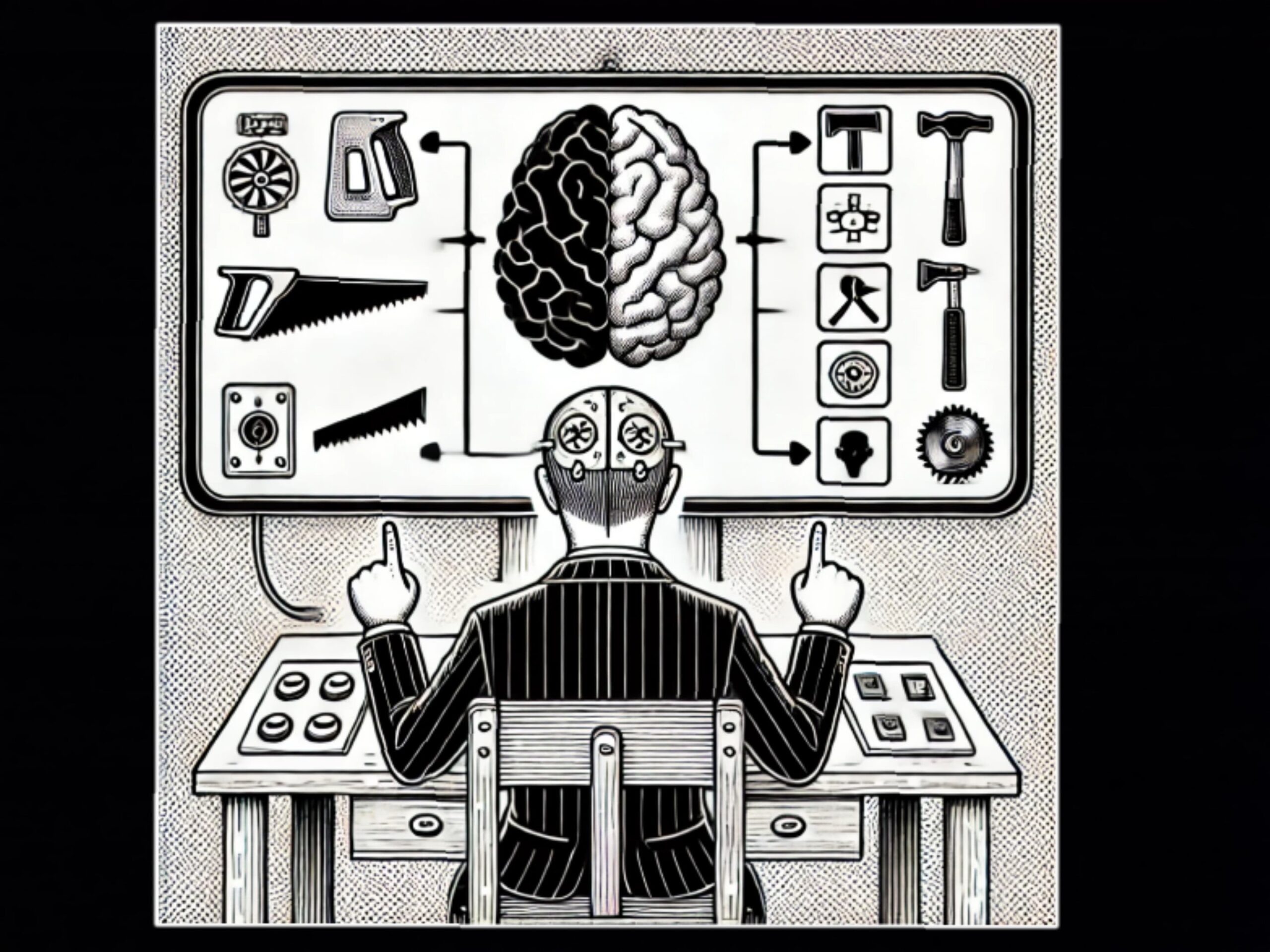
- If they only saw a picture with their left eye (which goes to the right side of the brain), they’d say they didn’t see anything. But, they could still draw or point to the thing with their left hand (which the right side of the brain controls). So, their brain was seeing it, but they couldn’t talk about it since speech is mostly handles by the left side of the brain.
- In a well-known experiment, Gazzaniga and Sperry showed someone a picture with a hammer on the left and a saw on the right. If you asked them what they saw, they’d just say a hammer (because that’s what the left side saw). But if you asked them to draw with their left hand, they’d draw a saw, even though they just said they didn’t see one.
- When they tried to count with both hands at the same time, it was a mess. Each hand had its own timing or count in its own way, like each half of the brain was off doing its own thing.
All this stuff made people wonder: did splitting the brain in half also split their mind in two?
Were these people living with two separate minds, or were they still one person even with their brain divided?
About Groundbreaking Brain Research
Roger Sperry, a Nobel Prize winner, and his student Michael Gazzaniga, a famous psychologist, did some game-changing work that helped us figure out how the human brain works. They looked at split-brain patients. These people had surgery (corpus callosotomy) to cut the connection between the two halves of their brain. Doctors did this to help people with really bad epilepsy. Sperry and Gazzaniga wanted to see how this surgery messed with how people think, act, and how their brains work.
Back in the 1960s, they kicked things off with a study on a patient they called Joe. Joe fought in World War II but got hurt badly when bombs hit him in the Netherlands. Pieces of metal messed up his skull, and he ended up with really bad epilepsy, having seizures all the time. For over 10 years, nothing seemed to help, and it made his life really tough.
So, Joe had the surgery to separate the two halves of his brain. After that, Sperry and Gazzaniga did tests to see how this split affected Joe’s thinking. Theylearned some cool stuff about how each side of the brain has its jobs, and that they can work on their own, almost like they have their personalities. This was a huge deal for brain science, opening up new ways to study what each part of the brain does and how we think.
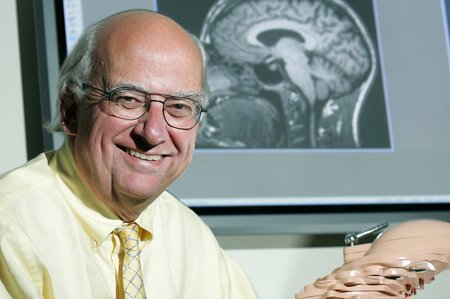
Michael Gazzaniga
American neuroscientist
Why Split the Brain?
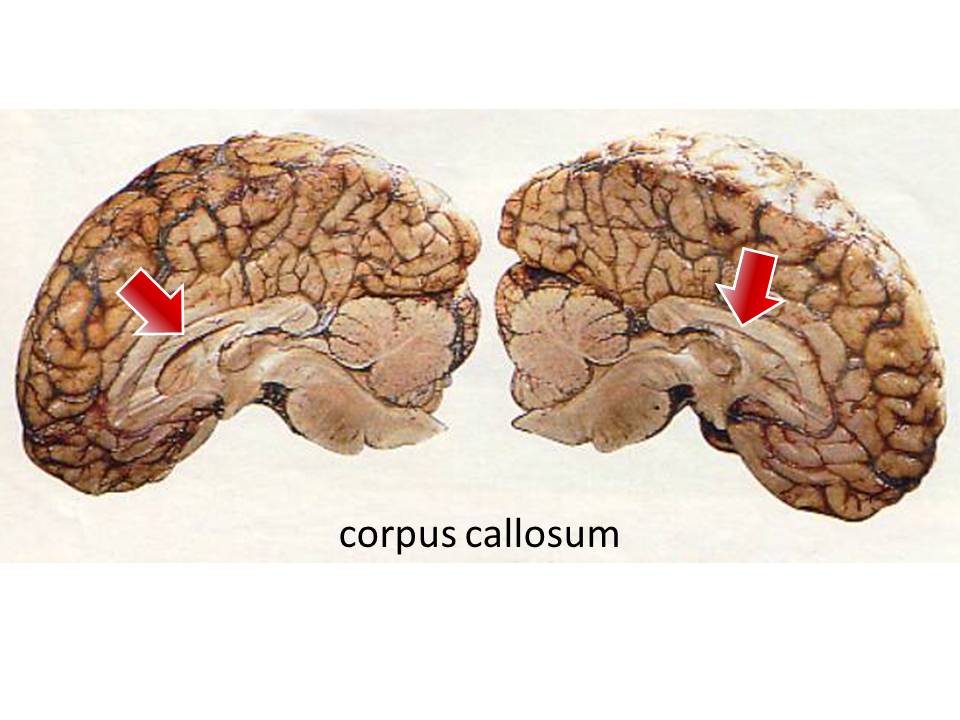
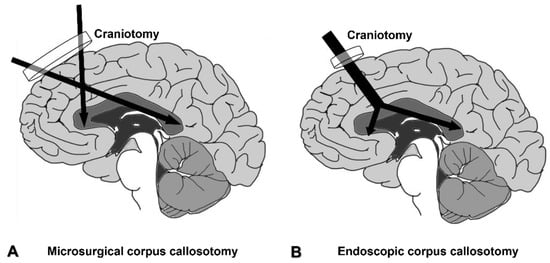
The corpus callosotomy came about as a last resort for folks with really bad epilepsy that just wouldn’t respond to anything else. These people were having seizures all the time, making it tough to live a normal life. Doctors noticed that a lot of the time, the seizures were jumping between the two halves of the brain using a part called the corpus callosum.
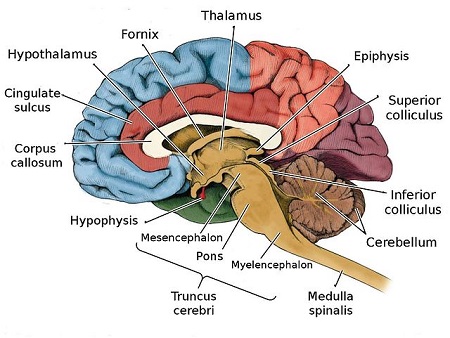
Think of the corpus callosum as a massive bridge made of over 200 million tiny wires. It’s how the left and right sides of your brain chat with each other and share info. The idea was that if they cut this bridge, they could trap the electrical problems causing the seizures on one side, stopping them from going wild all over the brain. If it worked, people would have fewer, less intense seizures and maybe get their lives back on track when nothing else helped.
This wasn’t a snap decision, though. A lot of study went into it. A guy named Roger Sperry, who later won a Nobel Prize, Did early work that pointed the way. He cut the corpus callosum in animals and watched to see what happened. Surprisingly, the animals could still move okay and do basic stuff, even with the cut. This meant that even though the two brain halves were disconnected, they could still do work on their own. Sperry’s work gave doctors trust that they could do the same thing in people without causing too much damage, especially if those people were out of other options.
As the surgery got better, doctors had to be careful. They wanted to cut enough to stop the seizures from spreading, but they also didn’t want to mess up other brain functions. This surgery ended up changing lives for many patients, and it also taught us a lot about the brain. We learned that each side of the brain has its own jobs and that they can work separately.
How Our Brain Processes Visual Information
So, how does your brain actually make sense of what you see?
Well, one of the coolest things that scientists have learned is that different parts of your brain handle different bits of seeing. It’s not as simple as your left brain controlling the right side of your body, like with movement. Seeing is more complicated.
Basically, both of your eyes send info to both halves of your brain. The left side of what you see goes to the right side of your brain, and the right side goes to the left side. It all crosses over at a place called the optic chiasm – it’s like a special switch-over point for your eye nerves. Usually, your brain puts all this info together using a connection called the corpus callosum. Think of it as a bridge between the two halves of your brain.
It gets really interesting when that bridge is out. Sometimes, people have surgery that cuts that connection. Then, things get weird. If you flash a picture to only the right side of their brain (by showing it to the left side of what they’re looking at), they might say they don’t see anything. That’s because the part of their brain that talks is usually on the left side, and it didn’t get the message.
But here’s the crazy part:
Even though they say they don’t see it, they can still draw the picture with their left hand!
That’s because the right side of their brain did see it, and it controls the left hand.
This shows that different parts of your brain can do different things, and that talking to each other is key for us to understand the world as a whole. It’s like one big, coordinated team effort just to see what’s in front of you! And you do that every minute of every day.
Seeing is obviously much harder than we think!
The Brain’s Two Sides
This study proved that the brain’s hemispheres have different jobs:
Each Hemisphere’s Skills
- The left side has Broca’s area (for talking) and Wernicke’s area (for understanding language). It’s basically the brain’s main language center.
- The right side is good at directions, recognizing faces, understanding emotions, and doing art because it’s better at seeing the big picture.
The left side is also good at logic, analyzing stuff, and math because it processes information step-by-step.
When the link between these sides is cut, weird things can happen. like someone with a split brain might have trouble drawing a cube with their right hand (controlled by the left side) but can draw it fine with their left hand (controlled by the right side).

Split-Brain Research: What We Learned
This important study totally changed how we think about the brain and how we’re aware of things. It showed that the brain isn’t just one thing, but a bunch of specialized parts working together – it’s what scientists call brain lateralization where each side has it’s own skill
What’s wild is that even when the two halves of their brains were separated, these patients still had normal intelligence and could still figure out hard problems. Their everyday lives weren’t really affected much, even with this huge change in their brain setup.
This study still helps us figure out how our awareness works and show how specialized and cool our brains really are.
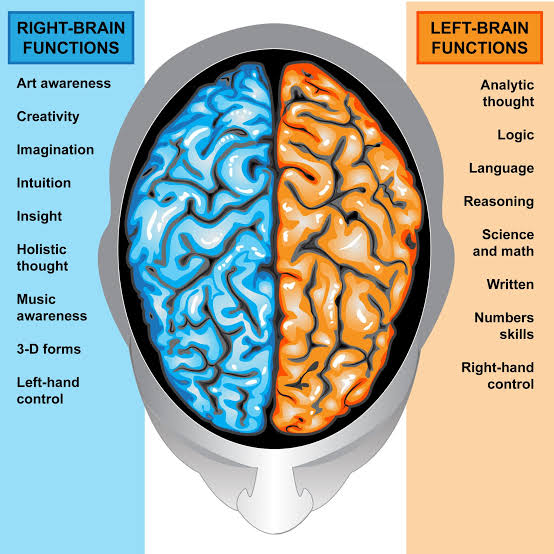
Brain hemisphere functions lateralization diagram
Optic chiasm visual pathways brain