
For a long time, a massive hole sat in the history of our earliest ancestors. Vertebrates first appeared over 520 million years ago during the “Cambrian Explosion”. However, most major fish groups did not show up in fossils until much later. Scientists call this 50-million-year mystery the “gnathostome gap“. They often blamed poor sampling or bad luck for this missing data. Now, a new study reveals a different story. A “Big Five” mass extinction actually jump-started the “Age of Fishes”.
How did the Late Ordovician Mass Extinction change things?
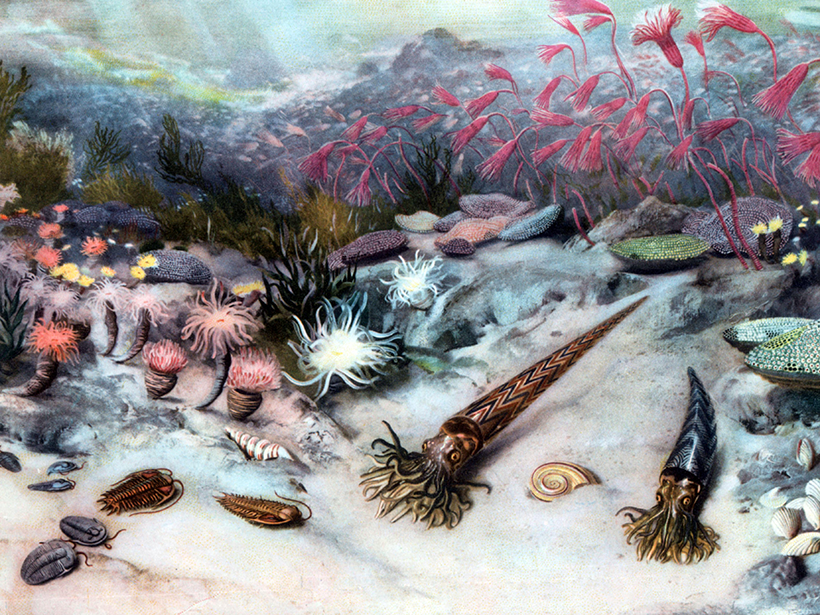
About 445 million years ago, the Late Ordovician Mass Extinction (LOME) hit the planet. Sudden polar glaciation and shifting sea levels destroyed coastal homes. This disaster acted like a massive reset button for marine life. Before this, jawless “conodonts” and invertebrates ruled the seas. The LOME devastated these dominant groups. This created an “ecological release“. It gave early jawed vertebrates the space they needed to finally thrive.
What is “Talimaa’s Gap”?
The research points to a quiet 3-million-year period right after the extinction. Experts call this the Rhuddinian era or “Talimaa’s Gap“. During this time, vertebrate diversity hit an all-time low. Life survived in small, isolated spots called “refugia“. Recovery was very slow. It took up to 10 million years for major groups like osteostracans and heterostracans to appear in the record.
Where was the first home for jawed fish?
South China was a vital “cradle” for early jawed fish. Many regions stayed empty for 15 million years after the extinction. However, South China hosted a diverse array of galeaspids and early jawed species. These pioneers stayed in their home waters for a long time. They only spread globally as the supercontinent Pangaea began to form. Shallow seas eventually replaced deep straits. This allowed these diverse fish to travel across the globe.
How did the team find this out?
The researchers built the most complete database of early Paleozoic fossils to date. They tracked 1,157 occurrences across 449 different species. The team used complex math to see through gaps in the fossil record. Their work shows a “double wedge” pattern. Conodonts declined while jawed vertebrates slowly climbed toward dominance. This rigorous approach finally explains how our ancestors took over the oceans.
Think of the Late Ordovician Mass Extinction like a massive forest fire. For millions of years, towering old trees (the conodonts) blocked all the sunlight. The fire cleared the canopy. While the forest floor looked empty for a while (Talimaa’s Gap), it finally allowed new, diverse plants (the jawed fish) to grow and take over the landscape.
REFERENCE
Hagiwara, W., & Sallan, L. (2025). Mass Extinction Triggered the Early Radiations of Jawed Vertebrates and Relatives (Gnathostomes). bioRxiv, 2025-09.