





Certain animals exhibit a fascinating reproductive strategy known as semelparity, where they reproduce only once in their lifetime. This phenomenon is observed in various species across different ecosystems. Here, we’ll explore a few examples, delve into the reasons behind their unique life cycle patterns, and describe their habitats.
1. Salmon
Species and Habitat
- Salmon are found in the North Atlantic and Pacific Oceans, with species such as the Atlantic salmon (Salmo salar) and various Pacific species including the Chinook (Oncorhynchus tshawytscha) and Sockeye (Oncorhynchus nerka).
Life Cycle
Journey of the Atlantic Salmon: A Life Story
Atlantic salmon, especially those gracing the rivers of Ireland, lead a remarkable life that is both an adventure and a survival story. These fish are anadromous, meaning they are born in freshwater rivers, migrate to the ocean to mature, and return to their birthplace to spawn. Let’s take a dive into the stages of this incredible journey.
The Beginning: Hidden Eggs
Life for the Atlantic salmon begins as a tiny, pea-sized egg nestled under gravel in the clean, cool rivers flowing into the North Atlantic. These eggs, laid in the winter months, are the culmination of a long migration by adult salmon, who stop eating to focus all their energy on reaching suitable spawning grounds. The female salmon create nests, or “redds,” in the gravel where they lay thousands of eggs, which are then fertilized by the males
The Early Days: Alevins and Fry
Once hatched, the young salmon, known as alevins, remain hidden in the gravel, surviving off the nutrient-rich yolk sacs attached to their bodies. This phase lasts until spring, when the yolk is fully consumed and the tiny fish, now called fry, begin to swim freely in the river. These small fry must quickly learn to navigate the fast-flowing waters, feeding on microscopic invertebrates and avoiding predators.
Growing Up: Parr
As the fry grow through the summer, they develop into parr, marked by distinctive vertical stripes and spots that provide camouflage. For the next one to three years, these young salmon remain in their home streams, feeding on aquatic insects and growing steadily. This period is crucial as they prepare for the significant changes that come with their transition to the ocean.
The Big Move: Smoltification
When the parr reach a certain size, they undergo a transformation called smoltification. This process involves physical and physiological changes that prepare them for life in saltwater. Their appearance becomes silvery, and their bodies adapt to regulate salt, making them ready for the journey to the sea. In the spring, these smolts leave the rivers in large numbers, embarking on an epic migration to the rich feeding grounds of the North Atlantic.
Life at Sea: Rapid Growth and Maturity
In the vast ocean, Atlantic salmon grow rapidly, feeding on abundant fish species such as herring and sand eels. This growth spurt is vital for their survival, reducing the number of predators that can threaten them. Depending on their time at sea, salmon mature and are ready to return to their rivers either after one year, when they are known as grilse, or after two or more years, when they are considerably larger.
The Return Journey: Homing Instincts
One of the most astonishing aspects of the Atlantic salmon’s life cycle is their ability to return to their natal rivers with remarkable accuracy. Using a combination of the earth’s magnetic field, the chemical scent of their home river, and pheromones, they navigate thousands of kilometers back to where they were born. This homing instinct is so precise that they can locate their spawning grounds even after extensive migrations to the Arctic Circle or the waters off Greenland.
The Circle of Life: Spawning and Kelts
Upon returning to their rivers, the adult salmon engage in a dramatic and often perilous upstream journey, leaping over waterfalls and navigating obstacles to reach their spawning grounds. After spawning, the exhausted salmon are known as kelts. Many die due to the energy expenditure and vulnerability to disease and predators, but some survive, regaining strength to potentially repeat this incredible cycle.
Reasons and Adaptations
- Energy Allocation: Salmon invest all their energy into a single, massive reproductive event, ensuring maximum effort in producing and protecting offspring.
- Environmental Adaptations: Their death after spawning provides critical nutrients to the stream ecosystem, benefiting their offspring and other aquatic life.
2. Bamboo
Species and Habitat
- Bamboo species are found across Asia, Africa, and the Americas, thriving in tropical, subtropical, and temperate regions.
- Notable species include the genus Phyllostachys and Bambusa.
Life Cycle
Once-in-a-Lifetime Lifecycle of Bamboo
Bamboo, a marvel of nature, lives a life that reads like a mystical tale. This incredible plant, known for its strength and grace, breeds just once in its lifetime, a phenomenon that’s both rare and remarkable.
The Secret Beginning
Bamboo’s journey starts humbly as a seed, a tiny spark of life hidden in the soil. Unlike most plants, bamboo seeds are a rarity, appearing only once in a generation. When these seeds finally sprout, they give rise to tender shoots that seem fragile but hold immense potential.
Rapid Growth: Nature’s Rocket
Once established, bamboo transforms from delicate shoots into towering giants almost overnight. Some species can grow up to 91 centimeters (about 3 feet) a day! This explosive growth is driven by an underground network of rhizomes, which spread out and fuel the rapid rise of new stalks. This network is the plant’s lifeline, storing nutrients and energy, and allowing it to regenerate swiftly.
The Grand Finale: Mass Flowering
Bamboo’s flowering is an event shrouded in mystery. Depending on the species, bamboo flowers just once every 20 to 120 years. When it does, the entire grove blooms in unison, a synchronized spectacle that can span vast regions. After this rare mass flowering, bamboo produces seeds and then, dramatically, the mature stalks die.
The Cycle of Renewal
Though the flowering and subsequent death might seem like an end, it is actually the beginning of a new chapter. The seeds left behind sprout new life, ensuring the species’ survival. This unique lifecycle contributes to bamboo’s resilience, allowing it to thrive and adapt to changing environments.
Nature’s Ingenious Design
Bamboo’s once-in-a-lifetime breeding is a testament to nature’s ingenuity. It’s a story of rapid growth, dramatic transformation, and continuous renewal. The next time you encounter a bamboo grove, remember the extraordinary tale unfolding beneath its serene surface—an awe-inspiring dance of life and rebirth.
Reasons and Adaptations
- Synchronous Flowering: This strategy overwhelms predators with an abundance of seeds, ensuring that some seeds survive to germinate.
- Resource Allocation: By focusing resources on a single reproductive event, bamboo maximizes its reproductive output when conditions are favorable.
3. Mayflies
Species and Habitat
- Mayflies (order Ephemeroptera) are found globally, particularly in clean, freshwater bodies like rivers and lakes.
Life Cycle
The Intriguing Life Cycle of Mayflies: A Dance of Ephemeral Beauty
Mayflies, part of the order Ephemeroptera, often go unnoticed by most people. These delicate insects, usually under 15mm in length, have a short yet fascinating life.
Their adult life lasts only a few hours to a few days. The green drake, the largest mayfly species in Britain, lives a bit longer and is easier to spot. In May, green drakes can be seen in large swarms over rivers during spring evenings. Their aerial dances earned them the nickname “spinners.”
Mayflies start their lives underwater as nymphs, also known as naiads. They spend 1 to 3 years in the sediment of clean rivers, streams, and lakes. Naiads feed on organic debris and molt 30 to 50 times. Watching a naiad is like seeing a tiny dragon with six pairs of gills moving on its sides.
As naiads near the end of their underwater phase, their behavior changes. They come out of the sediment, and their bodies become silvery as air fills their gut, making them float. Eventually, they rise to the surface of the water.
At the surface, they quickly shed their nymphal skin. Within seconds, they become winged insects called duns. Duns have a dull yellow-brown color and water-repellent hair. They rest on plants near the water as they prepare for their final transformation.
After a few hours, duns molt again, which is unique among insects. This molt reveals a new form with clear wings and longer tails. Male mayflies also develop longer front legs, ready for mating.
This second molt is still a mystery. It might be a trait from their ancient ancestors or an adaptation that has survived despite their short adult life.
Mayflies do not eat in this stage and live off fat reserves from their nymph phase. Females lay up to 8,000 eggs, scattering them over the water to continue the life cycle.
In the brief life of mayflies, we see a beautiful dance of life, highlighting nature’s fleeting yet profound beauty.
Reasons and Adaptations
- Rapid Reproduction: A short, intense breeding period reduces the risk of predation and ensures synchronization with optimal environmental conditions.
- Lifecycle Efficiency: By spending the majority of their life in larval form, mayflies maximize growth and resource accumulation before a brief but prolific reproductive phase.
4. Octopus
Species and Habitat
- Many species of octopus, including the Giant Pacific octopus (Enteroctopus dofleini) and the Common octopus (Octopus vulgaris), are found in various ocean habitats, from shallow coastal waters to the deep sea.
Life Cycle
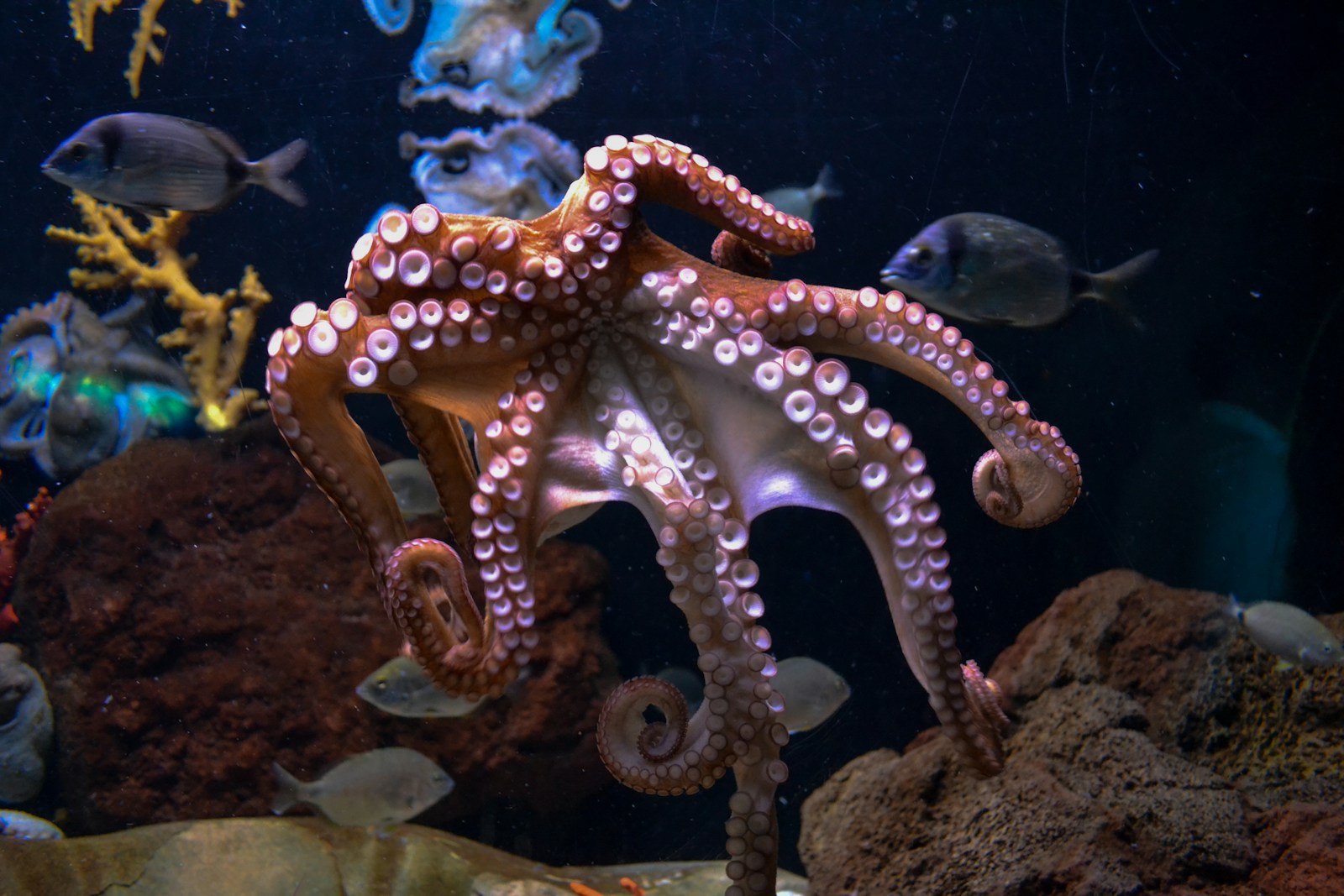
The octopus, one of the ocean’s most enigmatic creatures, leads a life filled with mystery and intrigue. With their intelligent eyes, dexterous arms, and shape-shifting abilities, octopuses captivate our imaginations. However, it is their unique, one-time breeding cycle that truly sets them apart.
The Start of Life: Hatchlings of the Deep
An octopus’s journey begins as a tiny egg, clinging to life in the deep sea. After a female octopus mates, she lays thousands of eggs in a hidden crevice, meticulously arranging them into clusters. For weeks, she guards these eggs, constantly tending to them, ensuring they receive the necessary oxygen by gently blowing water over them. During this period, she doesn’t eat, dedicating herself entirely to the next generation.
Hatchlings: The First Foray
Once the eggs hatch, the tiny octopuses, called paralarvae, drift into the open ocean, carried by currents. These minuscule creatures start their lives in a perilous world, feeding on plankton and small marine organisms while trying to avoid predators. As they grow, they descend to the ocean floor, where they will spend the rest of their lives.
Growth and Adaptation: Masters of Disguise
As juvenile octopuses, they quickly develop their remarkable abilities. Their intelligence becomes evident as they learn to navigate their environment, solve problems, and hunt. With the aid of specialized skin cells called chromatophores, they can change color and texture to blend into their surroundings, making them masters of disguise.
Adulthood: The Final Chapter
When an octopus reaches maturity, typically within a year to a few years depending on the species, its focus shifts to reproduction. For males, this means finding a mate and using a specialized arm called a hectocotylus to transfer packets of sperm to the female. For females, the act of laying eggs marks the beginning of the end.
The End: A Selfless Sacrifice
After laying her eggs, the female octopus’s life revolves around ensuring their survival. She stops eating, her body slowly deteriorating as she devotes every last bit of energy to protecting and oxygenating her eggs. This selfless dedication continues until the eggs hatch, after which the female’s life comes to an end. The male, too, typically dies shortly after mating.
Legacy: Life Renewed
Though the adult octopus’s life is tragically short, it is a testament to the relentless cycle of life in the ocean. Each generation’s sacrifice ensures the continuation of the species. The hatchlings, now on their own, will grow and eventually embark on the same journey, perpetuating this extraordinary life cycle.
The octopus’s one-time breeding cycle is a poignant reminder of nature’s delicate balance. It highlights the beauty and fragility of life, where each creature plays its part in the grand tapestry of the ocean’s ecosystem. Through their remarkable lives, octopuses teach us about dedication, resilience, and the enduring mystery of the deep sea.
Reasons and Adaptations
- Parental Investment: High parental care ensures that a greater proportion of offspring survive in the early stages.
- Energy Expenditure: The energy-intensive process of caring for thousands of eggs leaves the female octopus with little energy to sustain life post-hatching.
5. Agave
Species and Habitat
- Agave plants are native to arid and semi-arid regions of the Americas, particularly Mexico and the southwestern United States.
Life Cycle
Agave plants, often mistaken for cacti, lead fascinating lives defined by their dramatic one-time bloom. These succulents, native to the arid regions of the Americas, spend years growing in relative obscurity before making a grand exit.
Growth and Maturation: Patience in the Desert
Agaves start life from seeds or offsets, slowly developing into robust rosettes with thick, spiky leaves designed to conserve water. Over the span of 10 to 30 years, they store energy, patiently awaiting their moment of transformation.
The Grand Bloom: A Spectacle of Nature
When an agave reaches maturity, it channels all its stored energy into producing a towering flower stalk, which can grow several feet tall in just a few weeks. This sudden bloom is a spectacular sight, with clusters of flowers attracting pollinators such as bats, birds, and insects.
Seeding and Decline: The Final Act
Following pollination, the flowers produce seeds, ensuring the propagation of future generations. Once the seeds are dispersed, the parent plant’s life comes to an end. The agave’s death is inevitable, but it leaves behind offsets, or “pups,” around its base, which will grow into new plants, continuing the cycle.
Reasons and Adaptations
- Resource Accumulation: Agaves store vast amounts of energy in their leaves to support the growth of the massive flowering stalk.
- Pollination Strategy: The dramatic flowering event attracts a wide range of pollinators, maximizing reproductive success.
6. Squid
Species and Habitat
- Many squid species, such as the European squid (Loligo vulgaris) and the Japanese flying squid (Todarodes pacificus), inhabit oceans worldwide, from coastal waters to the deep sea.
Life Cycle
The Remarkable Lifecycle of Squid: Masters of the Ocean
Squid, with their jet-propelled agility and complex behaviors, are fascinating creatures of the deep. These cephalopods lead brief, yet intensely active lives, marked by rapid growth and a singular focus on reproduction.
Early Life: From Eggs to Hatchlings
Squid begin life as tiny eggs, often laid in clusters on the ocean floor. These eggs hatch into paralarvae, miniature versions of adult squid, which quickly adapt to their pelagic environment, feeding on plankton.
Growth and Adaptation: Swift and Stealthy
Squid grow rapidly, thanks to their voracious appetites and efficient hunting skills. They are equipped with specialized cells called chromatophores, allowing them to change color for camouflage and communication. Their streamlined bodies and jet propulsion make them adept hunters and elusive prey.
Reproduction: The Final Sprint
Upon reaching maturity, which can take just a year, squid focus on reproduction. Males transfer spermatophores to females, who then lay thousands of eggs. After mating, both males and females usually die, their life cycle complete.
Legacy: New Generations of the Deep
Despite their short lifespan, squid play a crucial role in the marine ecosystem. Their eggs hatch, and a new generation takes to the ocean, perpetuating the species’ remarkable cycle of life.
Reasons and Adaptations
- Group Spawning: Increases the likelihood of fertilization and overwhelms predators with sheer numbers of eggs and hatchlings.
- Lifecycle Completion: Dying after reproduction may reduce competition for resources with their offspring.
Additional Examples:
Habitat
- Found in the North Pacific Ocean, particularly along the coasts of Japan, Russia, Alaska, and British Columbia.
Life Cycle
- Females lay tens of thousands of eggs and guard them until they hatch, often starving to death during this period.
- After the eggs hatch, the female typically dies due to exhaustion and lack of food.
Reasons and Adaptations
- Parental Sacrifice: High parental care ensures a higher survival rate for the offspring in the absence of further parental support.
- Resource Allocation: The significant energy investment into a single reproductive event maximizes the number of offspring produced.
8. Periodical Cicadas (Magicicada spp.)
Habitat
- Found in the eastern United States, periodical cicadas live underground for most of their lives.
Life Cycle
- They have a unique lifecycle of 13 or 17 years spent as nymphs underground.
- They emerge synchronously in massive numbers to mate, lay eggs, and die within a few weeks.
Reasons and Adaptations
- Predator Satiation: The simultaneous emergence in large numbers overwhelms predators, allowing many to survive and reproduce.
- Long Development Period: Extended nymph stages ensure they emerge when conditions are optimal for survival and reproduction.