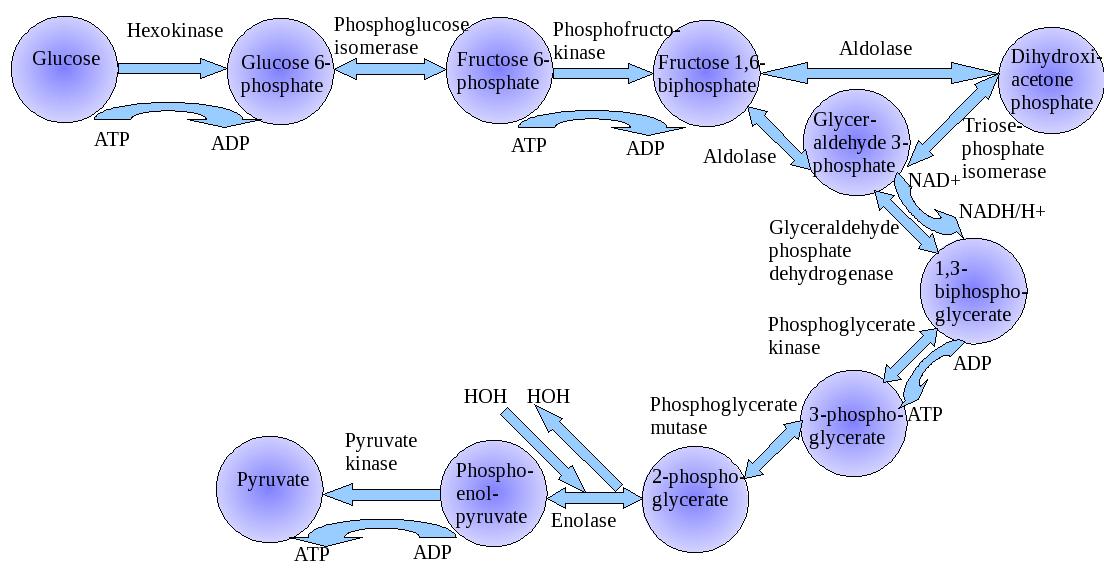





Intermediary metabolism includes all chemical transformations that occur within a cell or organism through enzyme-catalyzed reactions. Each step in these metabolic pathways relies on a specific enzyme, often supported by coenzymes and cofactors. Consequently, cells efficiently manage energy production and biosynthesis.
Key Concepts
- Precursor: The initial substance in a metabolic pathway.
- Intermediates: Compounds that form temporarily during metabolic reactions.
- Products: Final compounds produced by metabolic pathways.
- Metabolite: Any substance involved in metabolism, including precursors, intermediates, and products.
Overview of Metabolic Pathways
Intermediary metabolism coordinates the activities of all metabolic pathways, ensuring the smooth conversion of precursors, intermediates, and products. Broadly, metabolism divides into two processes:
- Catabolism: These reactions break down complex molecules into simpler ones, thereby releasing energy.
- Anabolism: These reactions assemble complex molecules from simpler precursors, consuming energy in the process.
Major Metabolic Pathways
1. Glycolysis
Glycolysis converts glucose into pyruvate or lactate under anaerobic conditions, producing 2 ATP molecules per glucose molecule. Subsequently, pyruvate transforms into Acetyl CoA, a central metabolite in energy metabolism.
2. Citric Acid Cycle (TCA Cycle)
Acetyl CoA, derived from carbohydrates, fats, and amino acids, enters the TCA cycle. Within this cycle, the molecule oxidizes to CO₂ while releasing energy in the form of NADH and FADH₂. These molecules later contribute to ATP production through oxidative phosphorylation.
3. Hexose Monophosphate Shunt (Pentose Phosphate Pathway)
This pathway generates NADPH, which cells use for biosynthesis, including fatty acids and cholesterol. Moreover, it produces ribose-5-phosphate, a vital component for nucleotide and nucleic acid synthesis.
4. Fatty Acid Oxidation
During β-oxidation, fatty acids break down sequentially, releasing Acetyl CoA. As a result, NADH and FADH₂ are formed, feeding electrons into the electron transport chain for energy production.
5. Amino Acid Degradation
Cells degrade excess amino acids to meet energy demands. Glucogenic amino acids provide precursors for glucose synthesis, whereas ketogenic amino acids convert into Acetyl CoA for energy production or ketone body formation.
6. Oxidative Phosphorylation
NADH and FADH₂ transfer electrons through the electron transport chain, ultimately producing ATP. This pathway serves as the cell’s primary energy source.
7. Gluconeogenesis
Gluconeogenesis synthesizes glucose from non-carbohydrate sources such as pyruvate, glycerol, and amino acids. By doing so, the body maintains a steady glucose supply, particularly during fasting.
8. Glycogen Metabolism
Glycogen acts as the storage form of glucose, mainly in the liver and muscles. Cells regulate its synthesis and degradation through separate pathways, providing a controlled energy reserve when needed.
Regulatory Mechanisms
Metabolic pathways remain under tight regulation to preserve cellular and organismal homeostasis. Cells achieve this through multiple mechanisms:
- Allosteric modulation: Molecules bind to enzymes at sites other than the active site, altering their activity.
- Covalent modification: Enzyme activity changes via phosphorylation or other chemical modifications.
- Hormonal control: Hormones influence metabolism by promoting or inhibiting enzyme production through changes in gene expression.